How long does a new roof last? On a Pittsburgh home, a new architectural asphalt shingle roof that’s installed and vented correctly should give you about 20 to 30 years, a basic 3 tab roof closer to 15 to 20, and metal, tile or slate anywhere from 40 to well over 100 years. The material sets the ceiling. The installation, the attic and the upkeep decide how close you get to it.
We’ve been doing roof replacement in Pittsburgh since 2003, and we tear off plenty of roofs that died young. Usually the shingle wasn’t the problem. Bad nailing, a hot attic, old decking or reused flashing was. Below we go material by material, then cover what takes years off a new roof and what adds them back.
If you’re asking whether your current roof is due, our guide on how often roofs need to be replaced in Pittsburgh covers the warning signs and the repair or replace call. This one is about getting the most years out of your next roof.
Short answer: Expect 20 to 30 years from architectural shingles, 20 to 30 from an EPDM rubber flat roof, 40 to 70 from metal and 75 years or more from slate. A sloppy install can cut any of those nearly in half.
How long does a new roof last, by material?
These are realistic ranges for a roof that went on right and gets basic care. Watch the last column: a roof rarely fails all at once, and the part that gives out first decides when you start calling a roofer.
| Roofing material | Realistic lifespan | What usually fails first |
|---|---|---|
| 3 tab asphalt shingles | 15 to 20 years | Thin single layer tabs crack, lose granules and lift in wind |
| Architectural asphalt shingles | 20 to 30 years | Pipe boots and flashing, then granule loss on the sunniest slopes |
| EPDM rubber flat roof | 20 to 30 years | Seams, edges and any spot where water ponds |
| Metal roofing | 40 to 70 years | Exposed screws, rubber washers and sealant, not the metal |
| Clay or concrete tile | 50 years or more | The underlayment under the tile, and tiles cracked by foot traffic |
| Natural slate | 75 to 100 years or more | Nails and flashing; the stone usually outlives both |
Home inspectors work from similar numbers. The InterNACHI life expectancy chart gives comparable ranges and, like us, calls them guidelines rather than guarantees.
Architectural asphalt shingles
This is what goes on most Pittsburgh homes today, and what we install on most of our jobs. Architectural shingles are laminated, two layers bonded together, so they’re heavier and stiffer than 3 tab and hold up better to wind. We install Atlas shingles, including Pinnacle Pristine, which Atlas backs with its Lifetime Limited Warranty.
On a well built roof, the shingles are rarely the first thing to go. Rubber pipe boots dry out and crack, and step flashing along a wall or chimney starts to let water in, years before the shingle field is worn out.
3 tab asphalt shingles
3 tab shingles are a single flat layer with cutouts. They’re lighter, they catch wind under the tabs, and they wear faster on slopes that face the afternoon sun. If your roof is 3 tab, it’s almost certainly older, and it’s usually the first roof on the street to need work.
EPDM rubber flat roofs
Rear additions, porches, garages and a lot of rowhouse roofs in the city are low slope, and that’s where we install EPDM rubber. A rubber roof lives or dies by drainage. Water that sits in a low spot for days works on the seams and edges until they open up.
That’s why we look at the slope before we look at the membrane. Greg J. put it this way in his Google review: “Alan talked through what they would do and how he would fix the slope of our back porch.” You can see one of these jobs on our rubber roof installation project page.
Metal roofing
Metal sheds snow well and doesn’t care much about freeze and thaw, which is why it can run 40 to 70 years here. What needs attention is what holds the panels down: exposed screws back out, rubber washers age, and sealant at trim needs checking every few years.
Slate and tile
Slate is the long game, and you still see a lot of it on older city homes. The catch is that the nails and flashing holding the slate rarely last as long as the stone, so a slate roof needs a roofer who will repair it rather than tear it off. Clay and concrete tile is less common here and heavy enough that the structure has to be ready for it. Under both, the underlayment ages faster than the roofing on top.
Do 30 year shingles really last 30 years?
Sometimes, but the number on the bundle isn’t a promise about lifespan. A 30 year, 50 year or lifetime label describes the length of the manufacturer’s warranty. Most shingle warranties give full coverage for an early period and then reduce what they pay as the roof ages, and nearly all of them cover the product, not the labor or how it was installed.
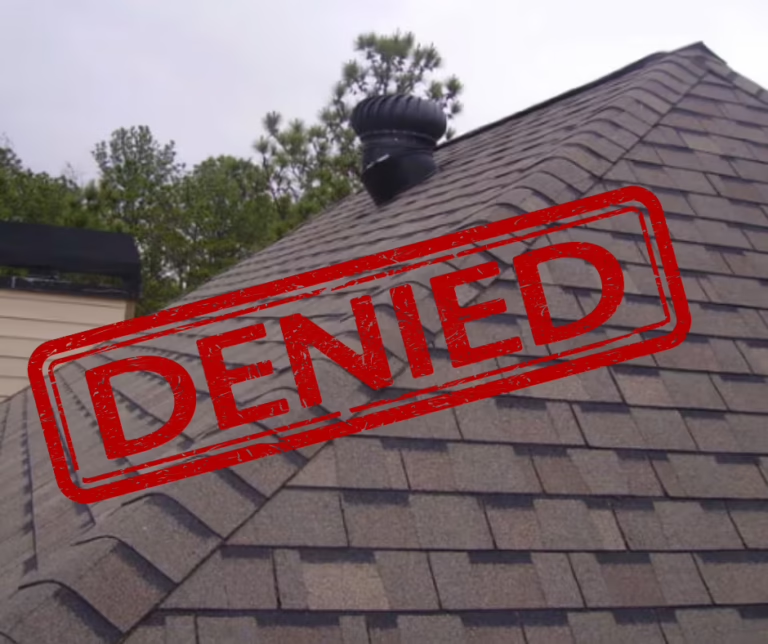
Warranties also come with conditions. Manufacturers expect the shingles to be installed to their instructions, and attic ventilation is part of that. A hot, poorly vented attic or the wrong nailing pattern can give the manufacturer a reason to deny a claim. Before you sign anything, ask the roofer what the manufacturer covers, what the contractor covers, and for how long.
Jon F. wrote in his Google review that “they used quality products with a great warranty.” The paperwork matters, but the install is what gets you to year 25.
What shortens the life of a new roof
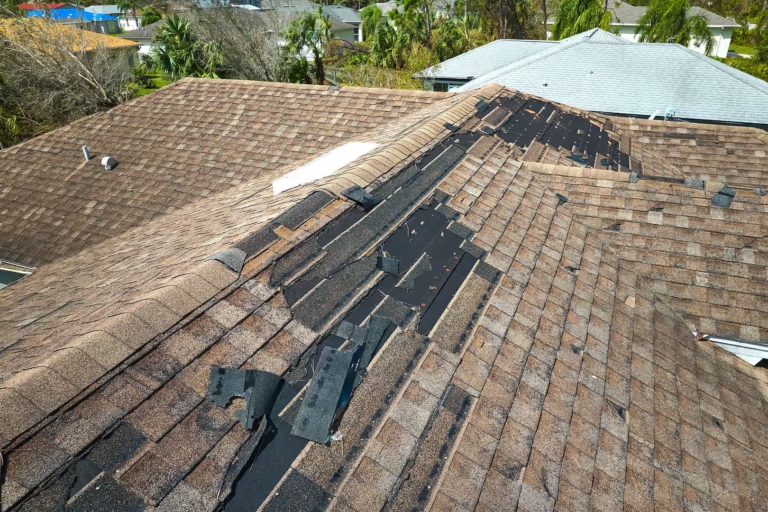
When a roof fails at 12 or 15 years, it’s usually one of these. None of them show on the day the roof is finished. They show up years later as leaks, curling or a soft spot underfoot.
Shingling over an old roof
A layover, new shingles nailed over old ones, saves a day of labor and costs you years. The second layer runs hotter, sits on an uneven surface and hides whatever is wrong with the wood underneath. A roof overlay rarely lasts as long as the same shingle installed over clean decking.
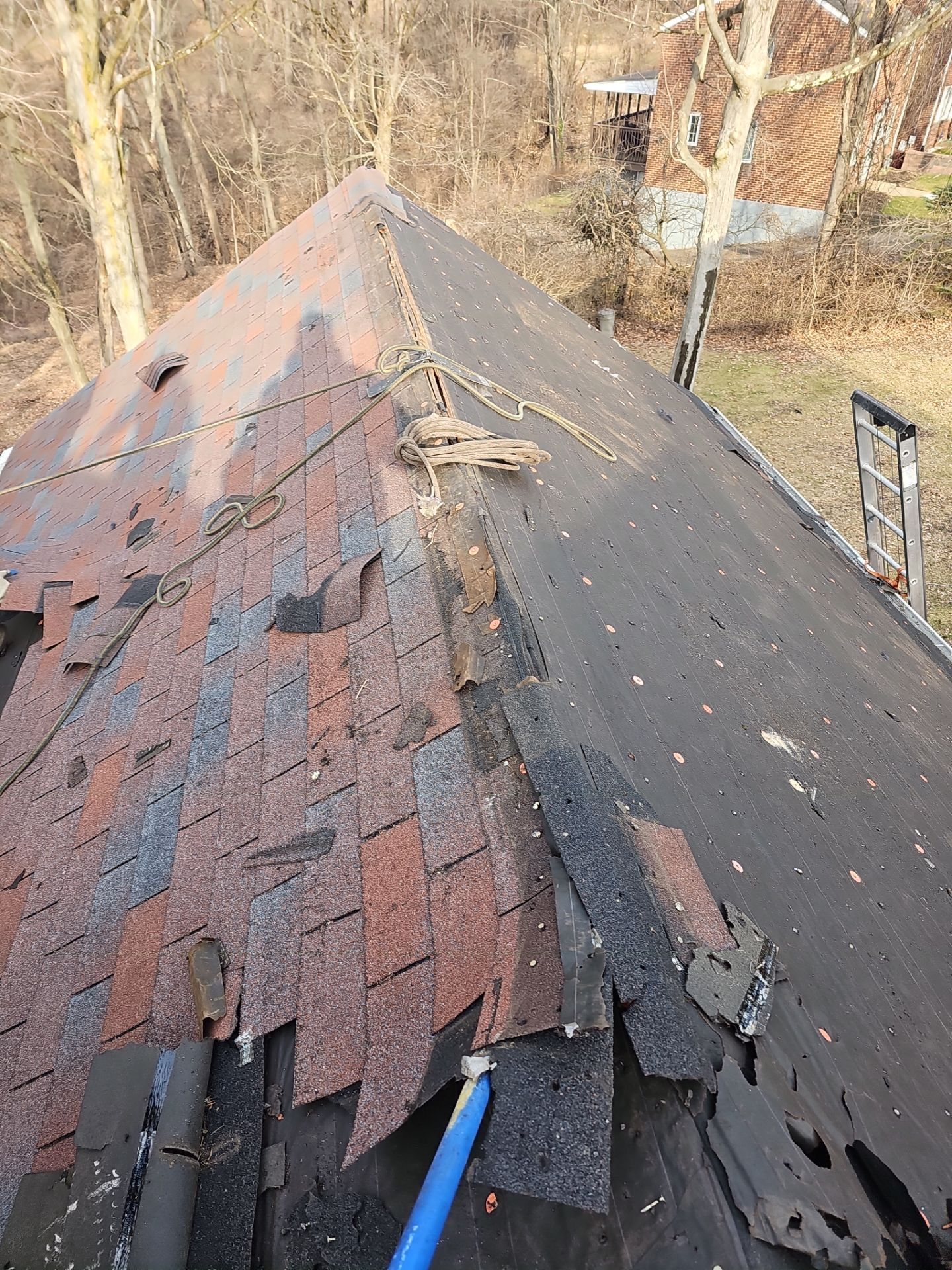
That’s why we strip every roof we replace down to the deck, like this one coming off at the ridge.
Old red shingles coming off at the ridge during a tearoff in Pittsburgh, Alan Construction.
Leaving bad decking in place
Shingles are only as good as the wood they’re nailed into. Soft or delaminated decking won’t hold a nail, so shingles loosen and lift long before they’re worn out.
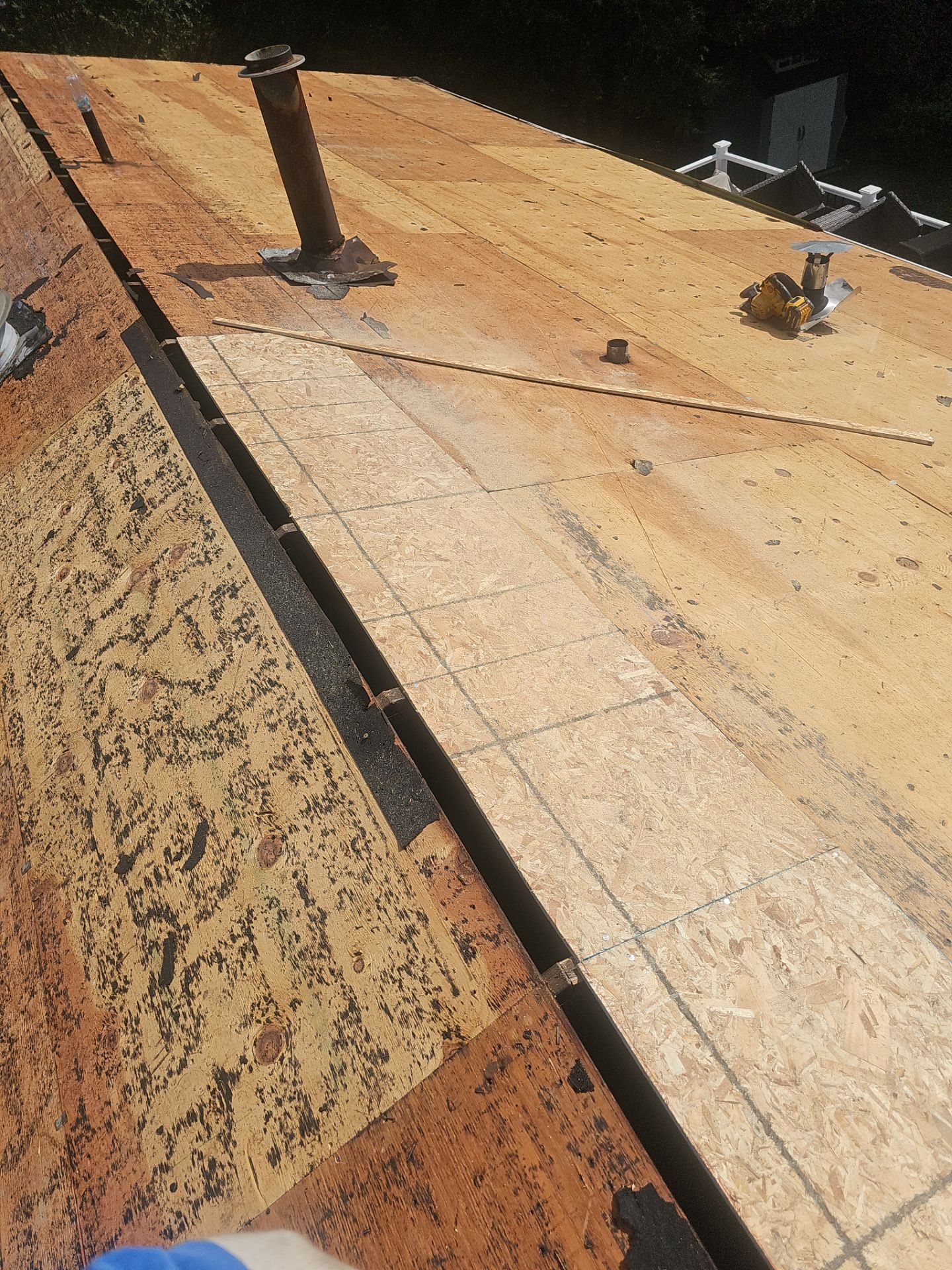
Once the old roof is off, we replace any boards that are rotted or spongy. Here, new OSB panels went in next to the original plywood around a vent pipe, the area where slow leaks usually do their damage.
New OSB panels next to old plywood decking around a vent pipe on a Pittsburgh roof, Alan Construction.
A hot, damp attic
Poor attic ventilation is the most common reason we see a young roof failing. Without enough intake air at the eaves and exhaust at the ridge, summer heat bakes the shingles from below and winter moisture condenses on the underside of the deck. The shingles go brittle and the wood starts to rot. We explain how airflow should work in why proper attic ventilation matters before cold weather arrives.
Skipping ice and water protection
Our freeze and thaw winters build ice dams at the eaves and push water uphill under the shingles. Self adhered underlayment seals around nails and stops that water at the deck.
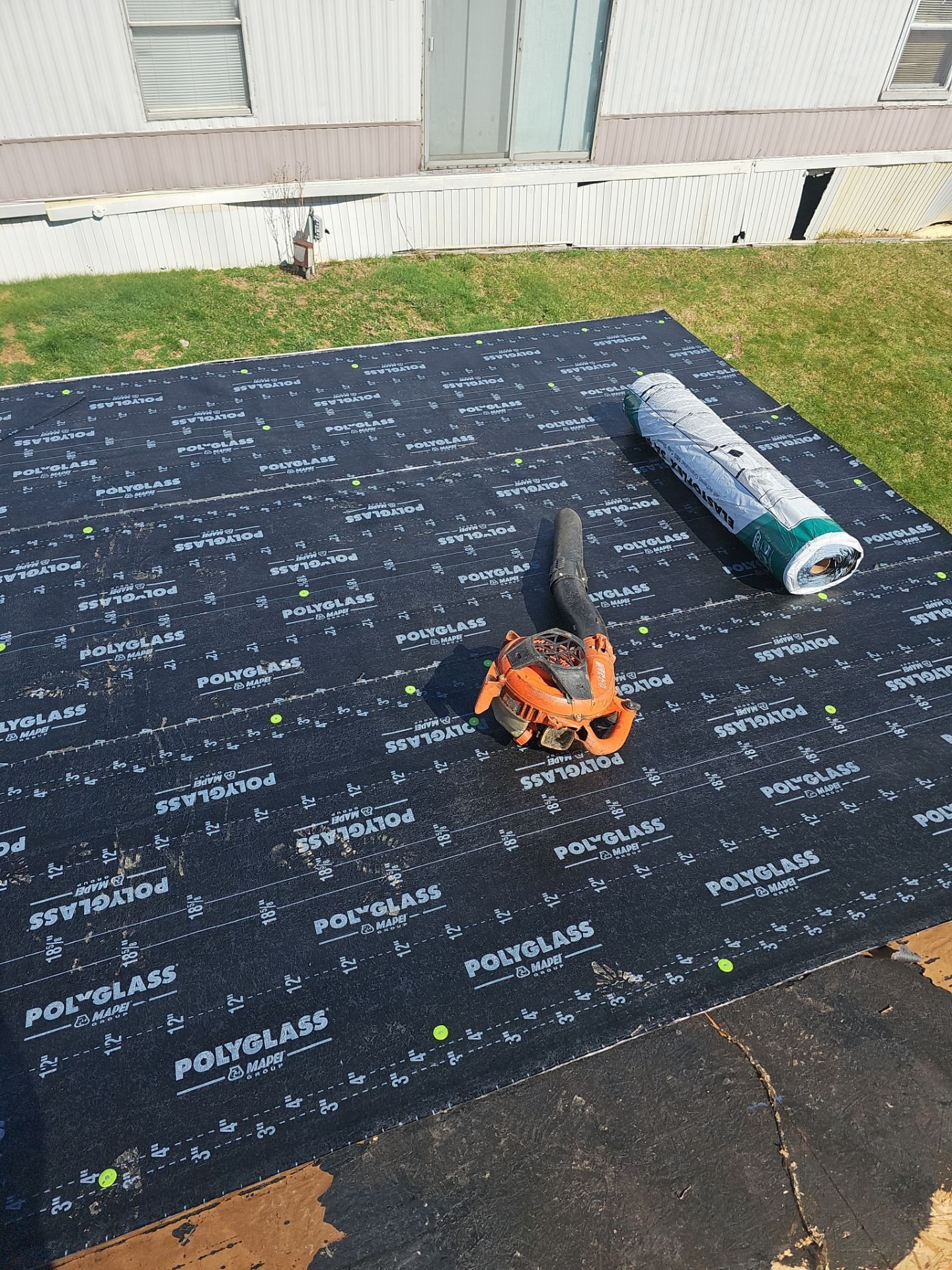
On this low slope roof in Oakdale, the crew rolled the membrane down firmly so it bonds to the deck with no gaps. Low slope areas, eaves and valleys are where it pays for itself, because that’s where water moves slowest.
Black self adhered underlayment being rolled onto a low slope roof in Oakdale, Alan Construction.
Bad nailing
Every shingle has a nailing zone. Nails placed too high, driven crooked or overdriven let shingles slide, tear or blow off in the first good wind storm.
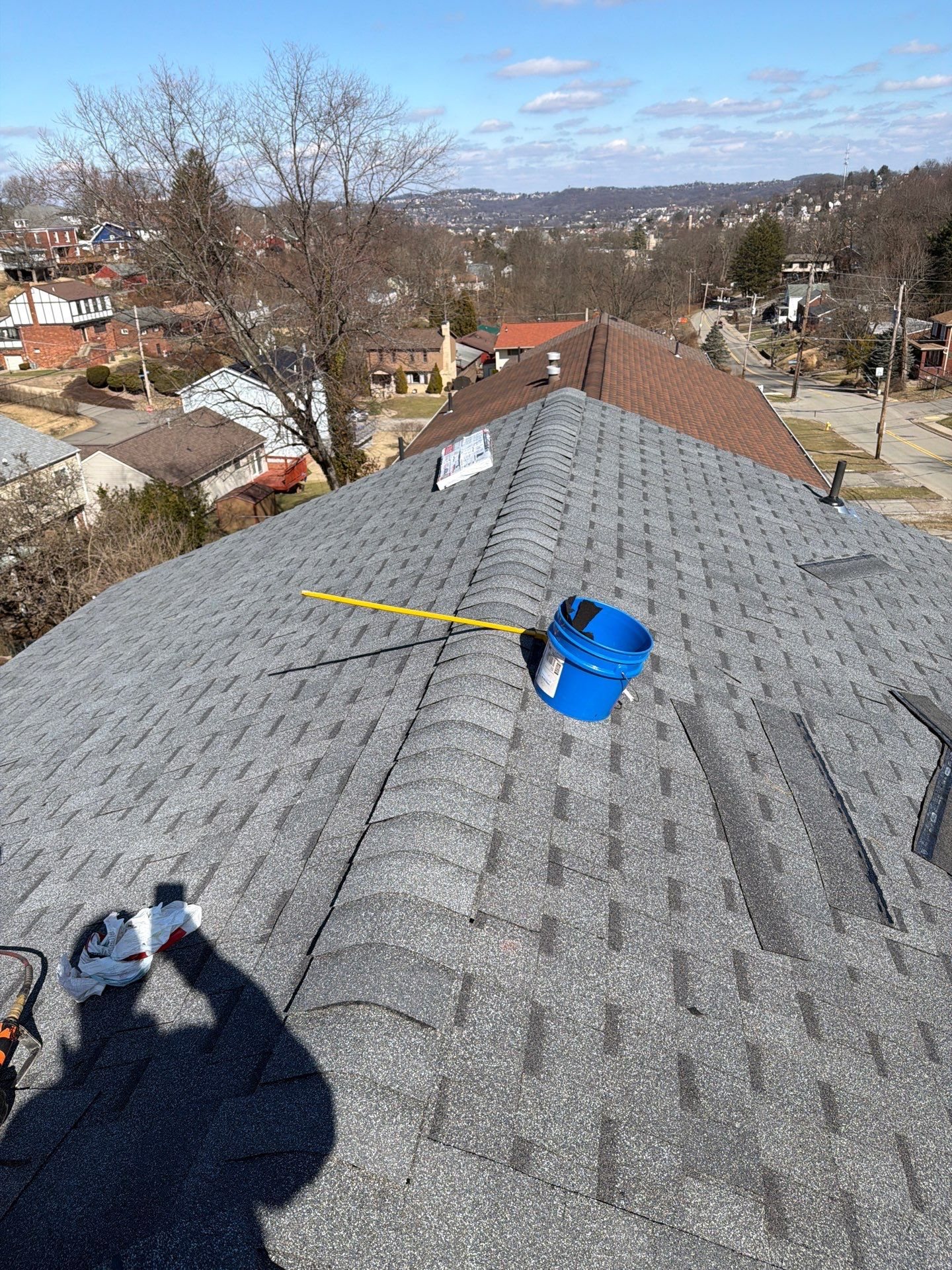
The chalk lines on this roof keep every course straight so the nails land where the manufacturer says they should. You’ll never see it from the street, but it’s a big part of why one roof makes 25 years and another doesn’t make 15.
A nearly finished gray shingle roof with a chalk line and tools on a Pittsburgh home, Alan Construction.
Reused flashing and old pipe boots
Flashing around chimneys, walls and skylights is where most leaks start. Reusing old flashing or leaving a cracked pipe boot in place puts the weakest part of the old roof on the new one. We replace them as part of the job.
Why one roof ages differently slope by slope
On many Pittsburgh houses, one roof wears out at three speeds. South and west slopes take the afternoon sun and lose granules first. North slopes on wooded hillsides stay damp and grow moss. The low slope porch or rear addition sheds water the slowest of all.
That’s why we check every slope before we say how much life a roof has left. A roof can look fine from the sidewalk while the back is close to done, and gutters that overflow keep the eaves wet all winter, right where ice dams start.
How to make your new roof last longer
Most of a roof’s lifespan is decided on install day. The rest is simple upkeep:
- Start with a full tearoff, sound decking and new flashing and pipe boots.
- Make sure the attic has balanced intake and exhaust ventilation.
- Use ice and water protection at the eaves, valleys and low slope areas.
- Clean the gutters at least twice a year, in late spring and after the leaves drop.
- Trim branches that touch or hang over the roof.
- Have the roof looked at after big wind or hail storms and every few years once it passes 10.
- Fix small problems right away, before water gets to the wood.
- Keep your install date, invoices and warranty papers together.
Our roof maintenance guide for homeowners goes through a season by season routine. If something does go wrong early, our roof repair crew can usually fix a boot, a flashing leak or a few blown off shingles before it costs you years.
Want an honest read on how many years your roof has left, or how to make a new one last? Request a free, no obligation estimate and we’ll check every slope and tell you straight.