When you’re buying an older home in the South Hills, check the roof, gutters, soffit and fascia, siding and windows before you plan any cosmetic work. Those five pieces keep water out of the house, and on an older home they’re where the expensive surprises hide. A fresh coat of paint means little if the shingles have two winters left.
The story usually starts the same way. Someone falls hard for a 1920s brick colonial in Mt. Lebanon or a solid Dormont four square with great bones. Then the inspection report lands, and the dream shows up with a to do list. Before you hire anyone, walk the outside of the property with clear eyes, starting at the top. If the roof is the big question, a contractor who handles residential roofing in Pittsburgh can tell you quickly how much life is left in it.
Short answer: check the roof first, then gutters and the roof edge, then siding and windows. Fix what keeps water out before anything that just looks nice.
Start at the top: the roof on an older home
If we could check only one thing on an older South Hills house, it would be the roof. Everything below it depends on it, and it’s usually the single biggest exterior project a new owner faces.
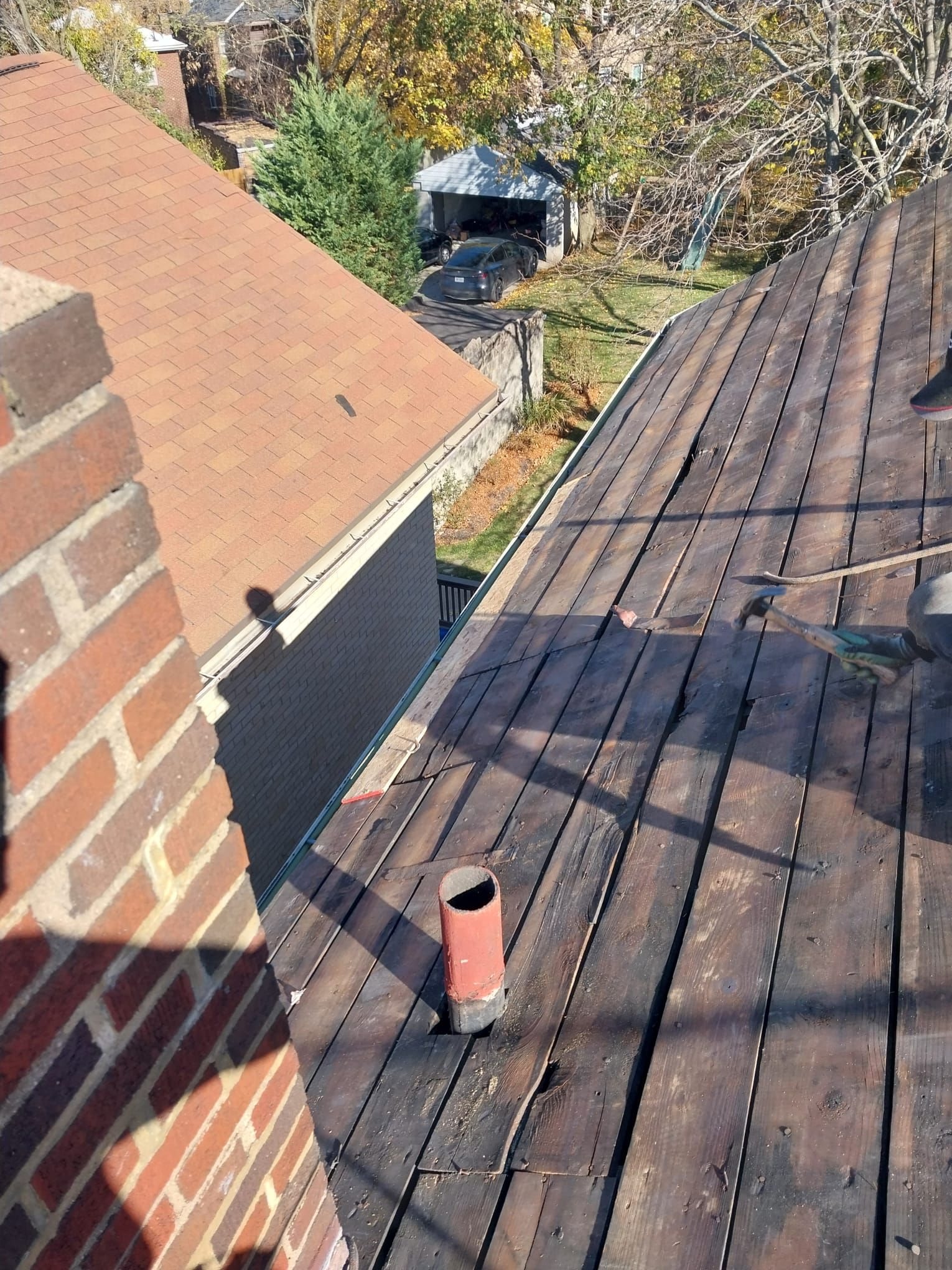
On older homes, what’s under the shingles matters as much as the shingles. Many houses from this era have board decking instead of plywood, and boards that have taken on water over the years can be soft, split or rotted.
You won’t see that from the driveway. What you can see: curled or cracked shingles, bare spots, granules in the gutters, sagging between rafters and stains on the attic side of the roof boards. Ask the seller how old the roof is and whether there’s paperwork.
Old board decking exposed after tear off beside a brick chimney on a Pittsburgh home, Alan Construction.
Questions to ask about the roof
- How old is it, and was it a full tear off or a layover on top of old shingles?
- Has it ever leaked, and where?
- Is the chimney flashing original or has it been redone?
- Are there signs of wet or soft decking in the attic?
Layers matter. An older roof that was covered over once already hides its real condition, and a replacement means tearing off every layer down to the deck. That’s when bad boards show up.
One of our customers with a house over 100 years old needed roof boards replaced once the old shingles came off. That’s normal on homes this age, and it’s why we check the attic and the deck before giving a firm scope. For a sense of how many winters a roof really has, see how long a new roof lasts.
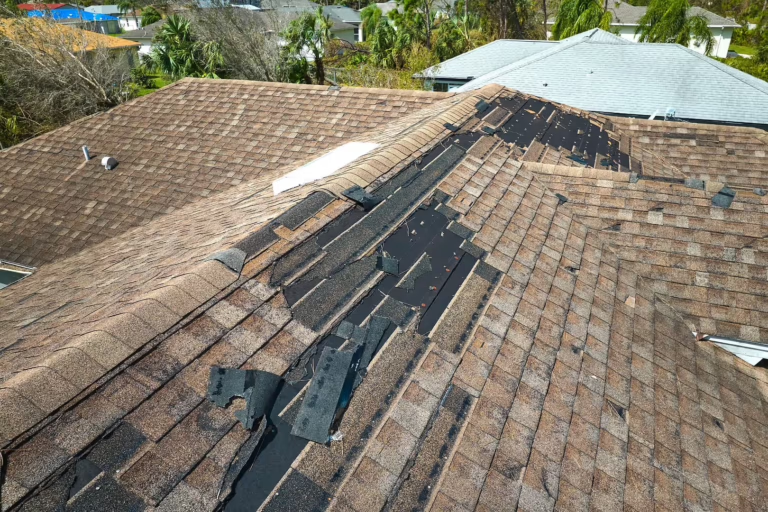
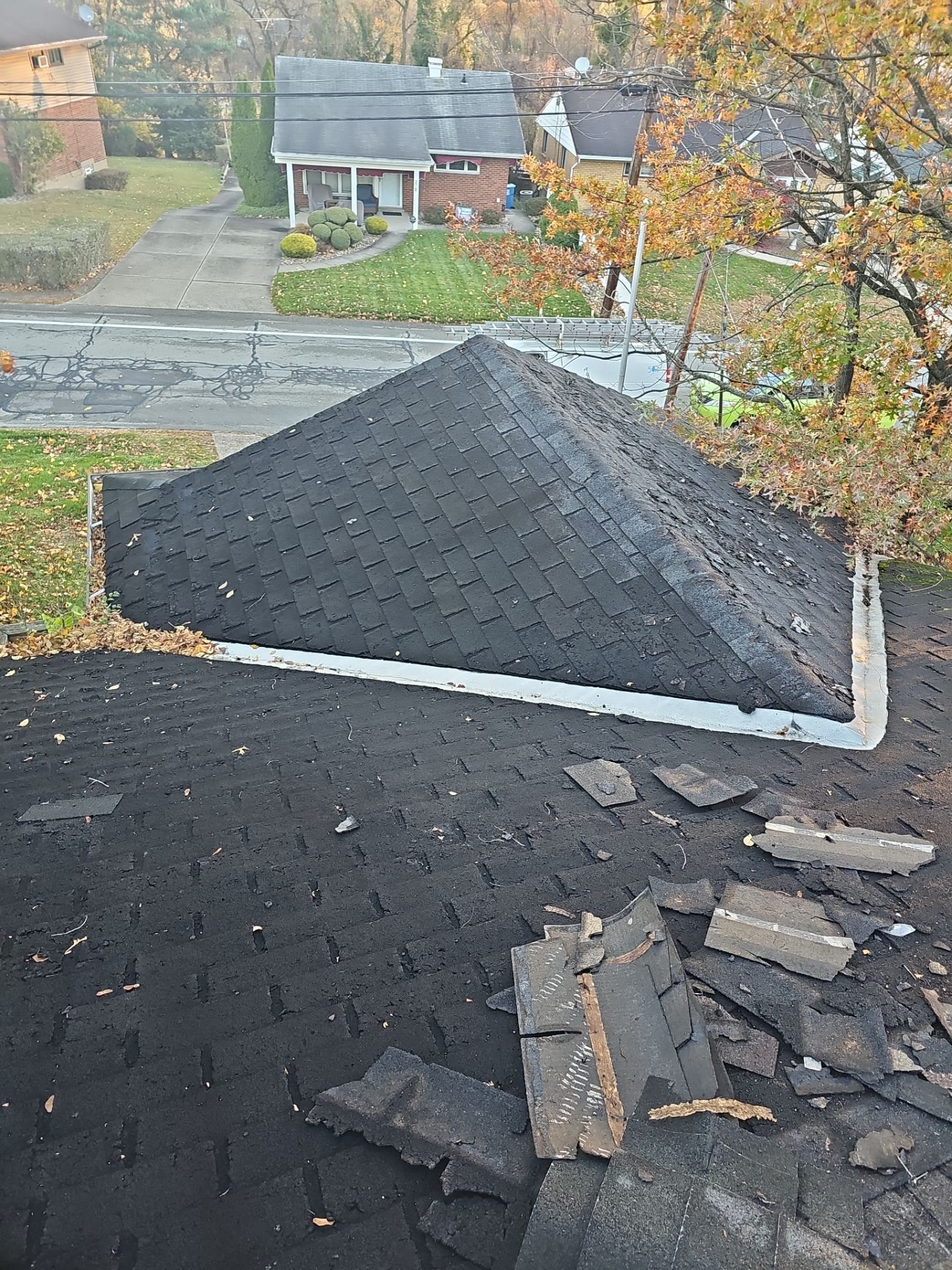
Torn up old shingles and debris on a Pittsburgh hip roof during a tear off, Alan Construction.
Gutters, downspouts and where the water goes
On sloped South Hills lots, gravity is not your friend. Water finds the low point, and too often that low point is a basement wall. The roof and gutters decide where that water lands.
Old, sagging gutters are a slow motion problem. When they overflow or pull away, water sheets down the siding, rots trim and porch posts, and pools at the foundation. Look for:
- Gutters that sag, lean or pull away from the fascia
- Rust, split seams or leaking joints
- Downspouts that dump right next to the house instead of carrying water away
- Staining or peeling paint below the gutter line
- Soil that slopes toward the house rather than away from it
Seamless gutters and downspouts that discharge well away from the house fix most of this. The ground matters too: the soil next to the foundation should fall away from the walls, not toward them. Fix drainage before anything cosmetic. Everything else is decoration if the water keeps winning.
Soffit and fascia: where old roof edges rot
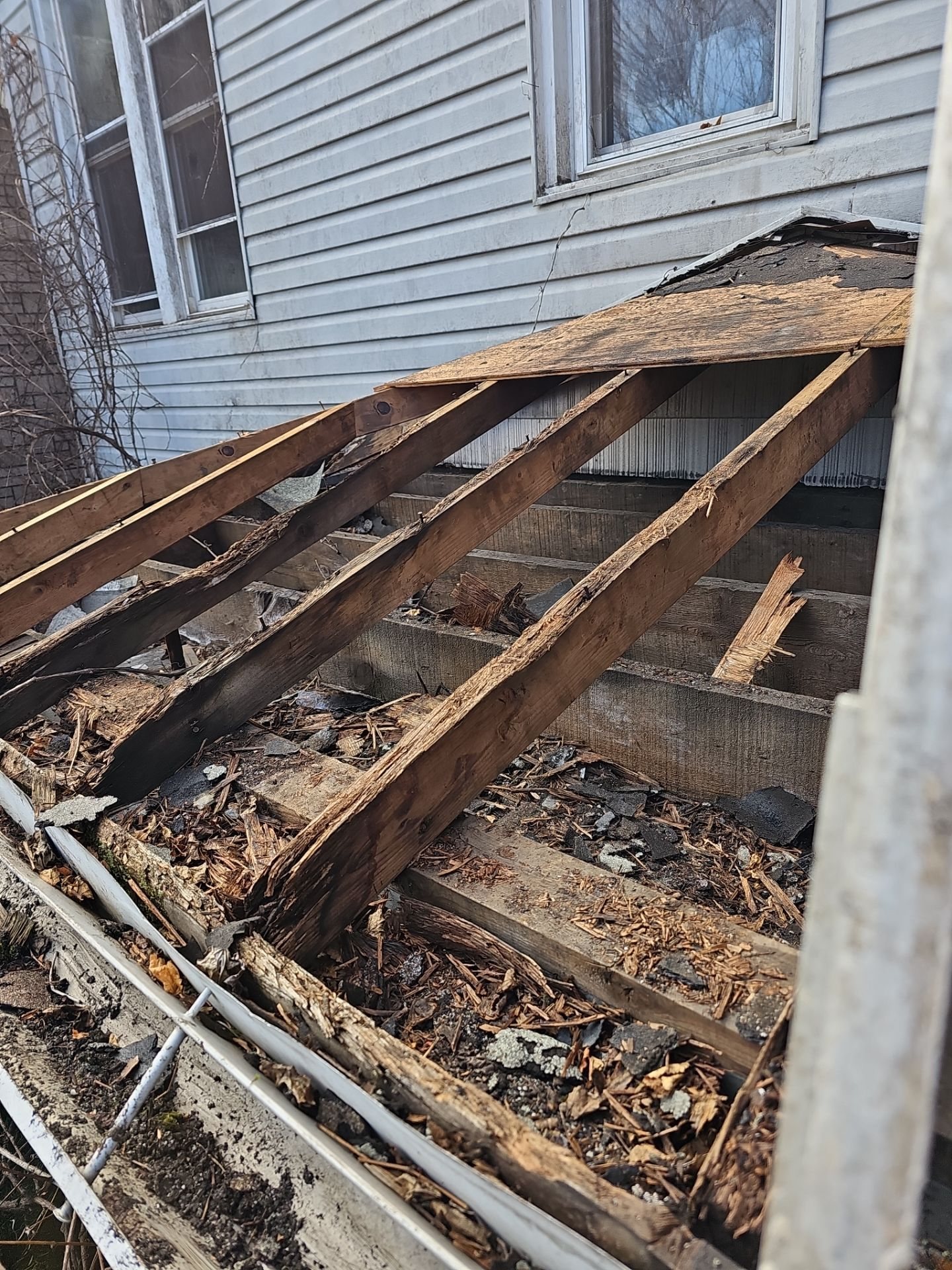
The fascia board behind the gutter and the soffit under the eave take the overflow when gutters fail. On older homes they’re often original wood, painted many times, and soft underneath.
Push on the fascia with a screwdriver. If it sinks in, the wood is rotted. Look for gaps where birds, squirrels or bees get in, and for peeling paint along the roofline. Porch roofs are a common trouble spot, since they’re low, often flat and catch runoff from the main roof. Our guide on what soffit is and why your house needs it covers the basics.
Exposed rafters and rotted boards on a porch roof against siding in Turtle Creek, Alan Construction.
What’s hiding in old siding and paint
Homes built before 1978 often hide materials that are easy to ignore and expensive to disturb. Lead paint is the big one. Scraping or sanding old exterior paint on siding, trim and window frames releases toxic dust, which is why federal rules require lead safe work practices. You can read the specifics in the EPA Renovation, Repair and Painting Program.
Asbestos is the other one. Some older siding shingles and roofing felts were made with it. Never guess. A test costs far less than improper removal, and the EPA’s asbestos guidance explains why you leave suspect material alone until you know.
Beyond hazards, look at the siding itself: warped or cracked panels, soft spots, loose pieces after a windstorm, and moisture stains behind downspouts. If it’s time for new siding, our vinyl siding installation page shows how we handle it.
Windows on an older home
Original windows can be charming and drafty in equal measure. Check for rotted sills, failed glazing, painted shut sashes, fogging between panes on newer units and gaps where daylight shows around the frame.
Old window trim is also where lead paint shows up most, so the same caution applies. If you’re weighing whether to fix or replace, read how to tell if drafty windows need repair or replacement.
Every South Hills municipality plays by its own rules
Something that catches newcomers off guard: the South Hills isn’t one place with one rulebook. Mt. Lebanon, Dormont, Upper St. Clair and the City of Pittsburgh are separate municipalities, each with its own permit and zoning office. Call the local office before you finalize an exterior plan.
If the home sits in or near a designated historic district, you may need approval before you change window styles, roof materials or siding. It can feel like red tape. But those guidelines also protect the character that made you fall for the house.
Buying an older home: the exterior checklist
When you’re buying an older home in the South Hills, the outside tells you most of what’s ahead. Water first. Hazards second. Paperwork third. Here’s the order we suggest:
| What to check | Why it matters | Do it before |
|---|---|---|
| Roof and decking | Keeps water out of everything below | Any interior or cosmetic work |
| Gutters and downspouts | Prevents rot and wet basements | Painting or new siding |
| Soffit and fascia | Protects the roof edge from rot and pests | New gutters |
| Lead and asbestos testing | Protects your health | Scraping or demolition |
| Siding and windows | Stops drafts and hidden water damage | Interior finishing |
| Local permits and historic rules | Avoids stop work orders | Ordering materials |
None of this is meant to scare you off. Older South Hills homes are often built better than a lot of what goes up today. You just have to respect them for what they are.
Why homeowners call Alan Construction
We’ve been working on Pittsburgh homes since 2003, and we handle the whole exterior: roofing, gutters, soffit and fascia, siding and windows. That means one crew can look at how the pieces work together instead of fixing one and ignoring the next.
As Chelsea C. wrote in her Google review: “Very pleased with our siding, soffits, fascia, and gutters by Alan, Jim, and their crew!”
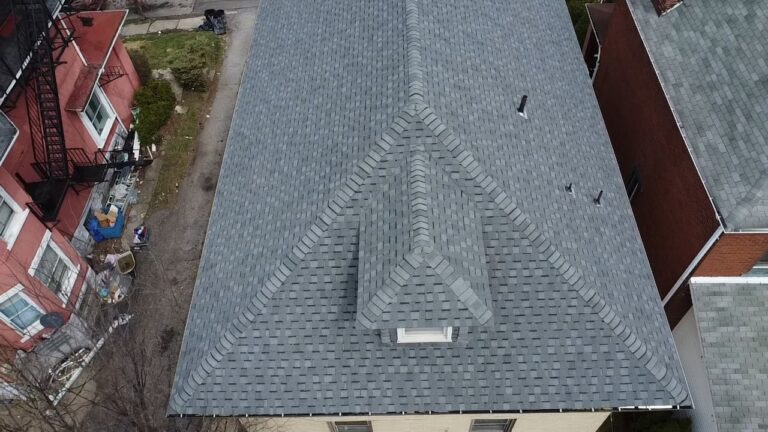
Drone view of a completed gray shingle roof on a Pittsburgh home, Alan Construction.
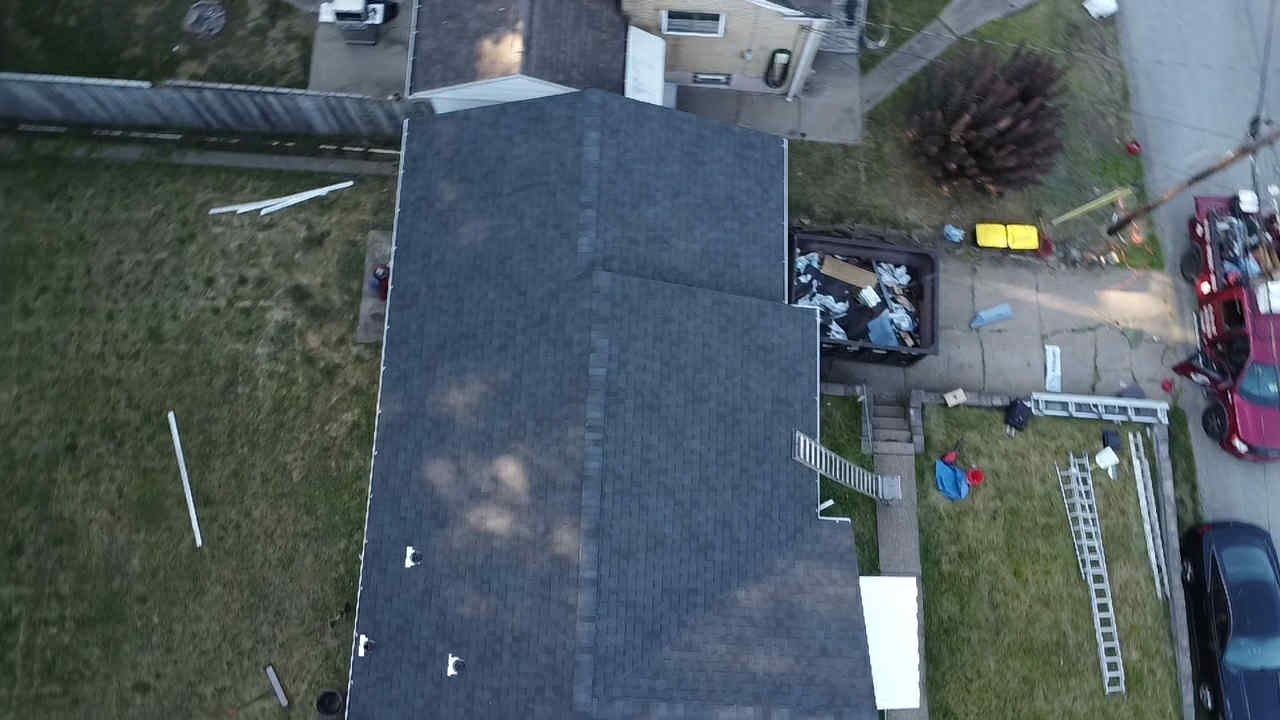
When you’re ready to move from checklist to real work, we’ll walk the property with you, flag what genuinely needs attention now, and tell you what can wait.
Buying or just bought an older home in the South Hills? Request a free estimate and we’ll walk the roof, gutters, siding and windows with you and give you a straight answer on what needs work first.