How long does siding last? On a Pittsburgh house, most siding lasts 20 to 40 years, and the tougher materials can go 50 years or more when they’re installed right and looked after. Where your home lands in that range depends on three things: what the siding is made of, how well it was put on, and how much freeze, thaw, shade and rain your walls take every year.
We’ve been working on Pittsburgh homes since 2003, and most of the siding we put up today is vinyl. Below is what each common material really gives you in our climate, what wears it out early, and the signs that it’s time to call about siding installation in Pittsburgh instead of another round of patching.
Short answer: Vinyl usually lasts 20 to 40 years, fiber cement 30 to 50 or more, wood 20 to 40 with steady painting, aluminum 25 to 40, and brick or stone veneer 100 years or more. Installation and upkeep decide where your house falls in that range.
How Long Does Siding Last? Lifespan by Material
The ranges below are the ones most installers quote for real homes, not lab conditions.
| Material | Typical lifespan | Upkeep it needs | Weak spot in Pittsburgh weather |
|---|---|---|---|
| Vinyl | 20 to 40 years | Wash once a year | Panels nailed too tight buckle; hard knocks in deep cold can crack them |
| Fiber cement | 30 to 50+ years | Repaint every 10 to 15 years, check caulk | Unsealed cut edges and joints take on water |
| Wood (clapboard, cedar) | 20 to 40 years | Paint or stain every 3 to 5 years | Rot where paint fails, low courses, around trim |
| Engineered wood | 20 to 30 years | Keep the coating and paint intact | Swells if water gets past the coating |
| Aluminum | 25 to 40 years | Wash, repaint when chalky | Dents from hail and ladders, faded finish |
| Stucco | 50+ years | Seal cracks early | Freeze and thaw opens cracks, water behind it |
| Brick or stone veneer | 100+ years | Check mortar and flashing | Hidden flashing and drainage details |
Those are realistic numbers, not best case ones. The InterNACHI estimated life expectancy chart, which assumes regular recommended maintenance, lists vinyl at 60 years and fiber cement at 100 years or more. A careful install and steady care can push you toward those figures, but for planning we’d use the ranges in the table.
Why Pittsburgh Weather Is Hard on Siding
Our winters swing above and below freezing over and over. Water gets into a crack or an open joint, freezes overnight, expands, and opens the gap a little more. Repeat that for a few winters and a hairline split becomes a loose panel or a soft board.
Add humid summers, long wet springs and the hills. Plenty of houses here sit tight against a slope or a neighbor, so one wall stays shaded and never fully dries. That’s the wall where green mildew shows up on vinyl and paint peels on wood first. South and west walls get the opposite treatment: the most sun and wind driven rain, so finishes fade and fail sooner on those sides.
Wind is the other big one. Spring and fall storms find any panel that wasn’t locked in properly. Our post on how fall storms damage siding on Pittsburgh homes covers what to check after a blow.
Vinyl Siding: The Most Common Choice Here
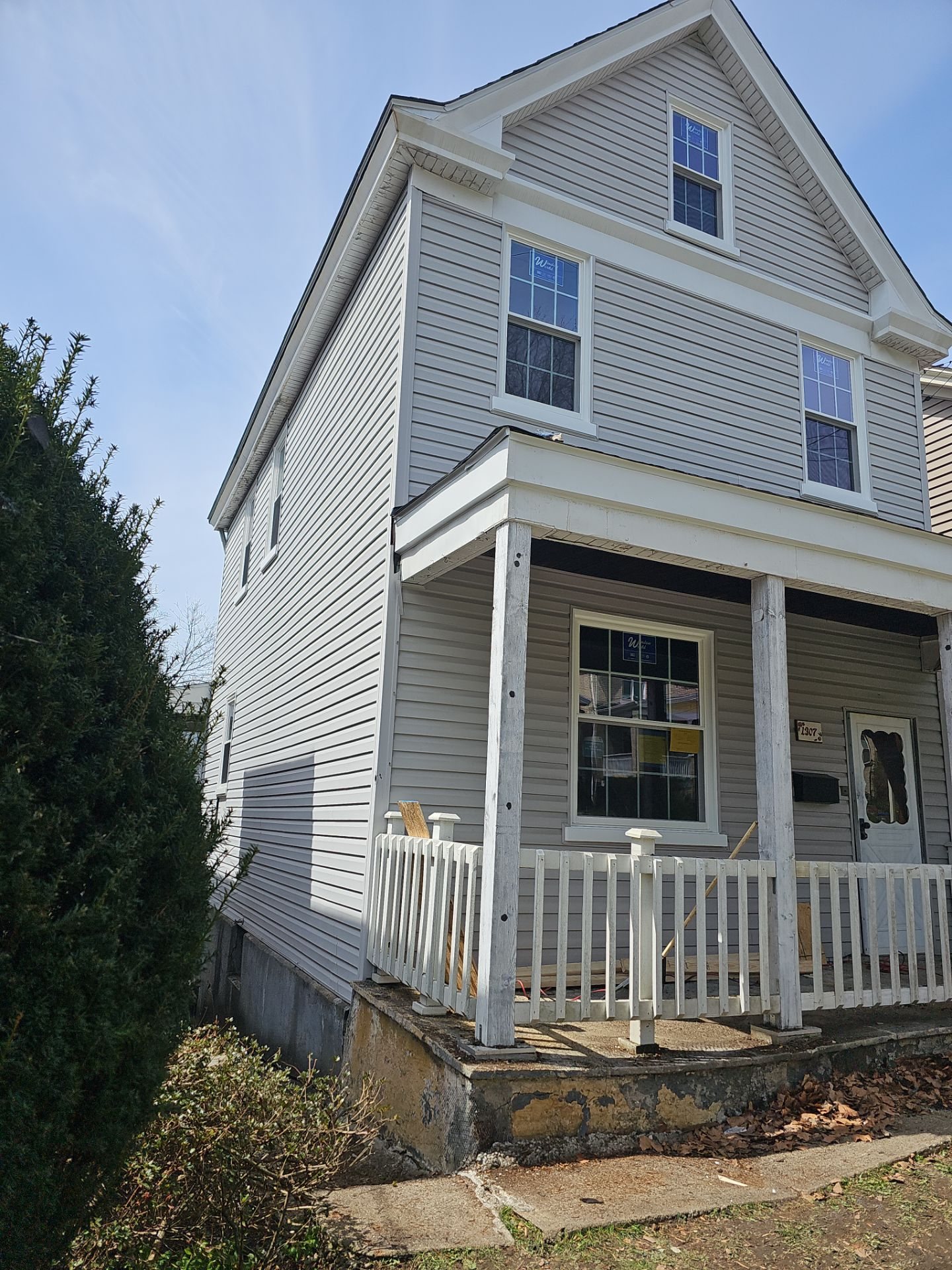
Vinyl is what we install most, on everything from narrow city houses like this one to larger suburban homes. A good vinyl job in Pittsburgh should give you 20 to 40 years.
The panels themselves rarely just wear out. What ends vinyl early is usually the install: nails driven so tight the panels can’t move with temperature swings, missing house wrap, or poor flashing at windows and doors. Thicker panels also handle cold weather knocks better than the thinnest builder grade product.
Gray vinyl siding on an older two story Pittsburgh home with a front porch, Alan Construction.
Vinyl never needs paint. The Polymeric Exterior Products Association, formerly the Vinyl Siding Institute, notes that a wash with mild soap and water is all it takes to keep it looking good. You can see a recent job on our siding replacement project page.
Fiber Cement and Engineered Wood
Fiber cement, with James Hardie the brand most people know, is made from cement, sand and wood fiber. It doesn’t rot, insects leave it alone, and it won’t burn. With repainting every 10 to 15 years and sound caulk, 30 to 50 years or more is realistic.
The tradeoffs are weight, more labor to install, and cut edges that must be sealed or they’ll soak up water. We compare it with vinyl in why more Pittsburgh homeowners are choosing fiber cement siding.
Engineered wood is wood strands bonded with resin under a factory coating. It looks like wood, it’s lighter than fiber cement, and it takes impacts well. Plan on 20 to 30 years and keep the paint intact, because once water gets past the coating at a cut edge or a bottom course, the board swells.
Wood Siding: Beautiful, but It’s All About Paint
Wood clapboard and cedar shakes look great on older houses, and plenty of original wood siding in Pittsburgh is still out there, sometimes hiding under a later layer of aluminum or vinyl. Wood lasts 20 to 40 years or more only if the paint or stain is kept up, usually every three to five years.
Skip a couple of paint cycles and the bottom boards, window sills and corner trim start to rot. Wood’s big advantage is that it repairs in pieces: a rotted board can be cut out and matched. Its disadvantage here is that moisture never stops trying. If you’re considering wood siding in Pittsburgh, be honest with yourself about the maintenance schedule.
Aluminum, Stucco, Brick and Stone
Aluminum siding went up on a lot of Pittsburgh homes decades ago, and many still have it. It doesn’t rot or burn and can last 25 to 40 years. Its problems are dents from hail and ladders and a finish that turns chalky. Once aluminum is dented and faded, replacing it with vinyl is a common move.
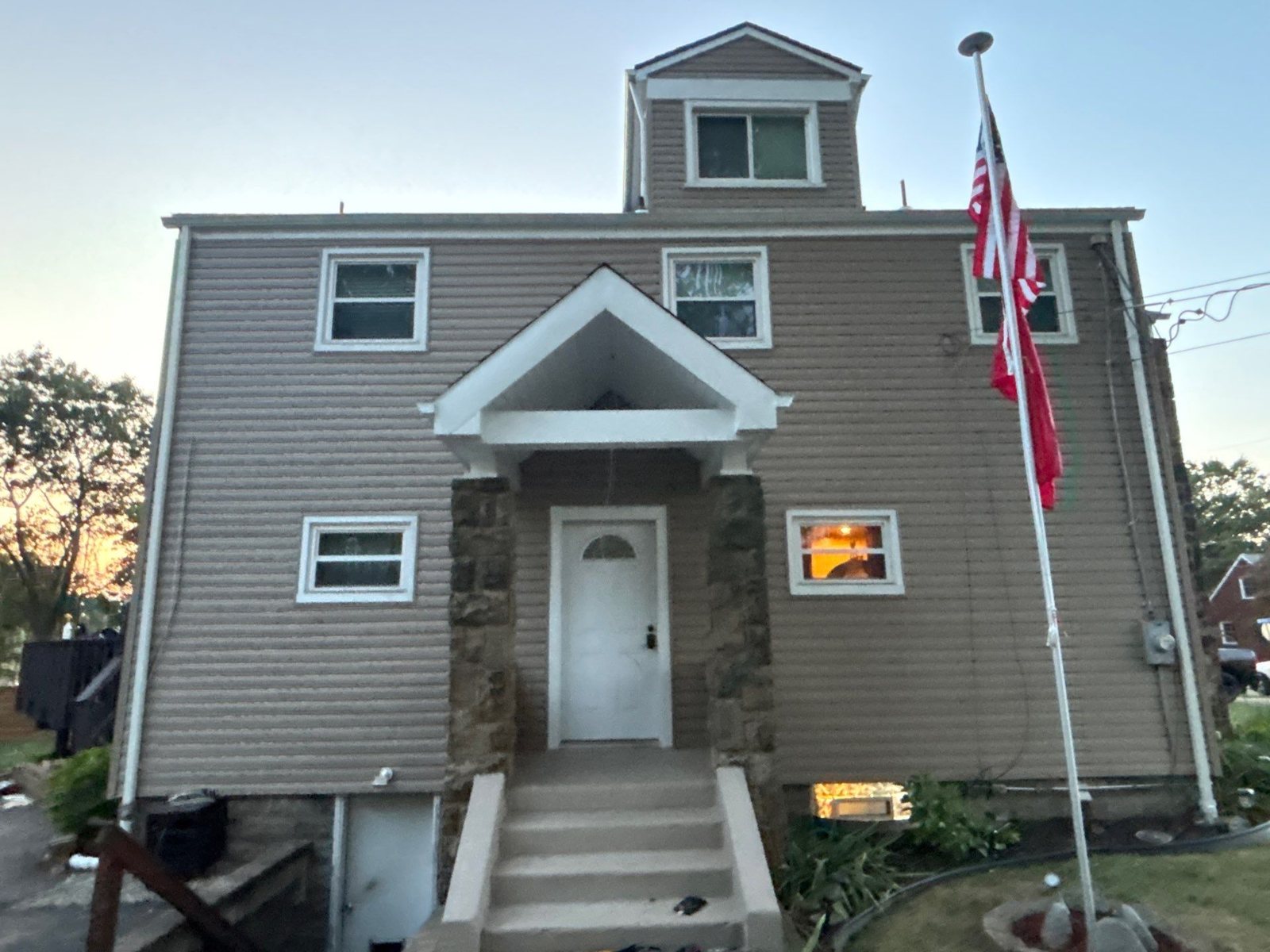
Brick and stone veneer last the longest, 100 years or more, which is why so many homes mix them in. On this Carnegie home, stone porch columns pair with new tan vinyl on the walls.
Tan vinyl siding with stone porch columns on a home in Carnegie, Alan Construction.
Stucco can go 50 years or more, but it lives or dies by the flashing and drainage behind it. Cracks that let water in, then freeze and spread, are the usual failure.
What Shortens Siding Life, and What Stretches It
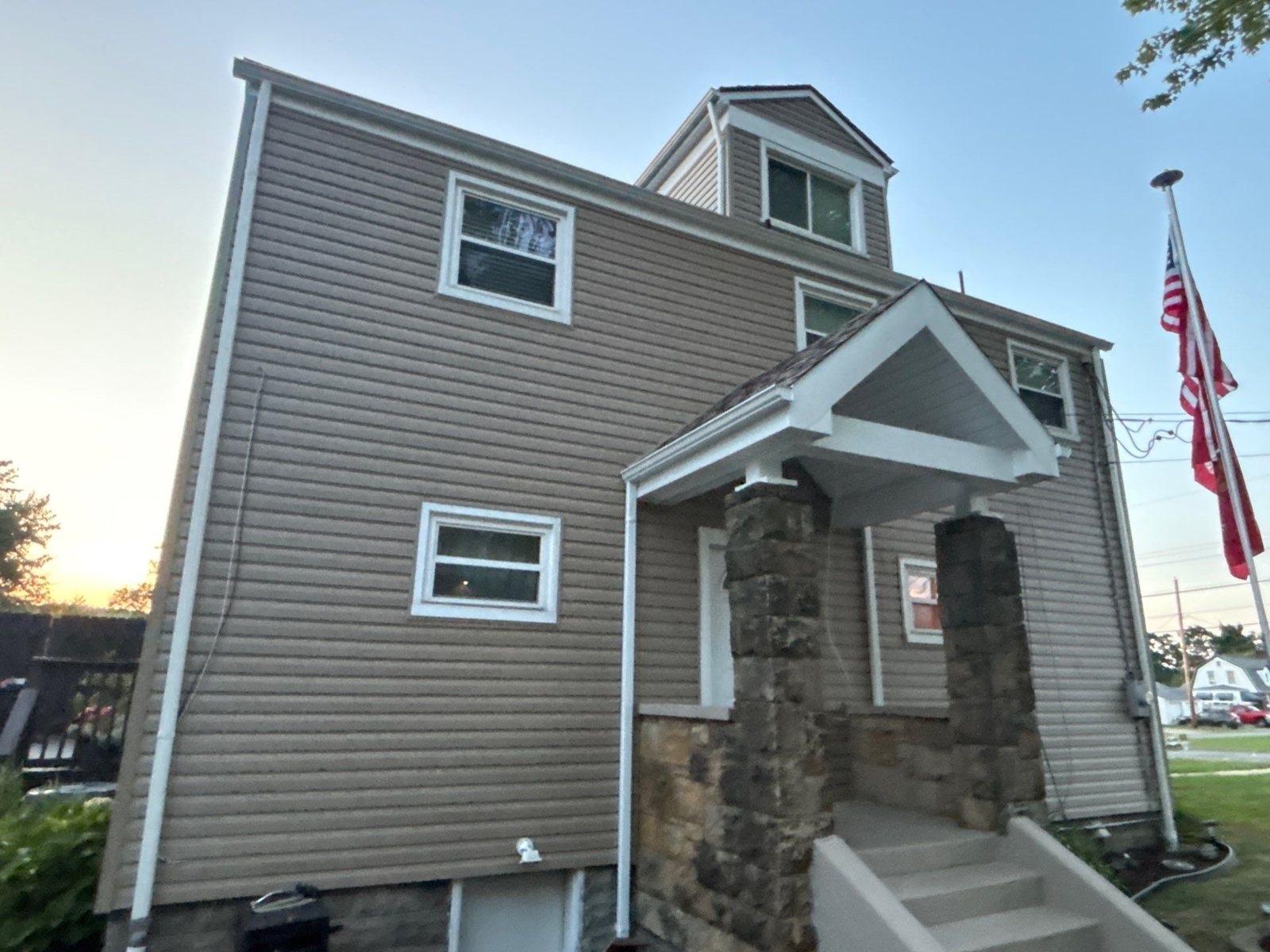
Installation counts as much as the material. On a job like this one, the details that decide the siding lifespan are the ones you can’t see once it’s done: house wrap lapped the right way, flashing at every window and door, corners and trim that shed water, and panels hung loose enough to expand and contract.
Skip those and even premium siding fails early, usually with hidden water damage behind it. That’s why we look at gutters, soffit and fascia during a siding estimate too. Water spilling over a clogged gutter runs straight down the wall.
Two story home in Carnegie with new tan vinyl siding and white trim, Alan Construction.
Common things that cut siding life short
- Overflowing gutters or short downspouts that dump water against the wall
- Mulch, soil or sprinklers soaking the bottom course
- Shrubs and branches rubbing the wall and holding moisture
- Grills parked too close to vinyl, which warps from the heat
- Pressure washing up under the laps, which drives water behind the panels
- Cracked caulk around windows, doors and trim
How to Make Your Siding Last Longer
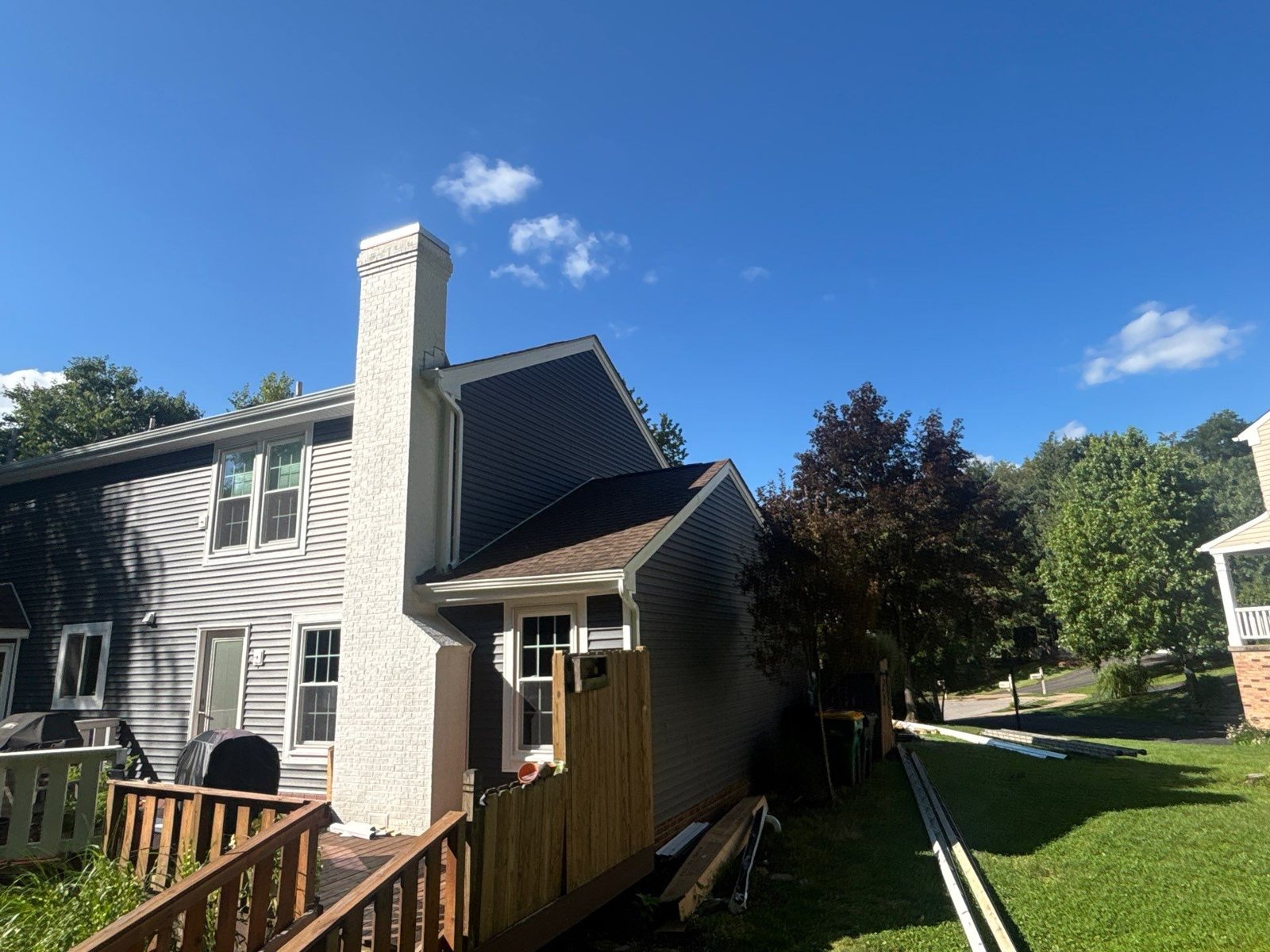
The back of a house usually gets the least attention and often the most shade. Walls like these, behind a deck, are where we look first for mildew and loose panels.
Once a year, walk all four sides. Wash vinyl with a soft brush, a garden hose and mild soap, scrubbing from the bottom up and rinsing from the top down. Look for cracks, gaps at the trim and caulk that has pulled away.
Gray vinyl siding on the back of a Pittsburgh home with a deck and chimney, Alan Construction.
- Keep gutters clear and downspouts extended away from the house
- Recaulk around windows and trim as soon as it cracks
- Repaint wood every few years and fiber cement every 10 to 15
- Fix a loose or missing piece right away, before water gets behind it
That last one matters. Sean W. described it in a Google review: “Piece of siding flew off in a windstorm friday night, I called saturday afternoon and they came out sunday morning to replace it for my family.” A single panel is a quick fix. A wall that sat open to the rain all winter is not.
How Do You Know It’s Time to Replace Your Siding?
Age alone doesn’t decide it. A 30 year old wall that’s flat, tight and dry can keep going, while a 15 year old wall with water behind it can’t. These are the signs we look for:
- Warped, buckled or wavy panels
- Cracks, holes, or pieces that keep blowing off
- Soft spots or rot when you press on wood siding or trim
- Paint that peels again within a year or two
- Chalky residue that comes off on your hand
- Musty smells or water stains on inside walls along exterior walls
- Drafts and rising heating bills you can trace to outside walls
One or two of these in a single spot is often a repair that buys years. If they’re showing up all around the house, replacement usually makes more sense than chasing patches. Before you pick a new product, read our guide to siding materials to avoid on your home.
What drives the cost of new siding
Every house is different, so we don’t quote numbers online. The things that move the price are the wall area and number of stories, the material and panel grade, how much old siding has to come off, any rotted sheathing found underneath, the trim, soffit and fascia work, and how easy the walls are to reach on a hillside lot. Our estimates are free, and we offer financing for siding projects through a lender network.
Not sure how much life your siding has left? Schedule a free estimate and we’ll walk the house with you and tell you straight whether it needs a repair or new siding.