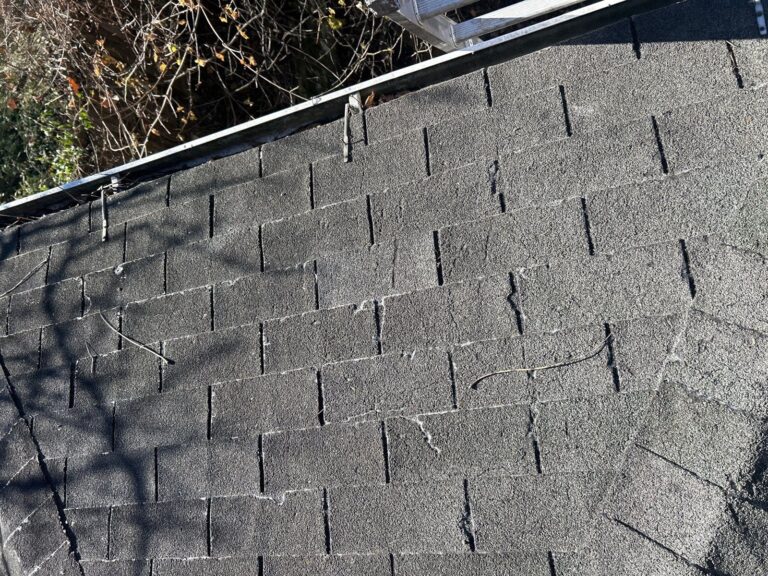
Wind damaged shingles usually show up as tabs that are lifted, creased across the top, or missing altogether. You may also see exposed nail heads, torn ridge caps and loose flashing. Adjusters look closely for these signs, especially creases and broken seal strips, and for a damage pattern that matches a specific storm date. Knowing what to look for helps you decide quickly whether to call for storm damage roof repair in Pittsburgh before a small problem turns into a leak.
Around Pittsburgh, strong winds come with spring thunderstorms, summer downbursts, fall cold fronts and winter systems. Homes on ridgetops and hillsides often take the brunt of those gusts, and many older homes here have aging shingles that give way more easily. Below we explain each type of wind damage, how adjusters evaluate it, and what to do next.
Short answer: Lifted shingles have lost their seal, creased shingles have a broken mat and count as damaged even if they lie flat, and missing shingles leave the roof open to the next rain. All three call for an inspection.
Why Wind Damages Shingles in the First Place
Asphalt shingles are designed to lie flat and lock together. Each shingle has an adhesive seal strip that bonds it to the one below once the sun warms the roof. When that bond holds, wind passes over the roof without catching an edge. When it breaks, a gust can get under the shingle and lift it like a lever.
Several things weaken that seal over time. Age, heat cycling, dirt and debris all reduce adhesion. Pittsburgh’s freeze and thaw cycles make shingles more brittle each winter. Shingles installed in cold weather sometimes never fully seal. Poor nailing, such as nails set too high or driven at an angle, also leaves shingles less able to resist uplift. That’s why two houses on the same street can come through the same storm very differently.
Lifted Shingles: The Early Warning Sign
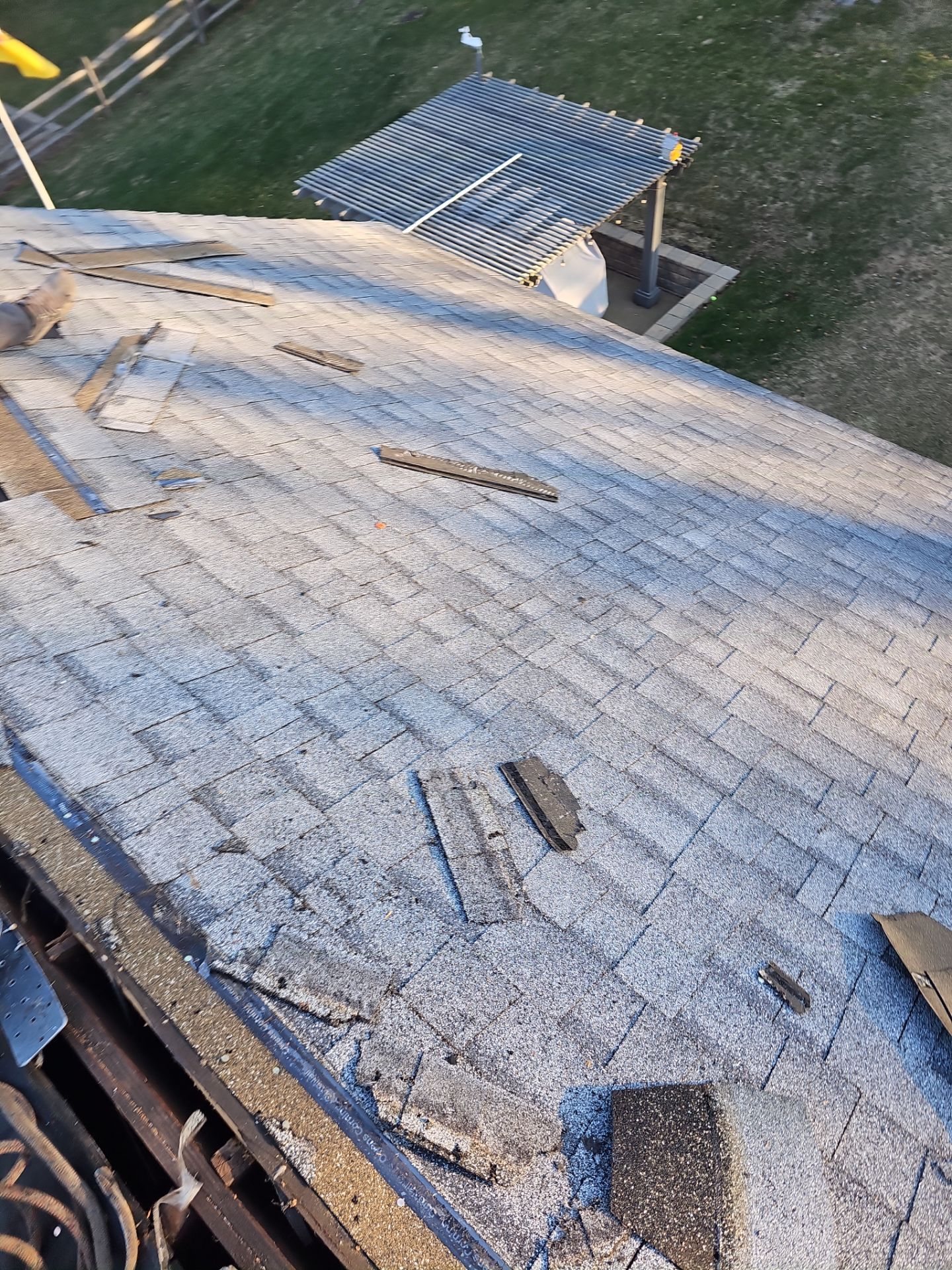
Lifted shingles are tabs that have come loose from their seal strip but haven’t torn off yet. From the ground they look like a slight ripple or an edge that sits higher than its neighbors. Sometimes they settle back down after the storm and are almost invisible unless someone checks by hand.
Why Lifted Shingles Matter
A shingle that has lost its seal keeps flapping in every storm. Each lift stresses the nails and the shingle until it creases, tears or blows off. Lifted tabs also let wind driven rain work under the roof, especially along eaves and rakes.
Weathered shingle roof with broken tabs and debris in Pittsburgh, Alan Construction.
Can Lifted Shingles Be Resealed?
Sometimes. A roofer can hand seal loose shingles if they’re still flexible and undamaged. Older or brittle shingles often crack when handled, which makes resealing impractical. An inspection will show whether a repair is realistic or the damage is more widespread.
Creased Shingles: What Adjusters Focus On
A creased shingle has been bent back by the wind hard enough to leave a fold line, usually running horizontally near the nail line or seal strip. The shingle may lie back down afterward, so creases are easy to miss from the ground. Up close, you’ll see a straight line where the granules have cracked or the mat has broken.
Why Creasing Counts as Damage
Creasing breaks the fiberglass mat inside the shingle. Once the mat is broken, the shingle can’t resist wind properly and is much more likely to tear off in the next storm. Many adjusters treat a creased shingle as functionally damaged even if it still covers the roof, which is why documenting creases carefully matters so much for a claim.
Missing Shingles and Exposed Underlayment
Missing shingles are the most obvious sign of wind damage. You may notice dark or light patches on the roof, exposed underlayment or bare decking, or shingle pieces in the yard, gutters or driveway.
Ridge Caps and Edges Go First
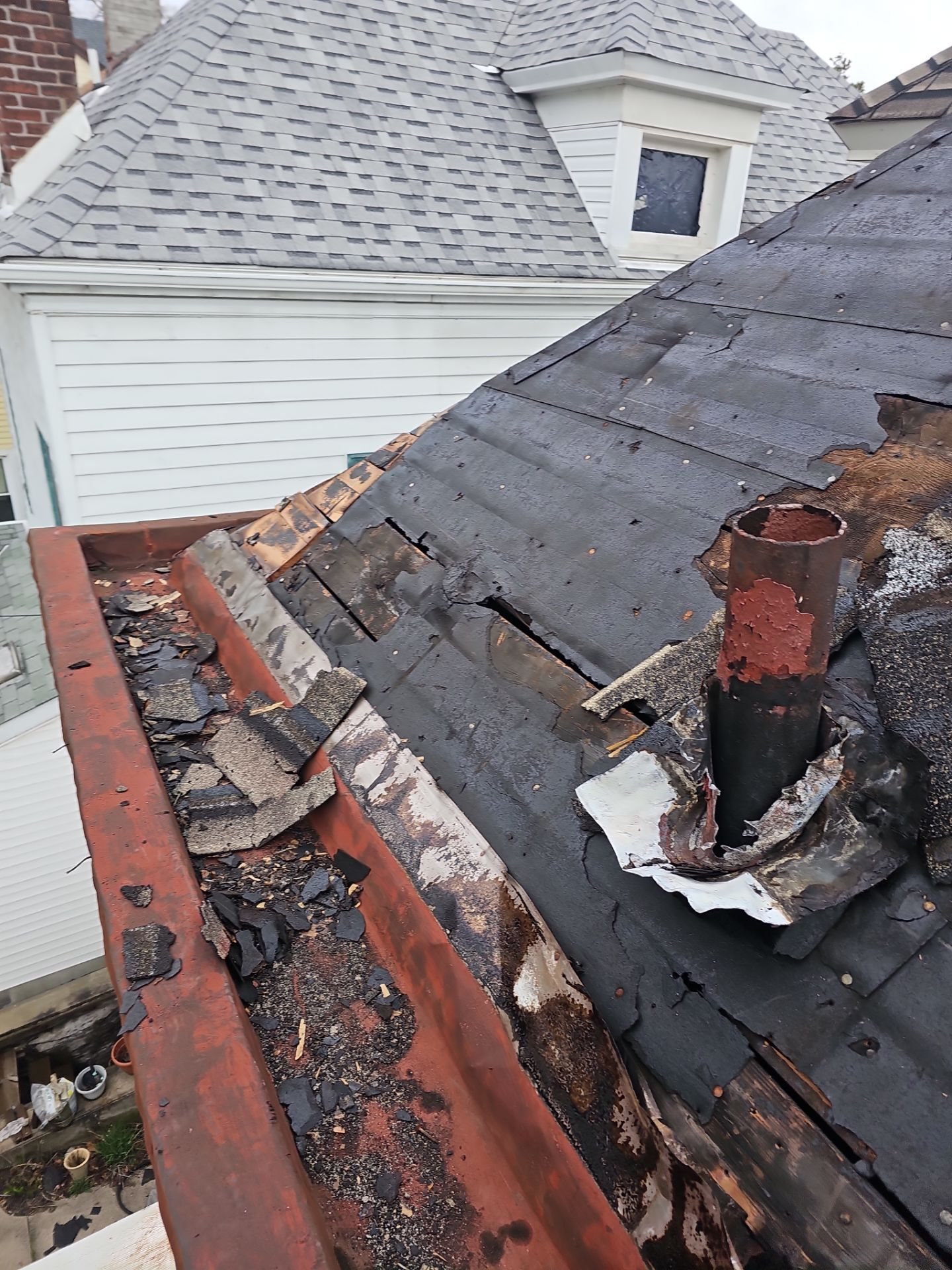
Wind damage concentrates on the ridge, hips, rakes and eaves because those areas face the strongest uplift. Torn or missing ridge caps are common after strong gusts, and missing edge shingles expose the drip edge and decking to rain.
Worn roof edge with a rusted gutter, debris and an old vent stack in Pittsburgh, Alan Construction.
Why Quick Action Matters
A roof with missing shingles is vulnerable to the next rain. Water soaks the underlayment, then the decking, and eventually reaches the attic and ceilings. In late fall and winter, moisture that gets in can freeze and expand. A prompt temporary repair or tarp protects your home while the claim is processed.
Other Signs of Wind Damage Beyond Shingles
Wind affects the entire roof system. After a storm, look for:
- Loose or bent flashing around chimneys, vents, skylights and walls
- Damaged drip edge or bent metal along the roof edges
- Torn or displaced vent caps and roof boots
- Exposed or popped nail heads where shingles have shifted
- Gutters pulled away from the fascia
- Siding, soffit or fascia damage on the same side of the house as the roof damage
- Fallen limbs that may have punctured or scraped the roof
Inside, check the attic for daylight through the decking, wet insulation or water stains. Ceiling stains on the top floor can be a delayed sign of storm damage.
What Does an Insurance Adjuster Look For?
The adjuster’s job is to decide whether the damage came from a covered storm and how much of the roof needs repair or replacement. Knowing their checklist helps you prepare.
| What they check | What it tells them |
|---|---|
| Directional pattern | Damage on the slopes and edges that faced the wind supports a storm claim; even wear everywhere suggests age |
| Creases, broken seals, missing pieces | The count and location on each slope help decide between a spot repair, a slope or the full roof |
| Storm date and weather data | Your reported date of loss is compared with records of high winds in your area |
| Wear and tear | Granule loss, curling, cracking and old repairs point to aging, which policies generally don’t cover |
| Repairability and matching | Brittle shingles or a discontinued color can make a spot repair impractical |
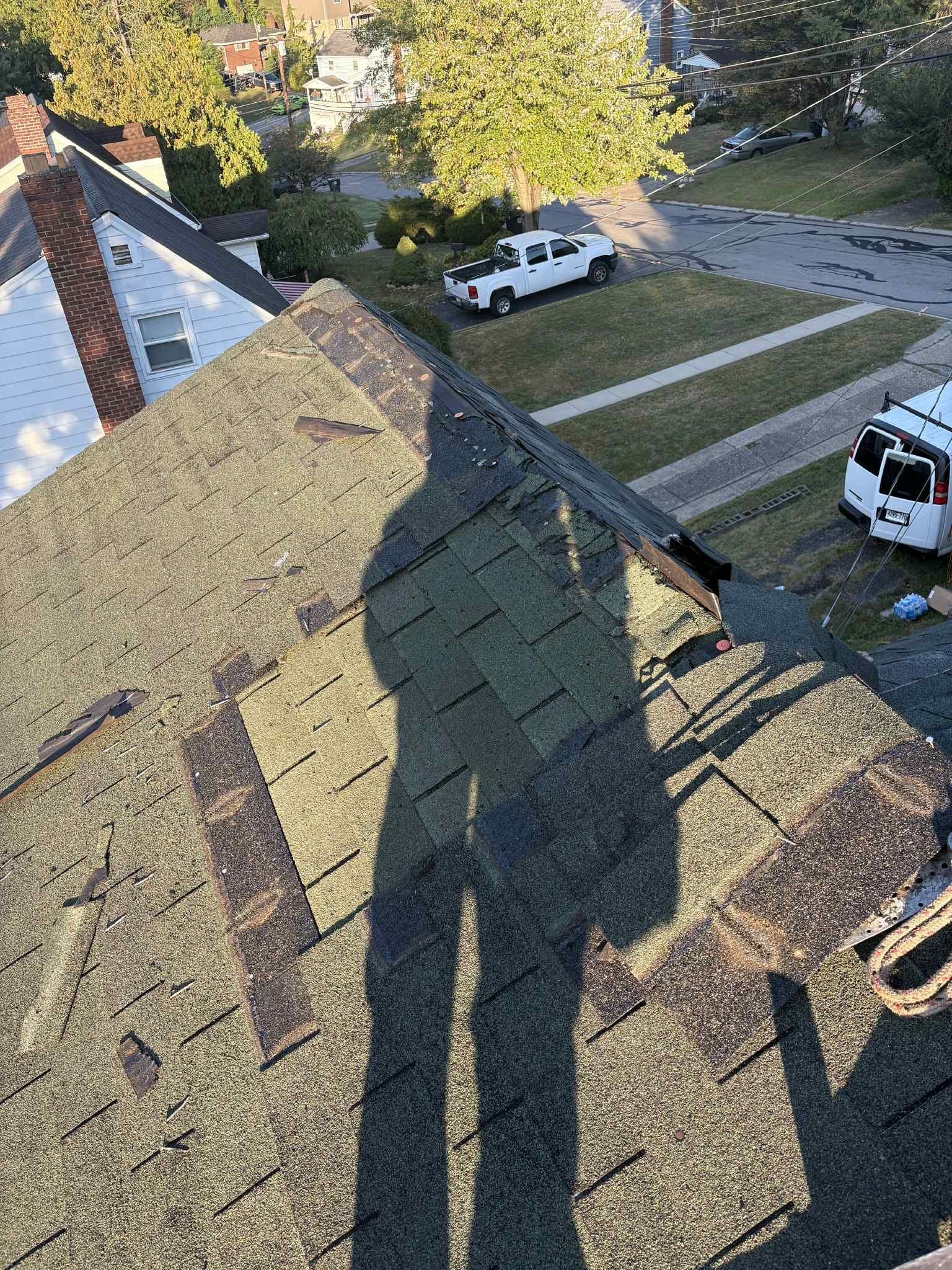
On older Pittsburgh homes, the wear versus storm question comes up on almost every claim. A roof like this one has years of weathering, and new wind damage on top of it has to be shown clearly. It helps to have a contractor who can point out which damage came from the storm.
Matching coverage depends on your policy, so ask your adjuster how yours handles it. Our post on how adjusters decide between a repair and a full replacement goes deeper.
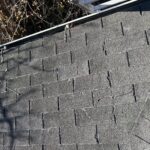
Old weathered shingles on a Pittsburgh roof slope before tearoff, Alan Construction.
Wind Damage vs. Hail Damage: How to Tell the Difference
Strong storms here can bring both wind and hail, and adjusters evaluate them differently. Wind damage means shingles lifted, creased, torn or blown off. Hail damage usually appears as random impact marks, bruises or granule loss across the shingle surface, along with dents on gutters, vents and flashing. If you suspect both, our guide on the signs of hail damage on asphalt shingles explains what to look for, so everything is documented in one claim.
What Should Pittsburgh Homeowners Do After a Windstorm?
- Stay safe and look from the ground. Don’t climb onto a wet or damaged roof. Use binoculars or walk the property to spot missing shingles, debris and damaged gutters.
- Document everything. Photograph visible damage, shingle pieces in the yard and interior leaks, and note the date and time of the storm.
- Prevent further damage. If shingles are missing or water is coming in, arrange a temporary repair or tarp and keep the receipts.
- Get an inspection before the adjuster visits. A roofer can find creases and broken seals you can’t see and be there when the adjuster inspects.
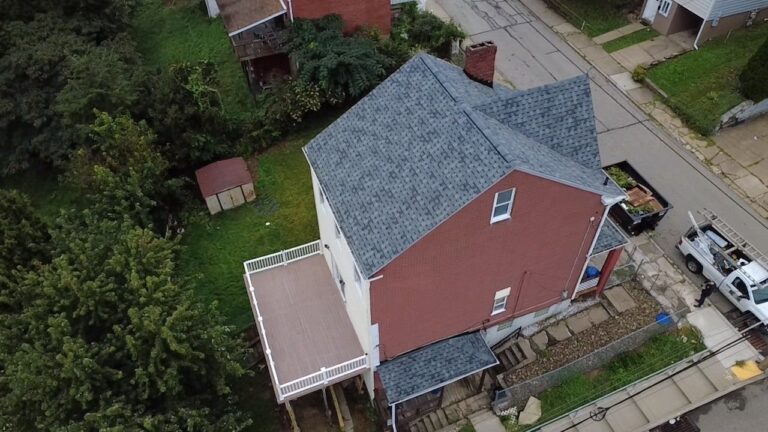
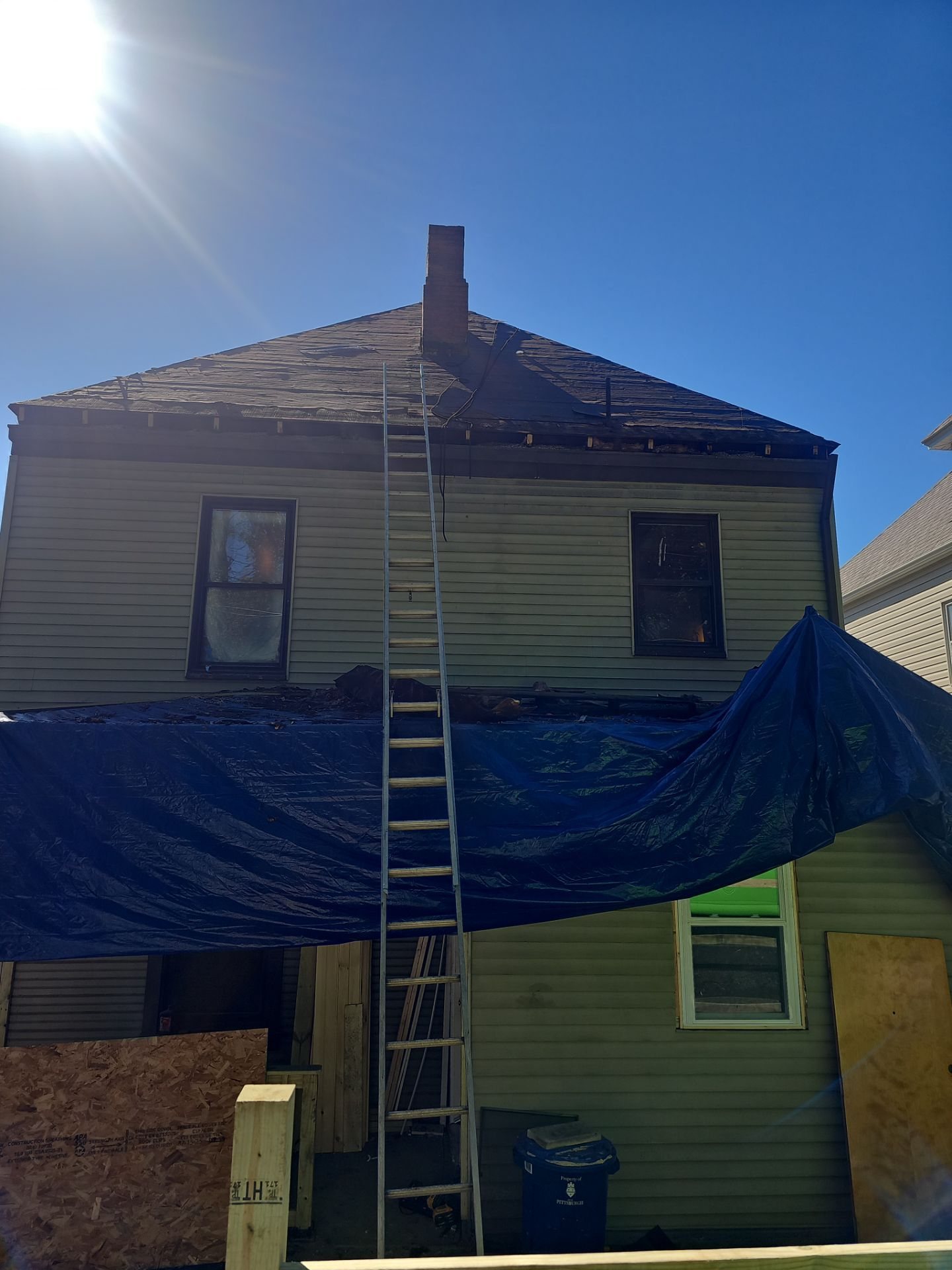
Ladder to the roof and a tarp below at the rear of a Pittsburgh house, Alan Construction.
Wondering what the last storm did to your roof? Contact Alan Construction for a free, no obligation inspection. We’ll document what we find and help you understand your options before you meet your adjuster.