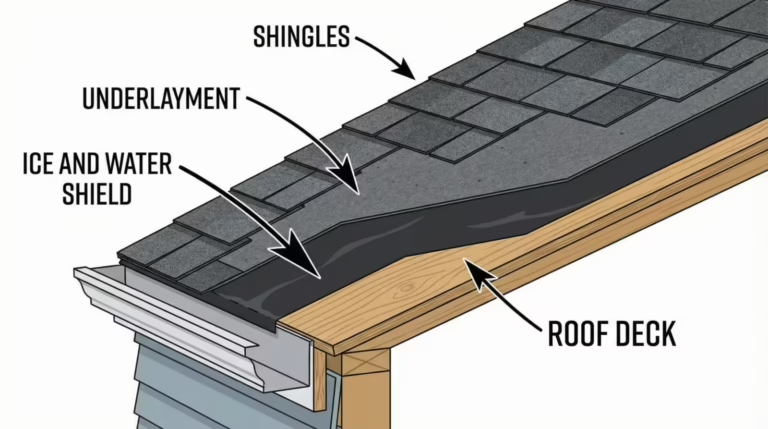
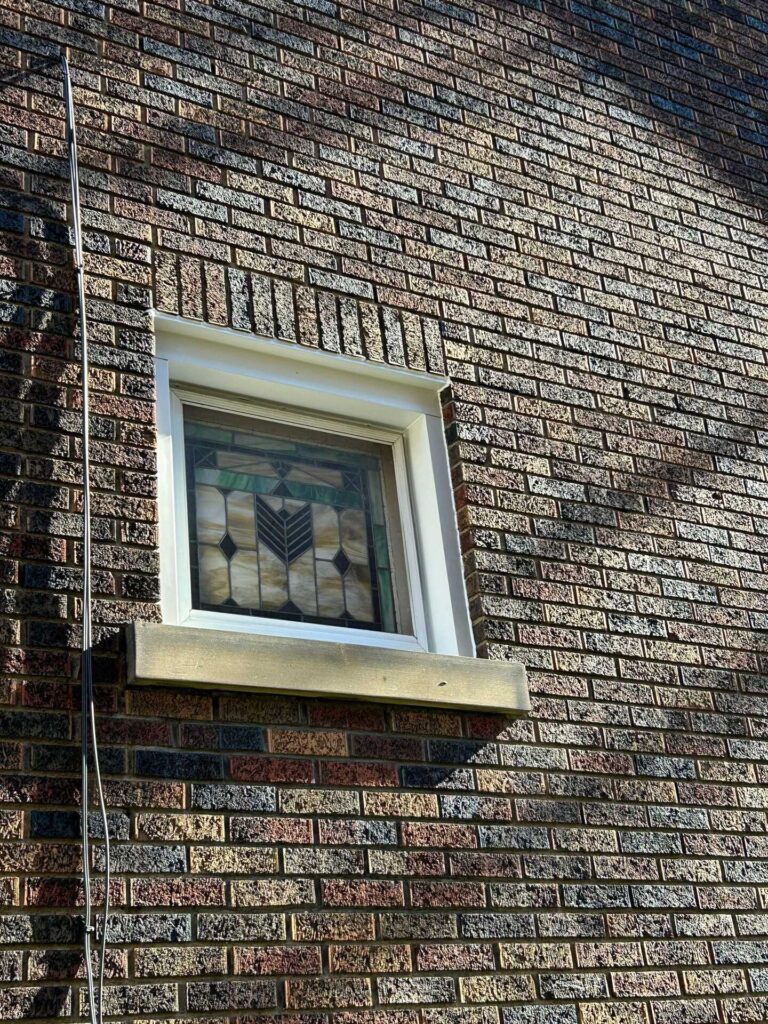
The signs of hail damage on asphalt shingles in Bethel Park include round black bruises where granules were knocked loose, soft spots that give slightly under pressure, exposed fiberglass mat, cracked shingle edges, dented gutters and vents, and granule buildup near downspouts. Most of this damage is subtle, and almost none of it is visible from your driveway.
That last part is what trips people up. A hailstorm rolls through Route 88, rattles the windows for eight minutes, and moves on. You glance up, and everything looks fine. Six months later there’s a stain on the back bedroom ceiling, and by then your claim window may already be closed.
What does hail damage look like on asphalt shingles?
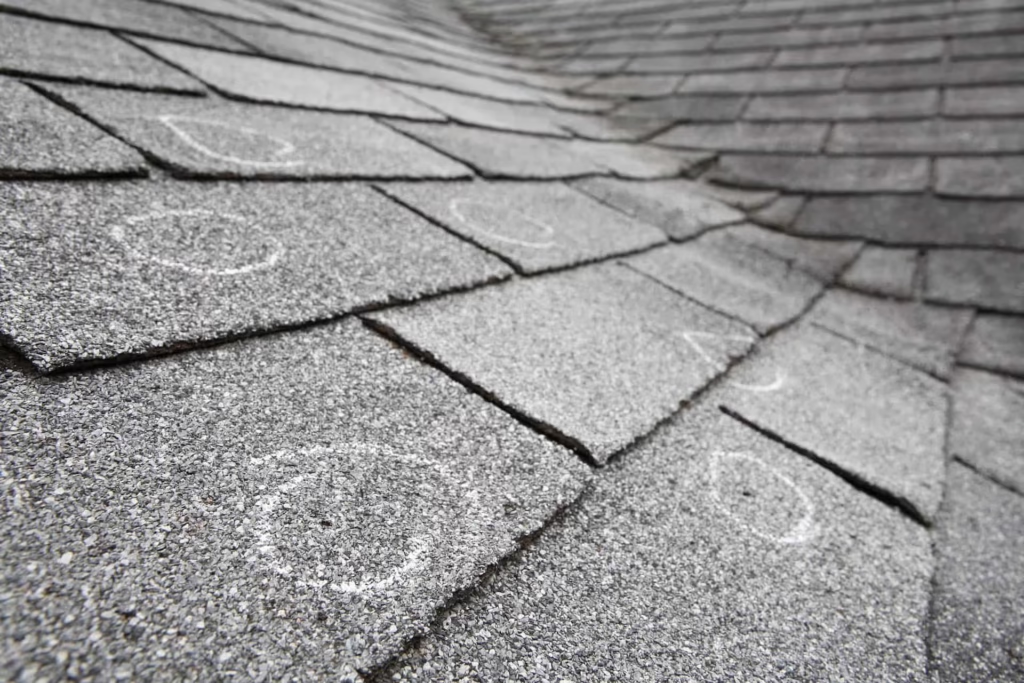
Hail damage rarely looks like a hole. It looks like a bruise — a dark, roughly circular spot, dime to half-dollar sized, where the granules have been knocked away and darker asphalt shows through. Press one with your thumb and it often feels soft, almost spongy, the way a bruised apple does. That softness means the fiberglass mat underneath has fractured, even though nothing has torn open yet.
The pattern matters as much as the individual marks. Hail hits are random and scattered, with no consistent spacing and no alignment to the shingle rows. Damage from foot traffic runs in a line. Blistering from manufacturing defects is uniform in size.
Granule loss and what it actually costs you
Those granules aren’t decoration. They shield the asphalt from ultraviolet light, and once they’re gone, that patch of shingle ages fast. A roof with heavy granule loss might not leak this year, but it can lose a third of its service life quietly and permanently. That’s why insurers treat granule loss as functional damage, not a cosmetic complaint.
Cracks, splits, and torn edges
Larger stones — anything past an inch or so — can split a shingle outright. You’ll see fresh cracks radiating out from a central impact point, or corners and edges that have chipped away. Wind driven hail also tends to break the adhesive seal strip that holds each shingle course down, which leaves tabs loose and ready to lift in the next storm.
Why Bethel Park roofs get hit the way they do
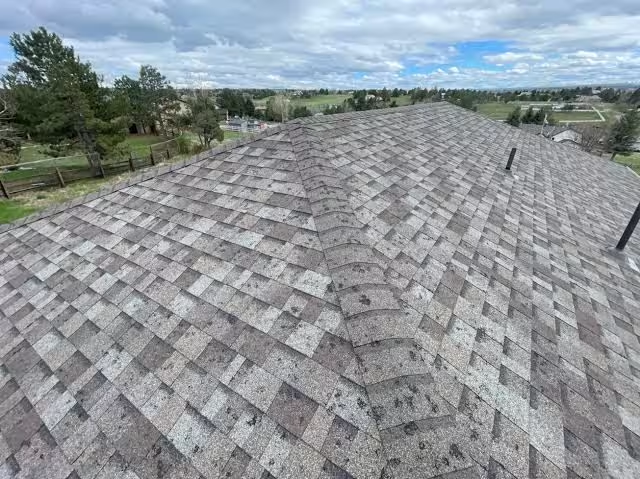
We’re in a pocket of Allegheny County where spring and early summer storms build fast over the ridges and drop hail in narrow bands. One street gets pelted while the next stays dry. I’ve seen homes on the same block where one roof needed full replacement and the neighbor’s needed nothing.
Then there’s the age of the housing stock. Plenty of homes here are running twenty-year architectural shingles from the mid-2000s, and older asphalt is brittle. The same stone that bounces off a three-year-old roof can crack a shingle that’s baked through fifteen Pittsburgh summers.
How to identify hail damage on shingle roof surfaces safely
Start on the ground, and stay there. Most of the reliable evidence sits at eye level, which is good news, because a wet roof is no place to experiment.
Walk the perimeter of the house and check these things in order:
- Gutters and downspouts, for dents and for a gritty pile of granules where water exits
- Metal fascia, drip edge, and any aluminum or vinyl siding on the storm-facing side
- Air conditioner fins, grills, and any metal patio furniture
- Window screens, wraps, and mailboxes
- Roof vents, pipe boots, and chimney flashing, using binoculars from the yard
Soft metal is your best witness. If your AC condenser and downspouts are pocked with dents, hail large enough to bruise shingles was almost certainly falling. If those surfaces are clean, the storm probably passed without doing structural harm. For a broader walkthrough of what to check across the whole exterior, this guide on Storm Damage Inspection & Prevention for Pittsburgh Roofs & Siding covers roofing and siding together.
What Are the Signs of Hail Damage on Asphalt Shingles in Bethel Park? A Quick Reference
Here’s the short version you can keep on your phone.
| Where to look | What you’re looking for | What it means |
|---|---|---|
| Shingle surface | Dark circular bruises, random spacing | Confirmed impact, granule loss |
| Shingle feel | Soft or spongy under thumb pressure | Fractured mat beneath the surface |
| Downspout outlet | Pile of sand-like granules | Significant surface stripping |
| Gutters and drip edge | Dents, dings, pockmarks | Hail was large enough to do damage |
| Roof vents and flashing | Dents, bent metal, loose seals | Likely leak entry points |
| Shingle edges | Fresh splits or missing corners | Larger stones, urgent repair |
| Attic decking | Damp sheathing, daylight, staining | Water is already getting in |
The signs most homeowners never think to check
Go into the attic with a flashlight on a bright day. Look for pinpoints of daylight through the decking, dark staining around nail heads, or insulation that feels damp in isolated spots. Hail damage often shows up here weeks before it reaches your ceiling. And watch your energy bills — wet, matted insulation quietly wrecks your thermal envelope, so a cooling bill that jumps for no obvious reason is worth a second look.
Does insurance cover hail damage to shingles?
In most cases, yes. Standard homeowners policies in Pennsylvania cover sudden damage from hail, though the details depend on whether you carry replacement cost value or actual cash value coverage. Replacement cost pays what a new roof costs today. Actual cash value subtracts depreciation, which on a fifteen-year-old roof can be a painful number.
Timing is the piece people get wrong. Policies carry reporting deadlines, and carriers push back hard on claims filed a year after the storm. Document everything the week it happens: photos, the date, and a written inspection.
One more thing worth knowing. Some carriers now attach cosmetic damage waivers or separate wind and hail deductibles to their policies. Read your declarations page before a storm, not after. If you’re weighing whether the damage justifies a claim at all, a professional assessment of asphalt shingle damage will tell you where you stand before you file.
Are hail resistant shingles worth it?
For most Bethel Park homes, I’d say yes — with a caveat.
Impact resistant shingles are graded under a testing standard that drops steel balls of increasing size onto shingle decks from twenty feet. Class 4 is the top rating, meaning the shingle survived a two-inch ball without cracking. The Insurance Institute for Business and Home Safety has gone further, testing shingles with laboratory-made ice stones instead of steel, and their impact resistance research on asphalt shingles is the most honest picture available of how these products behave in real weather.
The caveat: a Class 4 rating is not a force field. Testing happens on factory-fresh shingles at room temperature, and flexibility drops as shingles age. Many insurers offer a premium discount for impact rated roofs, though, and those discounts stack year over year. If you’re replacing a roof anyway, the upgrade is usually a modest percentage of the total and often pays for itself.
What to do in the first 72 hours after a hailstorm
Move fast, but don’t panic. Write down the date and time of the storm. Photograph your gutters, siding, AC unit, and anything dented, with something in frame for scale — a quarter works well.
Call your insurer to open a claim number even if you’re not certain damage occurred, then get a professional inspection. Be wary of anyone knocking on your door hours after a storm offering to handle your deductible — that’s a red flag, and in Pennsylvania it’s a legal problem. A contractor with a physical address and a history in the South Hills is a safer bet for any hail damage roof Bethel Park assessment.
Repair or replace: how the decision usually goes
If bruising is confined to one slope and covers a small share of the surface, targeted repair often makes sense. Once damage is scattered across multiple slopes, or the roof is past fifteen years, replacement is the better investment. Patching a roof near the end of its life buys eighteen months and a second bill.
An honest inspector will tell you which side of that line you’re on, and will show you photographs rather than asking you to take their word for it. If you want a straight answer about roof repair Bethel Park options after a storm, that’s the standard to hold anyone to.
The bottom line
Hail damage hides. It doesn’t announce itself, it doesn’t leak on schedule, and it doesn’t wait politely while you decide whether to look into it. Check your gutters and your AC unit after every hailstorm — it takes ten minutes — and get eyes on the roof itself if the soft metal shows dents. Catching it early is the difference between a repair and a replacement.