To file an insurance claim for roof damage successfully, document the damage the day it happens, read your policy, get a written inspection from a local roofer, and have that roofer on site when the adjuster comes. Do those four things and most of the fight is already won.
Filing a roof damage claim feels overwhelming the first time. Homeowners panic after a storm, scramble to find their policy, and sometimes settle for far less than the damage is worth. The process gets manageable once you understand what insurers expect and how adjusters judge damage. If you need help right now, start with our storm damage roof repair in Pittsburgh page, then use this guide to walk through every step, from photographing the first cracked shingle to pushing back on a low settlement.
Short answer: Act fast, photograph everything, know whether your policy pays replacement cost or actual cash value, and let a roofer walk the adjuster through the damage.
Why Acting Fast Matters After Roof Damage
Time works against you the moment damage happens. Every policy has its own reporting window, and some are much shorter than homeowners expect. Waiting too long also gives the insurer room to argue that secondary damage, like mold or rotted decking, isn’t related to the original storm.
Start the process within a day or two of the storm. Quick action tells the insurance company the damage is fresh, and it protects your home from getting worse, which insurers genuinely care about. Most policies expect you to take reasonable steps, like an emergency tarp, to prevent further damage.
Step One: Document the Damage
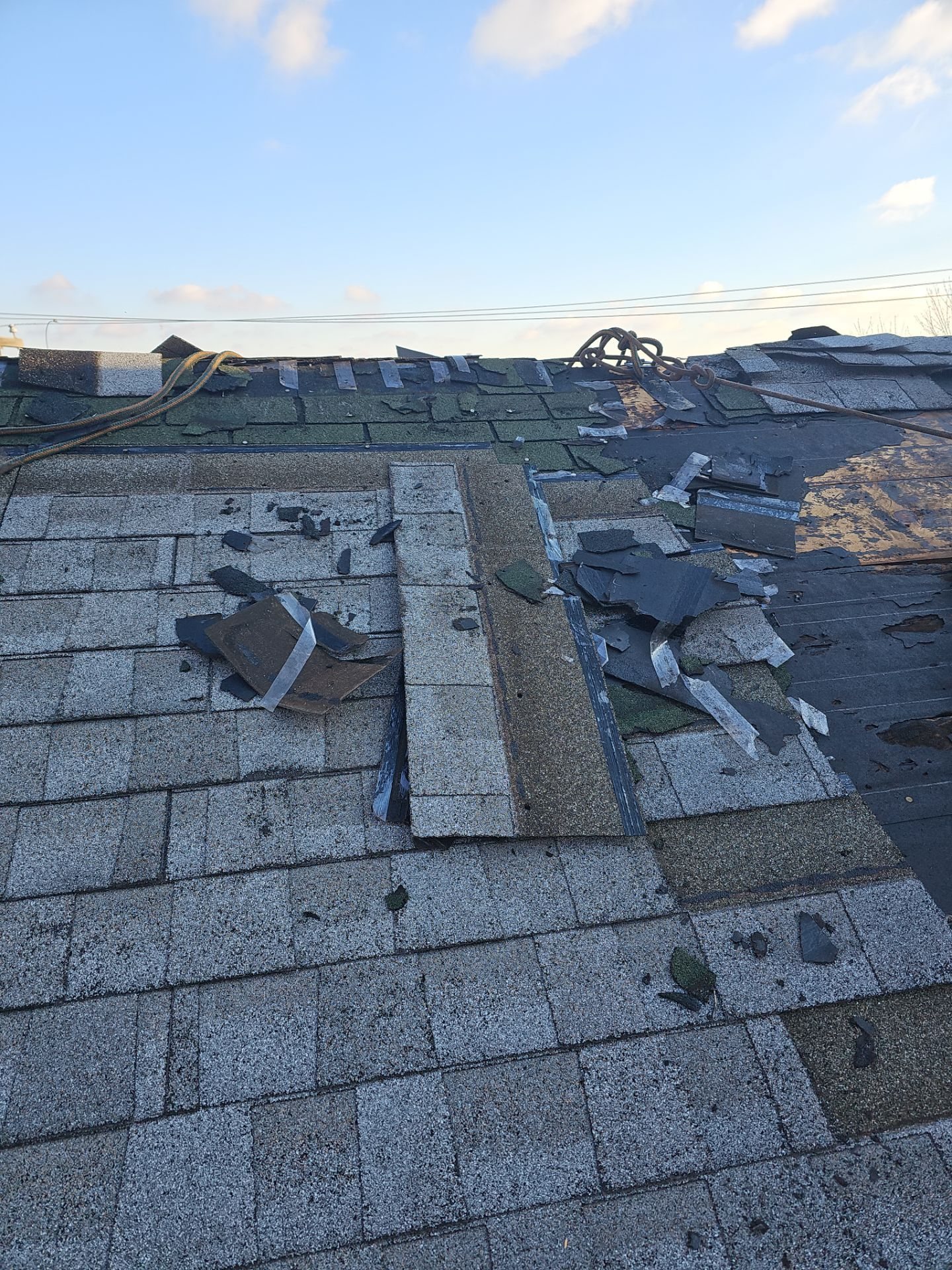
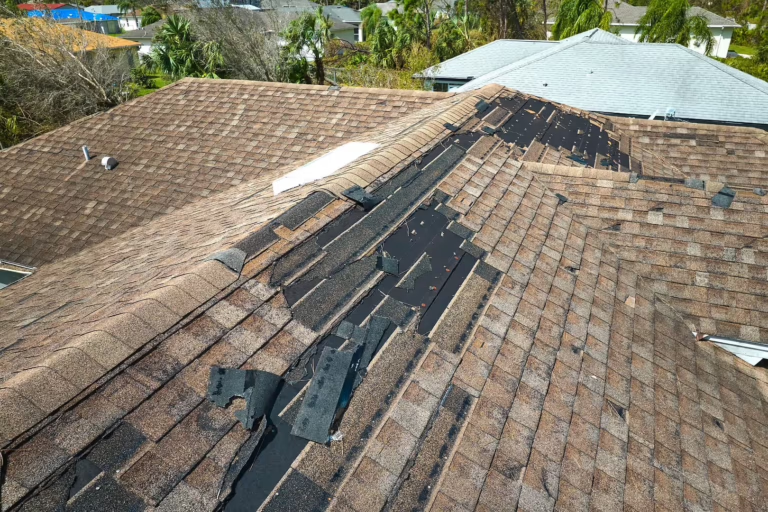
Before you touch anything beyond emergency tarping, grab your phone. Photos and videos are your strongest evidence in any roof damage insurance claim. From the ground, capture broken or missing shingles, dented flashing, gutter damage and debris on the roof.
Then walk through the house and photograph water stains on ceilings, peeling paint and any sign of an interior leak. Write down the date and time of the storm, because insurers cross check it against weather reports for your area.
Worn shingles with loose and missing pieces on a Pittsburgh roof before replacement, Alan Construction.
The more detailed your record, the harder it becomes for anyone to minimize the claim. Stay off a wet or damaged roof. Binoculars from the yard and a zoomed phone camera get you most of what you need.
Hire a Roofing Contractor Before the Adjuster Arrives
Here’s something many homeowners don’t realize: the adjuster works for the insurance company, not for you. Having an experienced roofer on your side levels the playing field. A roofer can spot damage an adjuster might overlook, like lifted tabs with broken seal strips, cracked flashing or soft decking.
Look for a contractor who has handled storm damage claims before. They’ll give you a written estimate, document the damage from a professional standpoint, and speak the technical language adjusters respect. At Alan Construction we work with homeowners insurance on storm claims and meet the adjuster at your home. We’ve been serving Pittsburgh since 2003, and we’re a registered Pennsylvania home improvement contractor, PA#126638.
Understanding Your Policy Before You Call
Reading your policy isn’t fun, but it’s essential. You need to know your deductible, your coverage limits, and whether you carry Actual Cash Value or Replacement Cost Value coverage. ACV pays the depreciated value of your roof. RCV covers new materials and labor, often in two payments, with the second released after the work is done.
| Policy type | What it covers | Best for |
|---|---|---|
| Actual Cash Value (ACV) | Depreciated value of the roof | Lower premiums |
| Replacement Cost Value (RCV) | Full replacement of the damaged roof | Better long term protection |
| Named peril | Only the events listed in the policy | Budget conscious homeowners |
| Open peril | All damage except listed exclusions | Broad coverage |
Knowing these details before you file prevents nasty surprises later. It also tells you what’s worth fighting for during negotiations. If your roof is getting older, read our guide on how roof age affects insurance coverage before you call. The Pennsylvania Insurance Department also has consumer help if you have questions about your rights as a policyholder.
What Happens When You File a Claim for Roof Damage?
Once you call your insurer, they’ll assign a claim number and schedule an adjuster visit. The adjuster inspects the roof, takes their own photos and writes a damage report. Then they issue a settlement offer based on what they found, which is where many homeowners feel shortchanged.
Be present for the inspection, and have your roofer there too. Let the roofer walk the adjuster through the damage and explain what needs replacing versus repairing, so nothing gets missed or downplayed.
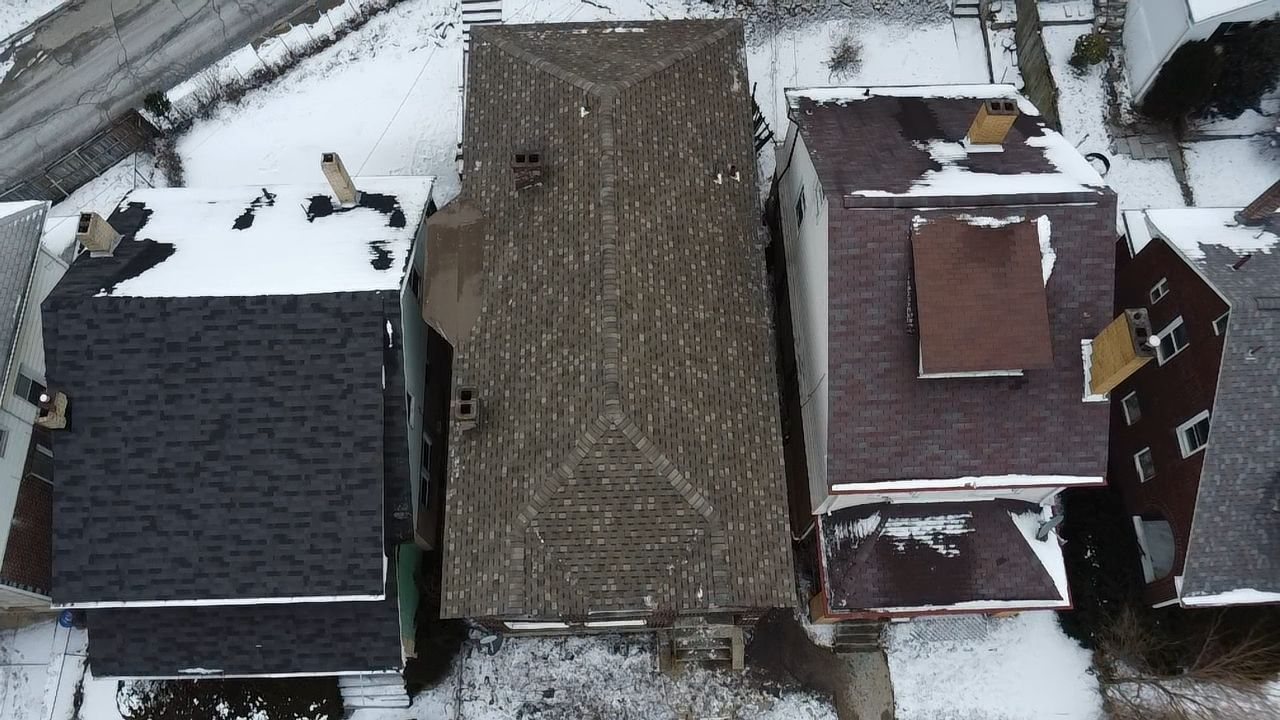
Drone view of a worn shingle roof between snowy neighboring houses in Pittsburgh, Alan Construction.
What Not to Say to a Roof Insurance Adjuster
Adjusters ask questions that can hurt your claim, even when they seem friendly. Never guess at the age of your roof or admit to deferred maintenance. Avoid saying things like “I think this might be old damage” or “I’m not sure when this happened.”
Stick to facts you can prove. For a deeper breakdown of the phrases that can sink a claim, read our guide on what not to say to a roof insurance adjuster.
What Documentation Do I Need for a Roof Damage Claim?
Solid documentation makes or breaks your case. At minimum, you’ll need:
- Photos and videos of all exterior and interior damage
- Your contractor’s written estimate and inspection report
- The date of the storm, ideally with a weather report confirming it
- Receipts for temporary repairs like tarps or emergency patching, which are often reimbursable
- A log of every call, email and letter with your insurer, including names and dates
If your claim gets disputed, this paper trail becomes your most valuable asset.
When the Settlement Feels Low
Sometimes the first offer arrives and it’s just not enough. Don’t panic, and don’t accept it out of frustration. Compare the offer line by line with your contractor’s estimate and find exactly where the gaps are.
Push back with documentation: more photos, a supplemental estimate, and anything else that supports your position. A polite but firm response often brings a revised offer. If the insurer won’t budge, you can request a reinspection or ask to escalate to a supervisor.
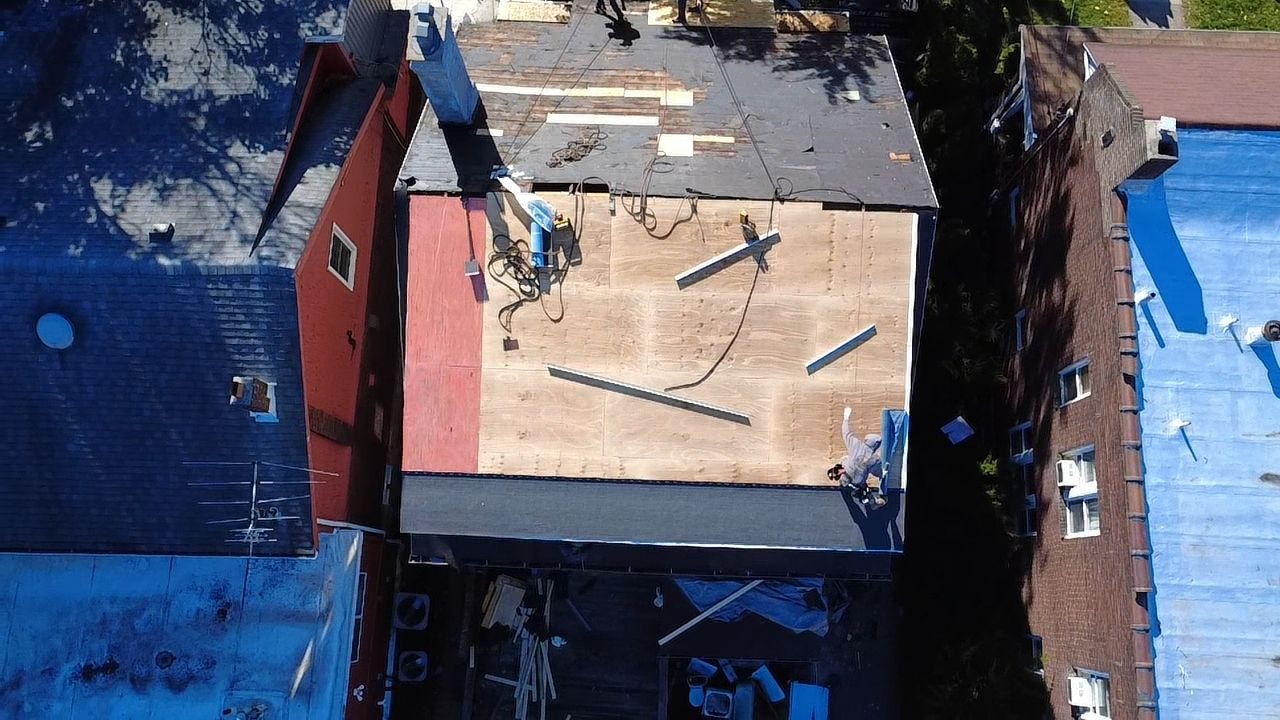
Drone view of a Pittsburgh row house roof stripped to the decking during replacement, Alan Construction.
Damage that only shows up once the old shingles come off, like rotted decking, can usually be documented and sent to the insurer as a supplement. That’s another reason to work with a roofer who photographs every stage of the job.
Roofing Insurance Tips That Save You Time
A few smart habits make every future claim easier. Schedule a roof inspection every year or two so you have a record of your roof’s condition. Keep a folder, digital or paper, with your policy, past inspection reports and photos taken before storm season.
Build a relationship with a trustworthy contractor before you need one. When a storm hits at 9 PM on a Saturday, you don’t want to be searching for roofers from scratch. Knowing who to call, and trusting they’ll show up, takes enormous pressure off a stressful moment.
Why Choosing the Right Contractor Changes Everything
Plenty of roofing companies are eager to take your call after a storm. Some chase claims aggressively without delivering quality work. Others do excellent work but lack experience with insurance paperwork.
We handle both sides. We know the documentation insurers require, and we know what a quality installation takes. One homeowner, Suzanna M., wrote in her Google review: “We then hired them to replace our roof which was damaged in the windstorm from last spring, and they worked with us and our insurance company to thoroughly replace and repair everything.”
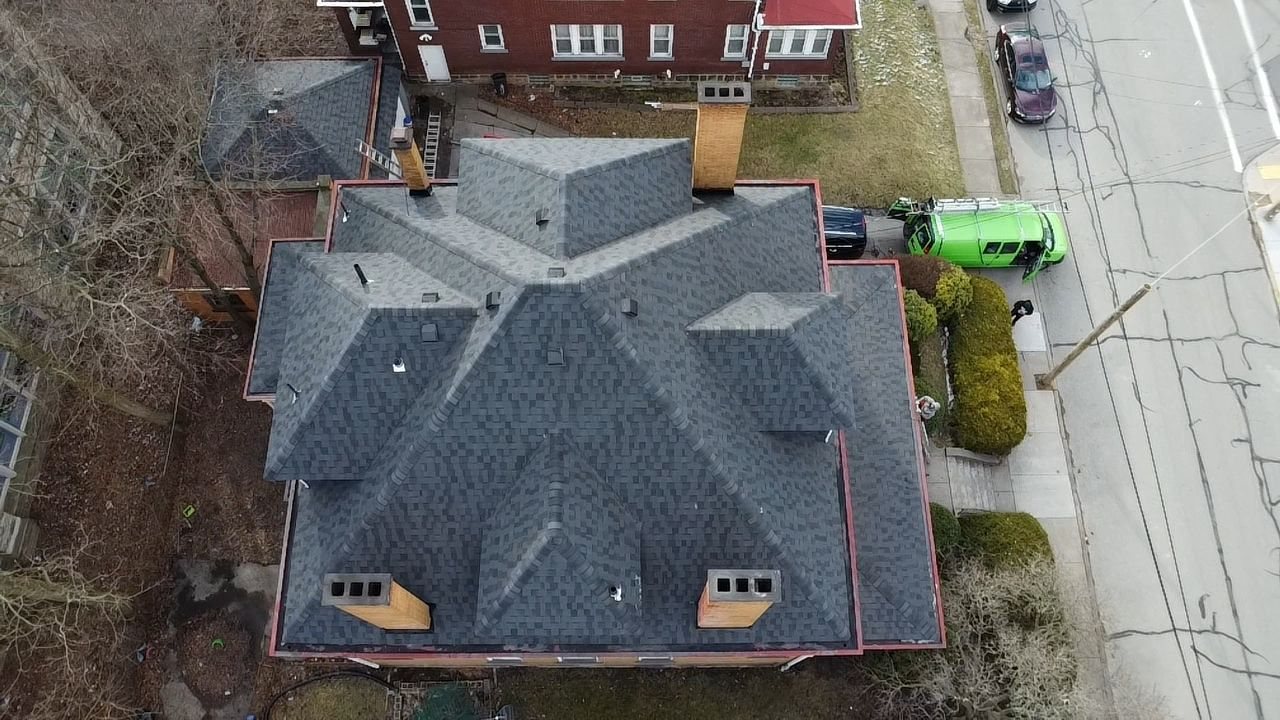
Drone view of a completed gray shingle hip roof on a Pittsburgh corner lot, Alan Construction.
Filing a roof damage insurance claim doesn’t have to feel like a battle. With prompt action, thorough documentation and the right roofer beside you, the process becomes straightforward. You’re not asking for a favor. You’re collecting on a policy you’ve paid into, often for years.
Storm damage on your roof? Request a free, no obligation estimate and we’ll document the damage and meet your adjuster.