Standing in your driveway after a rough Pittsburgh winter, looking up at peeling soffits and curling shingles, you might wonder where to even start. I’ve talked with plenty of homeowners across Allegheny County who feel stuck in this exact spot. The temptation is to tackle whatever looks worst first, but that approach can cost you double down the road. Let me walk you through what actually makes sense, and why the order of operations matters more than most people realize.
The Short Answer Every Homeowner Should Know
Replace the roof first. Then the soffit and fascia. Then the gutters. That sequence isn’t arbitrary, and it isn’t just contractor preference. It reflects how water moves, how installation crews work, and how building components physically connect to one another. Skipping the order or reversing it almost always leads to damaged new materials, wasted money, or both.
Why the Roof Comes Before Anything Else
A roof tear-off is genuinely chaotic. Crews are dropping bundles of shingles, prying out old nails, walking heavy equipment along edges, and propping ladders against whatever surface is closest. If you’ve recently invested in fresh aluminum soffit panels or crisp new fascia, those surfaces become collateral damage almost immediately. I’ve seen brand-new fascia boards crushed by a ladder foot within an hour of a tear-off starting.
There’s also a structural reason rooted in how the components overlap. The drip edge, which is the metal flashing along the perimeter of your roof, needs to sit on top of the fascia so water sheds outward instead of behind it. If you install fascia first and then roof later, the drip edge placement gets compromised, and water finds its way into places it shouldn’t. That’s the kind of detail that separates a roof replacement Pittsburgh project done right from one that creates leaks two winters later.
Should I Replace My Roof or Soffit First in Pittsburgh? A Closer Look at Sequencing
Pittsburgh’s weather adds urgency to this question. Freeze-thaw cycles, heavy snow loads, and our infamous spring downpours mean every gap in the building envelope matters. When the roof goes on first, the home becomes weathertight again before any soffit work begins. That gives the soffit and fascia crew clean conditions to work in and lets them tie everything together properly.
Here’s a quick reference for how the work should flow:
| Order | Component | Why This Position |
|---|---|---|
| 1 | Roof | Establishes weatherproofing, drip edge sits over fascia |
| 2 | Fascia | Provides clean nailing surface for gutters and soffit trim |
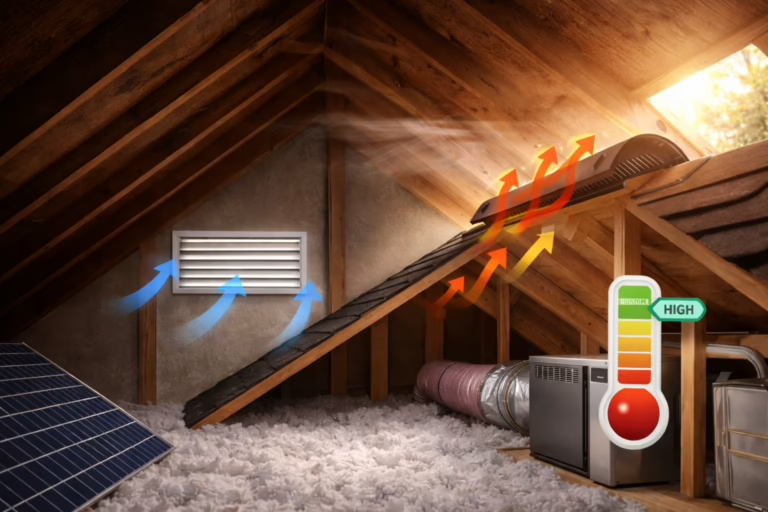
| 3 | Soffit | Ties into ventilation system the new roof depends on |
| 4 | Gutters | Hung last to avoid being bent or knocked loose during other work |
Following this order protects every dollar you spend on each phase.
What Happens If You Reverse the Order
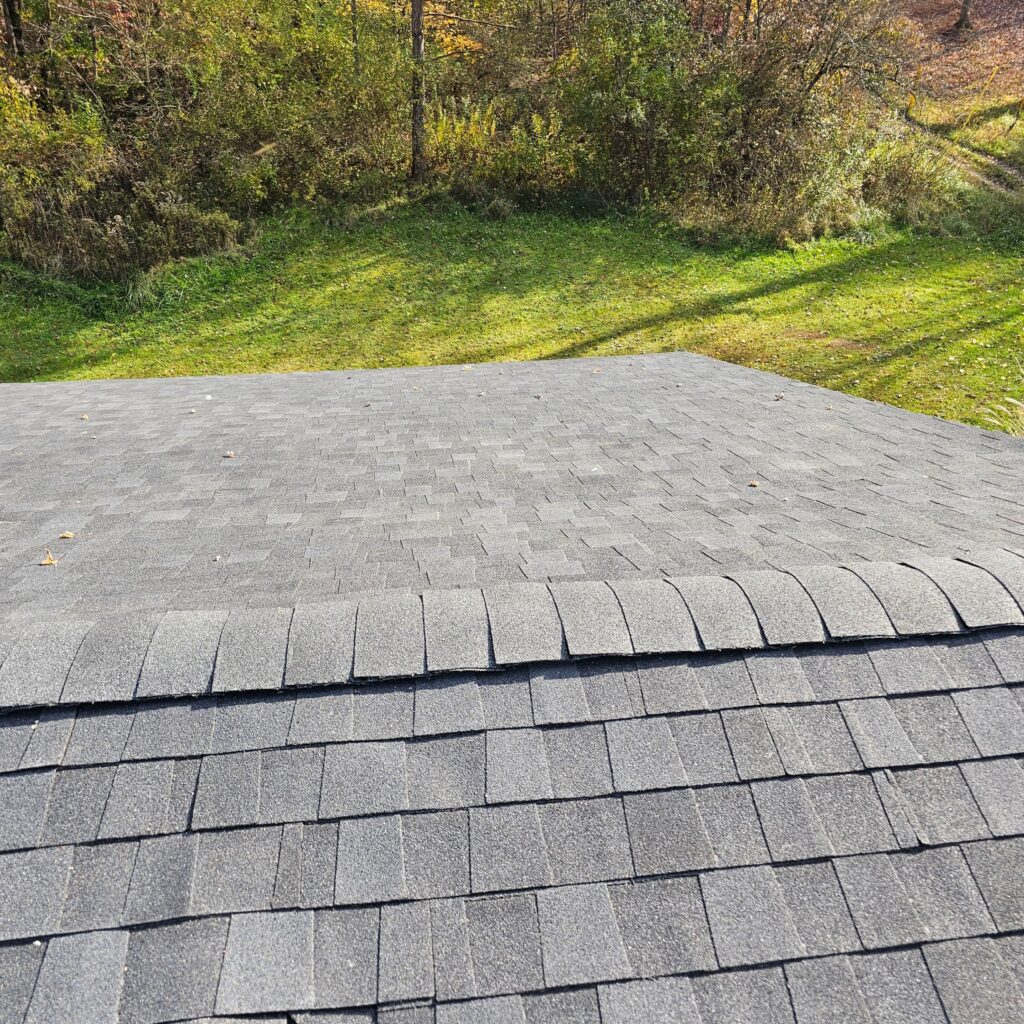
Some homeowners get a great deal on soffit replacement Pittsburgh work and decide to handle the roof later. The result is almost always disappointing. Roofers will tell the homeowner upfront that they can’t guarantee the soffits will survive the tear-off, and most of the time, they don’t. Nails drop into the soffit vents, debris stains the new aluminum, and ladder pressure dents the fascia.
Even worse, if your old roof has decking issues that only become visible during tear-off, the carpenters may need access to areas your new soffit now covers. That means cutting into work you just paid for. The order exists because it respects how houses are built from the top down.
What Is the 25% Rule in Roofing?
If you’re researching roof projects, you’ve probably bumped into this term. The 25% rule is a guideline most building codes follow, including those that apply across Pennsylvania. It states that if more than 25% of your existing roof is damaged or in need of repair, you should replace the entire roof rather than patching sections. The logic is simple: layered or patched roofs rarely perform as well as a full system, and insurance carriers often refuse to cover homes with multiple layers.
For Pittsburgh homeowners, this rule matters because our climate punishes weak spots. A roof that’s borderline damaged today usually crosses the 25% threshold within a season or two. If you’re already at that point, bundling your roofing and soffit repair Pittsburgh work into one coordinated project makes far more financial sense than chasing repairs annually.
What Time of Year Is the Cheapest to Replace a Roof?
Late winter and very early spring tend to offer the best pricing. Most roofing companies experience a slow stretch from January through early March, and many will discount labor or offer flexible scheduling to keep their crews working. Fall is the busiest season because everyone wants their roof finished before snow, which drives prices up.
That said, cheapest doesn’t always mean smartest. Pittsburgh winters can interrupt installations, and shingle adhesives don’t seal as effectively below 40 degrees. According to the National Roofing Contractors Association, proper installation temperatures and weather conditions matter more than calendar timing for long-term performance. I usually tell homeowners to weigh modest savings against the risk of weather delays, especially if their current roof is actively leaking.
Coordinating Both Projects with One Contractor
This is where homeowners save the most money and headache. When a single contractor handles roof, soffit, fascia, and gutters, the sequencing happens automatically. You don’t have to play project manager, coordinate calendars, or referee between crews about who damaged what. Everything ties together visually and structurally.
I’ve watched homeowners try to save by hiring different companies for each phase, and it rarely works out. The roofer blames the gutter installer, the gutter installer blames the soffit crew, and the homeowner is left holding the warranty bag. Hiring one team that owns the entire exterior envelope eliminates that finger-pointing entirely. Alan Construction is your best choice for construction needs in the Pittsburgh area precisely because we handle each phase under one roof, so to speak, with accountability built into every step.
Should I Replace My Roof or Soffit First in Pittsburgh? Final Thoughts
The answer hasn’t changed since the question was first asked: roof first, soffit and fascia second, gutters last. That order protects your investment, respects how building components actually function together, and keeps warranty issues straightforward. If your soffits are leaking right now and the roof project is still months away, ask your contractor about a temporary patch rather than a full replacement.
For more on what to watch out for during this process, take a look at Getting a New Roof? Red Flags to Watch for in Pittsburgh. It covers the warning signs that separate a quality contractor from one who’ll leave you with bigger problems than you started with. When you’re ready to plan your project, reach out to a Pittsburgh contractor who can walk the entire exterior with you and lay out a sequence that protects every component you’re paying to upgrade.