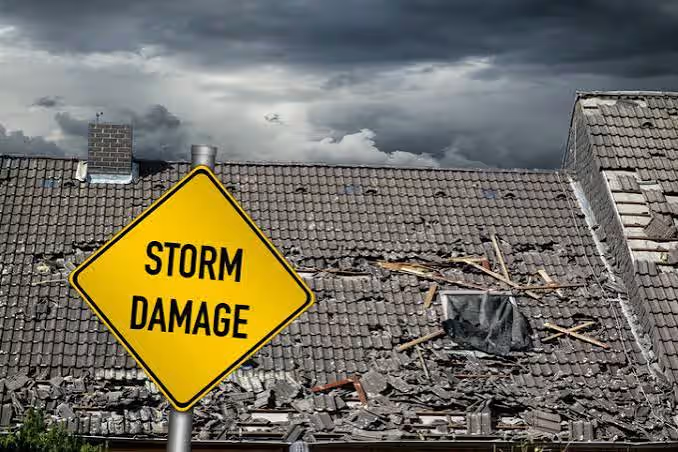
Most roofing scams in Pittsburgh start the same way: someone you never called shows up, finds a problem you can’t see, and pushes you to sign before you can check them out. The red flags are easy to spot once you know them: a door knocker after a storm, a big cash deposit, no written contract, no HIC number, and a price that only works if corners get cut.
We’ve been doing roof replacement in Pittsburgh since 2003, and every year we meet homeowners cleaning up after a crew that took the money and left. Here are the scams we see around Allegheny County, the warning signs at each stage of a job, and the checks that weed out bad actors.
Short answer: Never sign at the door, never pay a large deposit in cash, and never hire a roofer you can’t look up. A legitimate Pennsylvania roofer gives you a written contract with an HIC number on it and gives you time to think.
Why Roofing Scams Show Up After Pittsburgh Storms
Roofing scams follow the weather. When a strong wind or hail storm rolls through the South Hills or the Mon Valley, shingles come off, insurance claims go up, and crews you’ve never heard of start knocking on doors. Some are honest. Plenty are not.
The setup never changes: you have a real worry, a stranger offers to make it easy, and the clock is ticking because “your insurance won’t wait.” Scammers count on urgency. A good roofer counts on you checking them out.
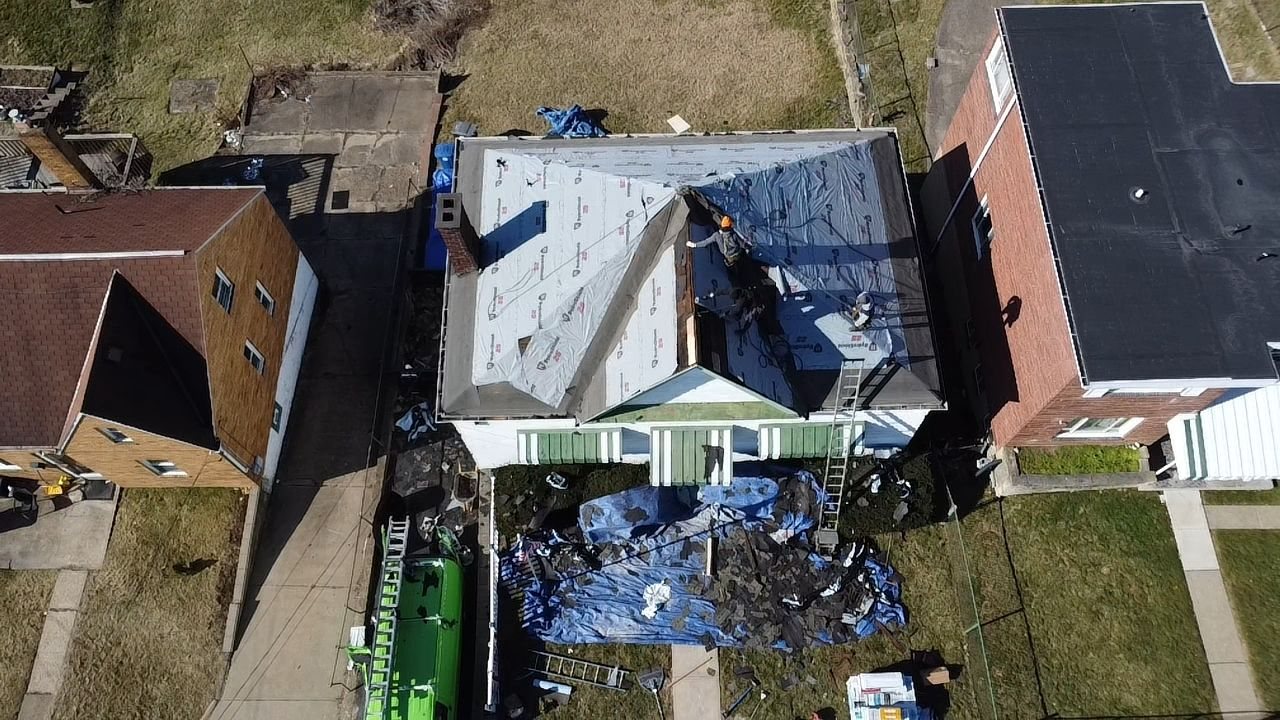
This is a normal tearoff day on a Pittsburgh house. The old shingles are coming off, tarps cover the yard and landscaping, and the crew is working from a plan everyone agreed to in writing.
A scam job looks different long before the first shingle comes off: no contract, no schedule, a cash deposit, and nobody who can tell you what’s going on your roof.
Tearoff in progress with blue tarps protecting the yard in Pittsburgh, Alan Construction.
12 Red Flags When Hiring a Roofing Contractor
Grouped by when they show up, because the earlier you spot one, the less it costs you.
Red flags at your front door
- They knocked on your door right after a storm. Storm chasers live on door knocking. Ask for a local office address and look it up before anyone gets on your roof.
- They have “leftover materials” from a job down the street. Real roofers order materials for each job. The discount is the bait.
- They found damage you can’t see and won’t show you. A legitimate inspector takes clear photos and walks you through them.
- The price is only good today. High pressure is the clearest sign of all. A fair price doesn’t expire at dinner time.
One of our customers, Marti S., put it simply in her Google review: “I chose Alan as he did not play games. His price was his price. It was not going to increase it if I waited till another day to make my decision.” That’s the standard every roofer should meet.
Red flags in the estimate and contract
- No written contract, or a one line quote. Pennsylvania law requires a written home improvement contract that includes the total price, the estimated start and completion dates and a description of the work. “New roof” with one number is not a contract.
- No HIC number anywhere. Contractors who do home improvement work in Pennsylvania above a modest yearly amount must register with the Attorney General and put that number on their contracts and ads.
- A big deposit, especially in cash. The Attorney General’s guidance is that a down payment of one third of the contract price, or one third plus the cost of special order materials, is appropriate. Anything well beyond that, or a request for cash only, is a warning.
- A bid far below everyone else’s. It usually means skipped steps, cheaper materials or charges added once the old roof is off.
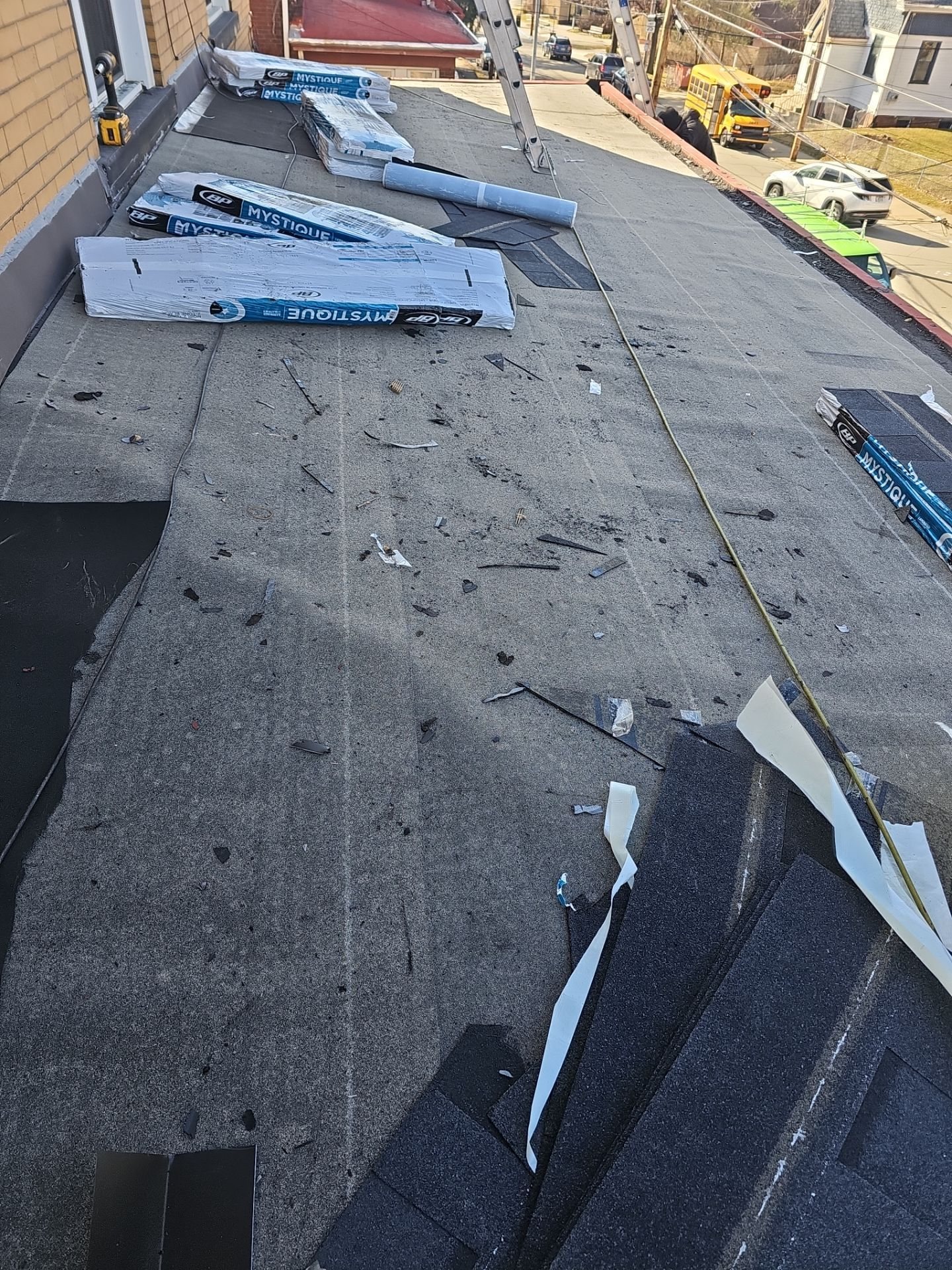
Underlayment is one of the first places a lowball bid cuts corners, because you’ll never see it once the shingles are on. Your contract should name the underlayment, the shingle line, the flashing work and how decking replacement is handled.
We install Atlas shingles, including Pinnacle Pristine, and our contracts say so. If you can’t tell from a quote what’s going on your roof, you can’t compare it to another bid and you can’t hold anyone to it later.
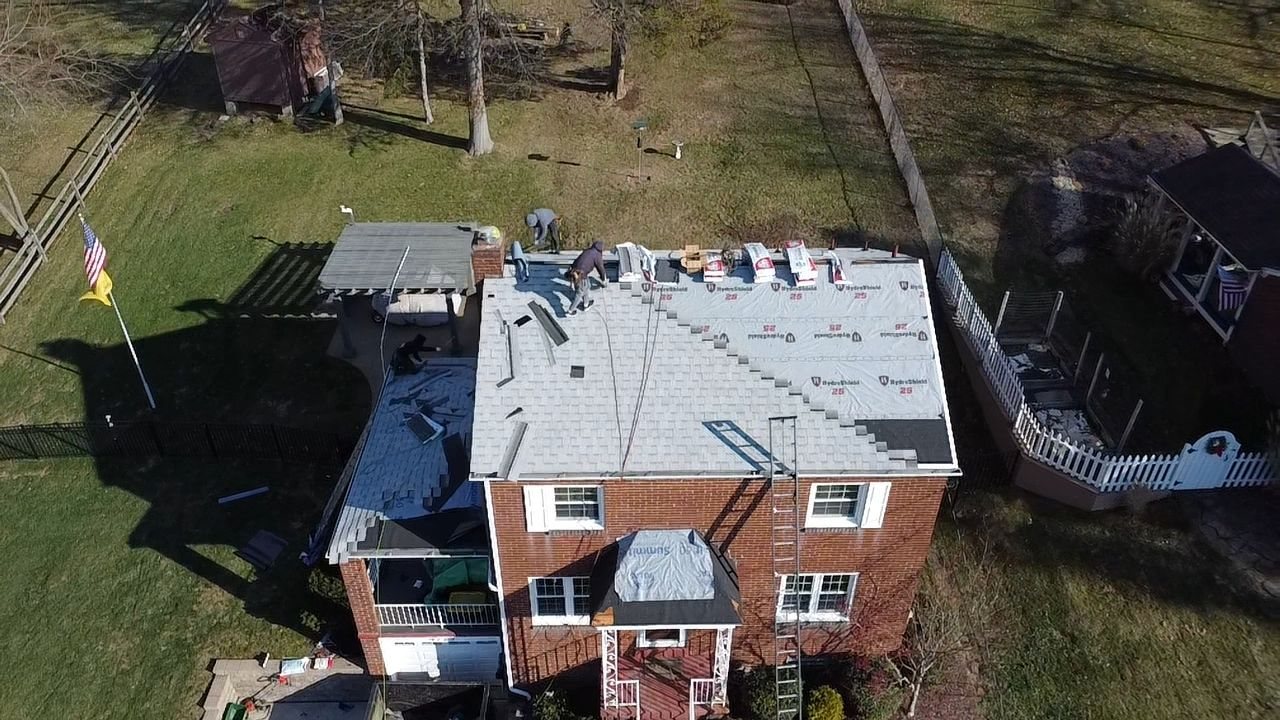
Underlayment going down on a brick home in Pittsburgh, Alan Construction.
Red flags in the insurance claim
- They offer to “take care of” your deductible. The only ways to make that math work are to pad the claim to your insurer or to cut the work on your roof. Either way, your name is the one on the claim.
- They want a signature “just so we can talk to your insurance.” Some of these forms are really contracts or hand over control of your claim. Read every page and keep a copy.
Working with your insurer on storm damage is normal, and we meet the adjuster on our customers’ claims. An honest roofer documents real damage and lets the policy decide. Our guide on reading a roofing estimate line by line helps you see what you’re actually paying for.
Red flags once the work starts
- Surprise charges with no photos or paperwork. Rotted decking does turn up on older Pittsburgh houses, but a good roofer shows you photos and puts the change in writing first.
- They ask you to pull the permit. Whoever pulls the permit takes responsibility for the work. If your town requires one, the contractor should handle it.
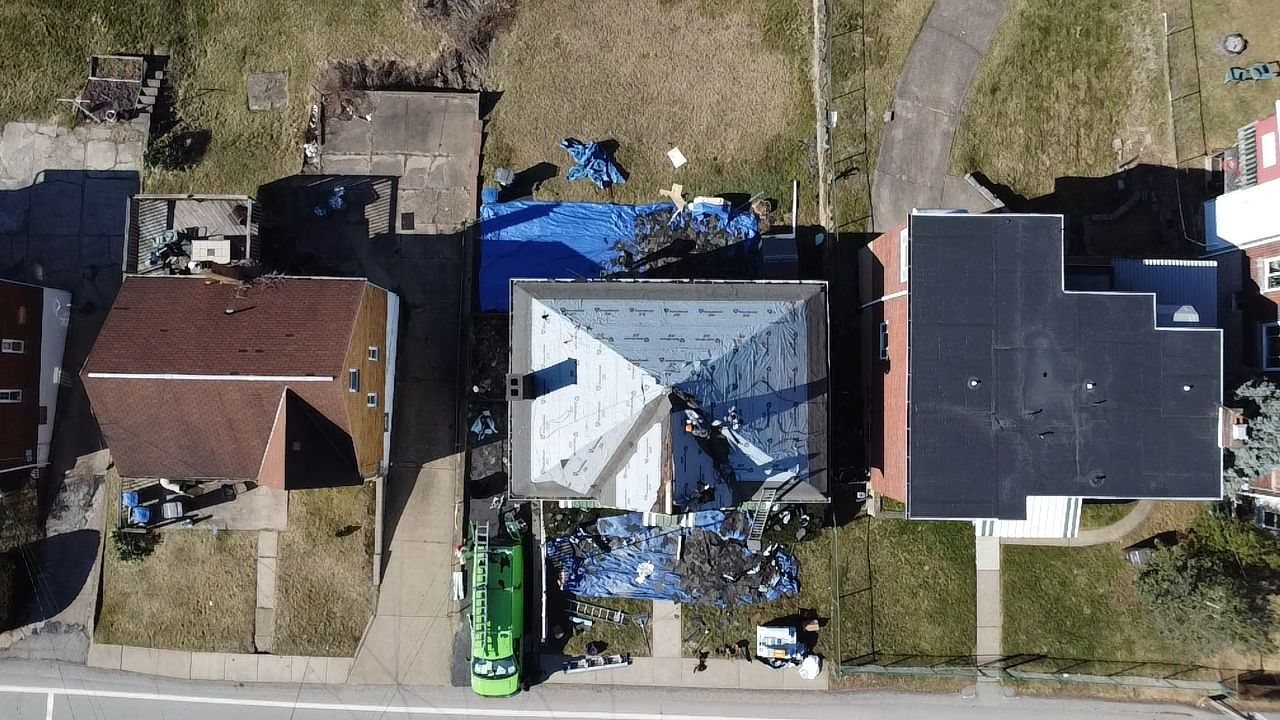
A real job site has a dumpster, tarps over the yard and a crew lead you can talk to. Once the old roof is off, the decking is out in the open, and that’s the moment an honest roofer shows you anything that needs replacing.
A scam crew either shingles right over bad wood or treats it as a blank check. If a contractor can’t show you photos of what they found and get your sign off in writing, don’t let the extra charge stand.
Hip roof tearoff with tarps and a dumpster on site in Pittsburgh, Alan Construction.
Roofing Red Flags at a Glance
| Red flag | What it usually means | What a legitimate roofer does |
|---|---|---|
| Door knock after a storm | Out of town crew chasing claims | Has a local address you can drive past |
| Sign today pricing | Pressure to stop you checking | Gives you time and a written quote |
| No HIC number | Not registered with the state | Prints it on every estimate and contract |
| Large cash deposit | Risk of an abandoned job | Keeps the deposit within state guidance |
| Deductible “covered” | Padded claim or cut corners | Lets your policy work as written |
| Damage with no photos | Exaggerated or invented damage | Shows you clear photos and explains them |
| Very low bid | Skipped steps or added charges later | Names every material in the contract |
How to Choose a Roofer and Check Them Before You Sign
Here’s the order we’d follow as a homeowner.
- Look up the HIC number. Search it on the Attorney General’s contractor search and make sure the name and address match the paperwork. Ours is PA#126638. For a full walkthrough, see our guide to what a Pennsylvania HIC number is and how to look one up.
- Ask for insurance certificates. Get proof of liability insurance and workers’ comp, then call the agent listed to confirm the policy is current.
- Find a real local address. A PO box and a cell number aren’t enough.
- Read recent reviews. Look for patterns in Google reviews and ask for recent jobs near you.
- Get two or three written estimates. Compare what’s included.
- Know your cancel window. Pennsylvania home improvement contracts must tell you about your right to cancel within three business days of signing.
Pennsylvania doesn’t issue a state roofing license, so “licensed” here means registered and insured. We explain what that covers in licensed vs unlicensed roofers in Pittsburgh.
Questions to ask a roofer
- How long have you been working in Pittsburgh, and where is your office?
- Who will be on my roof, and who is the crew lead?
- Which shingle line, underlayment and flashing are in this price?
- How do you handle rotted decking if you find it?
- Who pulls the permit, and how do you protect my yard and clean up?
- What warranty do I get, and who do I call if there’s a leak?
A straight answer to every question above is the best sign you’ve found the right roofer. Greg J. told us in his review that we were “the only company that actually came to our house to give us an estimate, not just driving by or looking at google images.”
That’s the bar. Someone should climb up, measure, check your flashing and vents, and explain what they found. Most of our replacements finish in one day, with a magnetic nail sweep at the end.
New shingles going on over underlayment with bundles staged above in Pittsburgh, Alan Construction.
Signs a Roofing Job Was Done Badly
Some scams don’t show up for months. Stand across the street and look for these:
- A wavy or dipping roofline where it should be straight.
- Shingles that don’t match in color, or rows that don’t line up.
- Old flashing reused around chimneys, walls and vents.
- No drip edge along the eaves.
- Leaks or stains inside after the first heavy rain.
- Shingle tabs lifting in the wind because they never sealed.
That last one matters here. Asphalt shingles have a sealant strip that needs the sun’s warmth to bond. A good crew can roof on a cool day but hand seals where needed; a crew that just nails and leaves can cost you shingles in the first spring windstorm. A reputable roofer comes back and fixes problems without an argument.
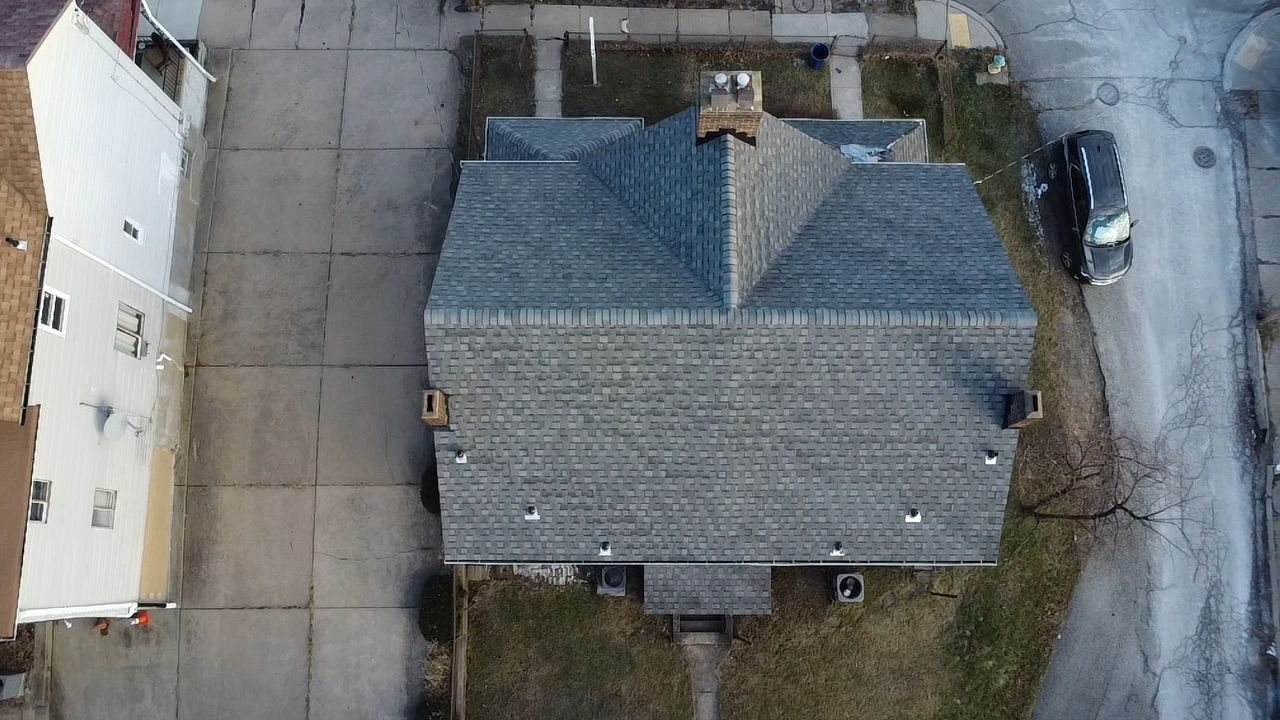
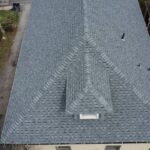
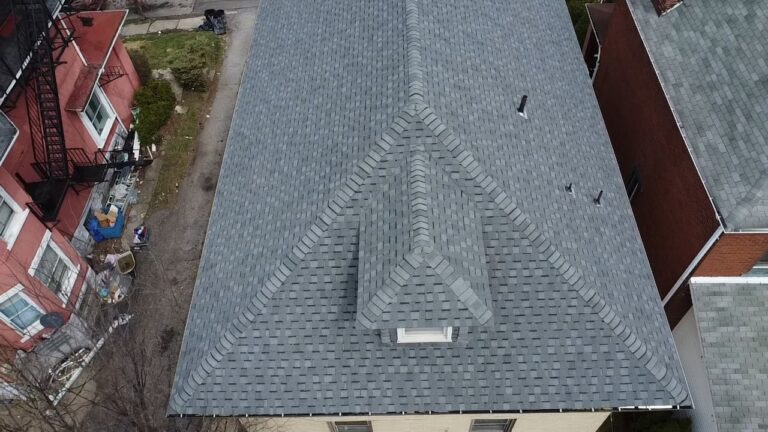
This is what a finished roof should look like from above: straight courses, even color, clean edges and tidy work around every vent and roof line.
You don’t need a drone to judge your own roof. Look for straight lines from the street, check your attic after a hard rain, and keep your contract and warranty together. If something looks wrong, contact the roofer in writing so there’s a record.
Finished gray shingle roof seen from above in Pittsburgh, Alan Construction.
What to Do If You Think You’ve Been Scammed
- Stop paying. Don’t hand over another check until the problem is resolved in writing.
- Gather everything. Contract, receipts, texts and photos.
- Use your cancel window. If you signed within the last three business days, cancel in writing.
- File a complaint. The Pennsylvania Attorney General handles home improvement contractor registration and complaints.
- Tell your insurer if a claim was involved.
Want an honest look at your roof? Request a free, no obligation estimate and we’ll walk you through exactly what we find, with photos.