Does a metal roof affect cell phone reception? In most Pittsburgh homes, no, not in any way you’d notice, and it has no effect at all on your WiFi, which is created and used inside the house. The exception is a home that already gets weak service outside, where a metal roof can be the thing that turns one bar into none.
We’re Alan Construction, and we’ve been handling residential roofing in Pittsburgh since 2003, metal roofs included, alongside the Atlas asphalt shingles most of our customers choose. The signal question comes up whenever metal is on the table, so here is the straight answer: how signals actually get into your house, when a metal roof matters, what to check before you commit, and the simple fixes if reception does drop.
Short answer: A metal roof can trim the signal coming straight down through the ceiling, but most cell signal enters through walls and windows, and WiFi never passes through the roof at all. If you get a strong signal standing outside, you very likely won’t notice a change.
How Cell Signals Actually Get Into Your House
Your phone talks to cell towers with radio waves. Those waves pass through some materials easily, bounce off others, and lose a little strength in everything they cross. Metal reflects radio waves well. That part is true, and it’s where the worry comes from.
What gets left out is the angle. Cell towers are usually a long way off and not much taller than the trees and hills around them, so their signal reaches your house from the side, at a low angle. It hits siding, brick and glass long before it would have to come straight down through the roof. The roof mostly shields you from the sky, not from the tower.
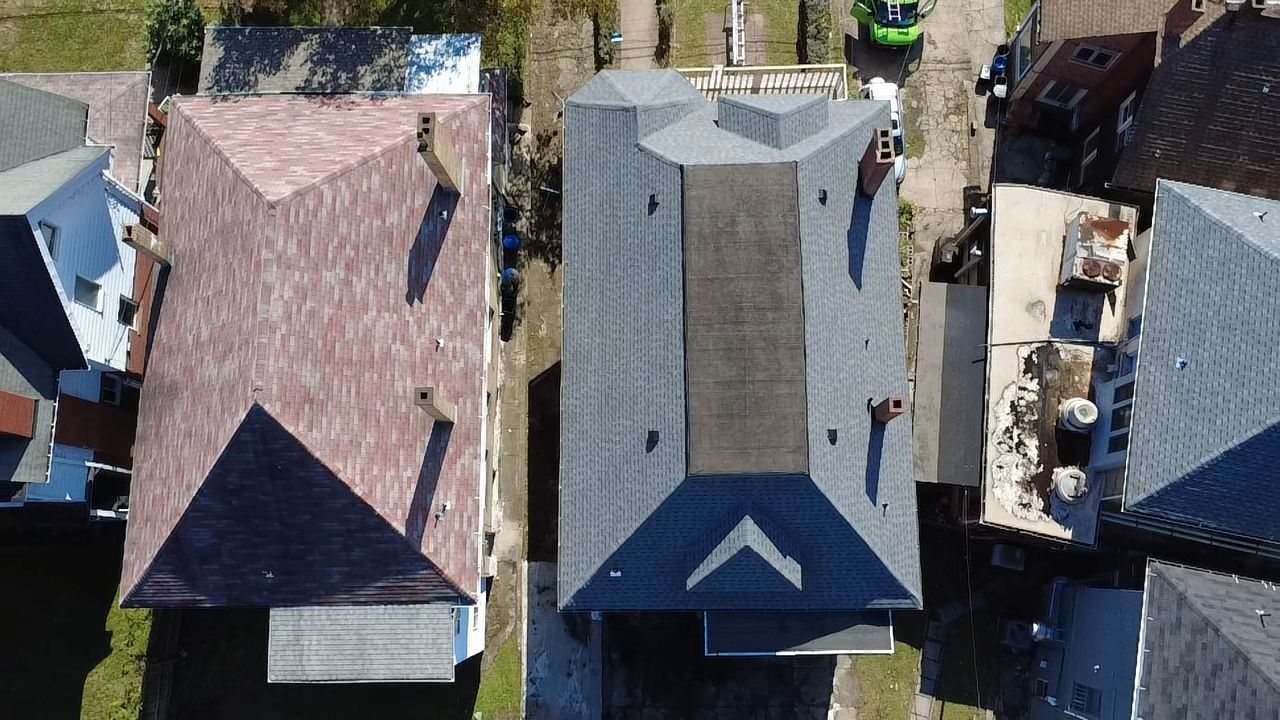
From the air, a roof looks like it covers the whole house, and it does cover the top. But a house isn’t a sealed metal box. Every wall, window and door is still open to radio waves, and those are the surfaces facing the tower.
That’s why you can make a call inside a grocery store or a warehouse with a big metal roof overhead. The walls around you matter far more than the lid on top.
A metal roof also doesn’t create static or electrical interference. It’s passive. It simply reflects some of the signal that hits it.
Overhead drone view of a new gray hip roof in Pittsburgh, Alan Construction.
Does a Metal Roof Affect Cell Phone Reception in Pittsburgh?
For most homes in the city and the surrounding boroughs, the honest answer is very little. Coverage around Pittsburgh is dense, and if your phone shows a strong signal standing in the driveway, a metal roof won’t change your daily calls or data. The Metal Roofing Alliance, the industry’s trade group, calls the interference negligible in its own myth busting piece on the topic.
Where it can matter is a house that is already on the edge. Our hills and river valleys create real dead spots. A home tucked down in a hollow or on the far side of a ridge may get one bar outside on a good day. In that house, every material that trims the signal counts, and a metal roof can be the last straw.
Things that stack up with a metal roof
- Brick or stone walls, common on older city homes.
- Plaster walls over metal lath, found in some older houses.
- Low E window glass, which uses a thin metallic coating that also reflects radio signal.
- Foil faced insulation or foil backed sheathing in the attic or walls.
- Metal siding, which together with a metal roof surrounds most of the house in metal.
One of these alone rarely kills a signal. Three or four together, in a spot with weak coverage, can.
What about 5G?
High band 5G, often called millimeter wave, runs above 24 GHz and struggles to get through almost any wall, not just metal. Most phone service inside homes still rides on lower frequency bands that pass through building materials far better. If you’re counting on high band 5G indoors, the roof is the least of your problems.
Does a Metal Roof Affect WiFi?
No. Your internet comes into the house on a cable, a fiber line or from a dish mounted outside, and it connects to a modem and router inside. The router then sends WiFi sideways through the rooms of your house. That signal never has to pass through the roof, so the roofing material doesn’t enter into it.
If WiFi feels slow after any roof job, check the usual suspects before blaming the roof:
- Router location: a basement corner, a closet or inside a cabinet.
- Older equipment that can’t cover a two or three story house.
- An internet plan slower than what the household actually uses.
- Thick interior walls, brick party walls in row homes, or big appliances between you and the router.
A mesh system or a second access point fixes most of these. The one real exception is a router or access point in the attic. There it sits right under the roof, and with metal overhead some of its signal bounces back. Move it to a top floor ceiling or shelf and the problem goes away.
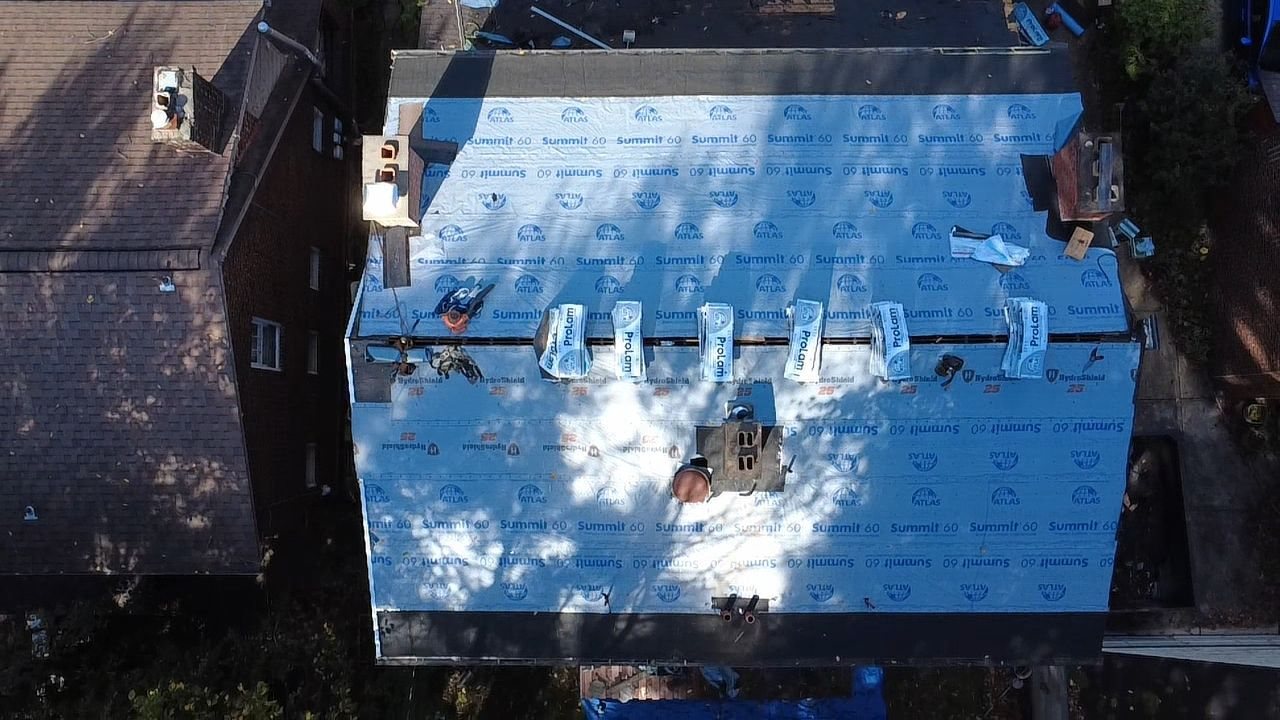
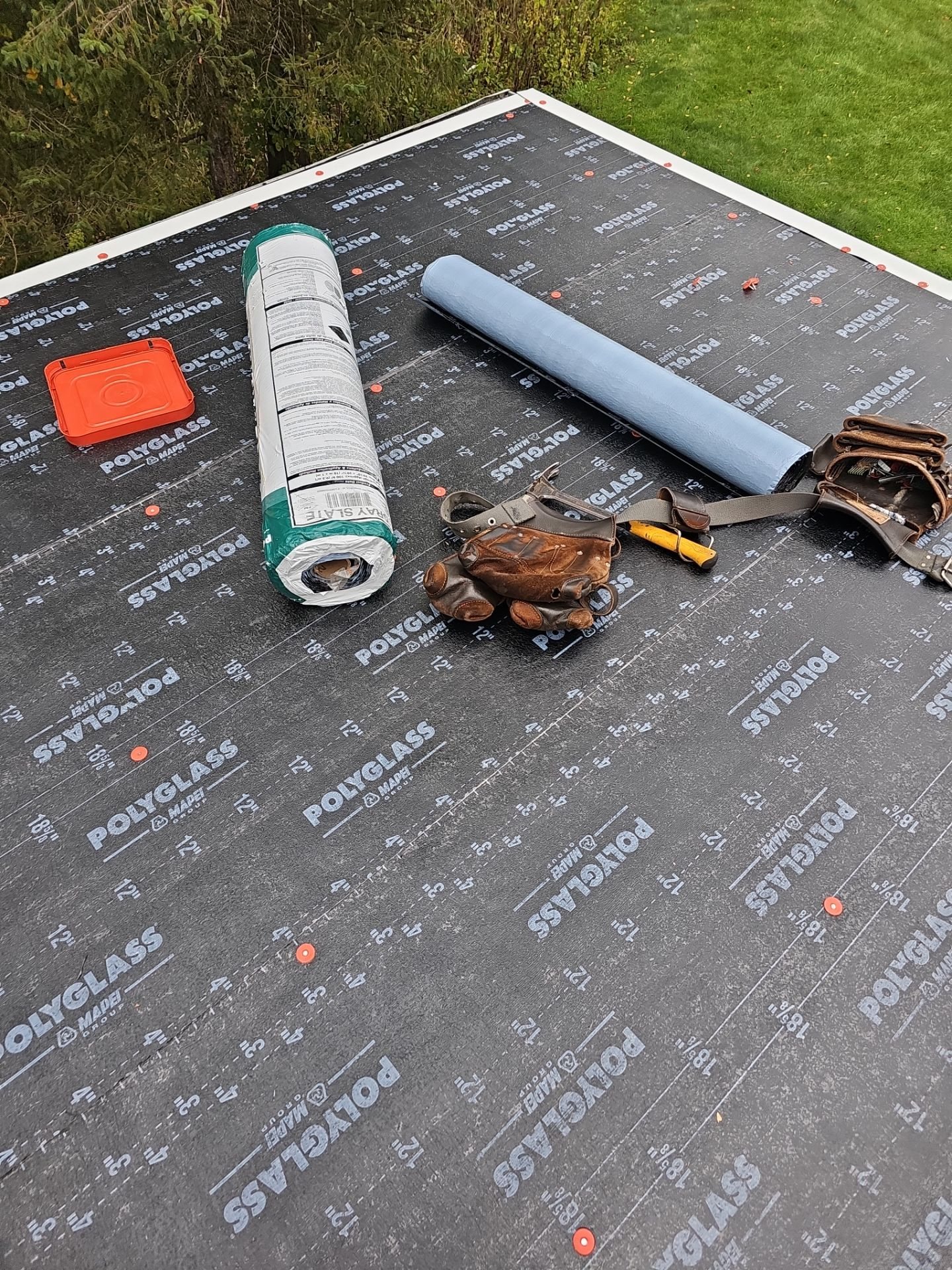
What sits under the roof matters as much as what’s on top. On a replacement like this one, the deck gets covered with synthetic underlayment before the shingles go on. That layer is a woven plastic, not metal, and it has no effect on signal. Our post on why roofing underlayment matters explains what it does do.
Foil is a different story. Foil faced insulation, radiant barriers and foil backed sheathing can block more signal than the roof itself, because they wrap the attic in a continuous metal sheet. If you’re chasing a reception problem, look up into the attic first.
Synthetic underlayment and shingle bundles on a Pittsburgh roof, Alan Construction.
Standing Seam or Metal Shingles: Does the Style Matter?
Residential metal roofing comes in two main styles. Standing seam uses long panels that run from ridge to eave with raised, locked seams. Metal shingles are smaller pieces formed to look like shingles, slate or shake.
Standing seam presents a larger unbroken metal surface, while metal shingles have more joints and overlaps. In practice the difference in reception between the two is small, and we wouldn’t pick one over the other for signal alone. Choose on looks, roof pitch and budget, then deal with reception if your home needs it.
How common building materials affect signal
| Material | Effect on cell signal | Why |
|---|---|---|
| Wood framing and drywall | Low | Most signal passes straight through |
| Asphalt shingles | Low | No metal sheet in the shingle itself |
| Clear window glass | Low | One of the main ways signal gets in |
| Brick and stone | Moderate | Thick, dense walls absorb more |
| Low E glass | Moderate to high | Thin metallic coating reflects signal |
| Metal roof | Moderate, overhead only | Most signal arrives from the side |
| Foil insulation or barriers | High | Continuous metal sheet |
| Metal roof plus metal siding | High | Surrounds most of the house |
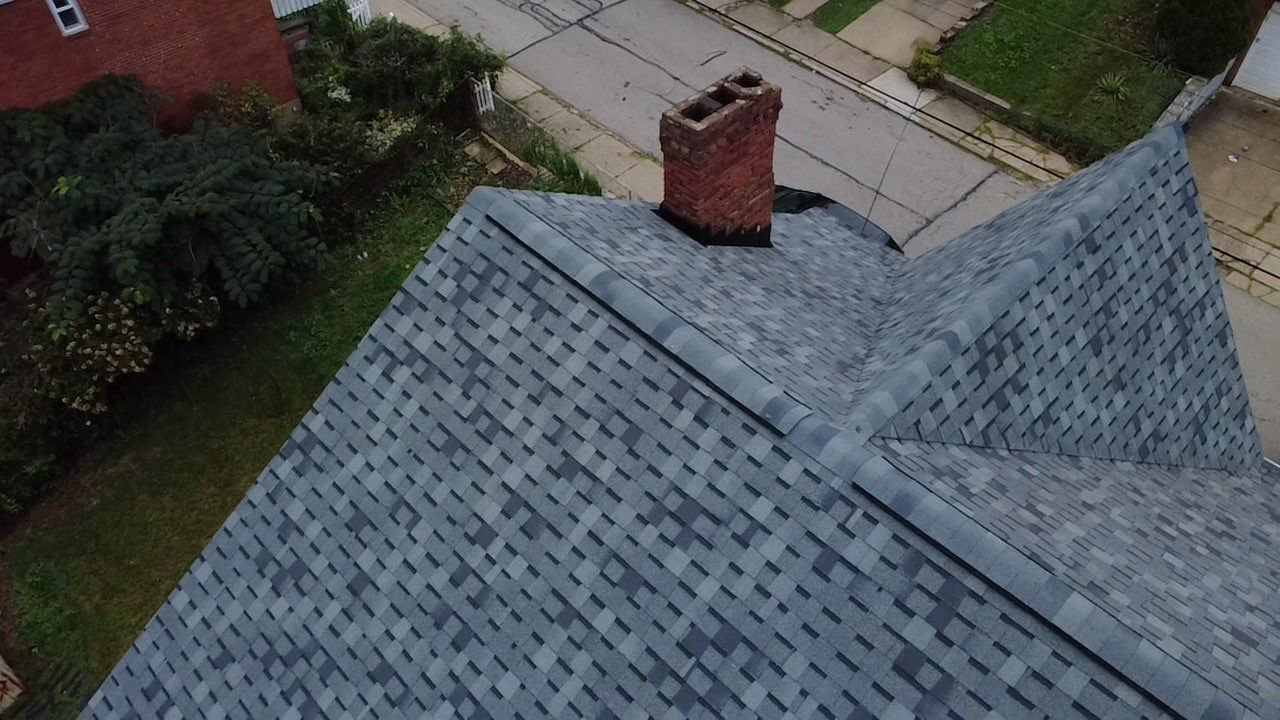
Here’s something most people don’t realize: a shingle roof already has metal on it. Drip edge runs along the eaves, valleys are often lined with metal, and the flashing around a chimney like this one is metal bent into the joint between brick and shingle. Our guide to how chimney flashing protects your roof covers that detail.
Nobody blames their chimney flashing for dropped calls. A full metal roof covers far more area, but the idea is the same: it shades the top of the house, not the sides facing the tower.
New gray architectural shingles around a brick chimney in Pittsburgh, Alan Construction.
How to Get Better Cell Service With a Metal Roof
If you lose bars after a metal roof goes on, or you already know your service is weak, these fixes work, from simplest to most involved.
Turn on WiFi calling
Most current phones support it, and the major carriers offer it. Your calls and texts travel over your home internet instead of the cell network, so the roof is out of the picture. It’s usually a single switch in your phone’s settings.
Install a cell signal booster
A booster uses an antenna outside the house to pick up the signal, amplifies it and rebroadcasts it indoors. The Federal Communications Commission points to boosters as especially useful in difficult indoor environments and at the fringe of coverage. Buy one approved for consumer use and register it with your carrier.
Ask your carrier about a network extender
Some carriers offer a small box that connects to your internet and acts like a tiny cell tower inside the house. Call and ask what they have for your address.
Use the windows
In a pinch, step closer to a window or an exterior door. Those openings are where most of the signal comes in.
Booster antennas, TV antennas and satellite dishes often end up mounted high. On any roof, every bracket and bolt that goes through the surface is a potential leak if it isn’t sealed and flashed correctly.
On this low roof in Imperial, the crew laid self adhered underlayment that seals tight to the deck. A mount drilled through later breaks that seal. That’s why we’d rather plan antenna or dish locations before the job than patch around them after.
A wall or gable end mount is often the cleaner choice. Tell us at the estimate if you plan to add one.
Self adhered underlayment and membrane rolls on a low roof in Imperial, Alan Construction.
Check Your Signal Before You Choose a Roof
- Stand in the driveway and note your bars, or the signal reading in your phone’s settings.
- Go to the top floor room right under the roof and check again.
- Repeat at a few times of day, since network load changes.
- Write the numbers down so you have a baseline if anything changes later.
If you get a strong signal outside, reception shouldn’t stop you from choosing metal. If you’re already down to one bar outside, plan on WiFi calling or a booster no matter what roof you pick, because the problem is coverage, not roofing.
When we come out for an estimate, we’re on the roof and in the attic anyway, so ask us to point out anything up there that could hurt signal. As Greg J. wrote in his review, “Alan construction was the only company that actually came to our house to give us an estimate, not just driving by or looking at google images.”
What Is the Biggest Problem With Metal Roofs?
Signal isn’t it. These are the real tradeoffs to weigh:
- Upfront investment: metal costs more to buy and install than asphalt shingles.
- Denting: thinner panels and softer metals can dent from hail or falling limbs.
- Oil canning: some standing seam panels show visible waviness across flat areas, a cosmetic issue.
- Movement: metal grows and shrinks with temperature, so clips and fasteners have to allow for it, and exposed fastener panels need their screws checked over time.
- Noise: over a solid deck with underlayment, rain is far quieter than on a barn, but it’s still worth asking about.
- Installer skill: trim, flashing and seams are less forgiving than shingles.
On the plus side, a well installed metal roof lasts a long time and sheds snow well, which counts during a Pittsburgh winter. Compare it against asphalt and slate in our guide to which roofing material lasts longest in Pittsburgh.
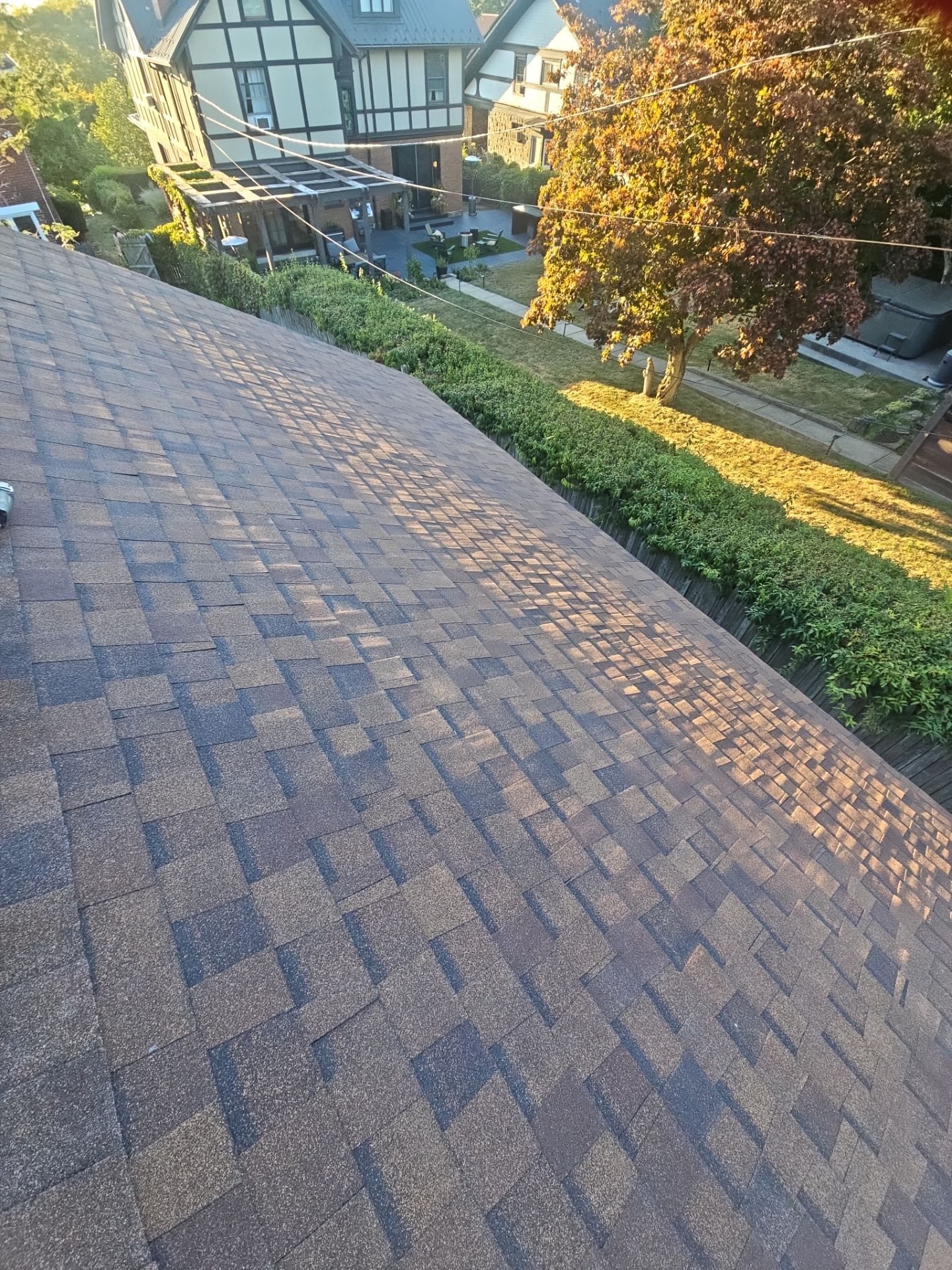
Most homes we roof still get architectural asphalt shingles like these. We install Atlas shingles, including Pinnacle Pristine, and we install metal too, so we don’t have a reason to push you one way.
The choice between asphalt and metal comes down to budget, how long you plan to stay, the look you want and the pitch of your roof. Reception is rarely the deciding factor.
If you’re on the fence, we can quote both options so you can compare. Financing is available through our lender network on the financing page.
New brown blend architectural shingles on a Pittsburgh roof, Alan Construction.
Thinking about a metal roof, or just want to know what your current roof needs? Schedule a free estimate and we’ll walk the roof, check the attic and give you straight answers with no obligation.