Vinyl siding thickness on residential panels typically falls between about 0.040 and 0.048 inches, which is the range one major manufacturer, Alside, publishes for its own lines, and 0.035 inches is treated as the minimum when comparing products. Thicker panels are stiffer and carry higher wind ratings, but thickness is only one of several things that separate a good vinyl siding grade from a cheap one.
When you’re collecting quotes for a whole house siding project, those decimals start showing up on spec sheets, and it’s hard to know what they mean. This guide explains the numbers, the grades contractors talk about, and the other details that matter just as much. When you’re ready to see options on your own walls, our page on siding installation in Pittsburgh explains how we plan and install a full vinyl project.
Short answer: For a full Pittsburgh siding job, look past the thinnest economy panels toward a mid or upper grade, then check the nail hem, profile, color certification and installer. A thick panel installed badly still fails.
How Vinyl Siding Thickness Is Measured
Thickness is the depth of the vinyl itself, measured in thousandths of an inch. You’ll see it written as .040, 0.044 or “44 mil” depending on who printed the brochure. They all mean the same scale.
The numbers look tiny because they are. The difference between an economy panel and a premium one is less than the thickness of a credit card, yet you can feel it right away when you hold the two side by side. The thicker panel is noticeably stiffer and doesn’t flop when you pick it up by one end.
Siding manufacturer Alside says a thickness of 0.035 inches is the minimum standard when comparing vinyl siding, and its own residential lines run from 0.040 to 0.048 inches nominal.
Vinyl Siding Grades and What the Numbers Mean
There’s no single official grading chart that every brand uses. Contractors and manufacturers tend to group panels into economy, standard and premium tiers, and each brand draws the lines a little differently. One manufacturer’s published product list shows how the range looks in practice.
| Alside product line | Nominal thickness | Place in the Alside range |
|---|---|---|
| Conquest | 0.040 in. | Thinnest |
| Coventry | 0.042 in. | Lower |
| Odyssey Plus | 0.044 in. | Middle |
| Charter Oak | 0.046 in. | Upper |
| Board and Batten vertical | 0.048 in. | Thickest (vertical style) |
Other brands follow a similar pattern. Use the table as a way to read any quote: find the thickness on the spec sheet, then see whether it falls near the bottom, middle or top of the typical range.
What thicker panels give you
Alside lists the benefits of thicker siding as greater strength and durability, higher wind ratings and weather resistance, more rigidity, a smoother finish and less noise coming through the wall.
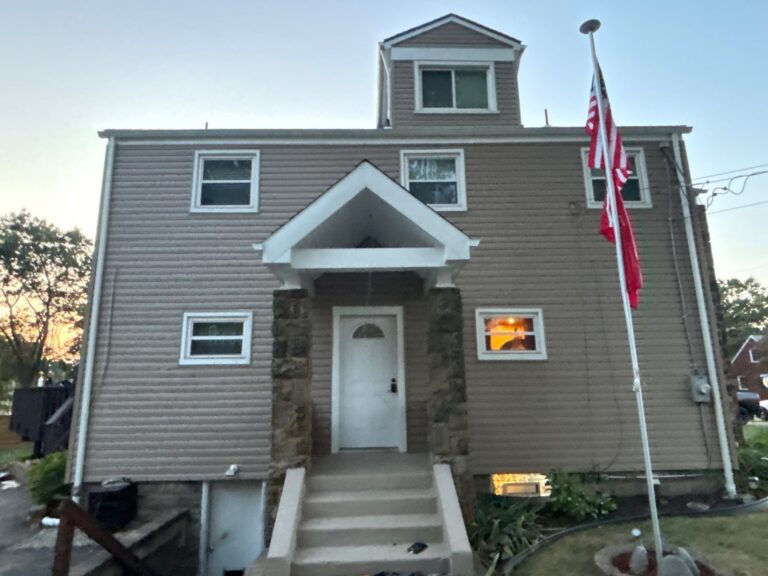
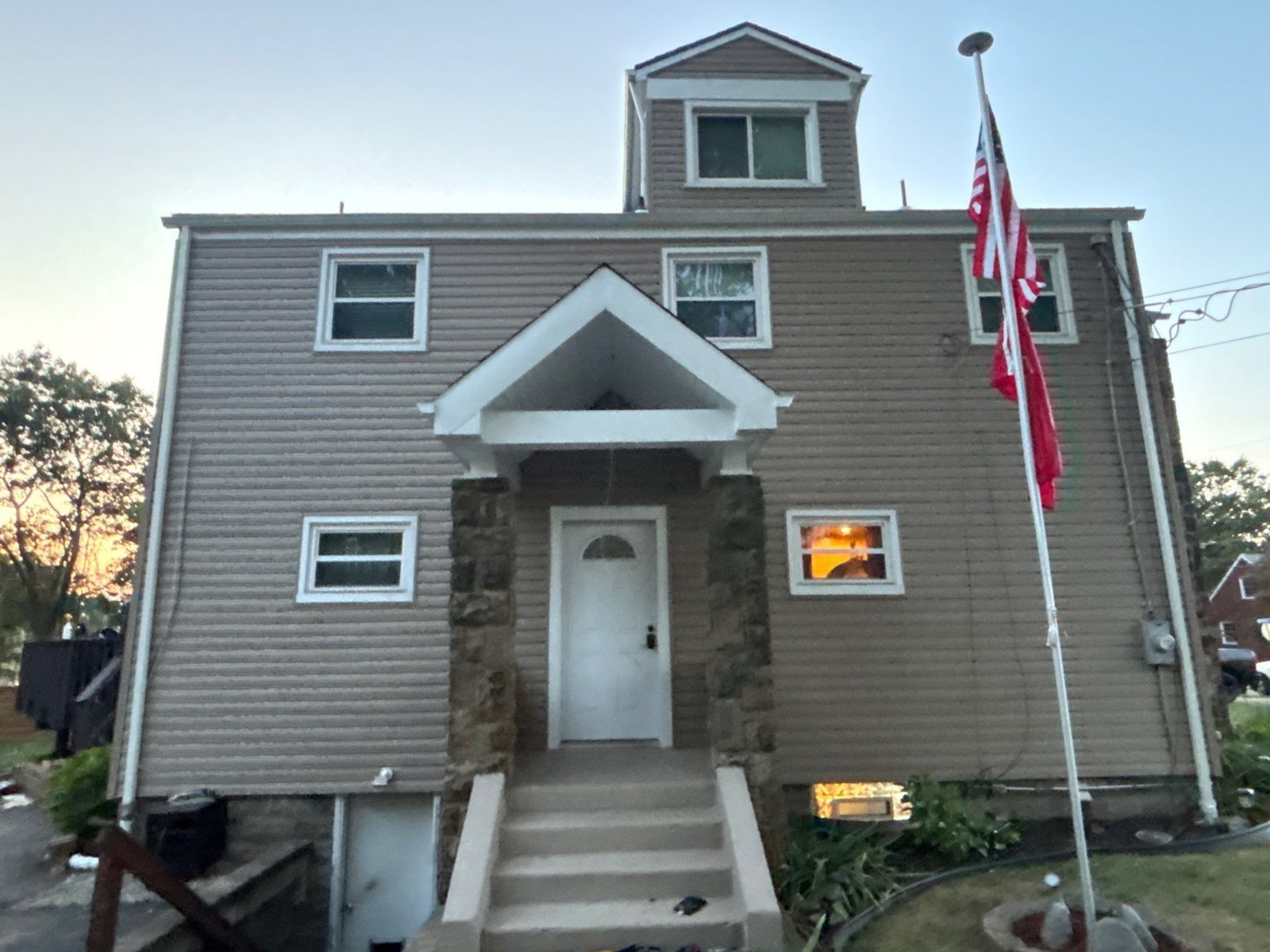
You see the payoff on a front like this Carnegie home, where long runs of siding meet stone columns and a dormer. Stiffer panels stay straight across the wall and keep clean lines at every corner and trim piece.
New tan siding with stone porch columns and a dormer on a home in Carnegie, Alan Construction.
What Is the Best Thickness for Vinyl Siding?
For most full replacement projects, a mid range panel is the sweet spot, and an upper range panel is worth it on the walls that take the most abuse. Here’s how we think about it with homeowners.
Economy panels
The thinnest products are common on new construction where price comes first. They meet the minimum, but they’re the least rigid option on a long wall. For a whole house project, we’d suggest looking above them.
Mid range panels
Around the middle of the range you get a stiff, straight panel that handles everyday bumps. For most Pittsburgh homes, this is where value and durability balance out.
Upper range panels
The thickest lines suit tall walls, homes on exposed hilltops and families who want the most rigid look. They’re also the best match for deep, shadowy profiles.
Thickness Isn’t the Only Mark of Quality
Two panels with the same thickness can perform very differently. When you compare quotes, ask about these details too.
Nail hem. The strip along the top of each panel is where the nails go. A double thick or rolled hem holds better in wind and resists tearing.
Profile and depth. Taller, deeper panel faces cast a stronger shadow line and look more like real wood lap.
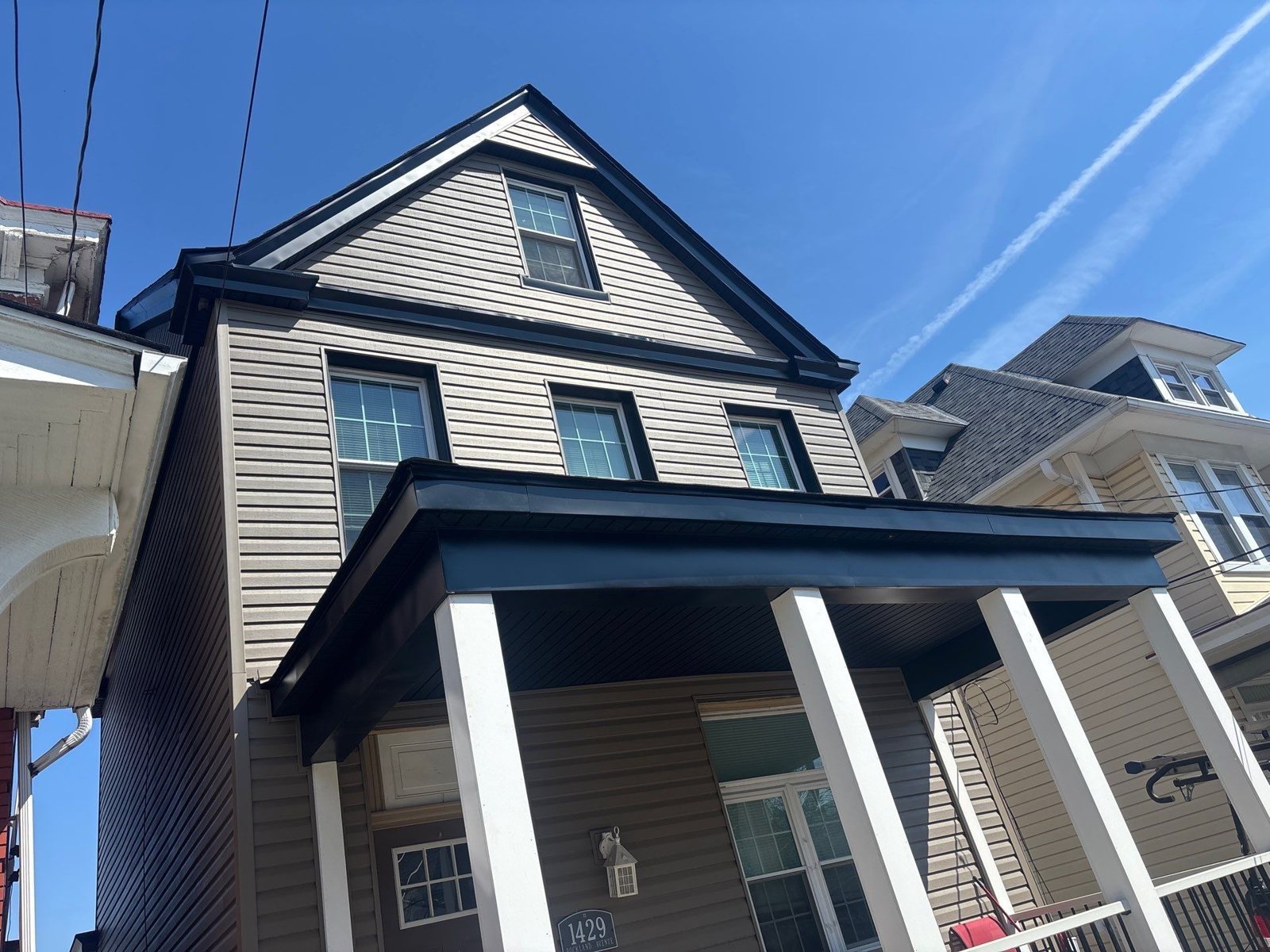
Color retention. Darker colors and black trim like this Pittsburgh porch front need a color made to hold up in the sun.
Tan vinyl siding with black trim on a porch front Pittsburgh home, Alan Construction.
Look for the certification label
The Vinyl Siding Institute runs a third party certification program for siding tested to the ASTM D3679 standard. According to the institute, certified siding has to meet the manufacturer’s advertised thickness and withstand winds of 110 mph, and individual colors can be certified for color retention after outdoor weathering tests. If a spec sheet lists a thickness, certification is how you know the panel actually measures up.
D4 vs D5 and Other Siding Size Terms
Thickness gets confused with the size of the panel, so here are the terms you’ll hear at an estimate.
- D4 and D5. “Double 4” and “double 5” describe a panel shaped like two boards stacked together, each showing about 4 or 5 inches. D4 gives a tighter, more traditional look; D5 shows wider boards and fewer lines.
- Panel length. Most horizontal panels come in long lengths so a typical wall needs fewer seams.
- A square. Siding is ordered by the square, which covers 100 square feet of wall. Two squares cover about 200 square feet before waste for windows, doors and cuts.
Why Installation Matters More Than an Extra Few Mils
Vinyl grows and shrinks with temperature, and Pittsburgh swings hard between summer heat and winter freezes. Panels have to be nailed in the center of the slots and left loose enough to slide. Nail them tight and even the thickest siding buckles by August.
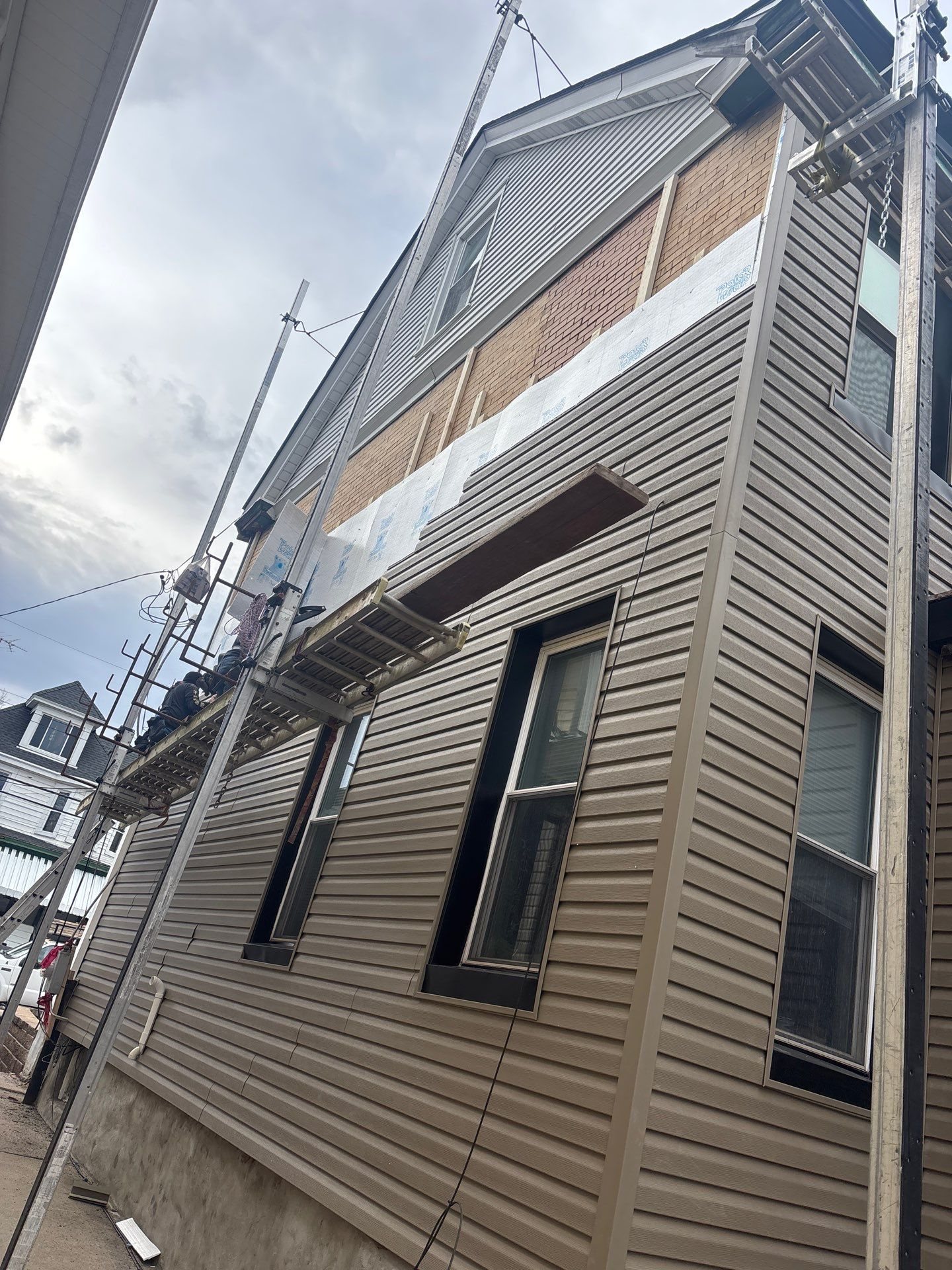
Tall walls like this one show every mistake, because a wave or a crooked course runs the full height of the house. Careful layout, level starter strips and a properly wrapped wall underneath matter more than choosing 0.046 over 0.044.
Tall wall with new tan siding and a ladder on a Pittsburgh home, Alan Construction.
Picking a Vinyl Grade for a Pittsburgh Home
Our homes take a beating from freeze and thaw cycles, wind on the ridges, and tight lots where ladders, bikes and snow shovels bump the walls. That’s why we usually point homeowners doing a full siding job toward a mid or upper grade panel instead of the cheapest line.
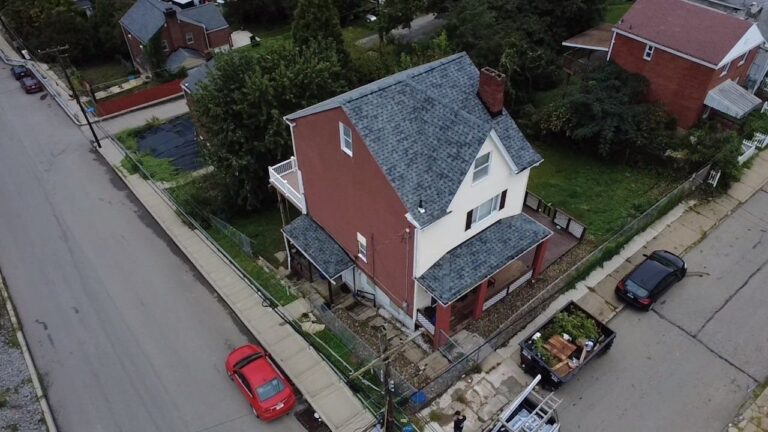
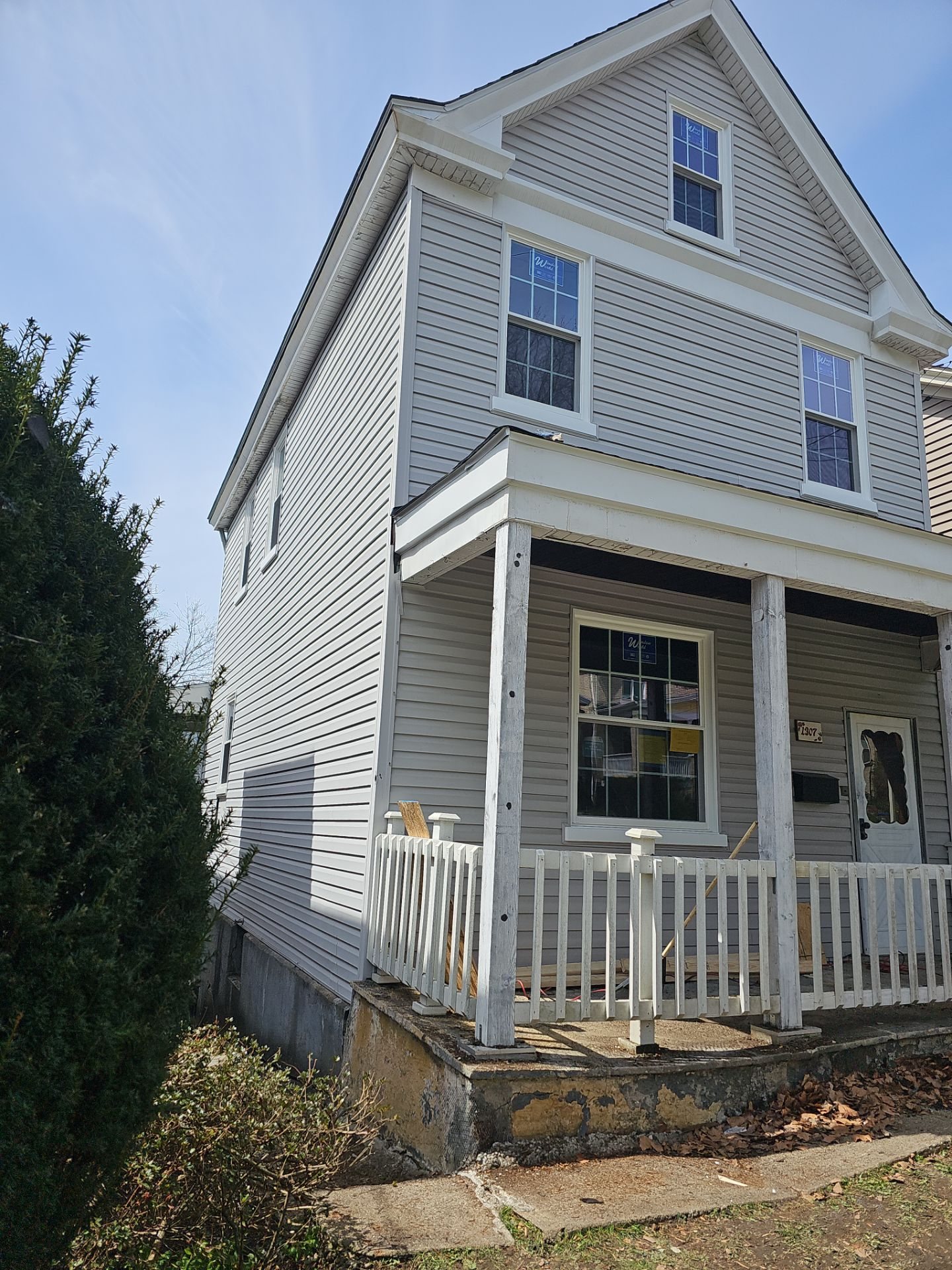
A two story house like this one, with a porch and a long side wall, is a good example of where a stiffer panel keeps the whole front looking straight.
Two story Pittsburgh house with gray siding and a white porch railing, Alan Construction.
If your current siding is already cracking or fading, our post on signs it’s time to replace your siding can help you decide, and our guide to how long siding materials last puts vinyl in context. Planning a bigger refresh? These exterior upgrades for curb appeal pair well with new siding.
What affects the cost of a better grade
Thicker lines cost more to buy, but the panel is only part of a siding estimate. Wall area, height, how much old siding comes off, wall repairs, trim, soffit and fascia all play a bigger role. A free estimate lets us price two or three grades on your actual house so you can compare them honestly.
Want to see the grades side by side? Book a free siding estimate and we’ll bring samples, measure your home and price the options for you.