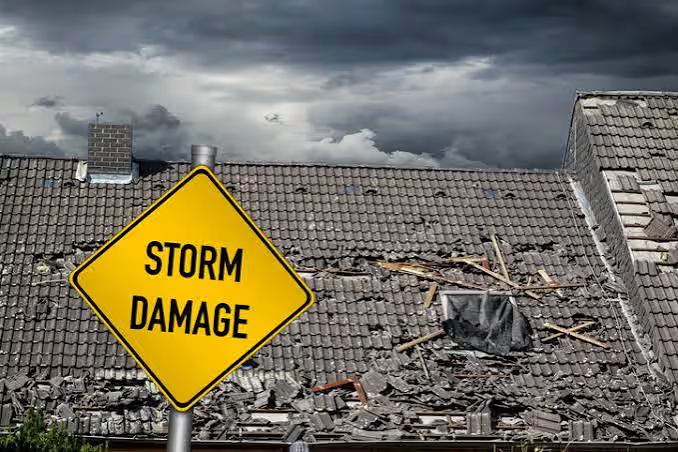
After a storm, look for missing or creased shingles, dented or loose flashing, granules piling up in the gutters, cracked or blown off siding, and any new water stains in the attic or on ceilings. If you find any of it, document it with photos, keep water out, and have a local roofer inspect before you call it minor or file a claim.
Roof storm damage in Pittsburgh is often hard to see from the yard. We’ve been fixing roofs and siding here since 2003, and this guide walks through what we check on a storm call. If you already know you have damage, our page on storm damage roof repair in Pittsburgh explains how we handle the inspection, the insurance side and the repair.
Short answer: Walk the outside of the house from the ground, check the attic for water, take dated photos of everything, and get a free inspection from a registered local contractor before you agree to any repair or sign anything.
What Roof Storm Damage in Pittsburgh Usually Looks Like
Summer thunderstorms, the occasional hailstorm and winter wind each leave a different kind of mark.
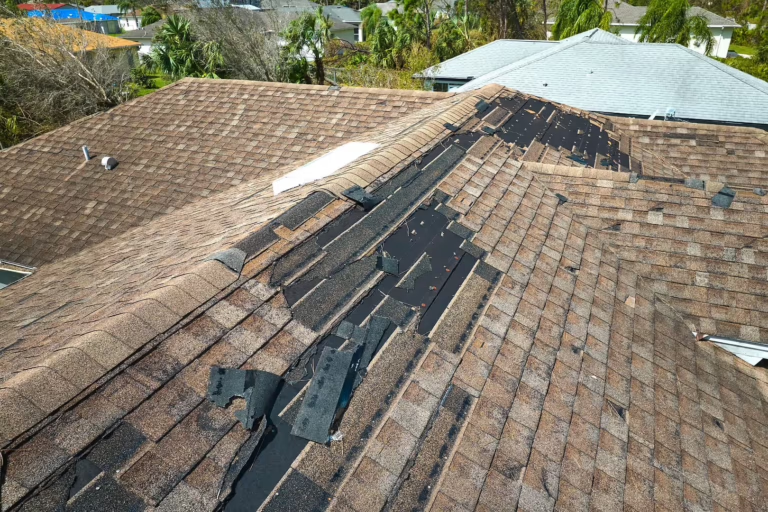
- Wind lifts shingle edges, breaks the seal strip, creases shingles back on themselves, and peels off ridge caps and starter rows first.
- Hail knocks granules loose, leaves soft bruises in shingles, and dents metal vents, gutters and downspouts.
- Heavy rain finds every weak spot: worn flashing, an open nail hole, a seam on a flat roof, a clogged valley.
- Falling limbs can crack decking, punch through shingles, and tear gutters and siding on the way down.
Wind usually hits one side of a house harder than the others, so damage is often concentrated on a single slope. That’s why we check every slope, not just the side you can see from the street.
Start on the Ground: A Safe Walk Around
Don’t climb onto a wet or damaged roof. Most of what you need to see can be spotted from the yard or a window. Watch for downed wires and hanging limbs. The National Weather Service has good thunderstorm safety guidance for the hours after a storm.
On your walk around, look for:
- Shingles, shingle pieces or ridge caps in the yard, driveway or street
- Dark patches or lines on the roof where shingles have lifted or gone missing
- Bent or loose metal at chimneys, walls and roof edges
- Gutters that sag, pull away from the fascia or have new dents
- Siding panels that are cracked, loose, holed or missing
- Branches resting on the roof or broken limbs over it
Binoculars help. If a neighbor’s roof lost shingles, yours took the same wind.
Roof Signs to Look For After a Storm
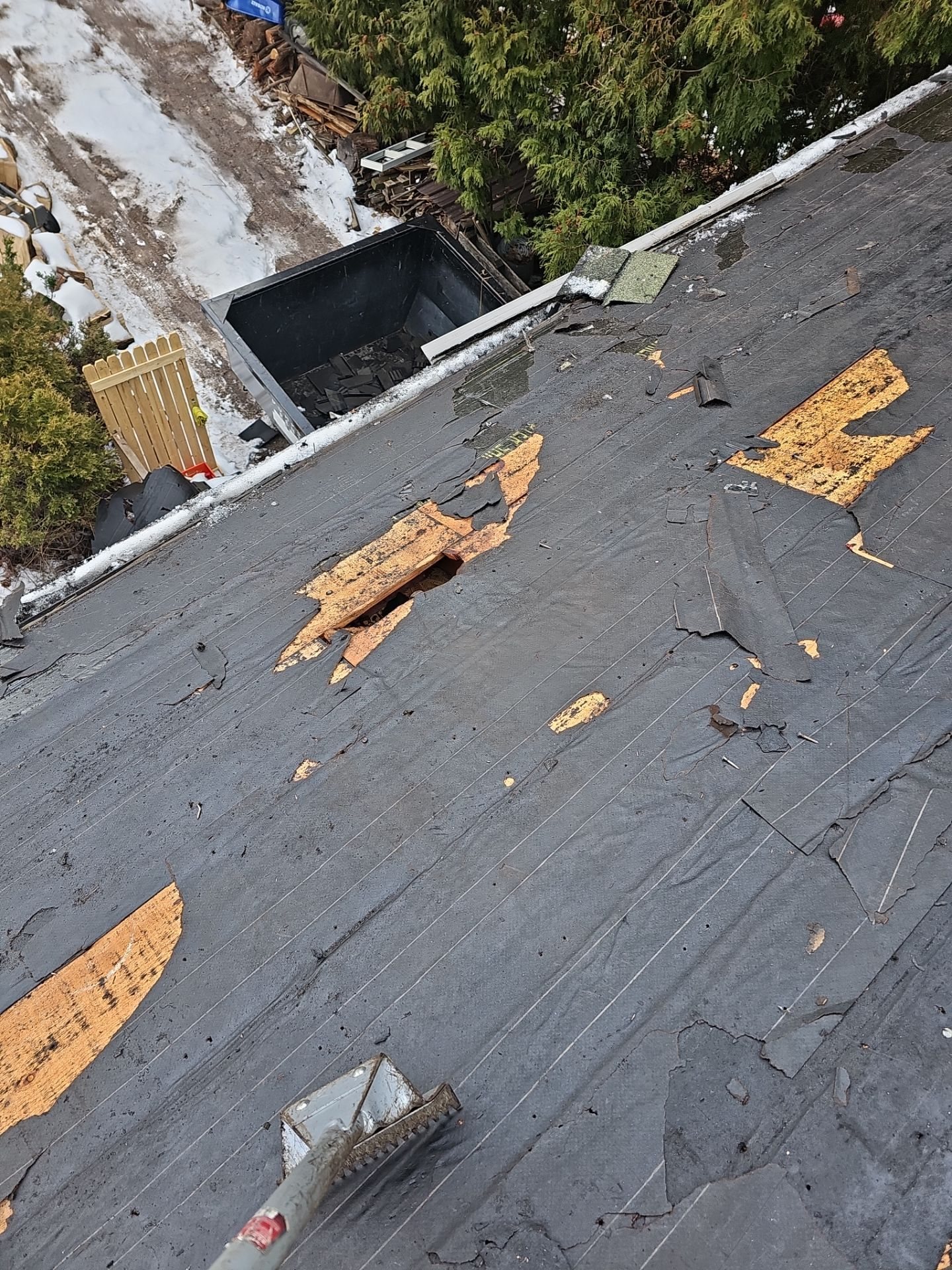
Flat and low slope roofs fail differently from shingle roofs. Wind gets under a loose edge or a tired seam and pulls the membrane back, and once the deck is exposed, the next rain goes straight into it.
This low slope roof was already worn thin, with torn patches showing the deck. A roof in this shape has no margin left when a storm comes through. On a rubber roof, check edges and seams for lifting or loose patches after any strong wind.
Worn low slope roof in Pittsburgh with torn patches exposing the deck, Alan Construction.
Wind Damage on Shingle Roofs
Missing shingles are obvious. The damage that gets missed is the shingle that’s still there but no longer sealed. When wind lifts a tab, it can crease the shingle across the top. That crease is a weak line that will tear in the next storm, and the broken seal lets wind driven rain get underneath. Ridge caps and roof edges take the most wind, so look there first.
Hail Damage
Hail damage on asphalt shingles shows up as dark spots where granules were knocked off, soft bruises you can feel, and cracked or split shingles. Small hail often leaves the best evidence on soft metal: dented gutters, downspouts, vent caps and window wraps. We wrote a full guide on the signs of hail damage on asphalt shingles if you want to look closer.
Flashing, Chimneys, Vents and Skylights
Flashing is the metal that seals the joints where the roof meets a chimney, a wall, a skylight or a pipe. A storm can bend it, loosen it or crack the sealant behind it. Many leaks that show up a week after a storm start at flashing, not at the shingles.
| What you see | Where to look | What it can mean |
|---|---|---|
| Shingles or caps in the yard | Yard, gutters, driveway | Wind damage, likely more lifted shingles nearby |
| Granules piled in gutters or at downspouts | Gutter troughs, splash blocks | Hail impact or an aging roof |
| Dents in vents, gutters or window wraps | Soft metal on the roof and walls | Hail, and possible shingle bruising |
| Bent or loose metal at a chimney or wall | Roof to wall joints, chimney base | Flashing damage and a future leak |
| Cracked, holed or missing siding | Windward walls, corners, gables | Wind or debris damage, water behind the wall |
| New stain on a ceiling or attic board | Attic, top floor ceilings, closets | Water already getting in |
Check the Siding, Gutters, Soffit and Fascia
Storms don’t stop at the roof. Vinyl siding locks panel to panel, so when wind gets under one loose piece, it can unzip a row and crack the panel above it. Debris and hail leave holes and cracks, especially on the walls that faced the storm.
Walk each wall and look for loose or missing panels, cracks and holes, gaps at corners and around windows, and trim that has pulled away. An open spot in the siding lets rain soak the sheathing behind it, so it’s worth fixing quickly. One homeowner, Sean W., described it in his Google review: “Piece of siding flew off in a windstorm friday night, I called saturday afternoon and they came out sunday morning to replace it for my family.”
Then look up at the gutters, soffit and fascia. A gutter that took a limb can sag or pull loose and tear the fascia with it, and soffit panels can blow out and let critters in. When panels can’t be matched or damage covers whole walls, see our siding installation page.
Look Inside: The Attic and Ceilings
The attic tells you whether water is already inside. Take a flashlight and check the underside of the roof boards, around the chimney and along valleys.
Look for dark or wet spots on the wood, drips, damp or matted insulation, and daylight where there shouldn’t be any. Downstairs, check the top floor ceilings and the corners of closets for new stains.
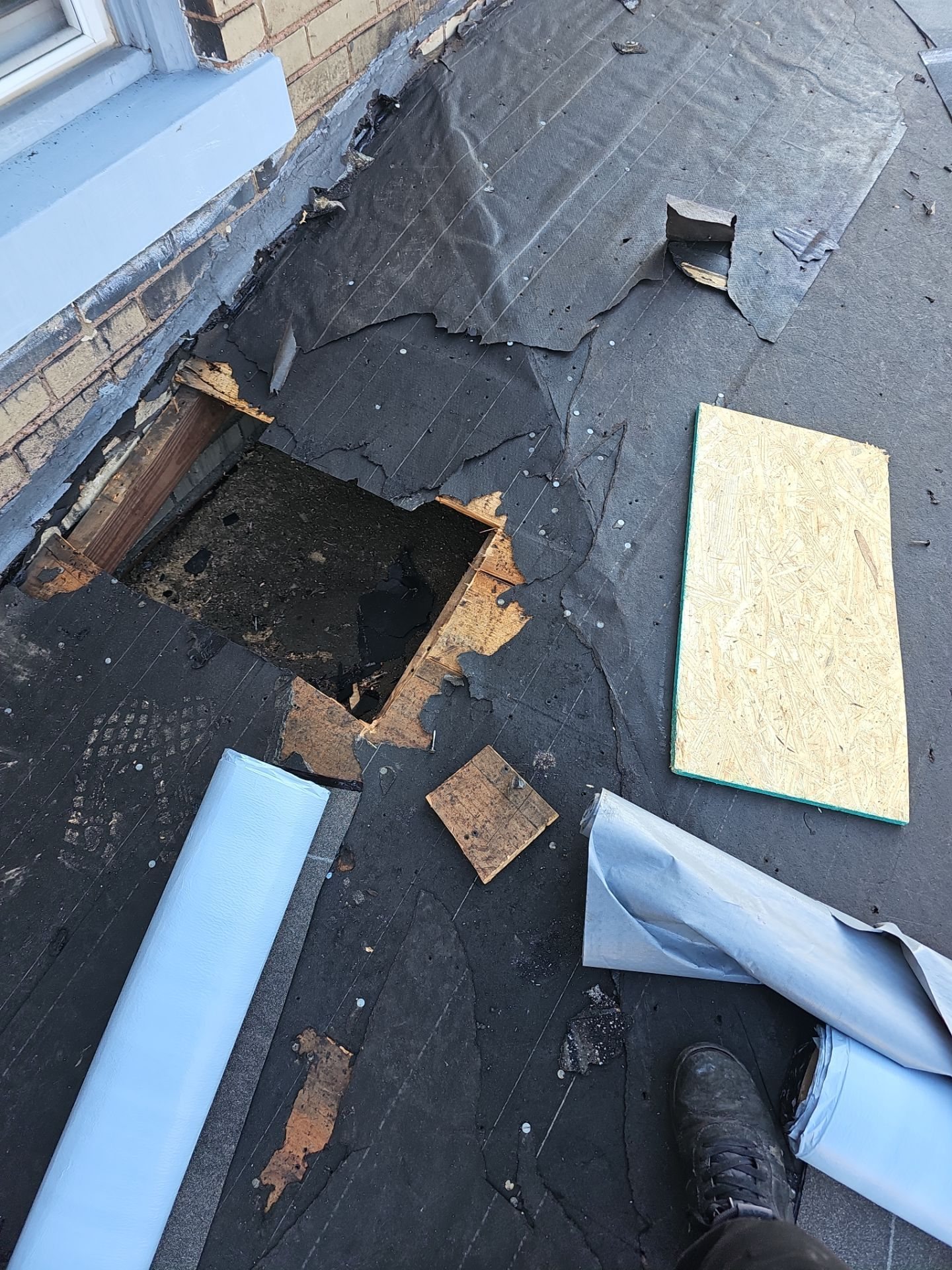
Water that sits on roof boards rots them, like the section we cut out on this McKeesport job.
Rotted deck section cut out on a torn off low slope roof in McKeesport, Alan Construction.
Storm Damage or Normal Wear?
Not everything you find after a storm was caused by the storm. Homeowners insurance generally covers sudden damage, like a windstorm tearing off shingles or hail bruising them. It generally does not cover a roof that has simply worn out.
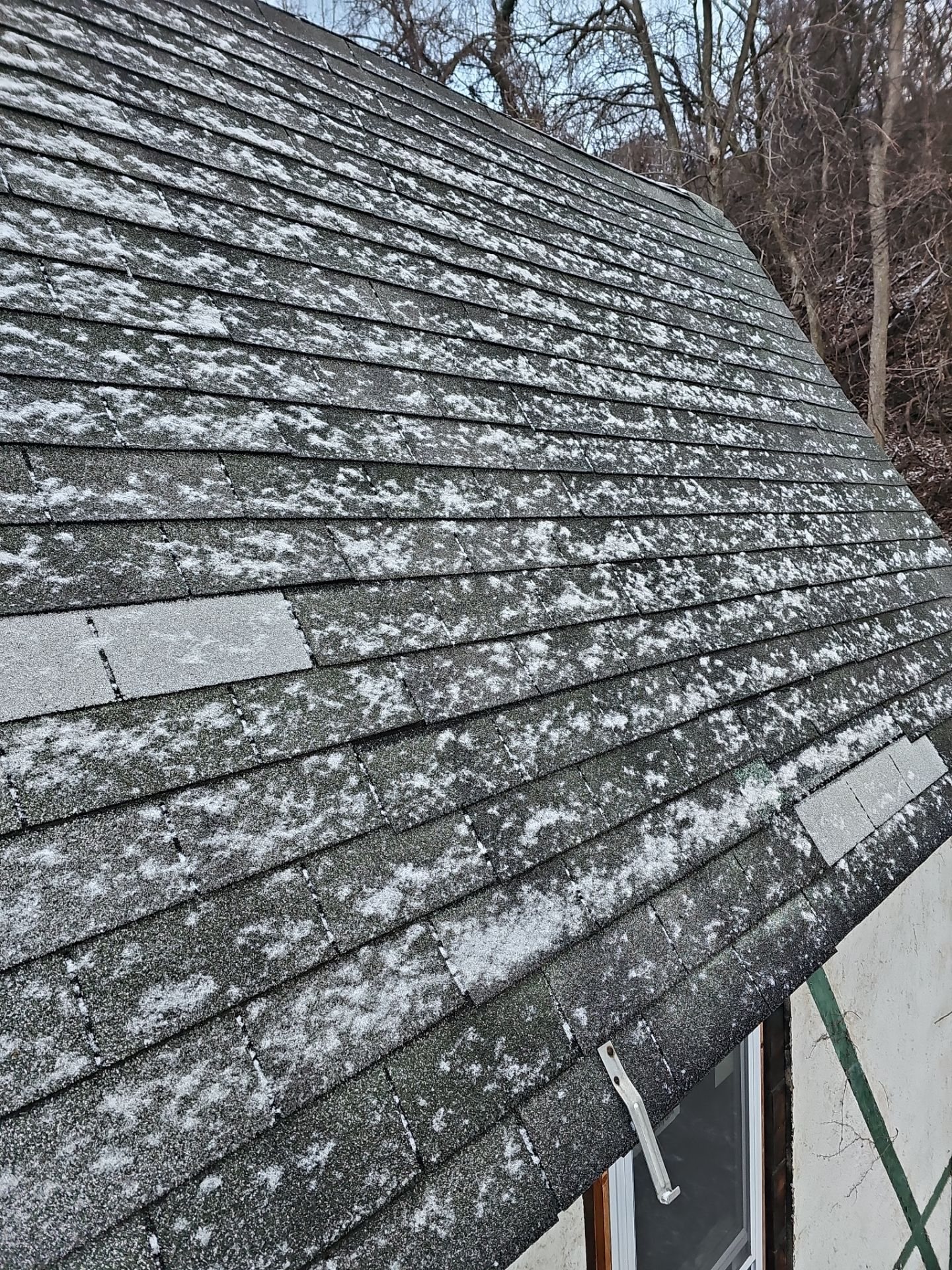
This Pittsburgh roof shows wear: old shingles covered in lichen and moss. A storm might finish it off, but an adjuster will see the age too.
An honest inspection separates the two. We’ll tell you what looks like storm damage, what looks like age, and whether a claim makes sense before you file one.
Old worn shingles covered in lichen and moss on a Pittsburgh roof, Alan Construction.
If you’re not sure how your policy treats leaks and older roofs, our post on whether homeowners insurance covers roof leaks in Pittsburgh walks through the usual rules. Your own policy wording is what counts, so read it or ask your agent.
What to Do in the First Day or Two
- Stay safe. Keep off the roof, stay clear of downed wires, and keep people out of rooms with sagging or wet ceilings.
- Take photos and video. Shoot the roof from the ground, every wall, the gutters, debris in the yard, and any inside stains. Your phone records the date.
- Keep water out. Move belongings, put down buckets, and if there’s an opening in the roof, have a roofer tarp it. Keep receipts for tarps and emergency work.
- Call your insurance company if you see real damage. Many policies set a deadline for reporting a loss, so don’t wait months.
- Get a local inspection. Have a registered Pittsburgh contractor look at the roof and siding before the adjuster visits, so you know what to point out.
Watch Out for Storm Chasers
After a big storm, out of town crews knock on doors asking for a deposit or a signature on the spot. Pennsylvania requires home improvement contractors to register with the Attorney General, and you can look up any contractor’s number in the PA home improvement contractor registry. Our registration is PA#126638, and we’re BBB Accredited with an A+ rating.
Working With Your Insurance Adjuster
The adjuster decides what the claim covers, and they move fast. We meet adjusters on the roof so the damage we found doesn’t get missed: creased shingles on the back slope, bent flashing at the chimney, hail dents on the vents.
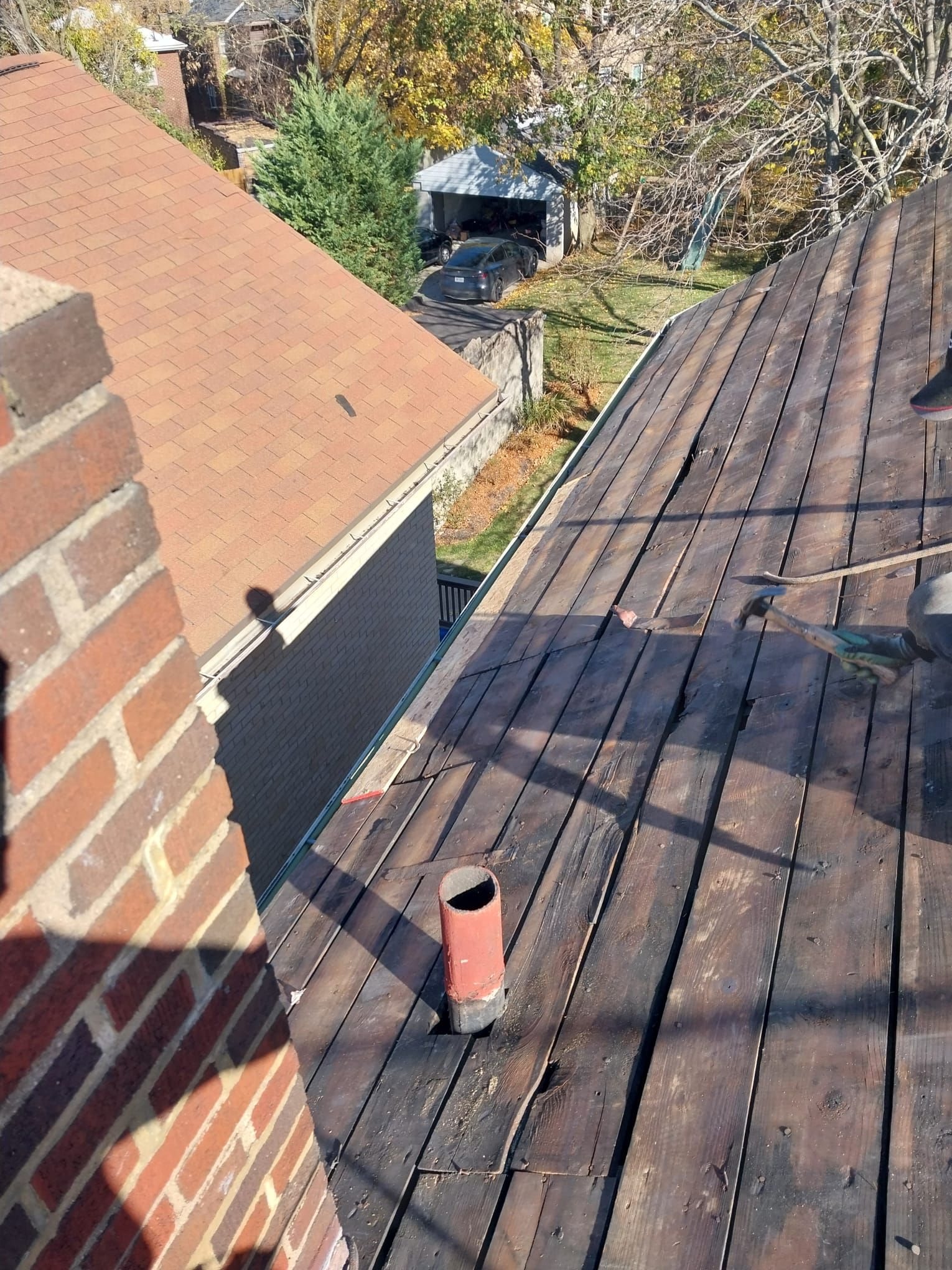
On this Pittsburgh job, tearing off the old roof exposed the original board decking beside the chimney. Clear photos and notes matter while a claim is open.
What you say to an adjuster matters too. Read our guide on what not to say to a roof insurance adjuster before the visit.
Old board decking exposed after tear off beside a brick chimney in Pittsburgh, Alan Construction.
Suzanna M. wrote in her Google review: “We then hired them to replace our roof which was damaged in the windstorm from last spring, and they worked with us and our insurance company to thoroughly replace and repair everything.” If you have trouble with a claim, the Pennsylvania Insurance Department has consumer help and a complaint process.
Repair or Replace After a Storm?
A few lifted shingles, one piece of flashing or a handful of siding panels can usually be repaired. Replacement makes more sense when damage is spread across several slopes, the roof was already near the end of its life, or water has reached the decking.
What drives the cost is the size and pitch of the roof, how many layers have to come off, how much decking needs replacing, and the flashing, vents and gutters involved. We give free, no obligation estimates that spell all of that out. Most of our roofing jobs are finished in one day, we install Atlas shingles, including Pinnacle Pristine, and we sweep the yard with a magnet before we leave. If the claim doesn’t cover everything, we also offer financing.
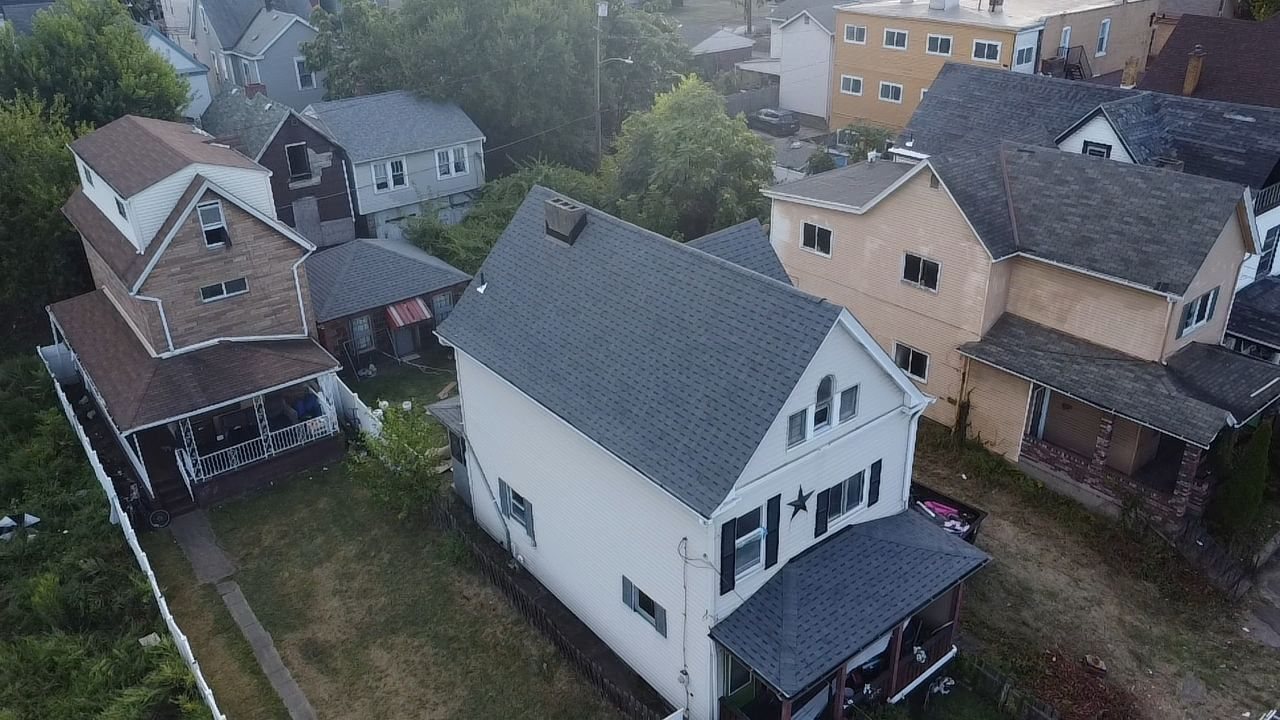
Think a storm hit your roof or siding? Request a free, no obligation inspection and we’ll show you what we find, with photos, before you call your insurance company.