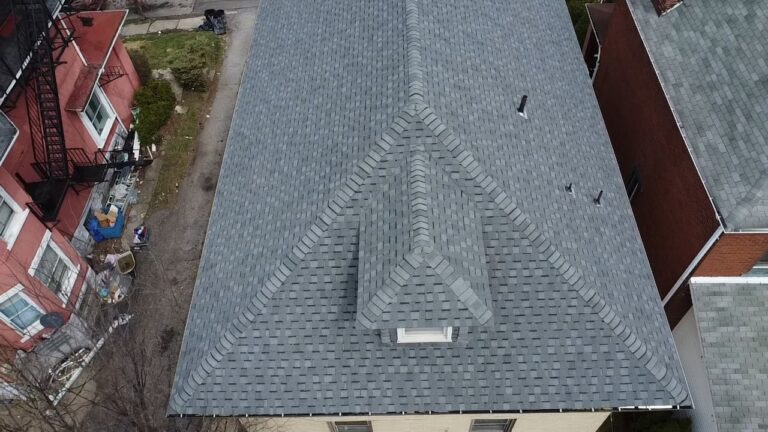
Does homeowners insurance cover roof leaks? Usually yes, when the leak comes from a sudden, accidental event like a windstorm, hail or a falling tree limb, and usually no when it comes from an old, worn out or neglected roof. That one distinction decides most claims we see in Pittsburgh, so it pays to understand it before you call your agent.
We’ve been roofing around Pittsburgh since 2003, and we work with homeowners and their insurance companies on storm claims every year. We meet the adjuster on the roof, point out what we found and put it in writing. If a storm just opened up your roof, our storm damage roof repair in Pittsburgh page explains how we handle the inspection and the claim.
Short answer: A homeowners policy typically covers a roof leak and the water damage inside when a covered event like wind, hail or a fallen limb caused it. Leaks from age, wear and tear or skipped maintenance are typically excluded.
When Does Homeowners Insurance Cover Roof Leaks?
Insurers sort damage into two piles: covered perils and everything else. A covered peril is a sudden event named in your policy. Wear and tear is not an event, so it lands in the other pile no matter how much water comes through.
Here are the causes that usually lead to a paid roof leak claim:
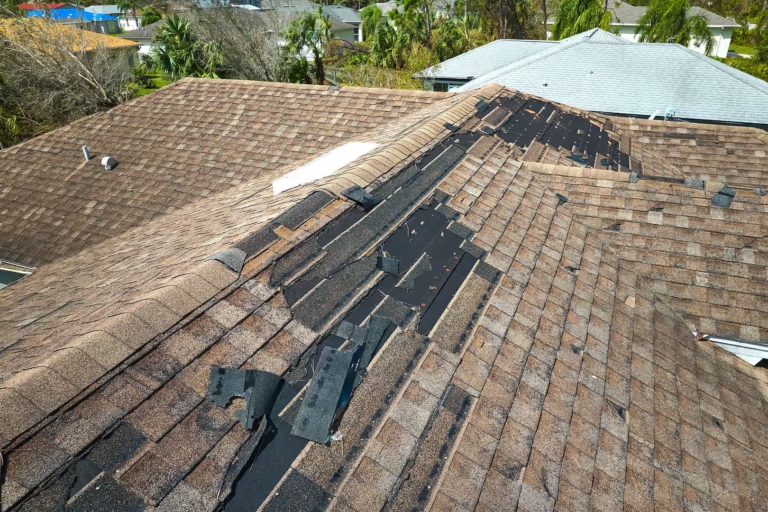
- Wind: shingles torn off or creased so they no longer seal, exposing the underlayment and nail holes.
- Hail: bruised or cracked shingles and punctured flashing.
- Falling trees and limbs: broken decking, crushed shingles, damaged gutters.
- Weight of snow or ice: structural damage from a heavy load.
- Fire and lightning.
- Vandalism.
In Pittsburgh, wind is the big one. Spring and summer thunderstorms and the occasional winter windstorm strip shingles off ridges and rakes, and the leak shows up a few days later in an upstairs bedroom. If the timeline lines up with a storm and the damage looks like fresh wind or hail damage, you have a reasonable claim.
What Insurance Usually Won’t Pay For
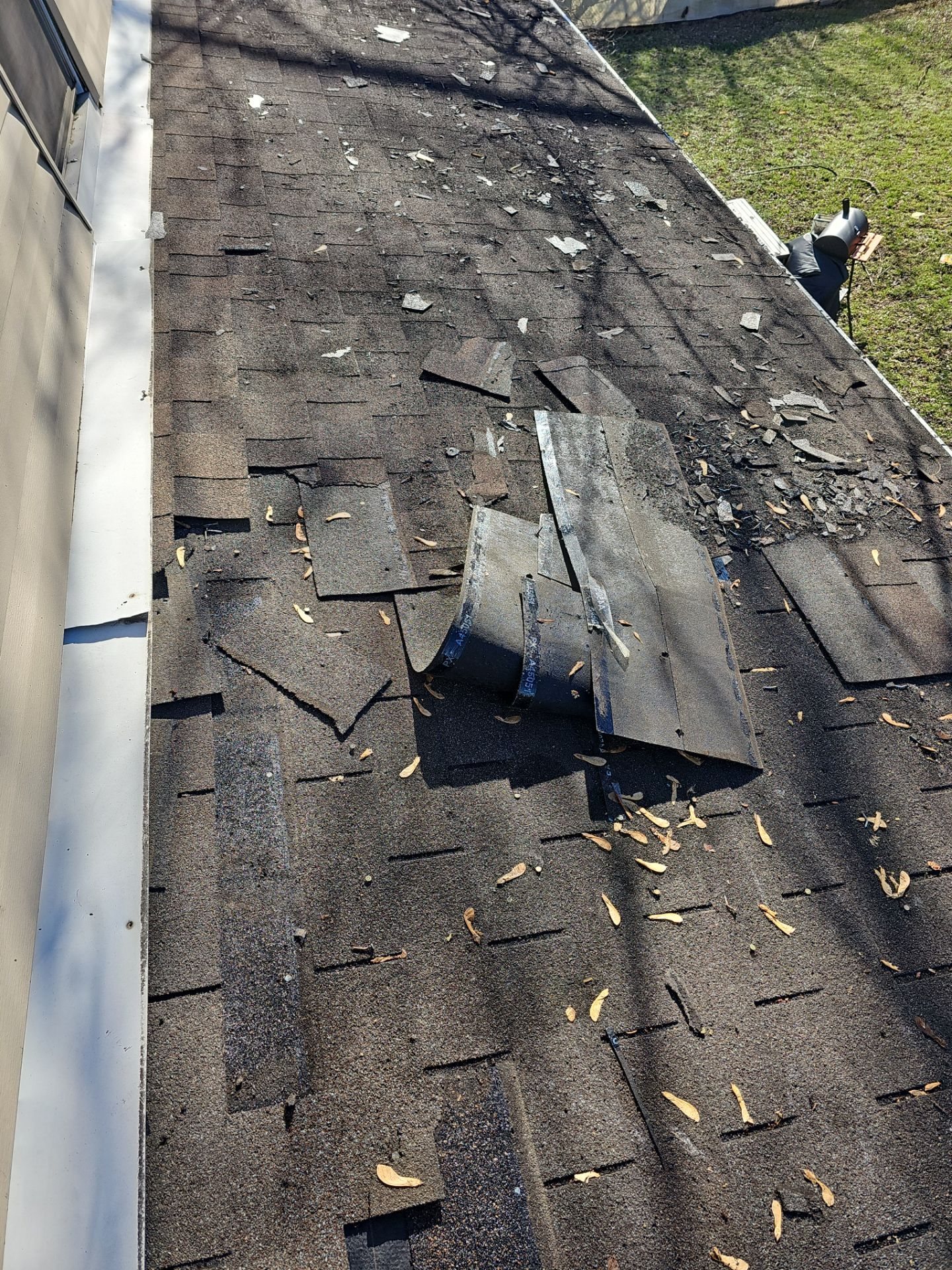
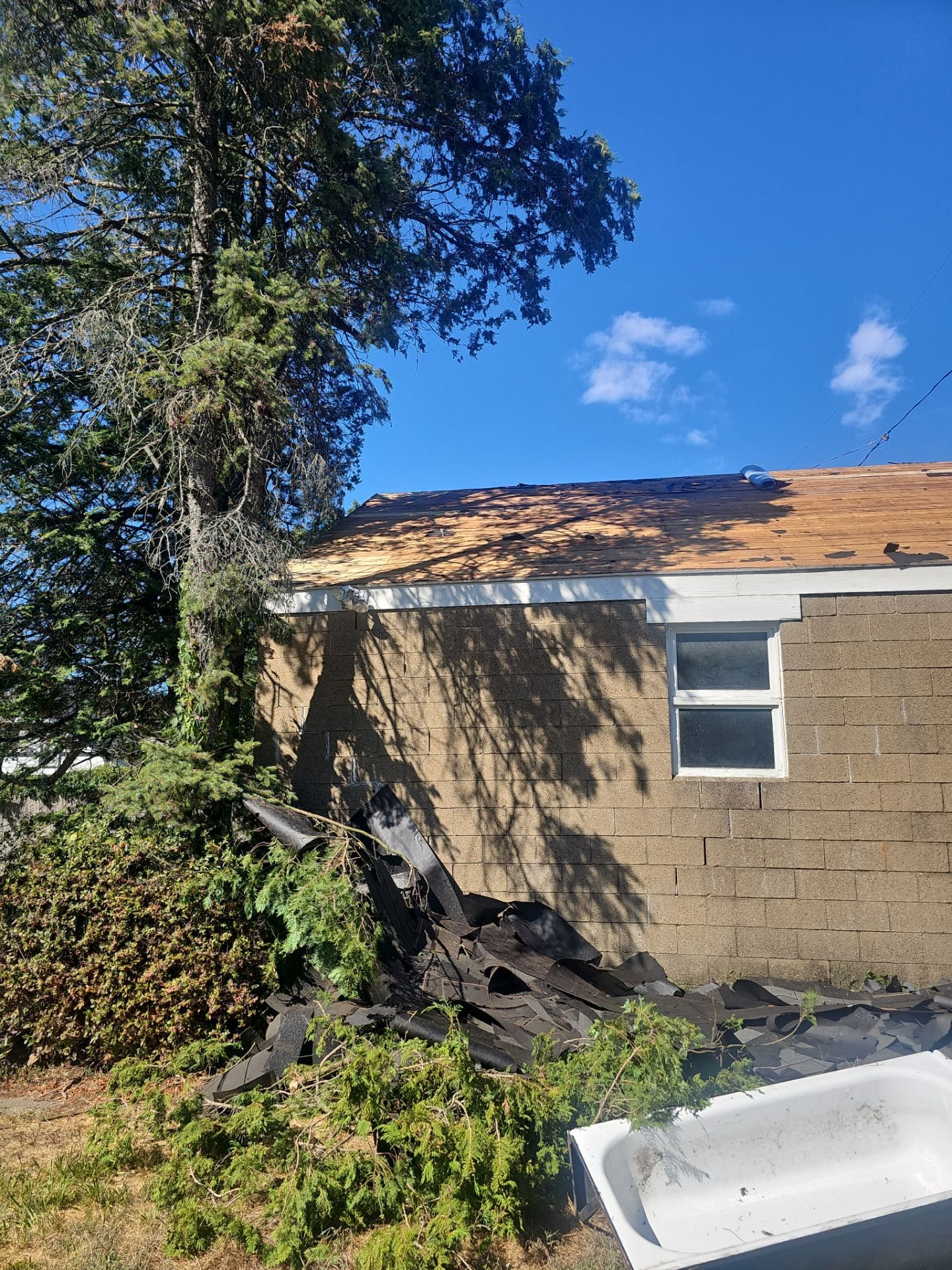
This is what an adjuster calls wear and tear. Shingles that have dried out, lifted and cracked along the eave over many seasons are a maintenance issue, not a storm event, and a leak through them is usually denied.
The Pennsylvania Insurance Department’s homeowners insurance guide lists wear and tear, flood, mold, wet rot and dry rot among the common exclusions in most policies.
Old shingles lifting and broken along a gutter, found by our crew on a job in East Pittsburgh, Alan Construction.
Other leak causes that typically get turned down:
- A roof that’s simply past the end of its life.
- Missing shingles or cracked flashing that were ignored for months.
- Clogged gutters that backed water under the roof edge.
- Squirrels, raccoons or birds chewing into the roof.
- Mold and rot from slow, long term moisture.
- Poor installation or faulty workmanship. That goes back to the contractor, not your insurer.
- Flood or surface water, which needs a separate flood policy.
Covered vs. not covered at a glance
| Usually covered | Usually not covered |
|---|---|
| Wind tearing off or creasing shingles | Shingles worn out from age |
| Hail bruising shingles or denting flashing | Flashing left cracked for months |
| A tree or large limb hitting the roof | Animal or pest damage |
| Fire, lightning or vandalism | Mold or rot from slow leaks |
| Weight of snow or ice causing damage | Poor installation |
| Interior water damage from a covered leak | Flood or surface water |
Which Parts of Your Policy Come Into Play
A roof leak claim can touch several sections of a standard policy at once:
- Dwelling coverage: pays to repair or replace the roof itself and the attached structure, including ceilings, drywall and flooring damaged by a covered leak.
- Personal property: covers furniture, electronics and belongings soaked by the water.
- Loss of use: helps with temporary living expenses if the damage makes the house unlivable while it’s repaired.
- Deductible: you pay this part before the insurer pays anything. Some policies carry a separate wind and hail deductible figured as a percentage of the dwelling coverage, so check yours before a storm, not after.
Read the water damage language closely. Most policies cover sudden water damage but not water that seeped in slowly over weeks.
Roof Age, Depreciation and Actual Cash Value
Even when a storm clearly caused the leak, an older roof can get a smaller check. It comes down to how your policy settles roof claims.
Replacement cost pays to repair or replace with similar materials without subtracting depreciation. Actual cash value takes the replacement cost and subtracts for age and wear, so an older roof is paid out for less.
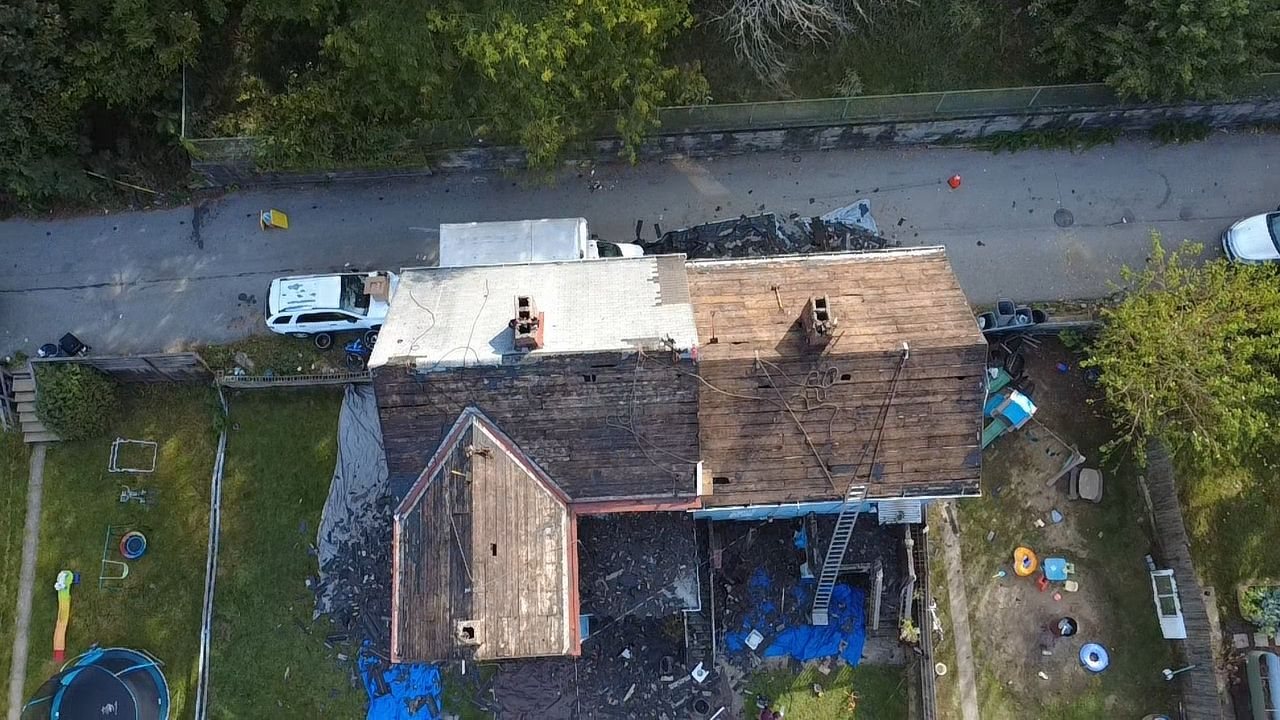
Drone view of an old brown roof in Glassport as tearoff begins, with tarps laid below to catch debris, Alan Construction.
The Pennsylvania guide notes that an actual cash value payment often isn’t enough to put a home back the way it was. Some insurers also apply a depreciation schedule to roofs, cutting coverage step by step as the roof ages. If your roof is getting up there, call your agent now and ask which way your policy settles roof losses. We break this down further in how old a roof can be before insurance won’t cover it.
Pittsburgh Leaks We See Most and How Insurers Treat Them
Here’s how the leak calls we get most often tend to play out with insurance.
Wind and hail damage
These are the cleanest claims. Missing or creased shingles, exposed nail lines and bruised shingles are easy to photograph and easy for an adjuster to tie to a dated storm. Siding works the same way: panels blown off in a windstorm are generally treated like wind damage to the roof.
Ice dams and heavy snow
Freeze and thaw cycles build ice along the eaves, and meltwater backs up under the shingles. Many policies treat the resulting interior water damage as sudden and accidental, while the cost of removing the ice itself may not be included. A roof that collapses under heavy wet snow falls under the weight of snow or ice coverage.
Flashing leaks around chimneys and vents
Leaks at chimneys, pipe vents and skylights are usually flashing problems. If wind or a falling limb bent the flashing, that’s a storm claim. If sealant dried out and cracked over years, insurers call it maintenance.
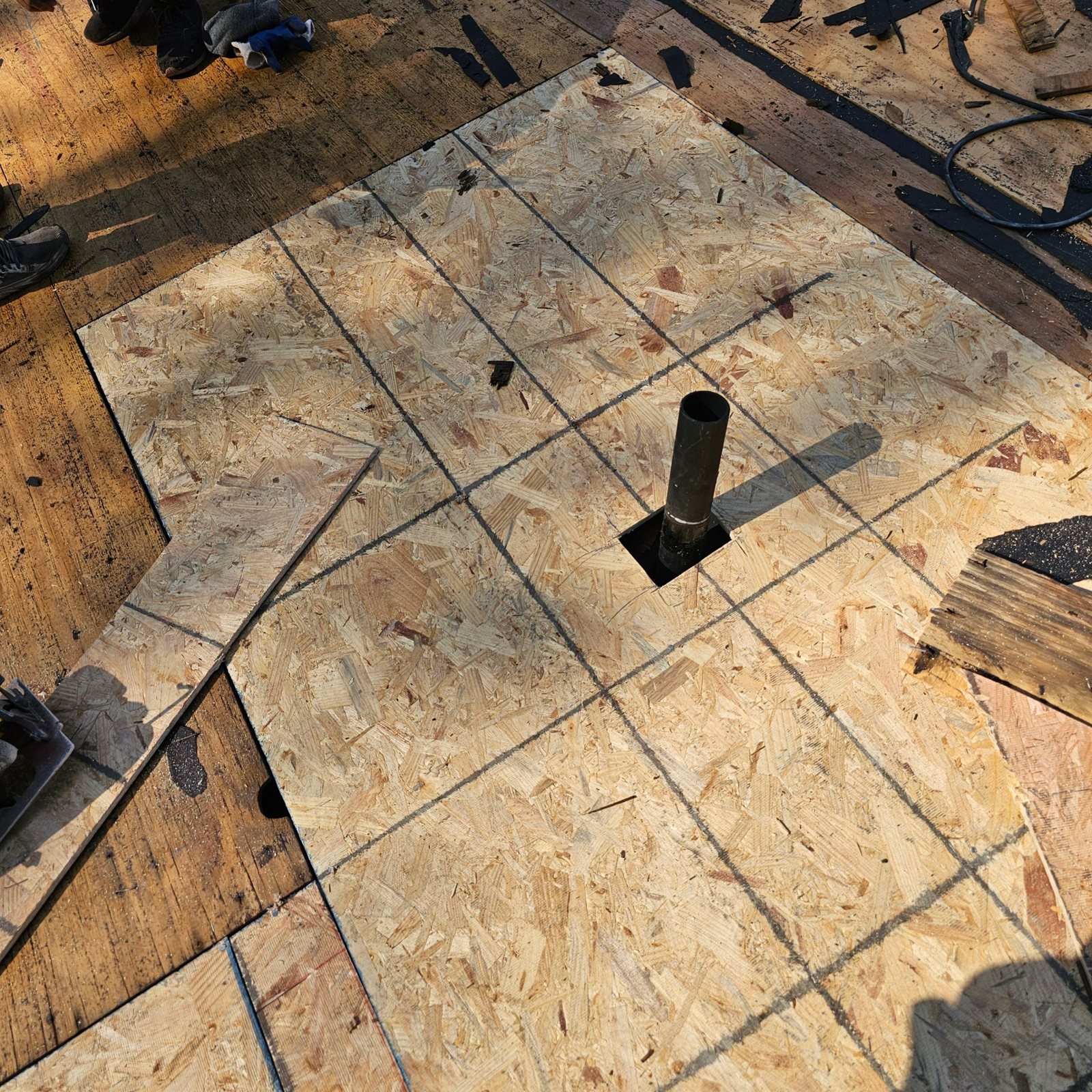
When we tear off a damaged roof, any soft or rotted decking we find gets replaced before new underlayment goes down, like the fresh plywood around this vent. Whether the insurer pays for that decking depends on whether the damage ties back to the covered event.
New plywood roof decking around a black pipe vent stack on a job in Natrona Heights, Alan Construction.
What to Do the Day You Find a Roof Leak
How you handle the first day or two shapes the whole claim. The Pennsylvania Insurance Department gives similar advice, and it matches what we tell homeowners:
- Document first. Take photos and video of the ceiling, walls, floors and anything wet before you clean up. If it’s safe from the ground, photograph the roof too.
- Stop further damage. Put out buckets, move belongings and get a tarp on the roof. Your policy expects you to prevent further loss, and skipping it can shrink the payout.
- Hold off on permanent repairs. Temporary fixes are fine, but wait for the insurer to inspect and approve before the roof is replaced.
- Call your insurer promptly. Keep a log of every call with the date, name and title of the person you spoke with.
- Get a roofer’s inspection. A registered, insured local contractor can tell you whether it’s storm damage before you file.
- Save every receipt for tarps, emergency repairs and any hotel stay.
For the full filing walkthrough, see how to file a roof damage insurance claim successfully.
Talking to the Adjuster
The adjuster’s report drives the settlement, so what you say on inspection day matters. Stick to facts: what happened, when it happened and what you saw. Don’t guess at the cause, and never say something like “I knew those shingles needed replacing.” That hands the adjuster a reason to call it preexisting wear. Don’t downplay it either. “It’s not that bad” can turn into a lower offer.
Having your roofer there helps. We walk the roof with the adjuster, show the creased and missing shingles, and make sure nothing gets missed, like damaged flashing, vents or gutters. One homeowner, Suzanna M., wrote in her Google review: “We then hired them to replace our roof which was damaged in the windstorm from last spring, and they worked with us and our insurance company to thoroughly replace and repair everything.”
More on this in what not to say to a roof insurance adjuster.
If Your Claim Is Denied or Comes Up Short
Don’t rush to accept the first offer. Compare the adjuster’s scope line by line with your contractor’s estimate. Missing items like drip edge, flashing, vents and decking are common, and a supplement request with photos often fixes them.
If you still disagree, check your policy for an appraisal clause, or hire a licensed public adjuster or an attorney. The state’s homeowners insurance help page points you to its Consumer Services Bureau for questions and complaints.
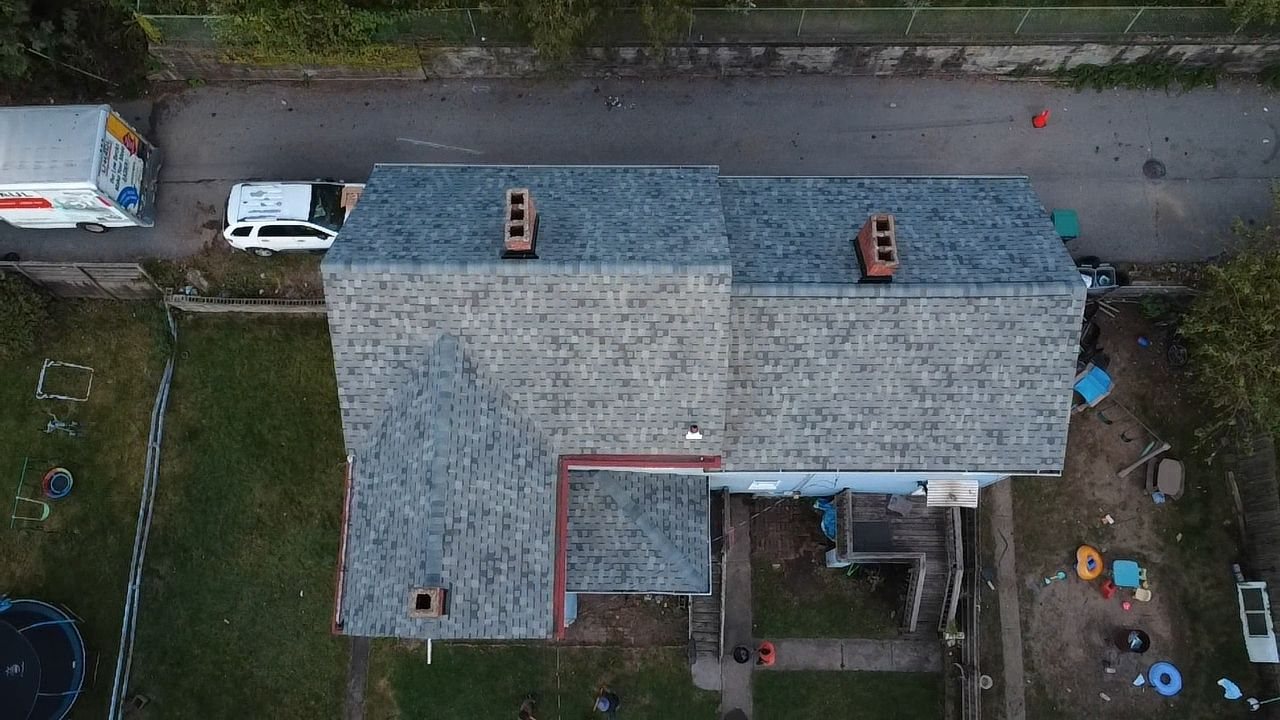
Overhead view of a finished gray roof with red drip edge and two chimneys in Glassport, Alan Construction.
Many homeowners hold off on a legitimate claim because they’re afraid of being dropped. The Pennsylvania guide states that state law does not allow an insurer to terminate a homeowners policy for claims or loss history. Claims can still affect your premium, so get a roofer’s opinion before filing a borderline one.
If the claim is denied because of age or wear, a full replacement may still be the right move. We offer free estimates, and our roof financing options can spread out a deductible or an uncovered replacement.
How to Keep Your Roof Insurable
The best claim is the one you never file, and the next best is one backed by a good paper trail. A few habits help on both fronts:
- Have the roof inspected after any major storm and every couple of years otherwise.
- Keep a folder of inspections, repairs and gutter cleanings. It shows the insurer the roof was cared for.
- Replace missing shingles and reseal flashing quickly instead of waiting for the next storm.
- Keep gutters clear so water and ice don’t back up under the roof edge.
Found a leak after a storm? We’ll inspect your roof for free, tell you honestly whether it looks like a claim, and meet your adjuster if it does. Request your free estimate.