In the vinyl siding vs aluminum siding decision, vinyl wins for most Pittsburgh homeowners who are replacing old aluminum: it doesn’t chalk, it shrugs off the dents that pock metal siding, and its color is part of the panel instead of a coat of paint that has to be redone. Aluminum still has a few real strengths, and it’s worth knowing them before you decide.
Plenty of homes around Pittsburgh still wear aluminum siding that went up decades ago. If yours is faded, dented or chalky, you’re probably weighing three choices: paint it, patch it, or replace the whole exterior. We only install vinyl, so this guide is written for the homeowner who’s thinking about that switch. If you’re already leaning that way, our page on siding installation in Pittsburgh covers how we handle a full project from tear off to trim.
Short answer: Aluminum resists fire and doesn’t crack, but it dents easily and its painted finish fades and chalks. Vinyl holds its color, hides small scuffs and needs little more than a rinse, which makes it the usual choice when old aluminum comes off.
How to Tell If Your Siding Is Vinyl or Aluminum
Before you compare anything, make sure you know what’s on the house. It sounds obvious, but older siding gets painted, patched and mixed, and plenty of owners aren’t sure.
- Tap it. Aluminum gives a hollow, tinny ring. Vinyl sounds duller and feels more like plastic under your knuckle.
- Look for dents. Small round dings from hail, balls or ladders are the signature of aluminum. Vinyl flexes back instead of denting.
- Rub it. Run your hand across a sunny wall. If it leaves a white or colored powder on your palm, that’s chalking, a sign of an aging painted metal finish.
- Check a cut edge. At a corner or behind a downspout, aluminum shows bare silver metal at the edge. Vinyl is the same color all the way through.
Vinyl Siding vs Aluminum Siding: Side by Side
Here’s how the two materials compare on the things homeowners ask us about most.
| Factor | Vinyl siding | Aluminum siding |
|---|---|---|
| Color | Color is in the panel, so scratches don’t show bare metal | Painted or baked enamel finish that fades and chalks with sun |
| Dents and impacts | Flexes and bounces back from most bumps | Dents from hail, branches, balls and ladders |
| Cold weather | A hard hit on a very cold day can crack a panel | Doesn’t crack in the cold |
| Fire | Softens and can melt near high heat, like a grill set too close | Noncombustible metal |
| Upkeep | Occasional wash with a garden hose and a soft brush | Washing plus repainting as the finish wears |
| Repairs | Damaged panels unlock and swap out | Matching an old faded color is hard |
| Style choices | Wide range of profiles, colors and trim | Limited, and repaint colors only cover the old finish |
Where Old Aluminum Siding Falls Short

The first problem with old aluminum is the look. The factory finish breaks down over the years, so walls that face the sun go pale and powdery while the shaded side stays darker. Washing removes the chalk, but it also removes more of the finish.
Dents are the second problem. Aluminum is thin metal, and every hailstorm, falling limb or stray baseball leaves a mark. Those dings don’t pop back out, and replacement pieces rarely match a color that’s been fading for decades.
New vinyl, like this green siding on a home in Monongahela, carries one even color across every wall because the color is part of the panel.
New green vinyl siding on the rear corner of a home in Monongahela, Alan Construction.
Why Vinyl Is the Usual Upgrade
Vinyl answers most of those problems directly. Because the color runs through the panel, a scuff doesn’t expose a different color underneath. There’s no paint to peel or chalk, and a garden hose takes care of most of the dirt that builds up on a north wall.
Quality is also easier to check than many people realize. Vinyl siding certified through the Vinyl Siding Institute is tested to the ASTM D3679 standard, and the institute says certified products are built to withstand winds of 110 mph, with most rated higher than that. Colors can be certified for color retention too, which matters on a south facing wall.
Vinyl also gives you more design room than aluminum ever did. You can pick a color for the whole house instead of repainting the old one, change the trim color, and add new soffit and fascia at the same time so the roofline matches.
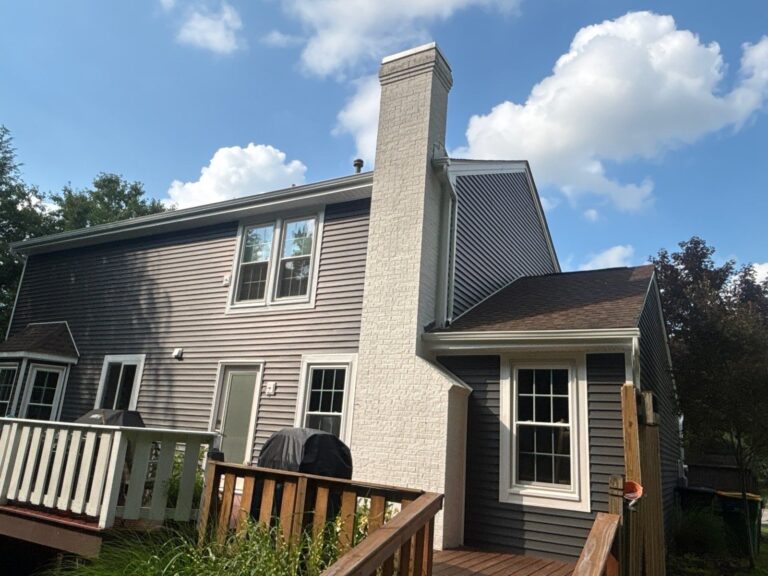
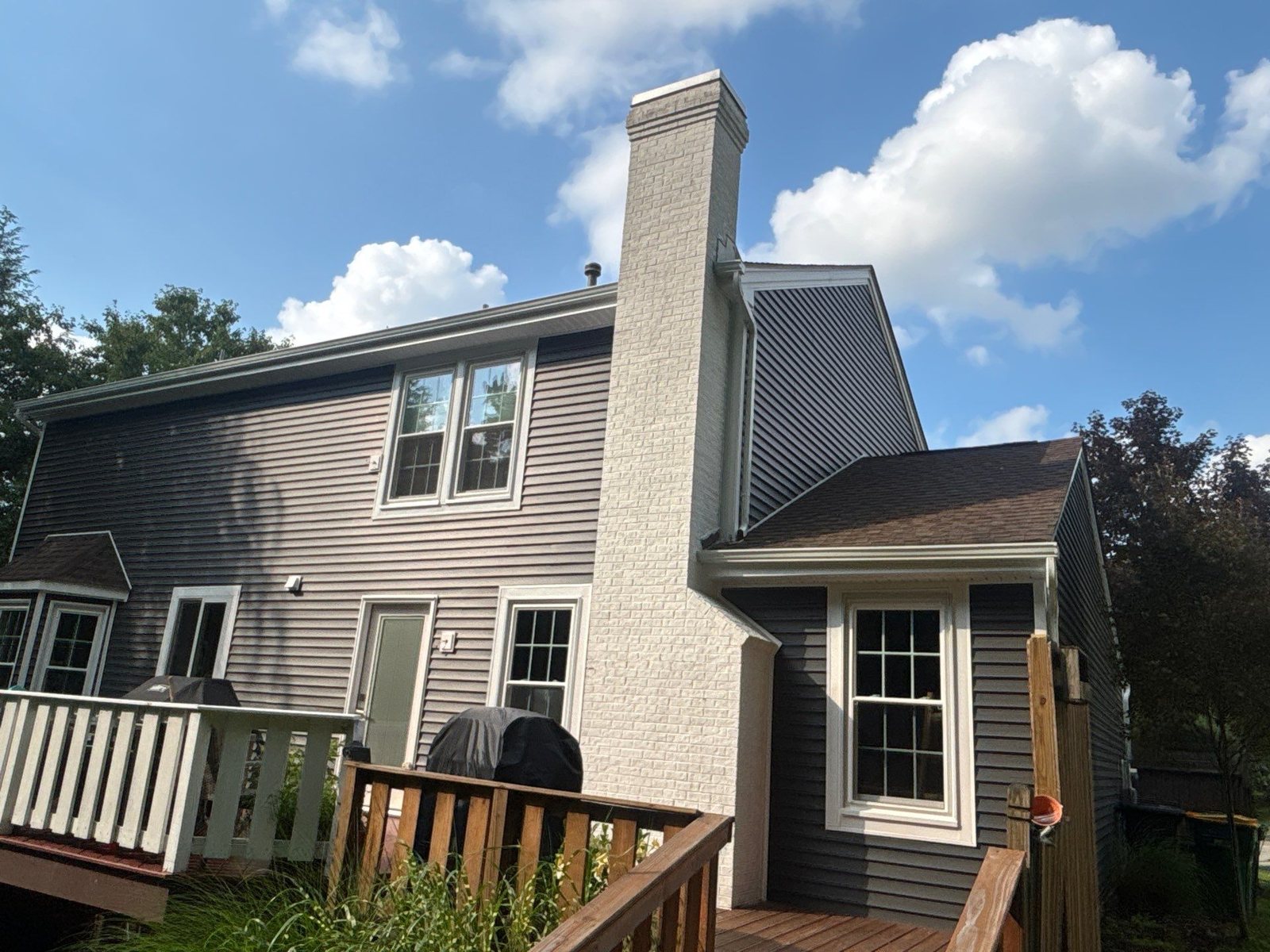
On the back of this Pittsburgh home, gray vinyl runs clean around a white chimney. A rear wall like this is usually where old aluminum shows the most wear, because nobody notices it fading until the whole house is compared side by side.
Gray vinyl siding and a white chimney on the rear of a Pittsburgh home, Alan Construction.
Painting Aluminum vs Replacing It With Vinyl
Painting is the option people try first, and it can make sense in a narrow case: the siding is solid, the dents are few, and you’re planning to sell soon. A good paint job freshens the look for a while.
The catch is that paint doesn’t fix anything underneath. It won’t remove dents, it won’t stop the next round of chalking, and it puts you back on a repainting schedule. For a homeowner staying put, that cycle usually costs more over the years than replacing the siding once. Replacement also gives us a chance to look at what’s behind the old panels, which paint never does.
What Replacing Aluminum Siding With Vinyl Involves
When we replace aluminum siding with vinyl, we treat it as a full exterior project, not a patch. Here’s what happens on a typical job.
Tear off and inspect. We remove the old aluminum so we can see the wall. Older homes sometimes have original wood siding or soft spots under the metal, and it’s far better to find them now than to bury them under new panels.
Prep the wall. Damaged sheathing gets fixed, and the wall is wrapped so water that gets behind the siding drains out instead of soaking in.
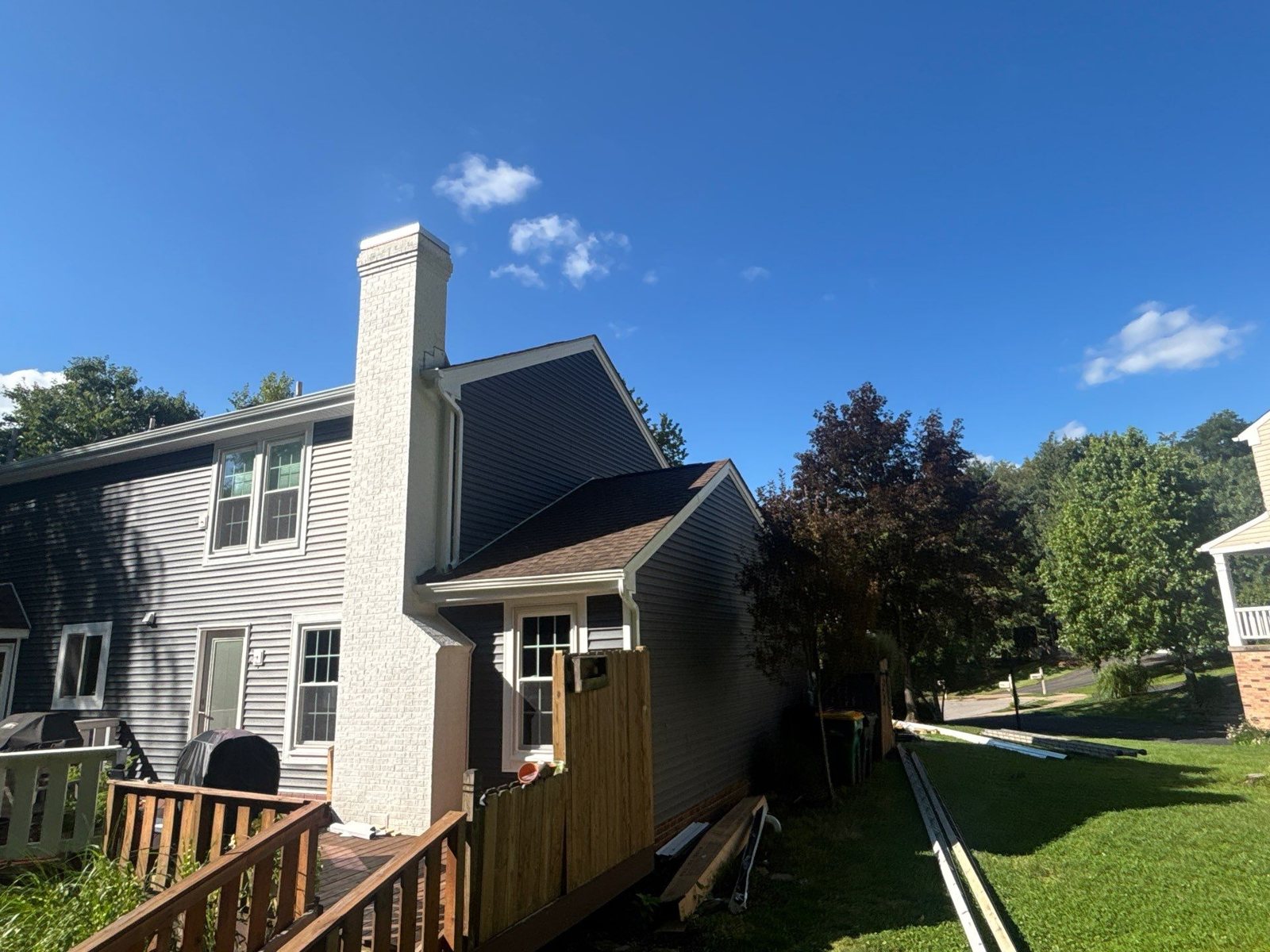
Install and trim out. New vinyl goes up with corners, window and door trim, and details around decks and chimneys like this Pittsburgh home.
Gray vinyl siding on the back of a Pittsburgh home with a deck and chimney, Alan Construction.
Plan the roofline at the same time
Soffit, fascia and gutters frame the siding, and old aluminum homes often have tired trim up top too. Doing them together gives you one clean look and one crew on site. If your roof is also getting older, our post on timing a roof and siding replacement together explains why the order of the work matters.
Pittsburgh Homes and Siding Choices
Pittsburgh’s housing stock is old, and our hills mean a lot of homes have tall rear walls, tight side yards and decks stacked against the back of the house. Those spots are hard to repaint and easy to dent, which is one more reason aluminum ages badly here.
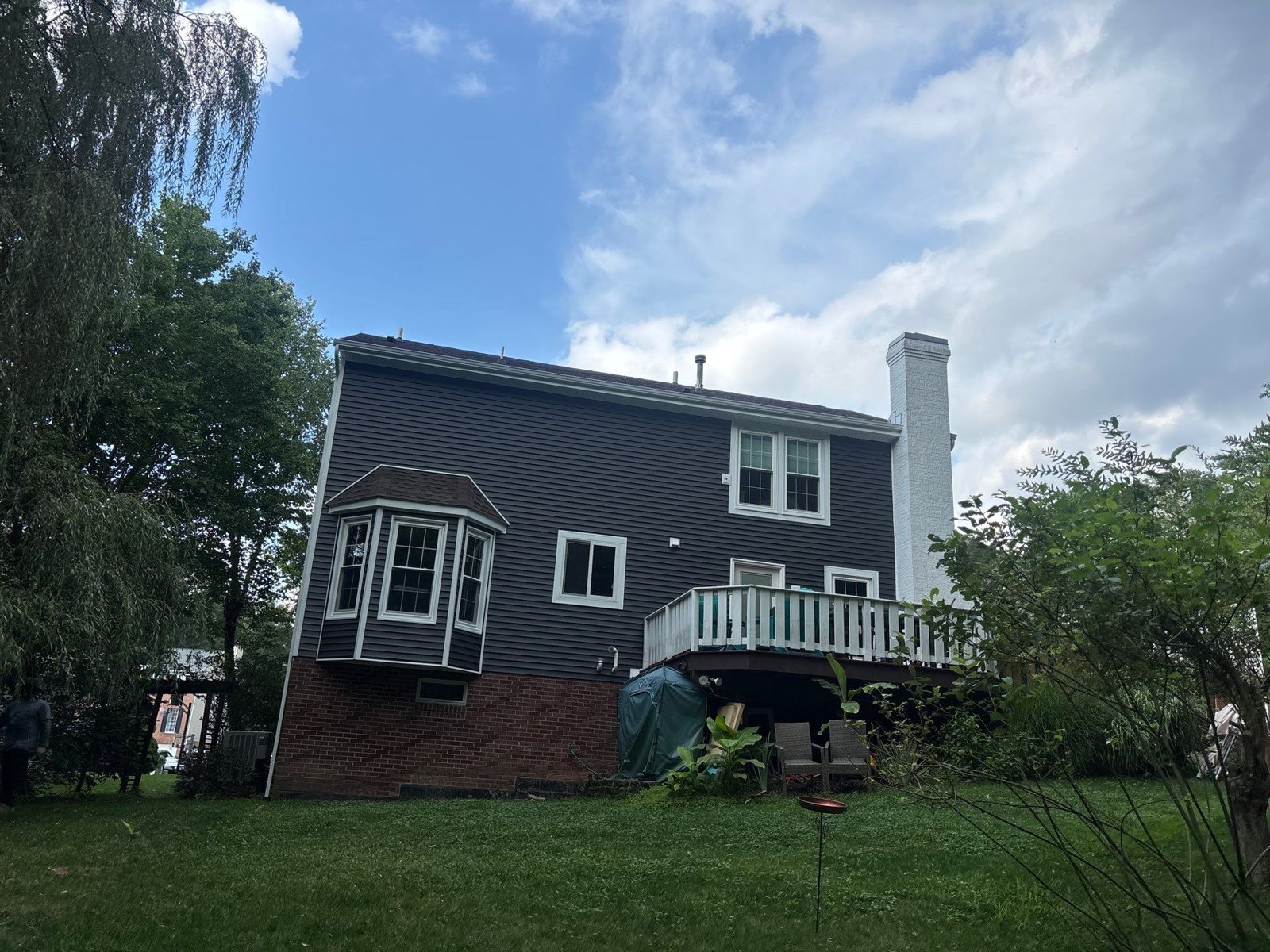
Our freeze and thaw winters and humid summers are hard on finishes. A material that doesn’t rely on paint takes one maintenance chore off the list for good. This dark gray siding with crisp white trim shows how much a darker color with contrasting trim can do for a rear wall.
Dark gray siding with white trim on the back of a Pittsburgh home, Alan Construction.
Not every siding material holds up the same way here, either. Our guide to siding materials to avoid on your home walks through the ones that cause the most trouble, and our post on how long different siding materials last helps you think about the long run.
What Drives the Cost of a Siding Replacement
Every house is different, so we don’t quote from a chart. The things that move the number are the size of the walls, how many stories and how steep the yard is, how much old material comes off, any repairs to sheathing, the vinyl line and profile you choose, and how much trim, soffit and fascia is part of the job. A free estimate measures your actual house and spells all of that out.
Homeowners can tell when a crew takes a full siding project seriously. One customer, Chelsea C., wrote in a Google review: “Very pleased with our siding, soffits, fascia, and gutters by Alan, Jim, and their crew!” That’s the kind of whole house result we aim for. If you’d like to spread the investment out, we also offer financing for siding projects.
Ready to retire that old aluminum? Request a free siding estimate and we’ll measure your home, check the walls and walk you through vinyl colors and styles.