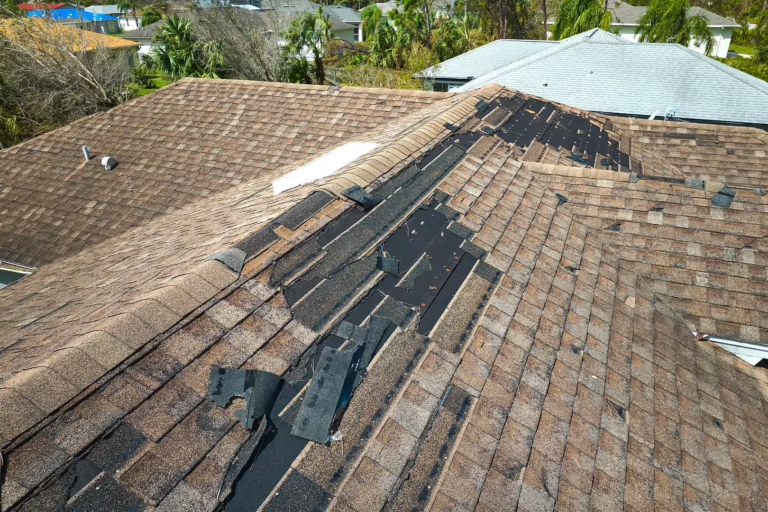
Roof or siding first? If both need work, replace the roof first, or better yet, do both in the same project, ideally during the mild stretches of spring or fall. The roof goes on top of everything else, the roof to wall flashing ties into the siding, and planning the two together lets one crew get that seam right the first time.
Most homeowners call a contractor the week after a storm, watching a stain spread across a ceiling. It doesn’t have to go that way. When you plan ahead, you control the timeline, the budget and the quality of the work. If siding is part of your plan, our page on siding installation in Pittsburgh covers what we do. Here’s why timing matters more than most people realize.
Short answer: roof first, then soffit, fascia and siding, then gutters. Doing the roof and siding in one coordinated project usually gives the cleanest result.
Why the Season on the Calendar Changes the Work
Roofing materials are pickier than they look. Asphalt shingles carry a heat activated sealant strip on the back, and that strip needs warmth and sun to bond. In deep cold the adhesive stays stubborn and the shingles turn brittle. In peak summer heat, those same shingles go soft and scuff more easily underfoot. Spring and fall land in the comfortable middle.
Siding has its own temperament. Vinyl gets brittle in deep cold and expands in high heat, so cutting and fastening it on a mild day produces cleaner, tighter results. Stable weather gives every panel room to sit correctly, and that’s the difference between siding that lasts and siding that fights you.
Roof or Siding First, and Why the Order Matters
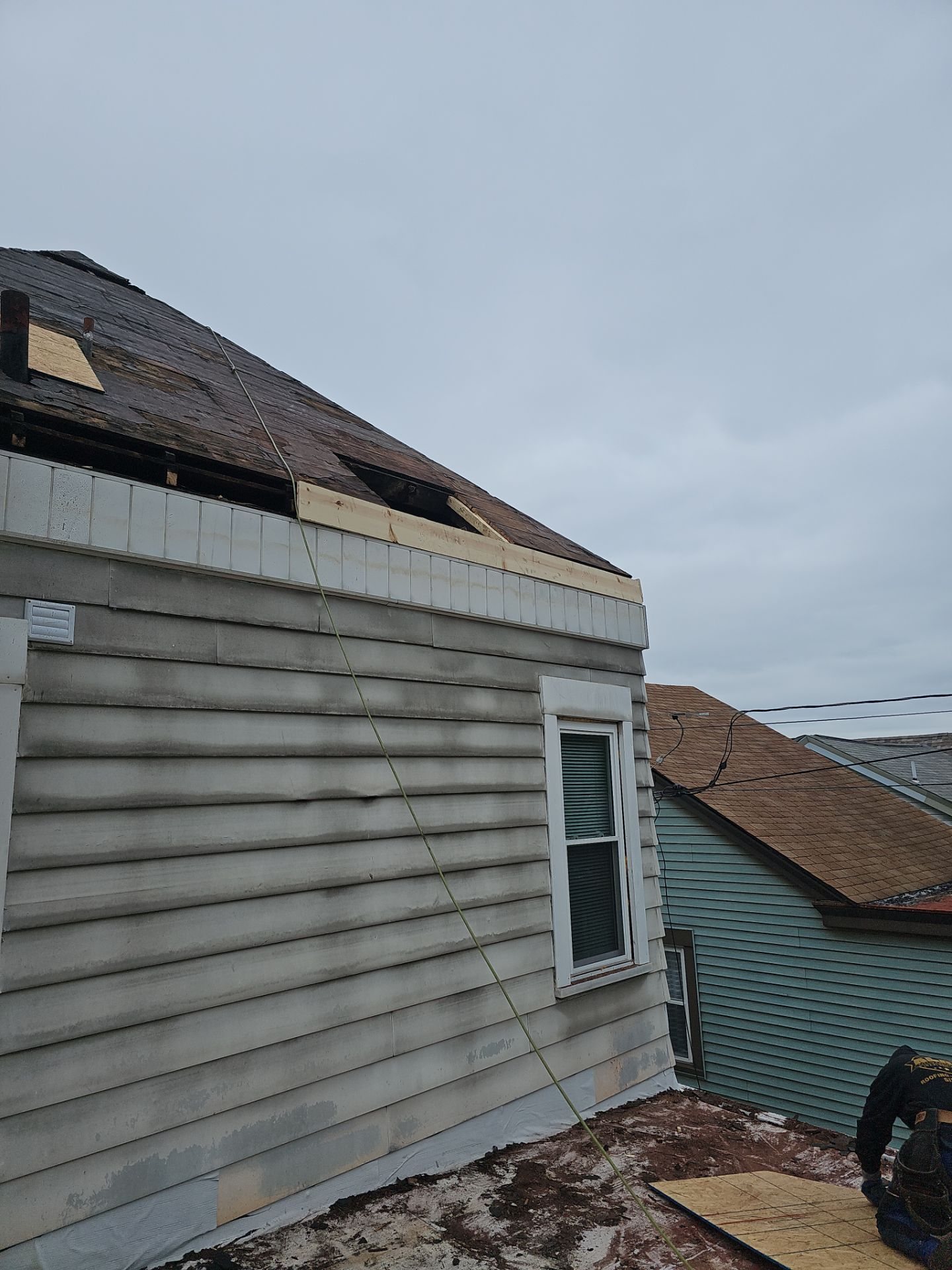
Your roof and your siding are not separate projects. They meet. Where a lower roof runs into a wall, step flashing and counter flashing have to be woven into the siding correctly, and that seam is where leaks love to start.
Do the roof first and the roofer can set new flashing against the bare wall. The siding crew then laps the new siding over it the right way. Reverse the order and the roofer often has to pull back brand new siding just to reach the flashing.
Gray siding wall below a roof edge with old decking exposed in Pittsburgh, Alan Construction.
A tear off is also hard on the walls below. Ladders, falling debris and old nails can dent or scratch new siding. And if the old roof has soft decking, the fix happens before anything new goes on the walls. The same logic applies to the trim along the roof edge, which we explain in how soffit and fascia protect your home.
The full sequence
- Roof, including decking repairs, underlayment and flashing
- Windows, if any are being replaced
- Soffit and fascia
- Siding and trim
- Gutters and downspouts
The Real Payoff of Doing Both at Once
Combining the work means one setup, one dumpster and one cleanup instead of two. Those fixed parts of a job get spread across a single project, and you only live through the noise once.
Most roofs we replace are finished in one day. Siding takes longer, depending on the size of the house, but planning both together keeps the whole exterior on one schedule and one crew.
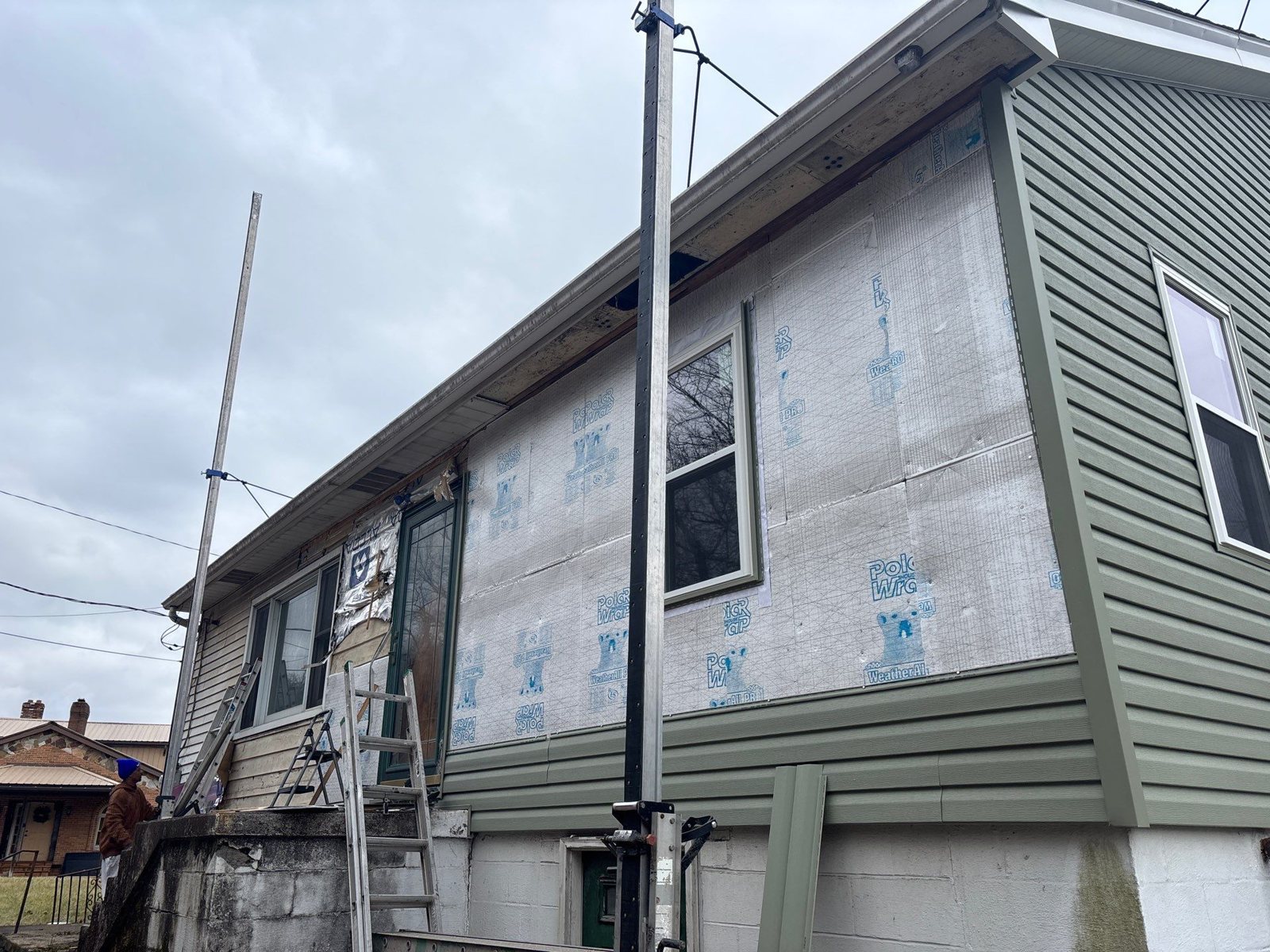
Doing both at once also tightens the whole exterior at the same time. New underlayment, clean flashing and fresh house wrap work together to seal the gaps where wind and water get in.
Wall half covered in house wrap and half in new green siding in Monongahela, Alan Construction.
Homeowners who have done it this way tend to say the same thing. As one put it in a Google review: “Just recently did a roof and siding job with them. They were very professional, punctual, and reasonable.” J W.
A Quick Season by Season Cheat Sheet
| Season | What to expect |
|---|---|
| Spring | Mild temperatures and good sealing, but book early because calendars fill up fast. |
| Summer | Peak demand and longer waits; midday heat can soften shingles underfoot. |
| Fall | Close to ideal weather, and a smart way to beat the winter rush. |
| Winter | Cold makes materials brittle, and shingles often need hand sealing to bond. |
None of this means winter work is impossible. Good crews do it with the right prep. It just means the easy road runs through spring and fall. For more on picking a window, see when is the best time to replace a roof in Pittsburgh.
Why Timing Matters So Much in Pittsburgh
Our climate here doesn’t do subtle. We get freeze and thaw cycles that pry at every seam, wet springs that test every flashing detail, and winters cold enough to cause trouble when the work is done wrong. A siding job scheduled for a dry stretch in October will outperform the same job rushed in during a February thaw.
That’s where a local team pays off. We’ve been working on Pittsburgh homes since 2003, and we plan around the weather instead of forcing a calendar that doesn’t fit. If you’re still weighing whether to patch or fully replace the roof, roof replacement vs. repair breaks that decision down in plain terms.
Waiting Rarely Saves Money
Small problems are patient. A slow leak can sit quietly for a couple of winters while the decking under it goes soft. By the time the stain shows up inside, what could have been a clean roof and siding project in a mild week can turn into decking replacement and drying out wet framing.
The homeowners who come out ahead treat exterior work as planned maintenance, not emergency surgery.
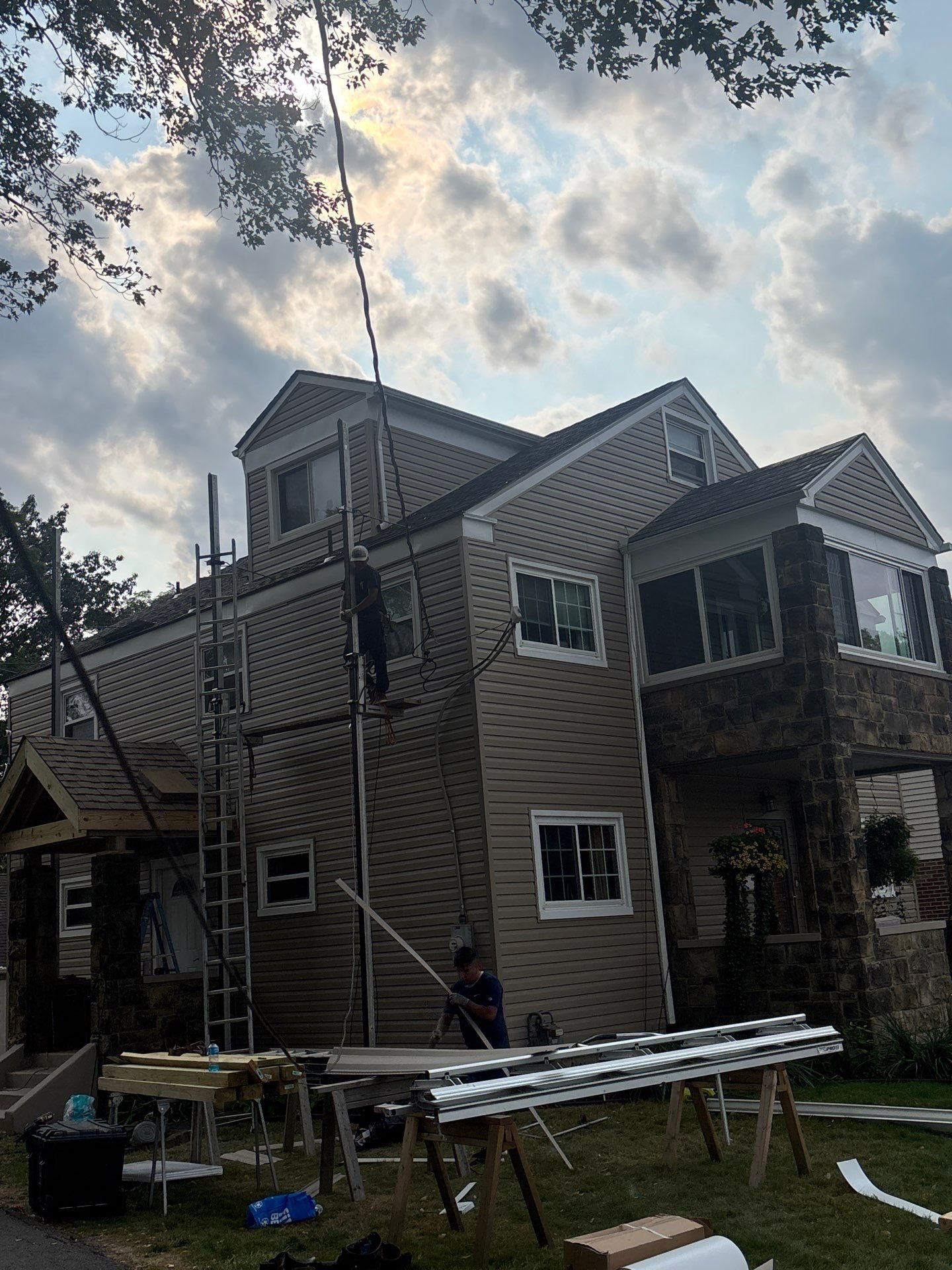
Siding crew setup with ladders and sawhorses beside a house in Carnegie, Alan Construction.
How We’d Plan It If It Were Our House
Start with an honest inspection before the busy season. Late winter or very early spring is a good time to book. Get the assessment done, understand your material options, and lock in a date in spring or fall while the calendar is still open. If you wait until July, you’re already at the back of the line.
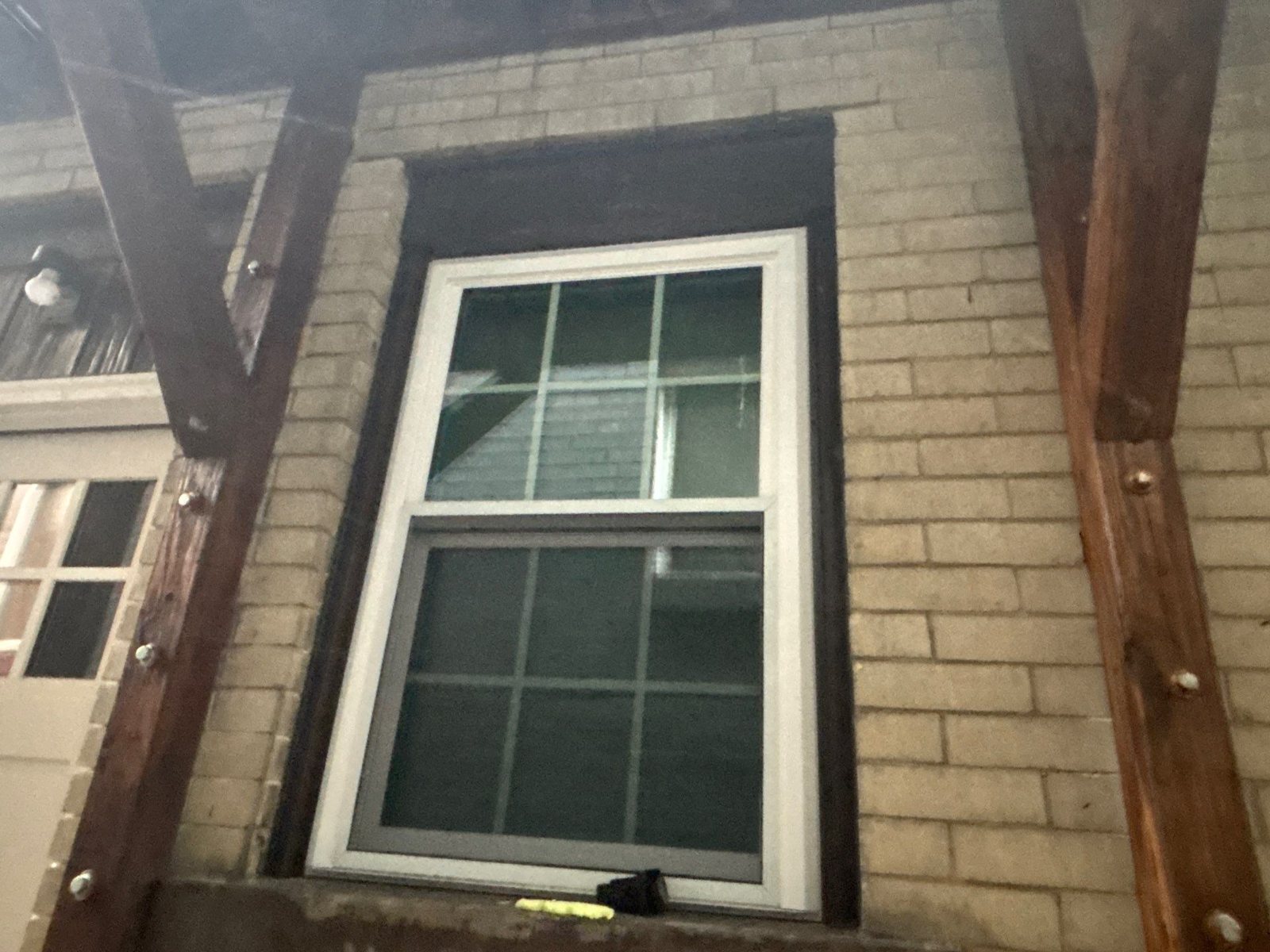
If windows are on your list too, plan them in the same project. New windows go in before the siding so the flashing and trim around each opening can be lapped correctly.
Pay attention to the shingle manufacturer’s installation guidance on temperature, because it protects your warranty as much as your roof. We install Atlas shingles, including Pinnacle Pristine, and we follow the maker’s instructions.
Keep good records too: photos before the crew starts, material warranties and the specs in writing. Those pages matter later for an insurance claim or a sale.
New white double hung window set in a brick wall in Pittsburgh, Alan Construction.
Planning a roof, siding or both? Get a free estimate and we’ll walk the whole exterior and lay out the right order of work.