The best time to replace a roof in Pittsburgh is late spring through mid fall, roughly May into October, when days are dry and warm enough for asphalt shingles to seal. If you can pick only one stretch, early fall is hard to beat, as long as you book before the calendar fills up.
The calendar is only half the answer, though. The condition of your roof decides how long you can afford to wait, and a leak in January doesn’t care which month a brochure recommends. We’ve been doing roof replacement in Pittsburgh since 2003, and this guide walks through each season the way we explain it to homeowners on an estimate: what the weather does to the install, what it means for your schedule, and when waiting stops making sense.
Short answer: Aim for May through mid October. Shingles need sun and warmth to seal, and Pittsburgh usually delivers both in that window. Below about 40 degrees, shingles get stiff and have to be hand sealed.
Why Temperature Decides the Best Time to Replace a Roof
Every asphalt shingle has a strip of heat activated sealant on the back. Once the shingle is nailed down and the sun warms it, that strip bonds it to the course below. That bond is what keeps shingles flat when wind gets under the edges.
Atlas, the shingle maker we install, explains in its cold weather shingle installation bulletin that the sealant needs a few weeks of sufficient heat from sunlight to fully bond. Cold weather causes two problems:
- Stiff shingles. Atlas notes that shingles become less flexible at around 40 degrees. Cold shingles can crack when they’re bent or dropped, and a nail can break through a shingle that isn’t lying flat.
- Sealant that doesn’t activate. In very cold weather Atlas requires hand sealing, which means spots of asphalt roofing cement under every tab. It also warns that shingles installed in fall or winter without enough heat may never seal on their own.
Heat has its own quirks, but they’re easier to manage. The Asphalt Roofing Manufacturers Association bulletin on shingles in hot weather points out that shingles soften and scuff more easily on hot days, so crews start early and work around the sun. A good crew can handle a hot July day. No crew can make a December day warm.
Pittsburgh Roofing Seasons at a Glance
Here’s how the year breaks down for a full tearoff and new shingle roof around Allegheny County.
| Season | Weather on the roof | Scheduling | Our take |
|---|---|---|---|
| Early spring (March, April) | Wet, with cold snaps | Calendars opening up | Fine on the right days |
| Late spring (May, June) | Warming, some rain days | Usually good availability | Very good |
| Summer (July, August) | Warm, long days, pop up storms | Busy | Very good, early starts |
| Early to mid fall (September, October) | Drier, mild, sunny afternoons | Busiest, book ahead | Best overall |
| Late fall (November) | Cooling fast, short days | Openings appear | Workable with precautions |
| Winter (December to February) | Cold, snow, freeze and thaw | Most open | Urgent jobs only |
Spring: Good Once the Pattern Settles
Early spring is unpredictable here. A mild afternoon can be followed by flurries the next morning, and rain comes through in waves. Roofs do get replaced in April, but expect a weather delay or two. By May the pattern usually settles, the sealant starts bonding much sooner, and most contractors still have room on the schedule because the fall rush hasn’t started.
Spring is also when winter damage shows up: lifted shingles, granules collecting in the gutters, a new stain on a ceiling after the snow melts. If you spot those, spring is a smart time to get an estimate and lock in a date before summer fills.
Summer: Long Days and Fast Sealing
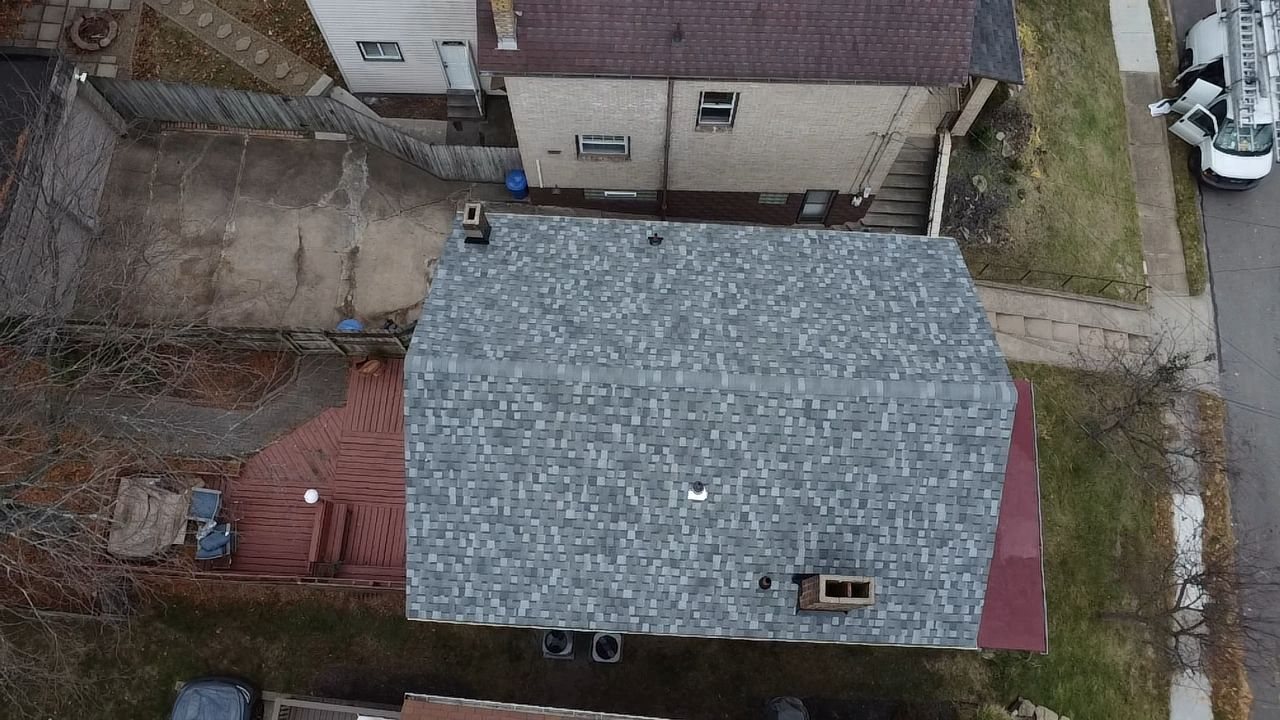
Summer gives you the longest working days of the year, and shingles installed in July seal quickly. The tradeoffs are heat and afternoon thunderstorms. Crews start early, keep an eye on the radar, and only open up as much roof as they can cover the same day.
This Pittsburgh roof was finished at the end of July. Most of our roofing jobs are done in one day, including a magnetic nail sweep of the yard. As Kenny K. put it in his Google review: “They were in and out in 1 day. The cleanup was spotless as well.”
New gray shingle roof finished in Pittsburgh at the end of July 2025, Alan Construction.
Fall: The Sweet Spot, If You Book Early
Early to mid fall is the sweet spot. Humidity drops, storms ease off, and afternoons are still warm enough for the sealant to bond before the cold sets in. Your new roof also heads into winter after a few weeks of sun.
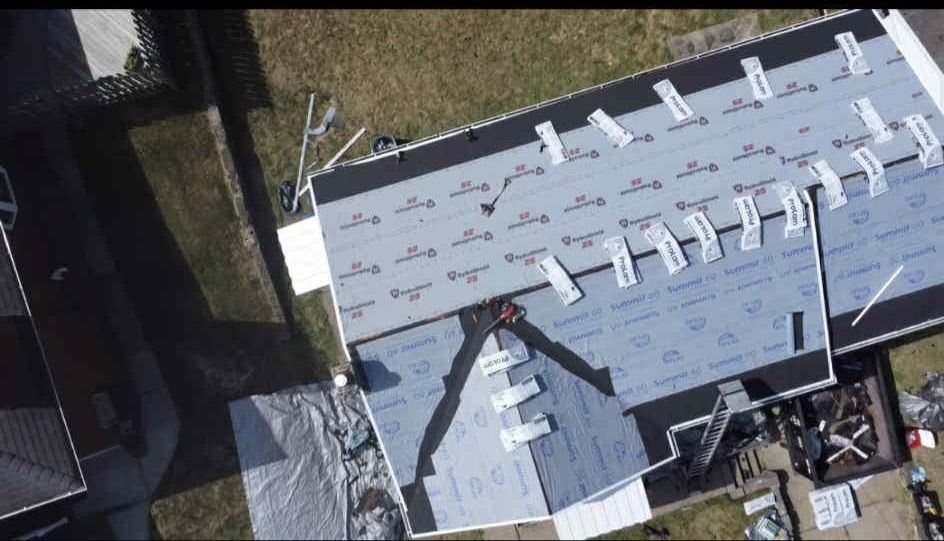
The catch is demand. So many homeowners want a fall roof that schedules fill fast in September and October. If you know you want a fall install, get your estimate in the summer. We cover the cutoff in detail in when it’s too late in the year to replace a roof in Pittsburgh.
Drone view of a Pittsburgh roof partly shingled over white underlayment in late September 2025, Alan Construction.
Late Fall and Winter: Possible, With Precautions
November is a sliding scale. Early in the month, plenty of days are still workable. As highs drop toward 40 degrees, frost delays the morning start, sunset cuts the day short, and shingles need hand sealing.
December through February is mostly for roofs that can’t wait. Winter work can be done: bundles are kept warm, shingles are hand sealed, and crews pick dry, ice free days. But one snowfall can turn a one day job into a week.
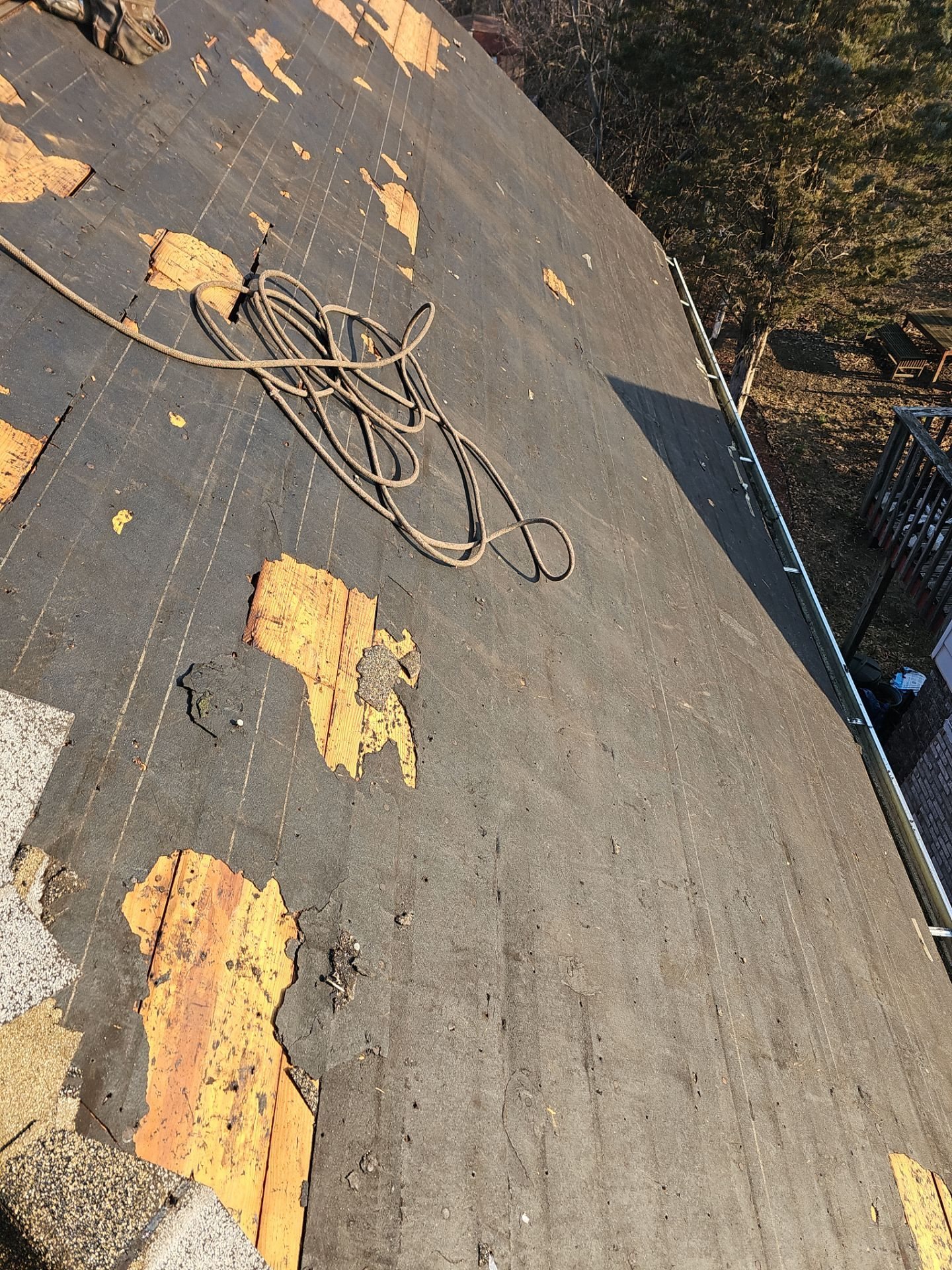
This deck was opened up in March. Once the old roof is off, the forecast matters more than the month.
Roof deck after tearoff with scraps of old felt still on it, Pittsburgh, March 2025, Alan Construction.
When You Shouldn’t Wait for the Ideal Season
The best season is a planning tool, not a rule. If you see any of these, get the roof looked at now instead of waiting for May:
- An active leak into a ceiling or wall
- Soft or sagging spots in the roofline
- Shingles torn off by wind or a storm
- Daylight showing through the attic boards
- Water stains that grow after every rain
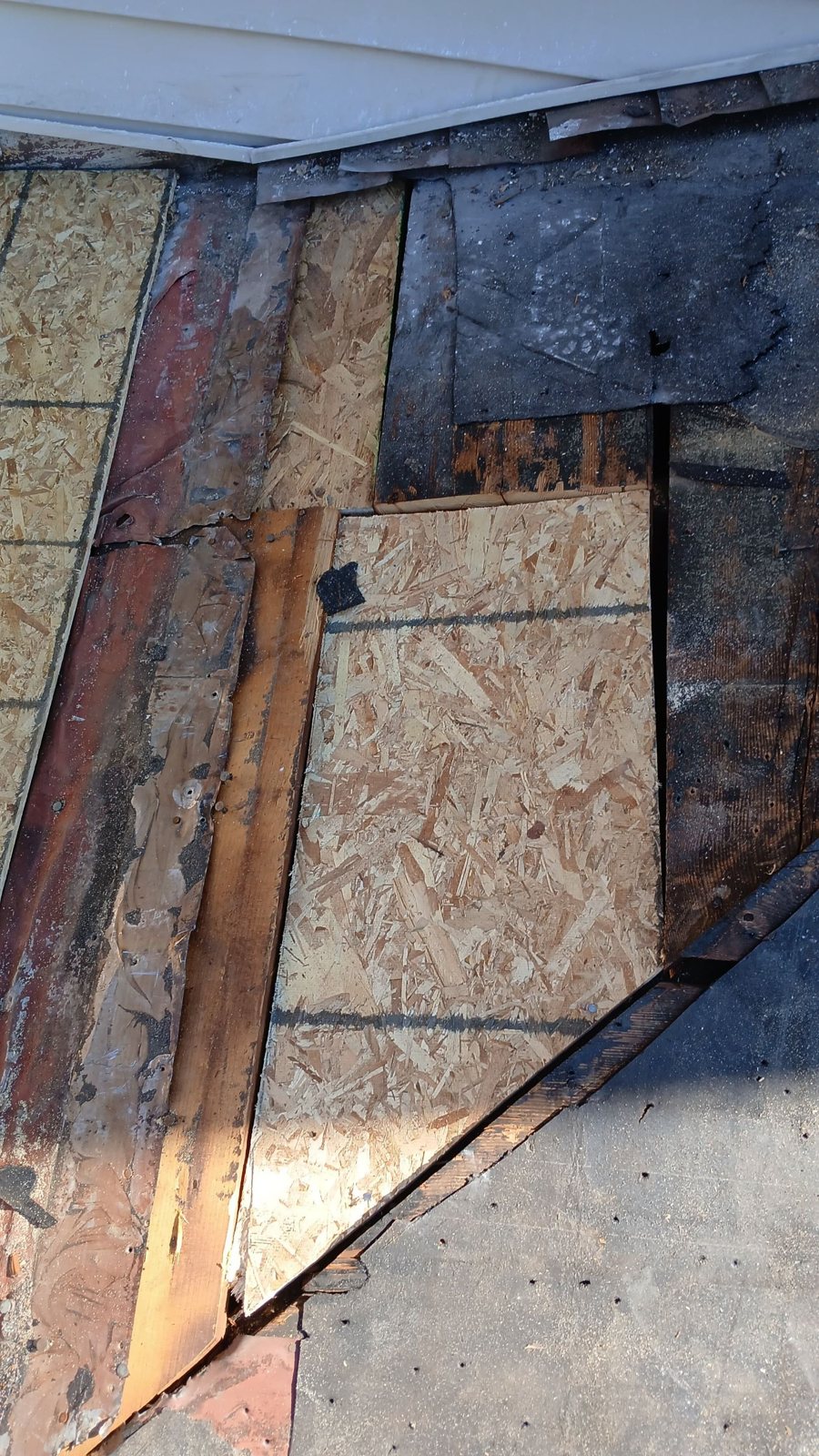
Waiting has a cost of its own. Water that gets past worn shingles soaks into the roof boards, and wet wood rots. On this Braddock job in November, rotted decking had to be cut out and replaced with new OSB before any shingles could go on.
Decking repairs add time and material to a replacement, and they grow the longer a leak runs. If a storm caused the damage, we work with your homeowners insurance and meet the adjuster at the house. Our storm damage repair page explains how that works.
Rotted roof boards replaced with new OSB on a low roof in Braddock, November 2025, Alan Construction.
Is There a Cheapest Time of Year to Replace a Roof?
Homeowners ask this all the time. The honest answer is that the season matters less than the roof itself. These are the things that actually drive the cost of a replacement:
- Roof size and the number of slopes, valleys and dormers
- Pitch, since steep roofs need more safety setup and slower work
- How many old layers have to come off
- How much decking needs to be replaced once the deck is exposed
- The material: asphalt shingles, metal, slate or a rubber flat roof
- Details like chimney flashing, skylights and ventilation
The real advantage of booking in a slower month is scheduling. You get a date sooner and have more choice of days. A firm written estimate also takes the guesswork out of timing. Marti S. said it well in a Google review: “I chose Alan as he did not play games. His price was his price. It was not going to increase it if I waited till another day to make my decision.”
If budget is the main reason you’re thinking about waiting, look at our financing options before you gamble on another winter with a failing roof.
Does the Roofing Material Change the Timing?
Asphalt shingles are the most sensitive to temperature because of that sealant strip. Other roof systems have their own limits:
- Metal: panels don’t rely on a sealant strip, so cold matters less, but underlayment, sealants and safe footing on a frosty roof still do.
- Slate and tile: both can go on in cool weather, but the material is less forgiving when it’s cold, and ice makes footing dangerous.
- Rubber (EPDM) flat roofs: adhesives and seam products have minimum application temperatures set by the manufacturer, so flat roofs are best done in the warmer months.
How to Plan Your Roof Replacement Timeline
If your roof is near the end of its life but isn’t leaking yet, work backward from the season you want:
- Watch for the signs: curling or lifted shingles, bald spots, granules in the gutters and the roof’s age. Our guide on how often a roof should be replaced covers what to look for.
- Get a free estimate a season ahead of when you want the work done.
- Choose your material and color while there’s no rush.
- Book the date and ask how rain delays are handled.
- Plan the day itself: move cars, clear the yard and keep pets inside. Our roof replacement timeline walks through what happens hour by hour.
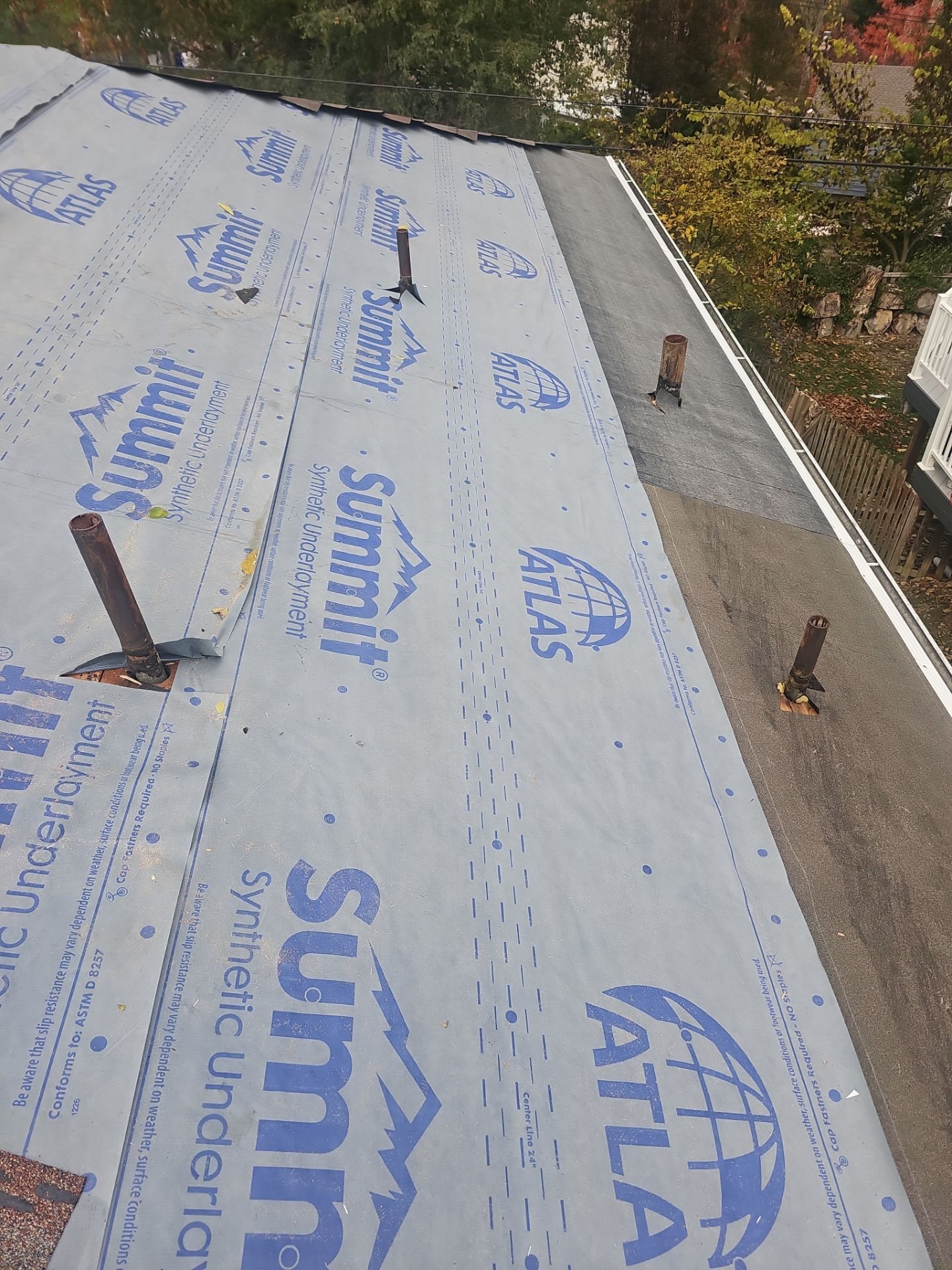
On short fall days, the order of work matters. Once the old shingles come off, the deck is covered with underlayment so the house stays protected if a shower rolls through before the shingles go on. This low slope roof was fully wrapped in synthetic underlayment at the end of October, with each pipe vent ready for flashing.
For the finished surface, we install Atlas shingles, including Pinnacle Pristine, which carries Scotchgard Protector to help resist the black algae streaks you see on so many older roofs.
Synthetic underlayment covering a low slope roof with pipe vents, Pittsburgh, late October 2025, Alan Construction.
Not sure whether your roof should be replaced this season or can wait until spring? Request a free estimate and we’ll look at your roof and give you a straight answer.