Soffit and fascia protect a home by sealing the roof’s edge and feeding fresh air into the attic. Fascia is the board that carries your gutters and covers the exposed rafter ends. Soffit is the vented panel underneath the overhang. Together, they keep water out, keep air moving, and stop rot before it reaches your framing.
On East End homes like the ones in Point Breeze, the roofline is almost always the last thing a homeowner looks at. That’s understandable. It sits twenty feet up, tucked under the eaves, painted the same color for decades. But when it fails, it fails quietly and expensively. When it does, our team handles soffit and fascia repair in Pittsburgh as part of the roof system, not as cosmetic trim.
What Is the Purpose of Soffit and Fascia?
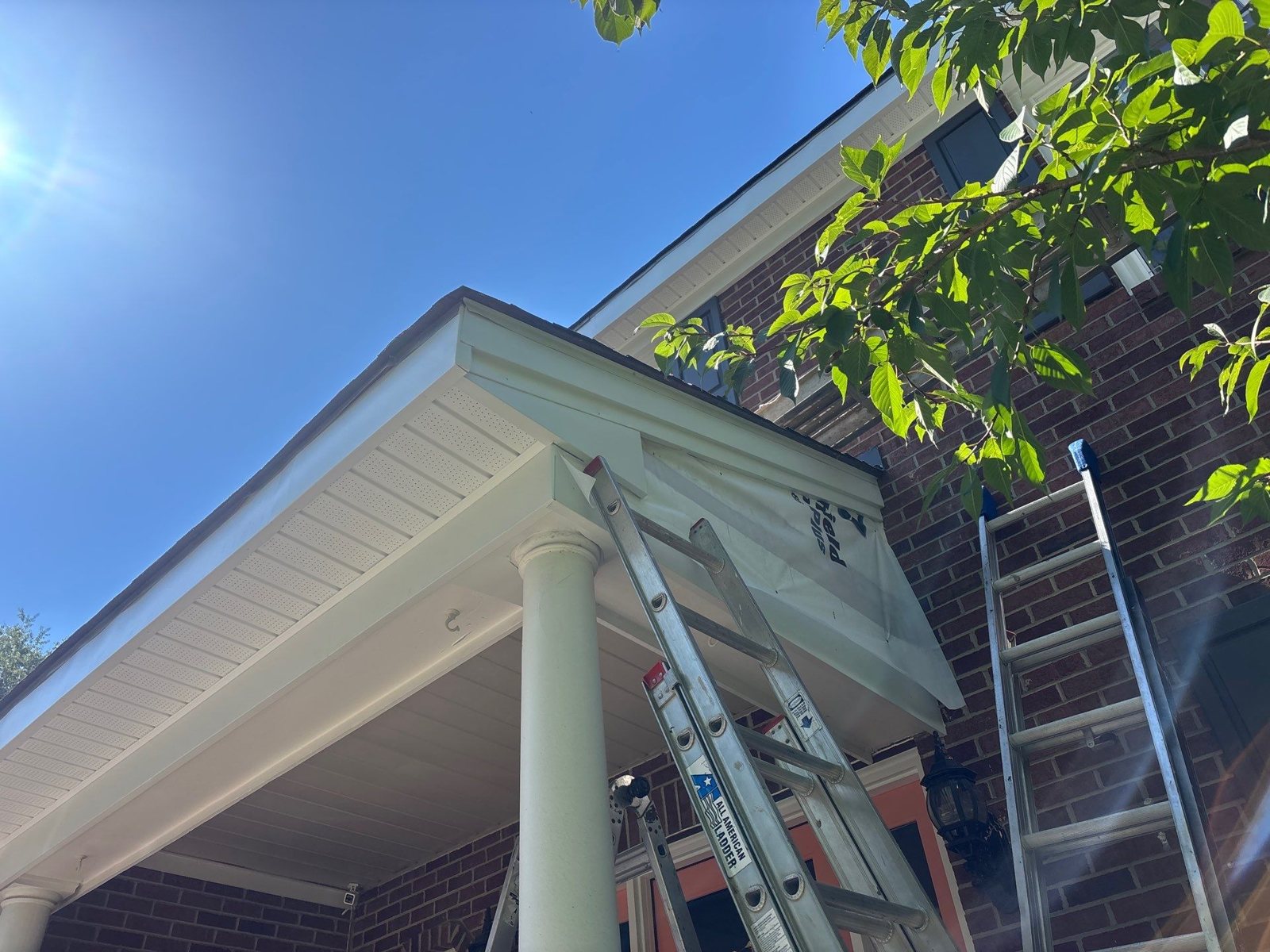
Think of these two pieces as trim that does real structural work. The fascia runs along the lower edge of the roof, capping the ends of the rafters so wind driven rain can’t soak into the grain. It’s also the anchor point for your gutters, so it carries a lot of weight in a heavy summer storm.
The soffit closes the gap between the roof overhang and the exterior wall. Most soffit panels are perforated or fitted with vents, and those small openings are the intake side of your attic ventilation. Cool air enters low at the eaves, travels up under the roof deck, and exits near the peak.
White soffit and porch ceiling with ladders against a brick wall in Pittsburgh, Alan Construction.
That constant airflow keeps your shingles from cooking from underneath and keeps moisture from building up in the attic. Block it, and the whole system stalls. If you want the basics first, start with what soffit is and why your house needs it.
How Soffit and Fascia Protect Point Breeze Homes
Point Breeze has housing stock most neighborhoods would envy: brick foursquares, Victorians with deep eaves, homes that have stood since the early 1900s. It also has a mature tree canopy, and those two things interact in ways that matter here.
Heavy shade means slower drying after rain. Overhanging limbs drop leaves and seed pods into gutters, which back up and spill water onto the fascia board. Older homes often have original wood fascia behind aluminum wrap, and once water gets behind that wrap, it doesn’t dry out. It just sits there.
Then there’s our winter. Freeze and thaw cycles are relentless in Western Pennsylvania, and the eave is the coldest part of the roof. When a warm attic melts snow higher up, that meltwater runs down and refreezes at the edge, forming an ice dam that pushes water back under the shingles. Properly vented soffit keeps the attic closer to the outdoor temperature, which is one of the best defenses against that cycle. We cover the full picture in why proper attic ventilation matters before cold weather arrives.
Common Problems With Soffit and Fascia
Most of what we find falls into a handful of categories, and nearly all of it starts with water going somewhere it shouldn’t.
- Rotted or soft fascia. Usually caused by clogged or badly pitched gutters. The board darkens, then softens, then the gutter fasteners lose their grip and the run starts sagging.
- Blocked soffit vents. Loose fill in the attic can drift over the eaves and seal off the intake vents. The attic stops breathing and nobody notices until shingles start curling early.
- Painted shut vents. On older homes with wood soffit, decades of repainting can plug the vent holes. The panels look fine from the street and work like a solid wall.
- Pest entry. Squirrels, birds and wasps are opportunists. A small gap at a soffit corner becomes a nesting site.
- Aluminum wrap over rotten wood. Cheap fascia wrap installed over damaged boards hides the rot instead of fixing it. It buys a few years and makes the eventual repair bigger.
Why Don’t All Houses Have Soffits?
Because not every roof has an overhang to enclose. Some rowhouses, older city builds and homes with flush or clipped eaves end the roof right at the wall line. There’s no underside to cover, so there’s no soffit.
Many older homes were also built with open rafter tails left exposed. In those cases, attic air has to come from somewhere else: gable vents, roof vents, or an intake system added at the eave during a roof replacement. A missing soffit isn’t automatically a defect. What matters is whether the attic gets enough intake air from some other source.
Is Soffit and Fascia Considered Siding?
Not exactly, though the confusion is understandable. Siding covers vertical walls. Soffit and fascia are roofline parts, even when they’re made from the same vinyl or aluminum as your siding and installed by the same crew. The distinction matters because estimates and warranties often list them separately, and because a roofer looks at them in terms of airflow and water management, which is the view you want here.
Soffit and Fascia Material Options
| Material | Upkeep | Best fit |
|---|---|---|
| Wood | High, needs regular paint | Historic homes where the original profile matters |
| Aluminum | Low | Fascia wrap over sound wood and vented soffit on most homes |
| Vinyl | Low | Straightforward soffit replacement |
| Fiber cement | Moderate | A painted wood look with better rot resistance |
| PVC or composite | Very low | Shaded, damp spots where wood keeps rotting |
There’s no single right answer. On a well kept Point Breeze home with detailed eave work, a material that holds the original profile without the rot risk makes sense. On a straightforward replacement, aluminum fascia over sound wood with vented soffit is hard to beat.
Should You Replace the Roof or Soffit First?
If both are on your list, the roof goes first, then soffit and fascia, then gutters. That order isn’t contractor preference. It follows how water moves and how the parts physically connect.
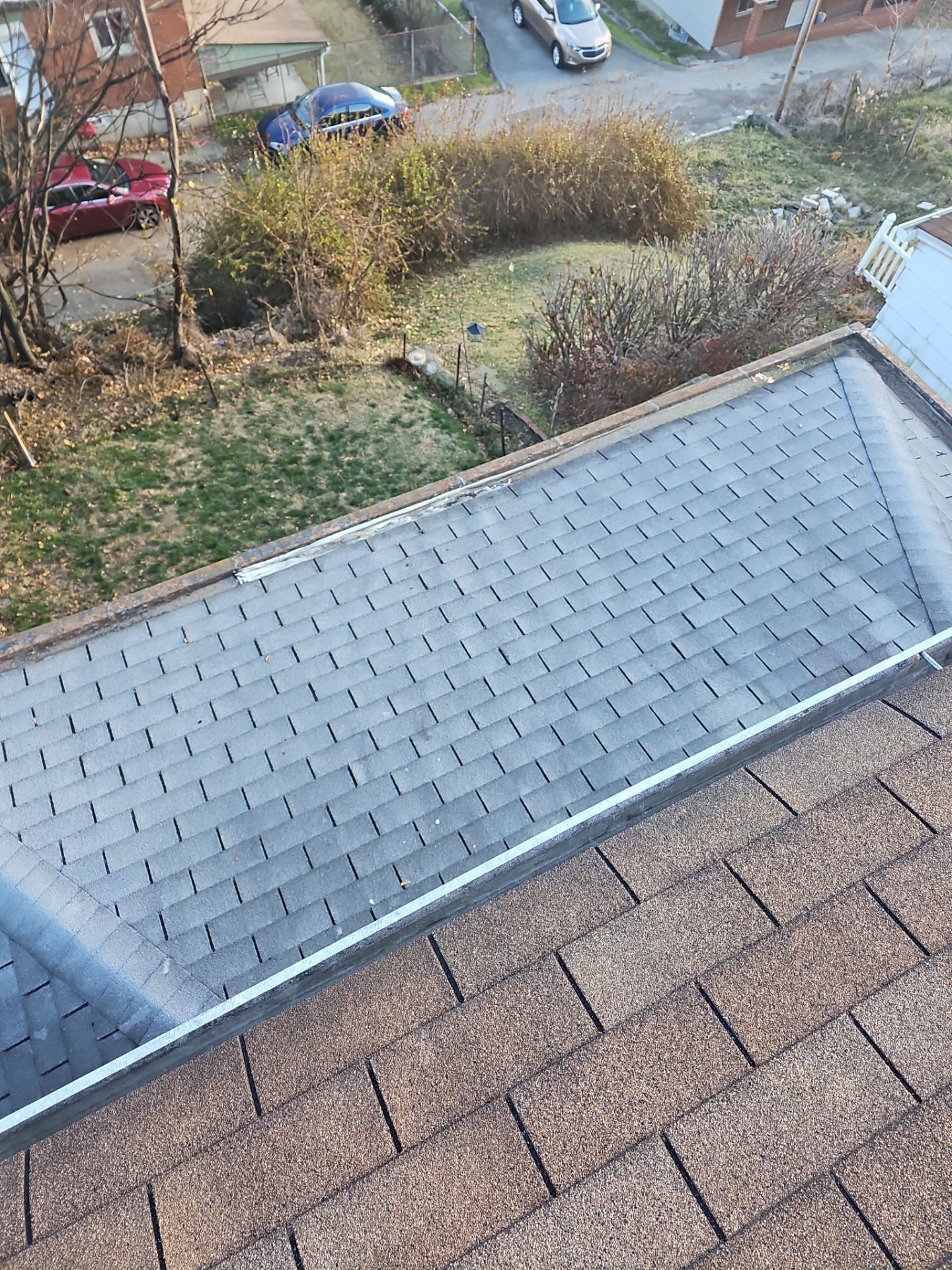
The drip edge, the metal flashing along the roof perimeter, has to lap correctly over the fascia so water sheds outward and into the gutter instead of behind it. Install fascia first and roof later, and that detail gets compromised.
Metal drip edge along the eave of a brown shingle roof in Pittsburgh, Alan Construction.
A tear off is also rough on everything around it. Crews are pulling old nails, moving bundles and leaning ladders against the closest surface. New soffit panels and fresh fascia are easy to dent or stain during that work. And if the old roof has rotted decking that only shows up during the tear off, the carpenters may need access to areas a new soffit would already cover.
If your soffit is leaking or open to animals now and the roof is still months away, ask about a temporary repair rather than a full replacement. For timing the bigger pieces, read why timing matters when you replace your roof and siding.
One crew for the whole roofline
When one contractor handles the roof, soffit, fascia and gutters, the sequence takes care of itself. You don’t have to coordinate calendars or referee between crews about who damaged what, and one company stands behind the whole roof edge.
That’s how one recent customer described working with us:
“Very pleased with our siding, soffits, fascia, and gutters by Alan, Jim, and their crew!” Chelsea C.
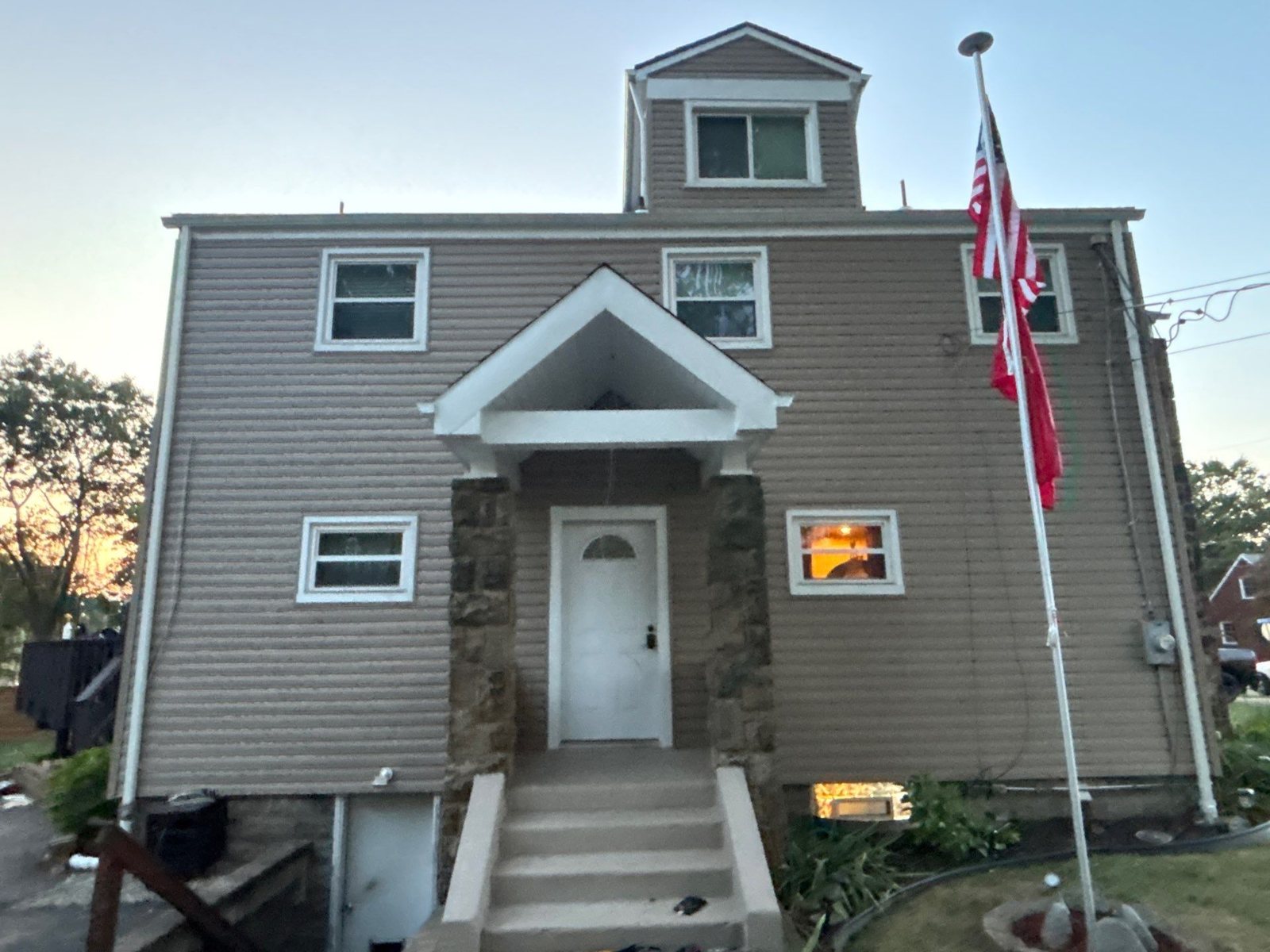
Front of a home with new tan siding, stone porch columns and a dormer in Carnegie, Alan Construction.
What to Look For From Your Own Driveway
You don’t need a ladder for a first pass. Stand back, look along the eave line, and check a few things:
- Is the fascia straight, or does it dip anywhere?
- Are gutters pulling away or overflowing at one spot?
- Do you see dark streaks, peeling paint, or daylight through a soffit seam?
- Inside, is there frost on roofing nails during a cold snap, or staining near the eaves?
Any one sign is worth a closer look. Two or more in the same area usually means water has been active there for a while. Localized damage, like one soft section or one loose panel, is a repair. Rot that has spread into the rafter tails is a bigger fix, and it’s best planned alongside the roof.
Roofline problems are hard to diagnose from the ground and easy to misjudge from a photo. When we look at a soffit and fascia problem, we get into the attic too, because ventilation tells you whether the damage was bad luck or a design flaw waiting to repeat itself.
Take care of the roofline and it will take care of everything under it. That’s not a sales pitch, it’s just how the assembly works. The National Roofing Contractors Association is a good place to read more about how roof edges and ventilation are supposed to work together.
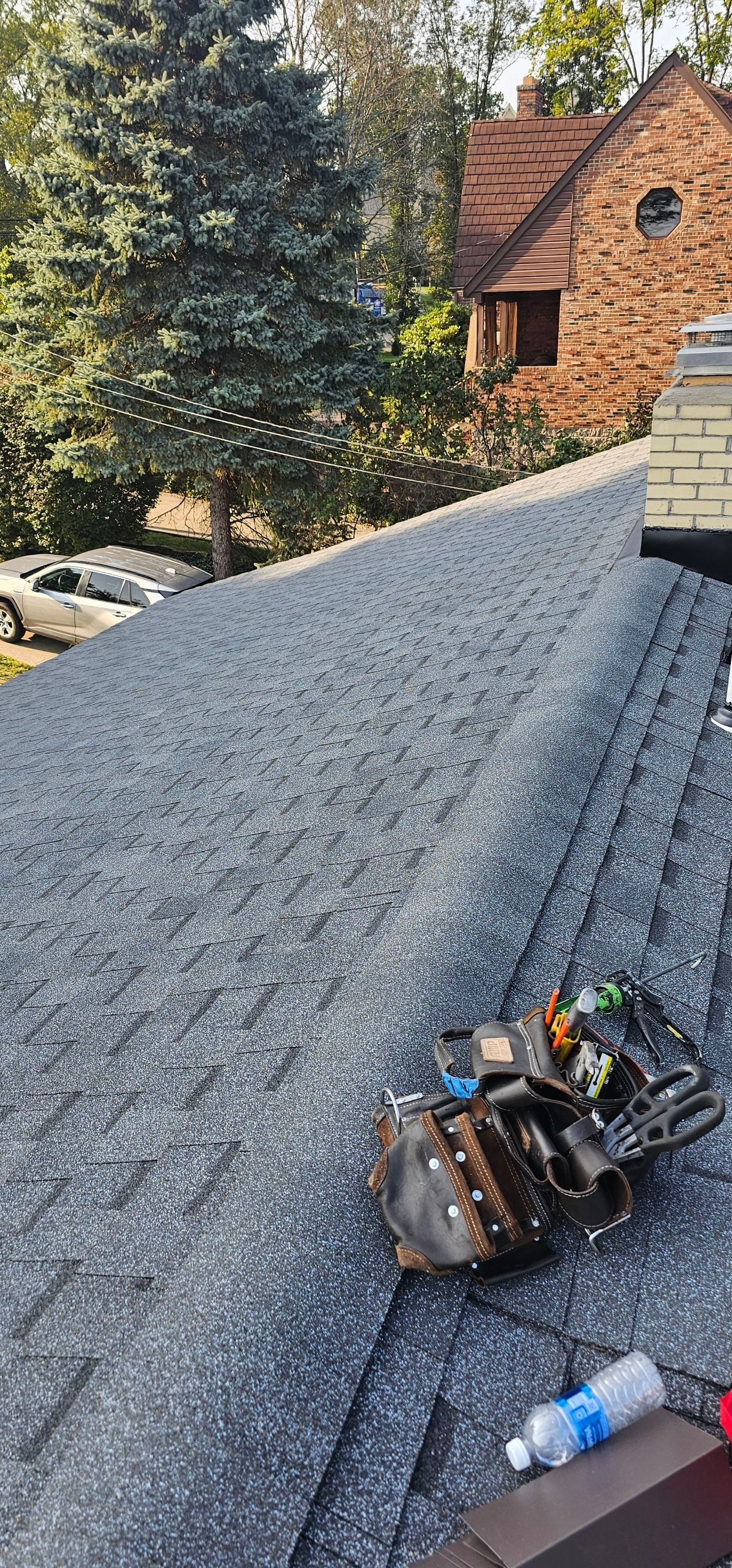
New gray shingles with a roofer tool bag on the slope in Bethel Park, Alan Construction.
Seeing peeling paint, sagging gutters or gaps under your eaves? Get a free estimate and we’ll check your soffit, fascia and attic airflow.