Proper attic ventilation keeps your attic cold and dry in winter, which stops ice dams, mold and rotting roof decks before they start. Checking your roof vents in the fall lets you fix airflow problems while the weather still cooperates, not in January when snow is sitting on the roof. If a ventilation problem has already caused a leak or soft decking, that’s roof repair in Pittsburgh work, and fall is the time to get it done.
Most homeowners never think about attic ventilation until something goes wrong. A brown stain shows up on a bedroom ceiling. Icicles as thick as your arm hang off the gutters. By then, the damage has usually been building for months.
In Western Pennsylvania, winter doesn’t mess around. Snow, ice and constant swings around freezing put real pressure on the roof, and the vents in it, to do their job.
Why your attic should be cold in winter
Here’s something we tell almost every homeowner. Your attic should be close to the temperature outside in winter. Not warm. Not cozy. Cold.
When heat from your living space leaks into the attic, it warms the underside of the roof. Snow on top melts, runs down to the colder eaves and refreezes. That’s an ice dam. Water then backs up under the shingles and finds its way into your ceilings and walls. A membrane along the eaves is the backup, and our guide on where ice and water shield should be installed explains how far up it belongs.
That’s the real reason attic ventilation matters before cold weather arrives. Once snow is on the roof, most fixes get harder and riskier. A fall check of your roof vents is far easier than repairing drywall and roof decking in March.
Should an attic have ventilation?
Yes. For the vast majority of homes with a standard unfinished attic, ventilation isn’t optional. The residential building code requires it, and for good reason.
Every day, your household produces moisture from showers, cooking, laundry and even breathing. Some of it drifts upward. Without a way out, it condenses on cold roof sheathing.
In a poorly vented attic in the middle of winter, you can find frost coating every nail tip poking through the roof deck. When the sun comes out, that frost melts and drips. Homeowners often think they have a roof leak. In reality, the attic simply can’t breathe.
What are the three types of attic ventilation?
When people ask about the three types of attic ventilation, they’re usually talking about intake, exhaust and the balance between the two. Each one plays a specific role, and a system only works when all three are right.
Intake ventilation
Intake vents let cool, fresh air into the attic. They’re usually in the soffits, the underside of your roof overhang. To see how that part of the house works, read our guide on how soffit and fascia protect homes.
Exhaust ventilation
Exhaust vents let warm, moist air escape near the peak of the roof. Ridge vents, turtle vents (also called box vents), gable vents and powered fans all fall into this group. Warm air rises naturally, so exhaust vents belong up high.
Balanced ventilation
Balance is where most systems fail. Air has to come in low and leave high in roughly equal amounts. Too much exhaust with too little intake is like trying to drink through a straw with your thumb over the other end.
Ridge vent vs turtle vents: which exhaust works better?
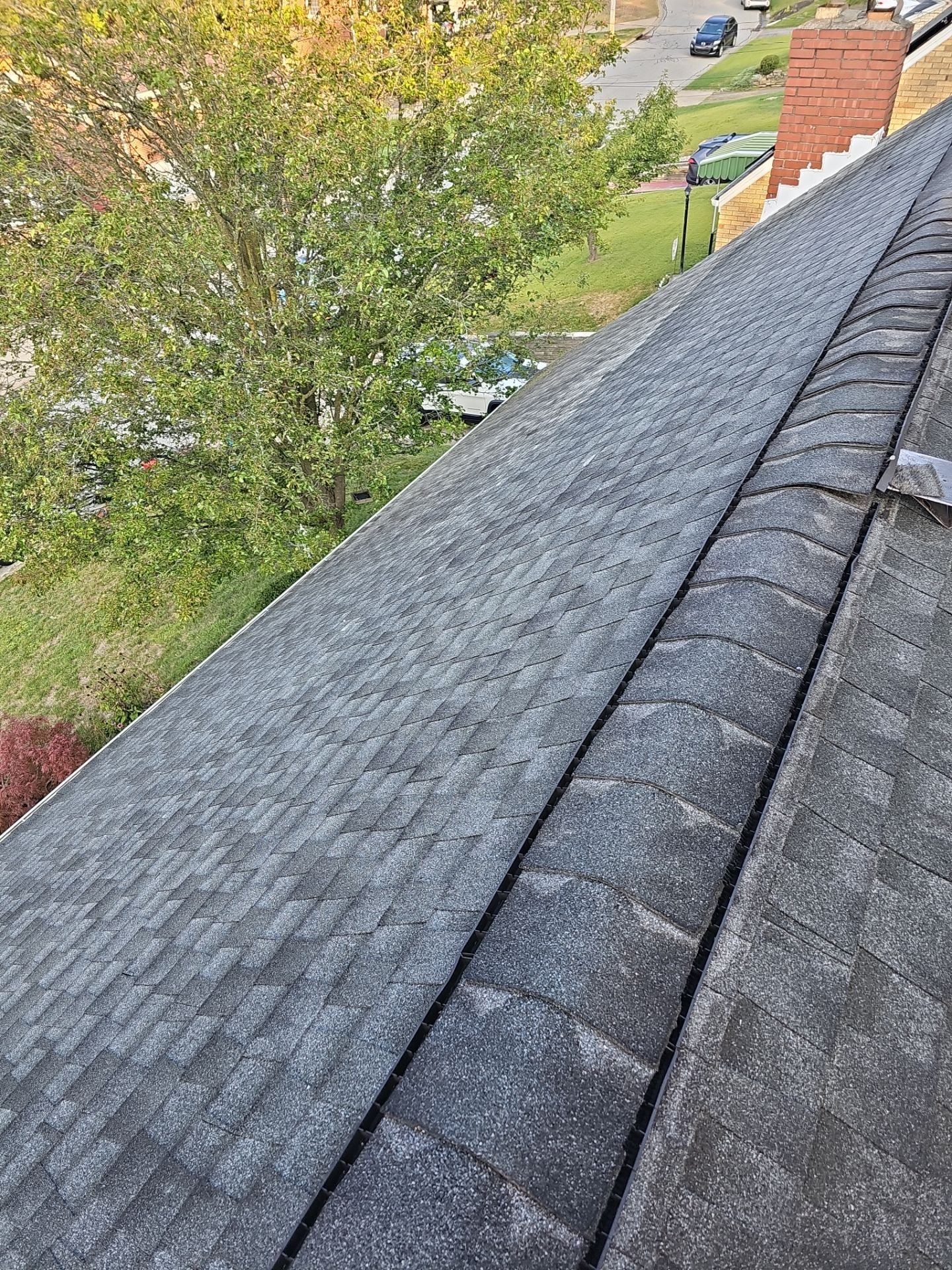
A ridge vent is a continuous slot cut along the peak of the roof, covered by a vented cap and finished with ridge shingles, so from the street it looks like a normal ridge. Because it runs the full length of the roof, it pulls air evenly from every rafter bay.
A turtle vent is a single low profile box vent set into the roof near the peak. It’s simple and works, but each one only vents the area around it, so a roof needs several of them to do the job one ridge vent does.
Shingled ridge cap running along the peak of a new Pittsburgh roof, Alan Construction.
On most homes with a usable ridge, we prefer a continuous ridge vent. Turtle vents still make sense on hip roofs with short ridges or on roofs where a ridge vent can’t get enough length. What you shouldn’t do is mix the two, which we cover below.
What are the rules for attic ventilation?
The common rule comes from the International Residential Code: about 1 square foot of net free vent area for every 150 square feet of attic floor. In some cases, such as when the vents are properly split between high exhaust and low intake, the code allows 1 square foot for every 300.
So a 1,500 square foot attic would typically need around 10 square feet of total venting at the 1 to 150 ratio. Ideally, that’s split roughly half intake and half exhaust. Local code has the final word, so it’s worth having a roofer measure before anyone cuts holes in your roof.
| Attic floor size | Vent area at 1 per 150 | Vent area at 1 per 300 |
|---|---|---|
| 1,000 sq. ft. | About 6.7 sq. ft. | About 3.3 sq. ft. |
| 1,500 sq. ft. | About 10 sq. ft. | About 5 sq. ft. |
| 2,000 sq. ft. | About 13.3 sq. ft. | About 6.7 sq. ft. |
One more rule people forget: nothing should block your soffit vents. Soffits packed with debris, paint or attic material look fine from the yard, but no air moves through them. If something inside the attic is covering the intake path, that channel needs to be cleared before any exhaust vent can work.
What is the most effective way to ventilate an attic?
For most homes, continuous soffit vents paired with a continuous ridge vent is the gold standard. It creates a steady, even flow of air along the entire underside of the roof.
It works without electricity. There’s nothing to burn out. Physics does the heavy lifting.
Powered attic fans can sound like an upgrade, but they come with a catch. If the ceiling below has gaps around lights, pipes or the attic hatch, a fan can pull heated air up out of your living space. You end up paying to heat your attic. Good roof ventilation is about smart airflow, not brute force.
Can you have too much venting in an attic?
Yes, and it happens more than you’d think. The problem usually isn’t the total amount of venting. It’s mixing the wrong kinds.
A common mistake is adding a ridge vent but leaving old gable vents or turtle vents in place. The exhaust vents start short circuiting. One vent pulls air in from another nearby vent instead of drawing fresh air up from the soffits, and big sections of the attic end up with stale, damp air.
Weather is the other concern. Too many exhaust openings, poorly placed, can let wind driven rain or snow blow in during a storm.
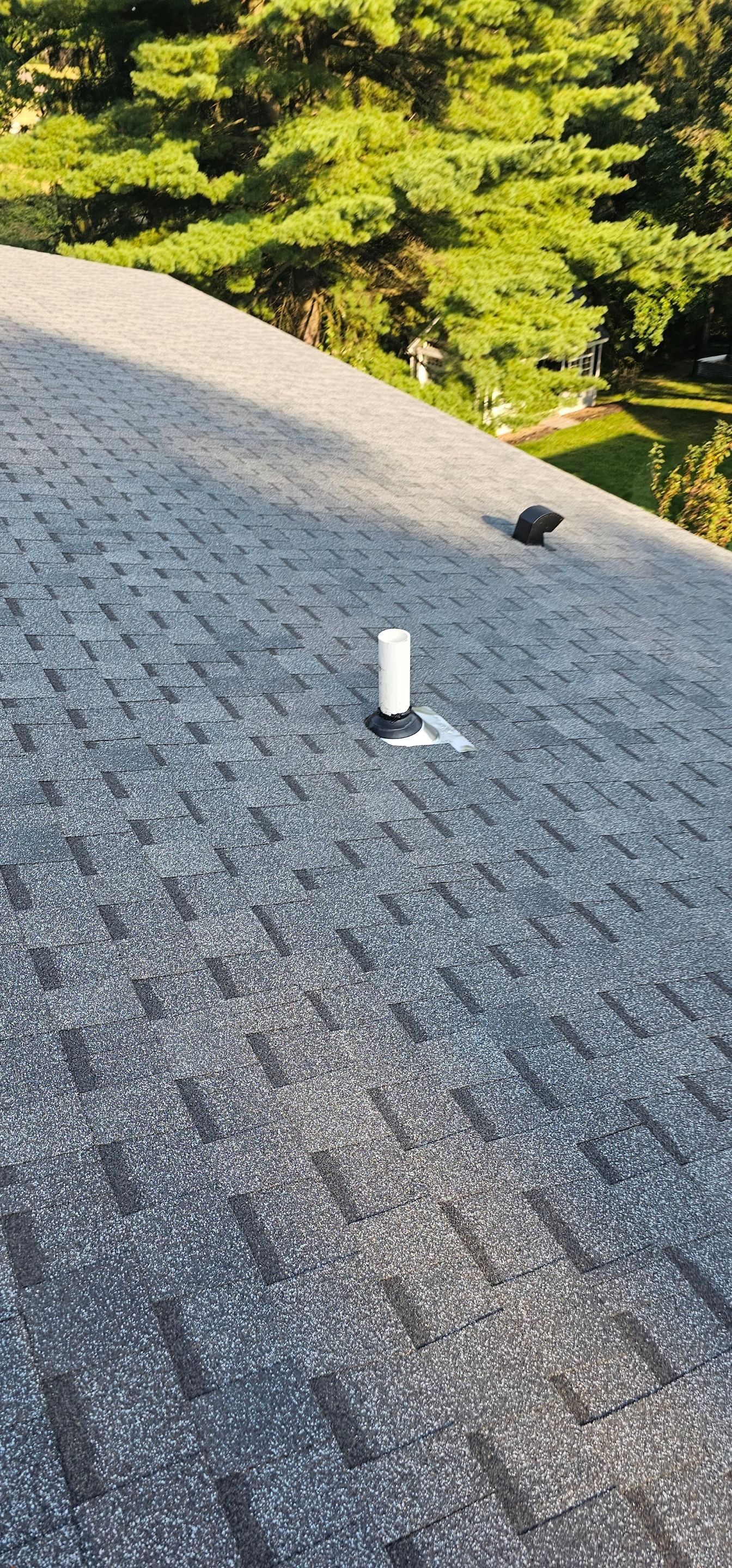
Also, not every vent on your roof is an attic vent. A pipe boot like this one seals a plumbing vent stack, which carries air from the drain lines and has nothing to do with attic airflow. When we plan ventilation, we count only the true intake and exhaust vents, then remove extras that work against the system.
Pipe vent boot set into new gray shingles on a Bethel Park roof, Alan Construction.
Should the attic vent be closed in winter?
No. This is probably the most common question we get every fall. It makes sense on the surface, because it feels like you’re letting cold air into your house.
But your attic isn’t supposed to be warm. Winter airflow keeps the attic cold, which cuts down the chance of ice dams. What keeps your living space warm is the ceiling below the attic, not a sealed up attic.
Close those vents and you trap moisture overhead. That’s how you get mold on the sheathing and nails that rust through. Leave them open.
Warning signs your attic isn’t breathing right
You don’t need to climb into the attic to spot trouble. Watch for:
- Large icicles or ice buildup along the gutters
- Snow melting unevenly on your roof, especially near the peak, while neighbors’ roofs stay white
- Peeling paint, ceiling stains or a musty smell in upstairs rooms
- Inside the attic: dark spots on the underside of the roof, damp wood or frost in cold months
Any of these means air isn’t moving the way it should. Catching them now beats finding them during a February thaw.
Getting your roof ventilation ready before the first snow
Fall is the sweet spot. Roofers can work safely, shingles seal properly in milder temperatures, and you’re not scrambling after the first storm.
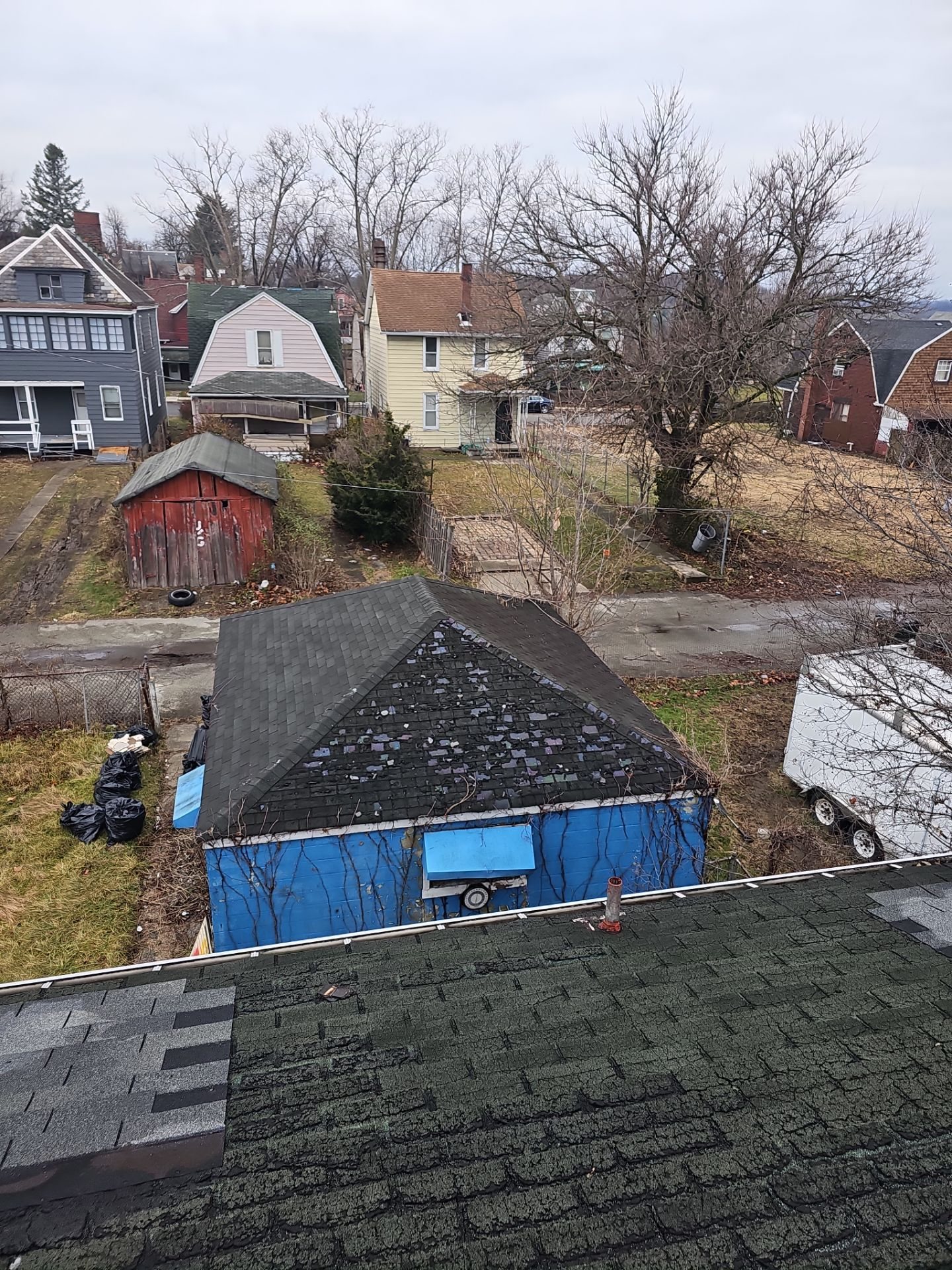
If your roof is near the end of its life, a replacement is the cleanest time to fix ventilation. With the old shingles coming off, the ridge can be opened for a continuous vent, leftover turtle vents can be removed and patched, and intake can be matched to exhaust.
An old shingle roof in Clairton before tear off, with the dumpster staged below, Alan Construction.
Here’s what we’d check before November:
- Soffit vents aren’t painted over, clogged with debris or blocked from inside
- Bathroom and kitchen fans vent outside, not into the attic
- Exhaust vents are one type, not a mix of ridge, turtle and gable vents
- Intake and exhaust are roughly balanced for the size of the attic
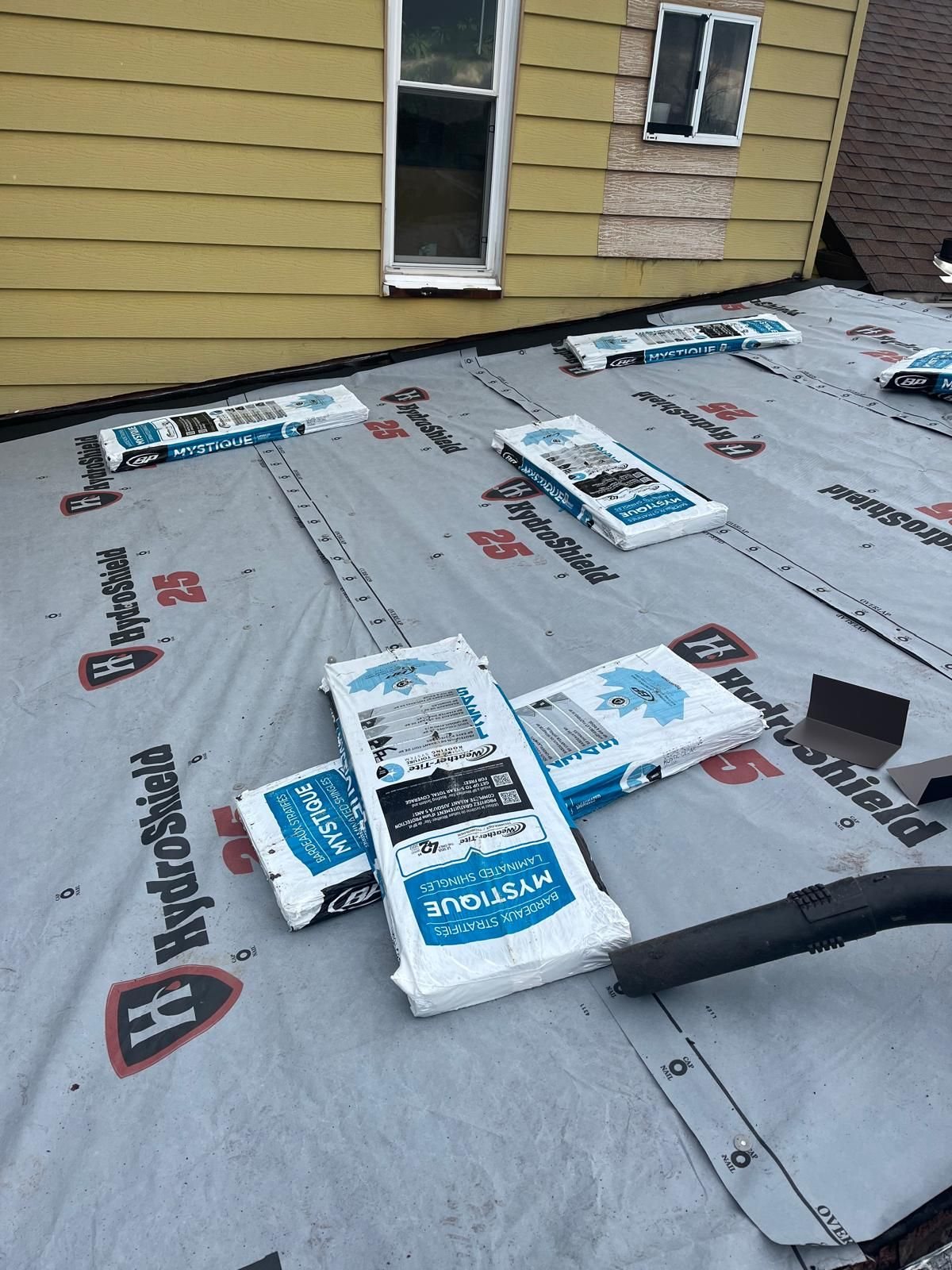
On a replacement, the ventilation plan gets settled at the underlayment stage shown here, before the shingles go on. That’s when ridge slots are cut, old vent holes are decked over and new vents are laid out.
If you’re not sure where to start, a local roofing crew can look at your roof and attic, measure your vent area and tell you what’s working and what isn’t.
Synthetic underlayment covering a roof deck with shingle bundles staged on top, Pittsburgh, Alan Construction.
Attic ventilation isn’t flashy. Nobody brags about their ridge vent at dinner parties. But it quietly protects your roof and your ceilings every single winter. Get it checked before the cold settles in, and you’ll be standing under a dry ceiling in February. For more on what that soffit intake does, see what soffit is and why your house needs it.
Want your roof vents checked before winter? Contact Alan Construction for a free, no obligation estimate.