Yes. If your roof is leaking, missing shingles, or near the end of its life, you should replace it before winter in Pittsburgh. Fall weather lets new asphalt shingles seal down properly, and a sound roof heading into January keeps you clear of ice dams, attic moisture and emergency repairs that are always harder than planned work. That’s the core argument for roof replacement in Pittsburgh in the fall rather than a winter roof replacement done in a rush.
The longer answer depends on your roof’s age, its condition, and how much risk you’re comfortable carrying through a Western Pennsylvania winter. We’ve been replacing roofs around Pittsburgh and Allegheny County since 2003, and the roofs that fail in February almost never fail without warning. They gave signals in September. Somebody just didn’t look.
Short answer: an old, leaking or granule shedding roof should be replaced before the cold sets in. A younger roof in good shape needs an inspection and a plan, not a rushed replacement.
Why Pittsburgh winters punish an aging roof
Total snowfall isn’t really the problem. The thaw is. Pittsburgh bounces above and below freezing over and over from December through March.
Water melts, seeps into a hairline crack in a shingle or a gap in old flashing, refreezes overnight and expands. Repeat that cycle all winter and a minor flaw becomes a leak. A roof with brittle shingles, loose flashing or tired underlayment gives that water plenty of places to start.
Winter roof replacement or fall replacement: how we decide
We ask homeowners three questions. How old is the roof? Has water ever come inside? And can we get a full, dry install window before the weather turns? If the answers to the first two are “old” and “yes,” we stop hedging. Get it done.
The reason is physical, not sales pressure. Asphalt shingles have a self sealing adhesive strip that softens in warmth and bonds each course to the one below it. On a mild fall day that bond forms quickly.
In a cold January drizzle it may not form until spring, which leaves new shingles more exposed to wind uplift through the exact months you need them locked down. We install Atlas shingles, including Pinnacle Pristine, and like every asphalt shingle they seal best in mild weather. That’s the single biggest argument for doing the work in the fall.
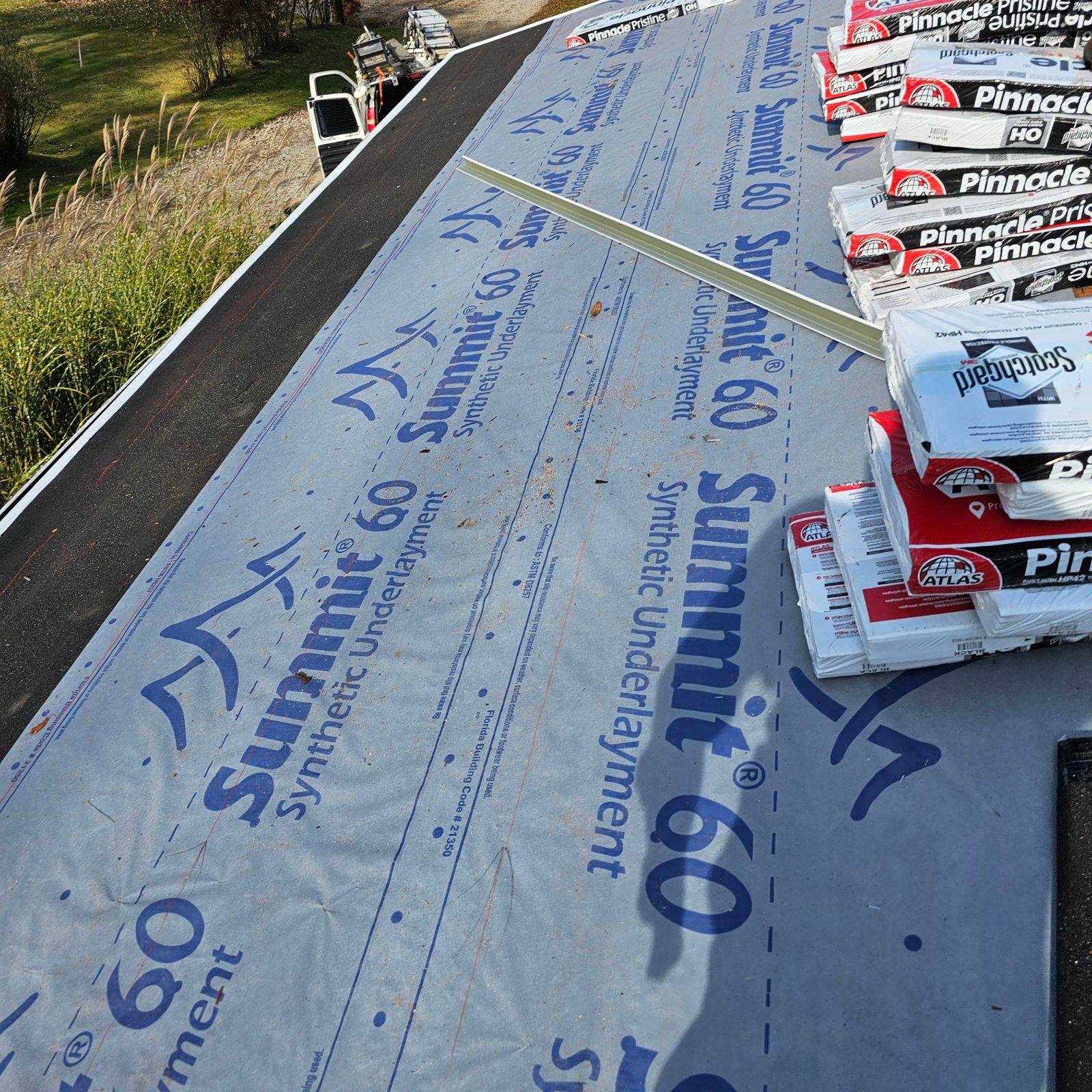
Synthetic underlayment rolled out with shingle bundles stacked on top during an October job in Natrona Heights, Alan Construction.
A winter roof replacement is still possible. We’ve done them, and done them well, with hand sealing where the shingles need it and close attention to the forecast. They just take more care and more contingency. If you’re trying to judge how late is too late, read when it’s too late in the year to replace a roof in Pittsburgh.
What is the 25 percent rule for roofing?
It’s a rule of thumb you’ll hear from roofers and adjusters: once repairs would touch roughly a quarter of the roof within a year, a full replacement usually makes more sense than another patch. Building codes and insurance policies handle this differently, so ask your municipality or your adjuster how it applies to your house.
Here’s why it matters before winter. Many homeowners nurse a roof along with a patch here and a patch there. Each repair buys a season, and then the roof gets replaced anyway. If you’re already at the point of repeated repairs, fall is the time to stop paying for patches that won’t make it through another freeze and thaw season.
Should a 20 year old roof be replaced?
Often, yes, and in Pittsburgh we lean toward yes more often than a mild climate would. Most asphalt roofs we tear off are somewhere around that age, and our freeze and thaw cycling wears shingles faster than the label on the bundle suggests.
A 20 year old roof with good attic ventilation, no curling and no bare spots can sometimes go a few more seasons. A 20 year old roof with brittle edges, worn granules and a gutter full of grit is done.
Stop thinking in warranty years and start thinking in condition. The roof doesn’t know what the paperwork says. For a fuller look at real lifespans, see how long a new roof lasts.
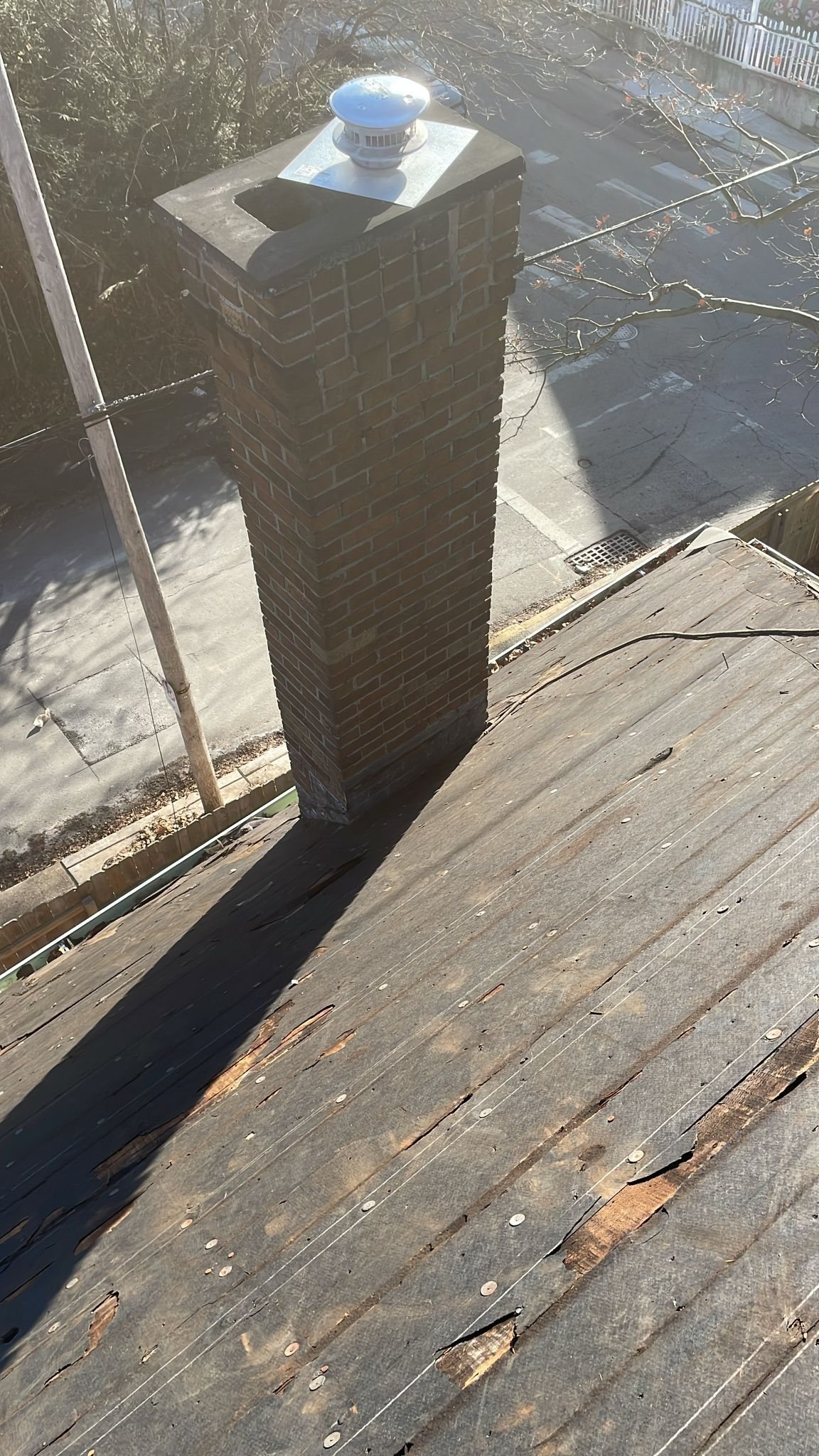
A weathered, worn older roof around a brick chimney in Pittsburgh, Alan Construction.
A quick attic check anyone can do
Go up on a bright afternoon with the lights off. If you see daylight through the decking, you have gaps. If you see dark staining on the rafters or the underside of the boards, water has been getting in. If the attic smells damp or you see frost on nail tips on a cold morning, moisture is building up. Five minutes, no ladder, real answers.
Is it better to wait for the slow season?
Some homeowners wait for late winter, when roofing calendars open up. That can work for a roof that’s still sound. It’s a gamble for a roof you already know is failing.
Winter installs come with real trade offs: shorter daylight, more weather delays, shingles that may need hand sealing, and more risk when a storm rolls in on a day the roof is open. If you want to compare every season on its merits, read the best time to replace a roof in Pittsburgh before you commit to a date.
Fall vs. winter vs. spring: what actually changes
| Factor | Fall | Winter | Spring |
|---|---|---|---|
| Shingle sealing | Excellent | Poor to fair | Good |
| Scheduling | Busy | More open | Busy |
| Weather delays | Low | High | Moderate |
| Risk of winter leaks | Avoided | Already carried | Already carried |
Look at the last row. That’s the one people skip. A spring install means you’ve gambled through an entire Pittsburgh winter with a roof you already knew was failing.
Warning signs to check before winter
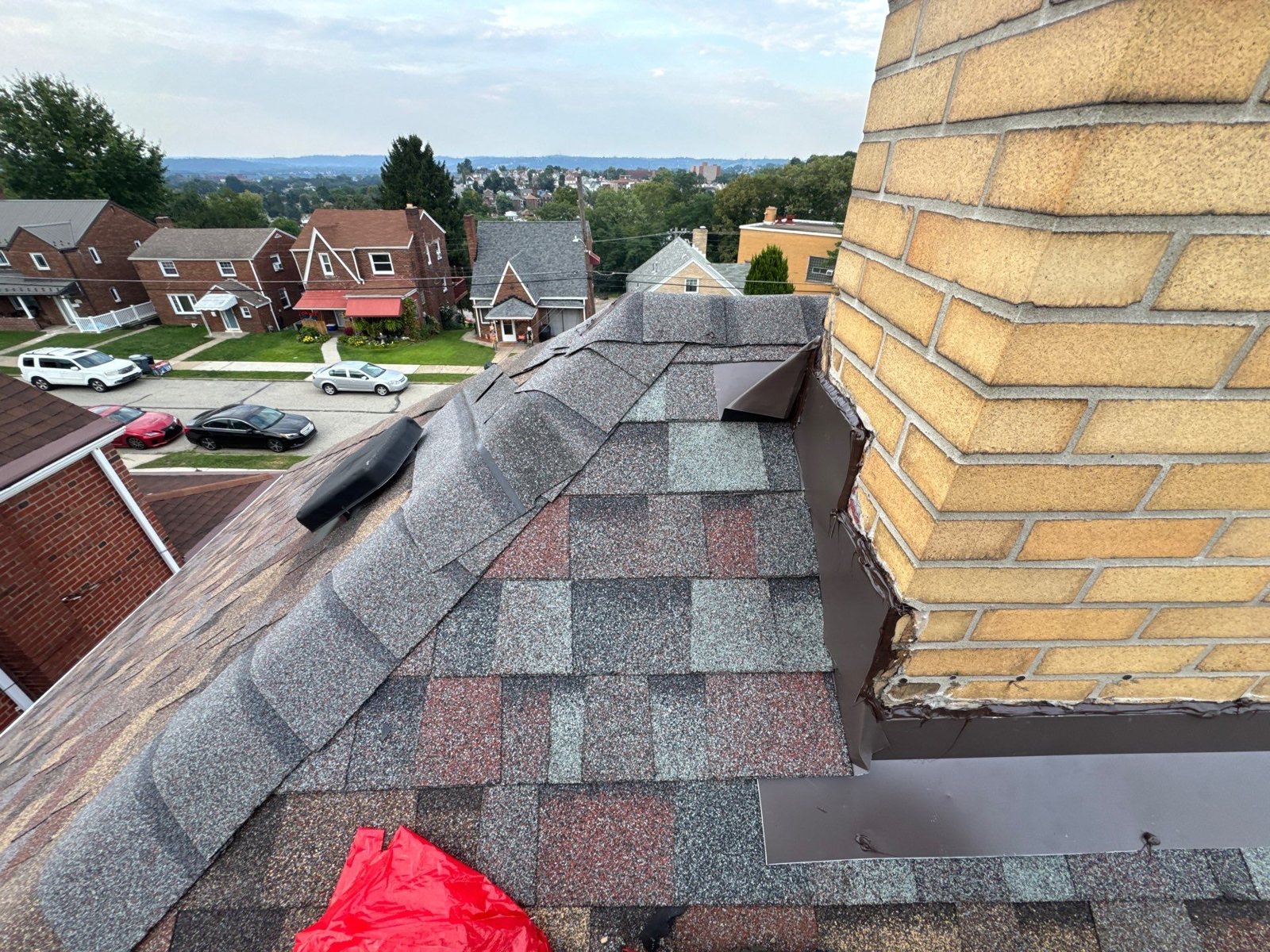
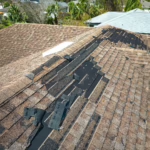
Granules in the gutters are the big one. Those granules protect the asphalt from the sun, and once they wash off, the shingle dries out and cracks. Cupped or curled shingle edges mean the shingle has been taking on moisture.
Then there’s flashing. Most Pittsburgh leaks we chase don’t start in the middle of a roof. They start at a chimney, a valley or a sidewall where old flashing has pulled loose. If your home has a brick chimney and the roof is original, have someone look at that junction specifically.
New metal flashing along a brick chimney on a Munhall roof, Alan Construction.
- Granules collecting in gutters or at downspout outlets
- Curled, cupped or cracked shingles
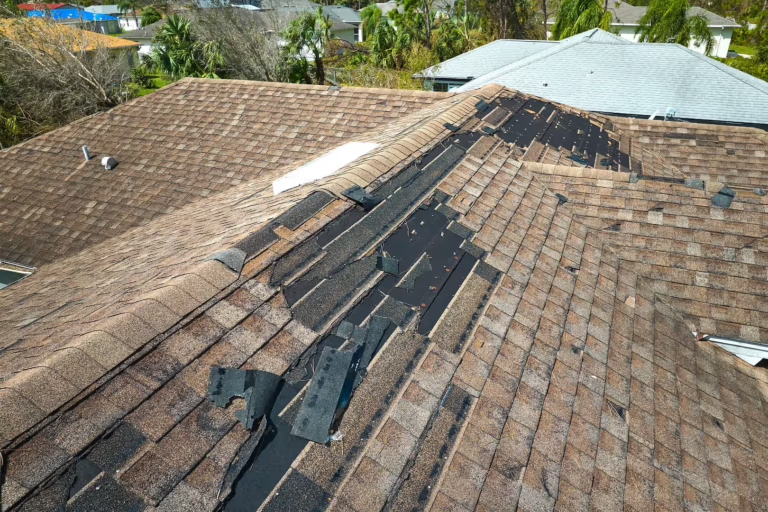
- Missing shingles after a fall windstorm
- Loose or rusted flashing at chimneys, walls and valleys
- Stains on ceilings or on the attic side of the roof boards
Ice dams: the winter problem nobody plans for
Ice dams form when warm attic air melts snow on the upper roof. The water runs down to the cold eave and refreezes into a ridge of ice. Water then backs up behind that ridge, works under the shingles and shows up in your ceilings.
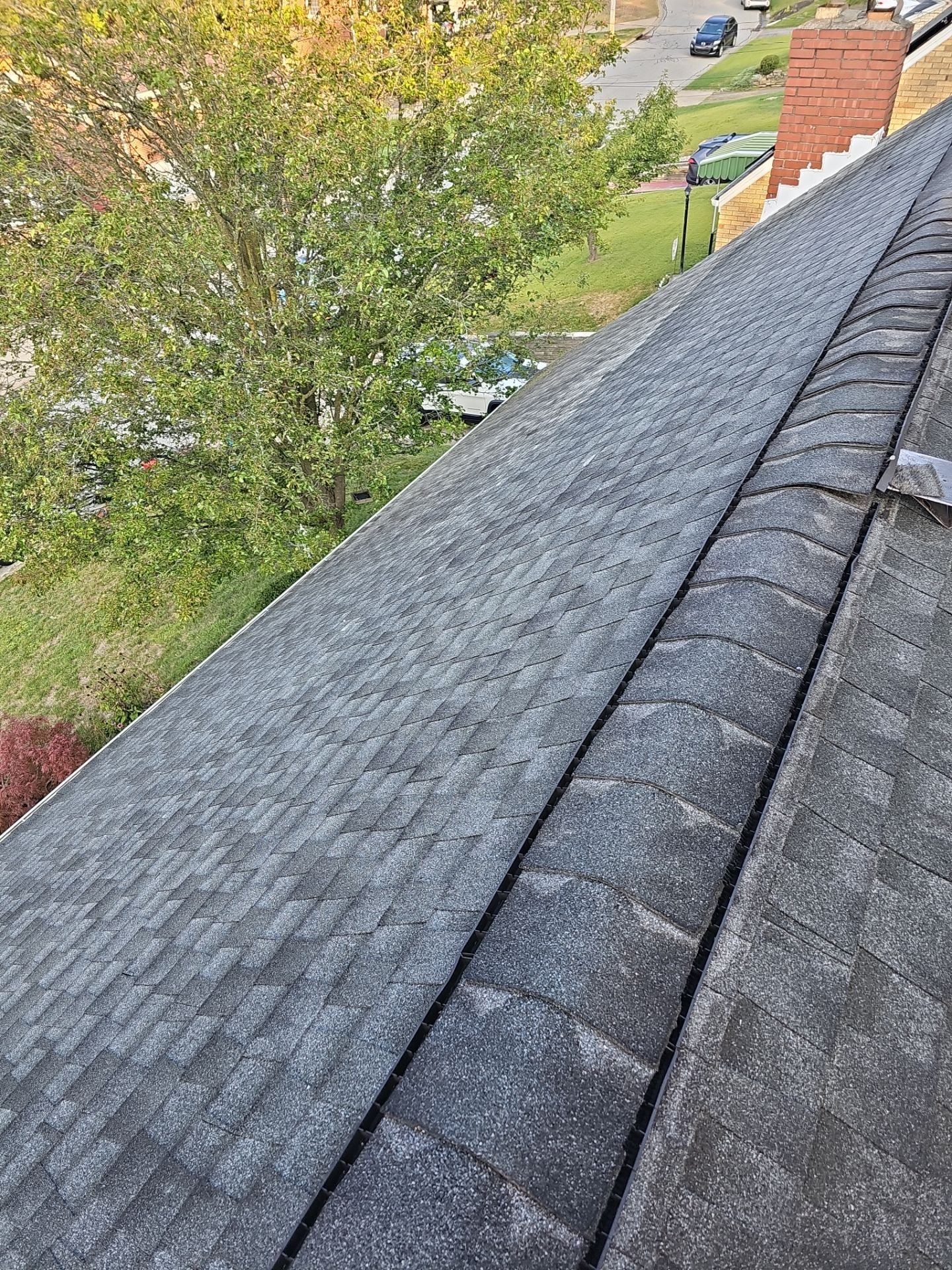
The fix isn’t a bigger gutter. It’s a roof that breathes and an eave that’s protected. A roof that vents properly at the ridge and the eaves, with ice and water shield protecting the eave edge, is far less likely to dam up. When we replace a roof, ventilation is part of the job, not an afterthought, and we handle ice dam work on existing roofs too.
Shingled ridge cap running along a new Pittsburgh roof, Alan Construction.
What waiting until spring really costs
A planned replacement is a known scope. A February emergency is not. Once water reaches drywall, ceilings and flooring, you’re dealing with interior repairs on top of the roof you needed anyway, plus tarps and temporary fixes in freezing weather.
There’s a resale angle too. Buyers and their inspectors look hard at roof age. A roof replaced on your schedule is a selling point. A ceiling stain from last winter is a negotiation.
How to vet a contractor before the season closes
Fall is busy, and that’s when rushed hiring happens. Ask for proof of insurance from the carrier, not just a PDF from the contractor. Ask who’s actually on the roof. Ask what happens if rain moves in mid tear off. A legitimate roofer will answer all three without flinching.
Check that the contractor is registered with the Pennsylvania Attorney General through the HIC registration search. Alan Construction is registered as PA#126638, licensed and insured, and BBB accredited with an A+ rating. Read reviews from a few years back, too, not just last month’s. Roofing problems surface in year two.
Most of our roof replacements are finished in a single day, which matters when you’re racing the weather. As Linda C. put it in her Google review: “They were timely and efficient. Cleaned up and done in a day.”
So, should you replace your roof before winter in Pittsburgh? If your roof is around 20 years old, has active leaks or is shedding granules, yes. Schedule it now and get ahead of the freeze and thaw cycle. If it’s younger and clean, get an inspection, document the condition and plan ahead. The worst position is the middle one: knowing something’s wrong and deciding to find out how bad in January.
Not sure your roof will make it through another winter? Request a free estimate and we’ll tell you honestly whether it needs a repair, a replacement or nothing at all yet.