Can you replace a roof in winter in Pittsburgh? Yes, but for most asphalt shingle roofs the practical cutoff for an easy, worry free job is mid to late November, when daytime highs start slipping toward the temperatures shingles need to seal. December jobs are still possible, but they need extra steps and cooperative weather. If you’re planning roof replacement in Pittsburgh this year, the thermometer matters more than the calendar.
We hear this question every fall. Usually it comes from a homeowner who just found a water stain on the ceiling after a heavy October rain and wants to know if they’ve waited too long. The honest answer depends on the weather, the condition of the roof and how the crew handles cold.
Why temperature matters more than the calendar
Asphalt shingles have a strip of heat activated sealant on the back. Once the sun warms it, it bonds each shingle to the one below, which is what keeps them locked down in high winds. Shingle makers generally want warmth, sunlight and temperatures above about 40 degrees for that strip to activate.
Cold creates other problems too:
- Shingles get brittle and can crack when they’re nailed or bent over a ridge.
- Air compressors struggle to hold steady pressure, which leads to nails driven too deep or not deep enough.
- Morning frost pushes start times later, and early sunsets cut the workday short.
None of that makes it impossible to replace a roof in winter. It just makes the job slower, harder and less forgiving of shortcuts.
How Pittsburgh’s late season weather changes the job
The National Weather Service climate normals for Pittsburgh show how quickly average highs fall from November into January. Here’s what that typical slide means for a roof replacement.
| Period | Typical weather | What it means for your roof |
|---|---|---|
| Late September to early November | Mild afternoons, plenty of sun | Good conditions, sealant activates well |
| Mid to late November | Cooler days, frosty mornings | Still workable, frost may delay starts |
| Early December | Highs hovering in the 40s | Borderline, hand sealing usually needed |
| Mid December to February | Frequent freezing days, snow | Emergency work only in most cases |
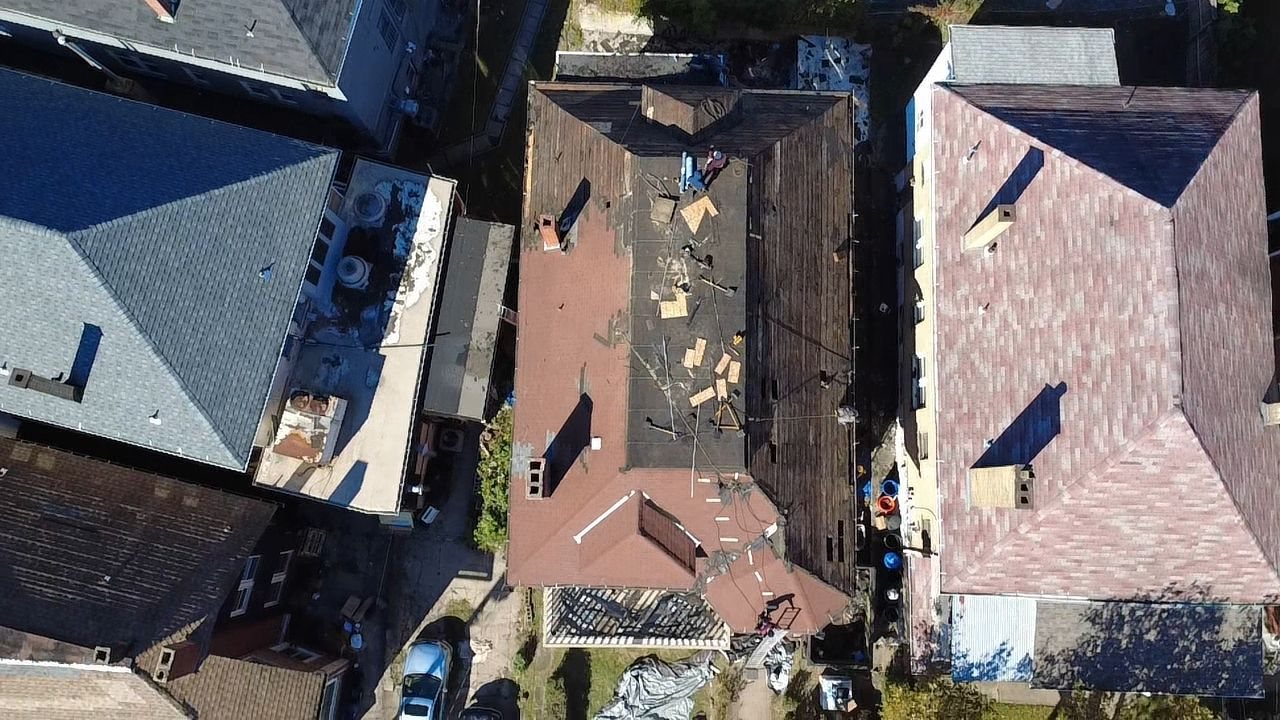
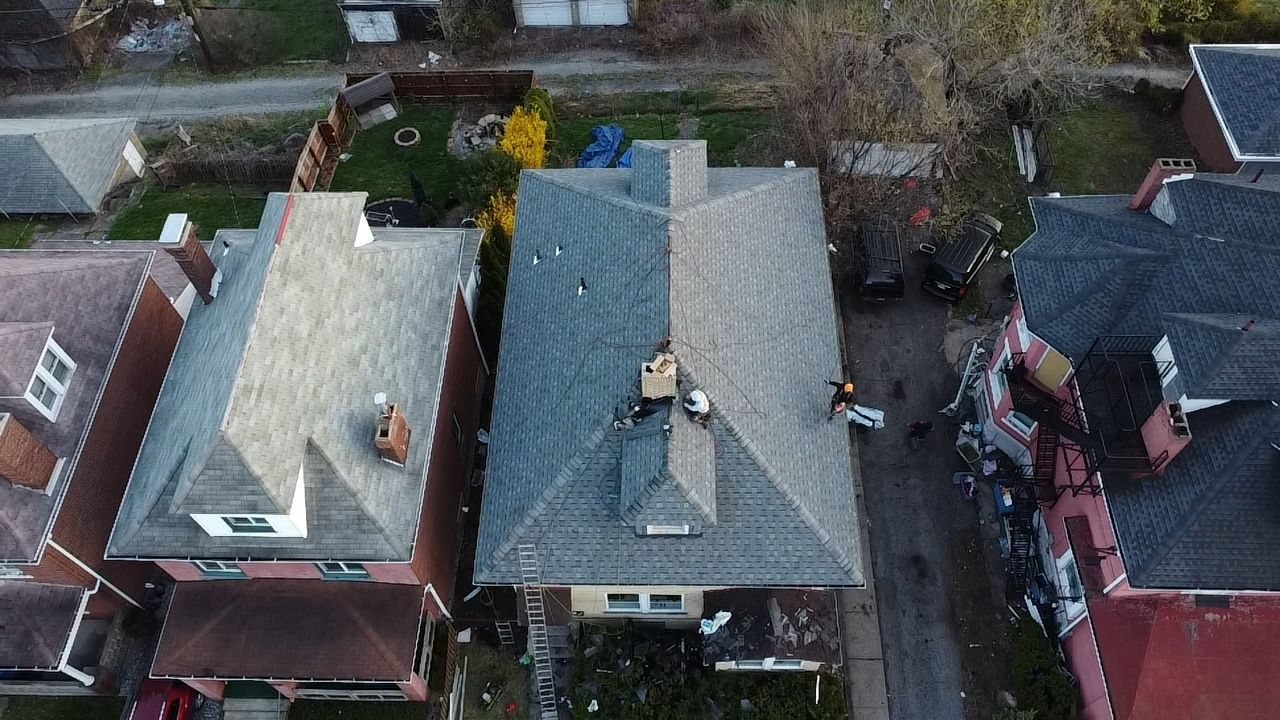
Late November work is doable when it’s planned around the weather. This tear off was photographed in late November.
On jobs like this, the day starts once the frost burns off and each section is dried in before the afternoon cools down. Most of our roofing jobs are finished in one day, which matters a lot when daylight is short and the forecast can turn quickly.
Drone view of a hip roof under tear off between neighboring Pittsburgh homes, photographed in late November, Alan Construction.
How the roofing window narrows from fall into winter
The window doesn’t slam shut on one specific date. It narrows gradually, and each stage carries a little more risk.
Late September through early November
This is the prime fall roofing window. Days are mild, humidity is low, and shingles have plenty of sunny afternoons to seal before winter. If you can get on a schedule in this window, do it.
Mid November through early December
Work can still happen here, but a good crew adjusts. That means keeping shingle bundles out of the cold before installation and hand sealing shingles with roofing cement so they hold down until warm weather finishes the bond.
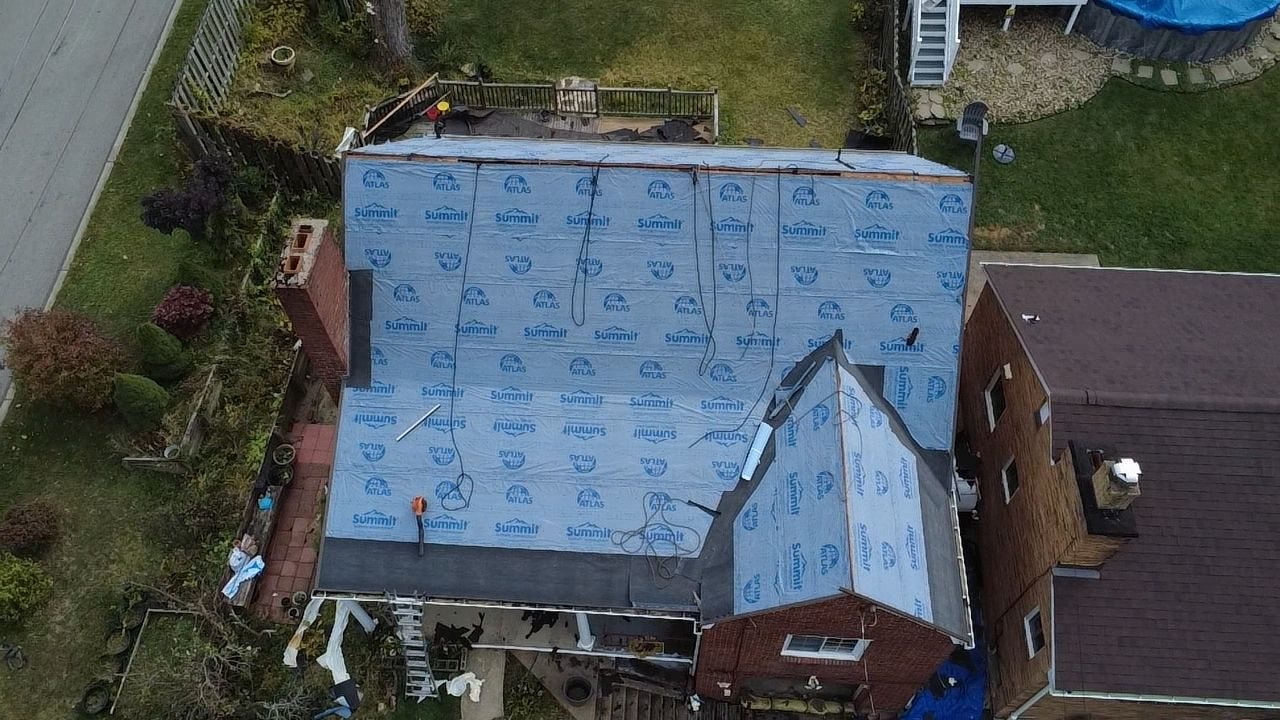
Ask your contractor directly how they handle cold weather installs. A roof like this one, fully dried in with underlayment, is protected while the shingles go on, but the sealing step is what keeps those shingles in place through winter winds.
Aerial view of blue underlayment covering a whole Pittsburgh roof on a late November job, Alan Construction.
Mid December through February
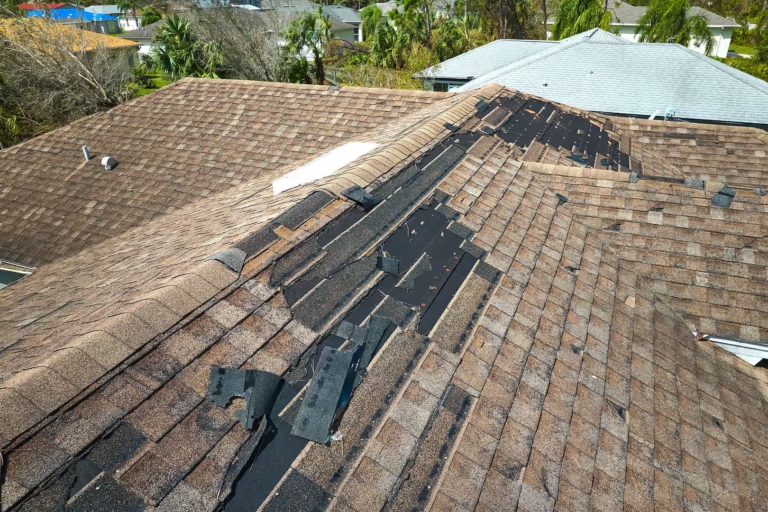
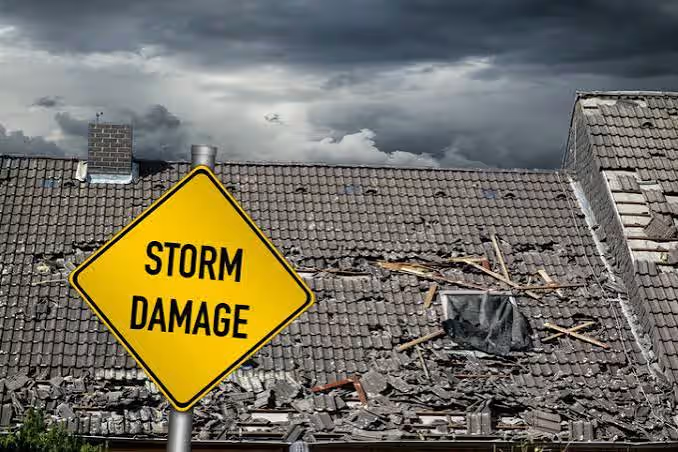
This is emergency territory. Winter tear offs after a tree comes through a roof are doable, but crews move slower, days are short, and one snowstorm can stretch a short job into a long one. Unless your roof is actively failing, a temporary roof repair and a spring replacement usually make more sense.
What time of year is the cheapest to replace a roof?
Late winter and early spring tend to be the easiest times to book. Demand drops after the fall rush, and you’ll usually have more choice of dates. Homeowners who sign in January or February for a March or April install often get a calmer experience overall.
Fall is the opposite. It’s the busiest part of the roofing year, because everyone wants a new roof before snow. Labor availability is what changes most by season, and that affects both price and how soon you can get on the schedule. Our guide on the best time to replace a roof in Pittsburgh covers spring, summer and fall in more detail.
The cheapest roof, honestly, is the one you replace before it causes interior damage. A leak that runs all winter can add drywall, ceiling and decking repairs to the bill.
Should a 20 year old roof be replaced?
Not automatically. Age alone doesn’t mean a roof is finished, but at 20 years it deserves a close look. Many standard three tab shingles were designed for about that long, and Pittsburgh’s freeze and thaw cycles don’t help.
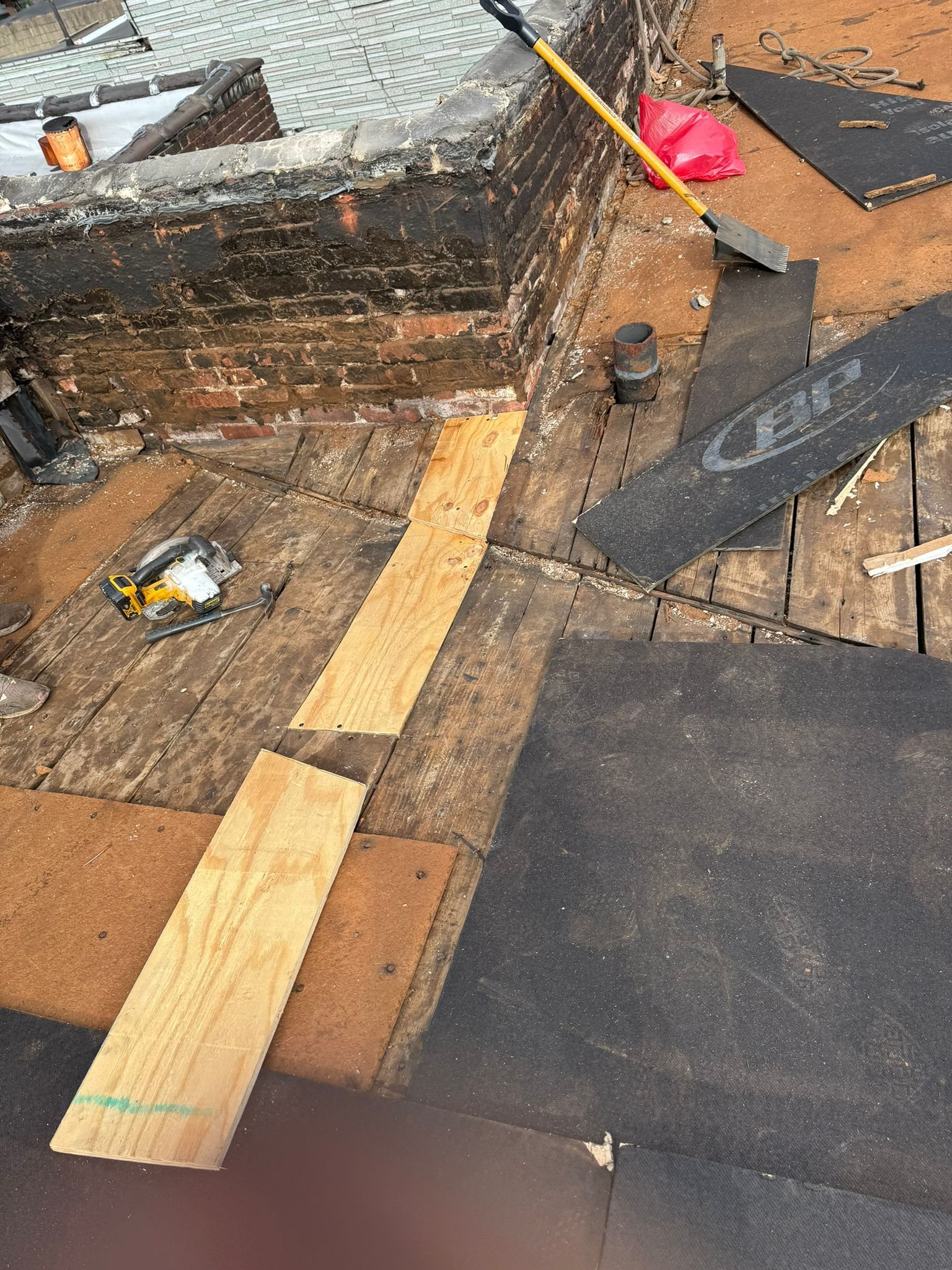
On an older roof, look for curling or cupped shingles, bald spots where granules have worn away and cracked flashing around chimneys and vents. In the attic, check for daylight, damp spots or dark staining on the decking. Soft boards like the ones patched here only show up once the old shingles come off.
New plywood patches laid over old board decking during a Pittsburgh roof replacement, Alan Construction.
If two or three of those issues show up together, replacement is usually the smarter money move. Insurance matters here too. Some carriers start limiting coverage on older roofs, as we explain in how old a roof can be before insurance won’t cover it.
How long does an asphalt shingle roof last in Pittsburgh’s climate?
Here’s the part that surprises people. The number on the shingle wrapper is not a promise, and many roofs in Western Pennsylvania wear out before the rating suggests.
Why the gap? Pittsburgh swings between humid summers, heavy rain and winters that freeze and thaw over and over. Water gets into small gaps, freezes, expands and slowly works shingles and flashing loose. Poor attic ventilation shortens life even more by cooking shingles from underneath in summer.
Installation quality matters as much as the product. A well installed architectural shingle with proper ventilation can outlast expectations, and a rushed install can fail early. We install Atlas shingles, including Pinnacle Pristine, and for a deeper look at lifespan, read how long a new roof lasts.
What happens if you miss the window?
Missing the fall window isn’t the end of the world. Plenty of homeowners get through winter just fine with a solid temporary repair. What matters is being honest about your roof’s condition.
If you have an active leak, don’t wait. Get a roofer out to tarp the damaged area, replace a few shingles or reseal the flashing. That buys you time until spring without putting your ceilings at risk.
If your roof is simply old but still holding, use the winter to plan instead. Get your inspection done, compare free estimates and book an early spring slot. You’ll be first in line when the weather turns, instead of fighting for a spot in October.
How to plan your roof replacement the smart way
The best advice we can give is to think one season ahead. If your roof is showing its age in spring, schedule for summer or early fall. If you notice problems in late fall, start planning for the following spring.
Before you sign anything, ask your contractor three questions:
- Will you hand seal the shingles if temperatures drop?
- How will you store materials in cold weather?
- What happens to the schedule if snow rolls in mid project?
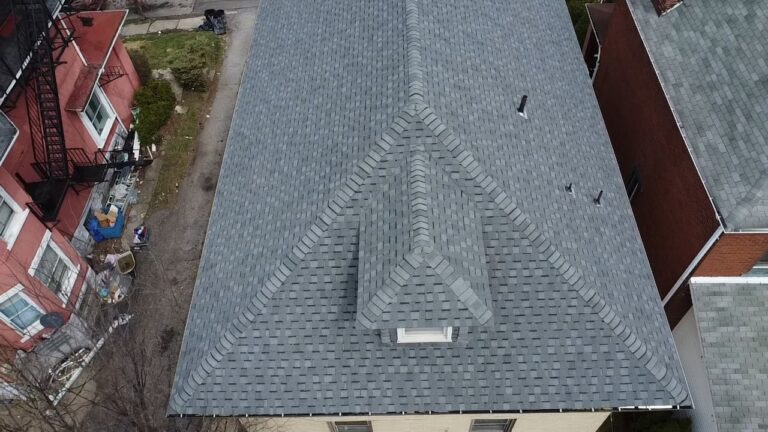
Aerial view of two finished gray shingle roofs side by side in Pittsburgh, Alan Construction.
A good contractor will have clear, confident answers to all three. To see what a typical job looks like day by day, read how long a roof replacement takes.
So, when is it too late in the year to replace a roof in Pittsburgh? For a standard asphalt shingle roof, aim to finish by mid November. Push into December only if your crew is ready for cold weather methods. After that, save full replacements for emergencies and plan the rest for spring.
Wondering if your roof can wait until spring? Contact Alan Construction for a free, no obligation estimate.