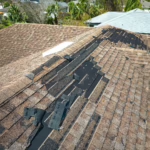
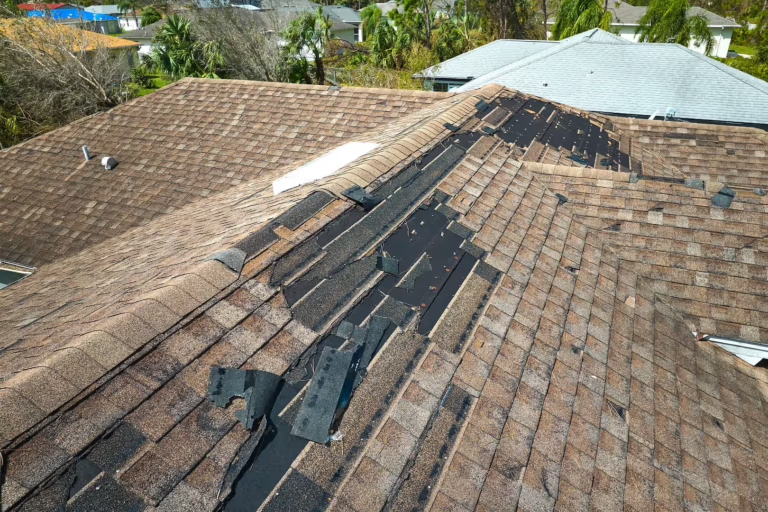
Yes. Missing shingles almost always turn into bigger roof problems during winter. Each gap exposes underlayment and wood decking to snowmelt, ice and wind driven water, and freeze and thaw cycles widen the damage week by week. A small patch in November can become a decking and drywall repair by March, which is why we treat any roof repair in Pittsburgh that involves an open gap as urgent once the weather turns.
We’ve been on roofs around Pittsburgh and Allegheny County since 2003, and the pattern rarely changes. A homeowner who calls in July about a shingle in the yard usually needs a quick fix. A homeowner who calls in February about a brown ring on a bedroom ceiling often needs soaked plywood cut out in freezing weather. Same original problem, very different scope.
This post walks through what happens under missing shingles once the temperature drops, how long you can realistically wait, what repairs involve, and when replacement makes more sense than patching.
How bad are missing shingles?
Worse than they look from the driveway. A shingle isn’t decoration. It’s the top layer of a water shedding system that only works when every piece overlaps the one below it. Pull one out and you expose the nail heads of the course underneath, plus a strip of underlayment that was never designed to be the main barrier.
Here’s the part most people miss. Wind rarely takes just one shingle cleanly. It breaks the sealant strip on the shingles around it too, so neighbors that look fine are no longer bonded down. That’s why we check a wide area around any missing shingles, not just the obvious hole.
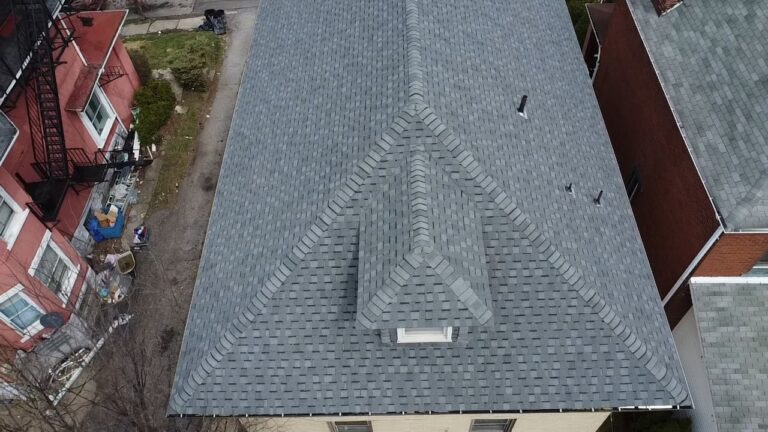
New architectural shingles overlapping course over course on a Pittsburgh roof, Alan Construction.
Why winter makes missing shingles worse
Winter changes the math completely. In summer, rain hits exposed underlayment, runs off and dries in an hour. In winter, snow sits on that gap for days, melts slowly from below, soaks into the decking seam and refreezes overnight.
Water expands roughly nine percent when it freezes. That expansion pries at plywood seams, loosens nails and lifts the shingles bordering the gap a little further each cycle. In Pittsburgh the bigger problem isn’t total snowfall. It’s how often the temperature crosses 32 degrees. A single gap can go through many freeze and thaw cycles between December and March.
That’s how a few shingles lost in a November windstorm turn into soft decking by late winter. The shingles were a minor problem. The delay was not.
How long can a roof go with missing shingles?
Our honest answer: days, not months. If the weather stays dry and mild, a roof can tolerate a small gap for a week or two without real harm. But nobody gets to choose the weather, and in our region a storm can arrive before you’ve called anyone.
Think in terms of storms, not calendar time. Every rain or snowfall that hits an exposed area speeds up the damage. Two dry weeks mean little. Two wet weeks with a freeze in the middle can mean rotted sheathing. If it’s already November, treat it as urgent and get a roofer out before the first real accumulation.
How long can a roof be exposed without shingles?
This question usually comes up in the middle of a project, when a tear off gets rained out or a homeowner sees underlayment on a neighbor’s house for a week. Synthetic underlayment is tough. Each product is rated for a limited period of sun exposure, and it sheds water well when it’s properly lapped and fastened.
Traditional felt paper is a different animal. It tears at the fasteners in wind, wrinkles when wet and starts failing after a few days of real exposure. Either way, underlayment is a temporary shield, not a roof. It was never built to carry snow or to stop water that gets under a seam.
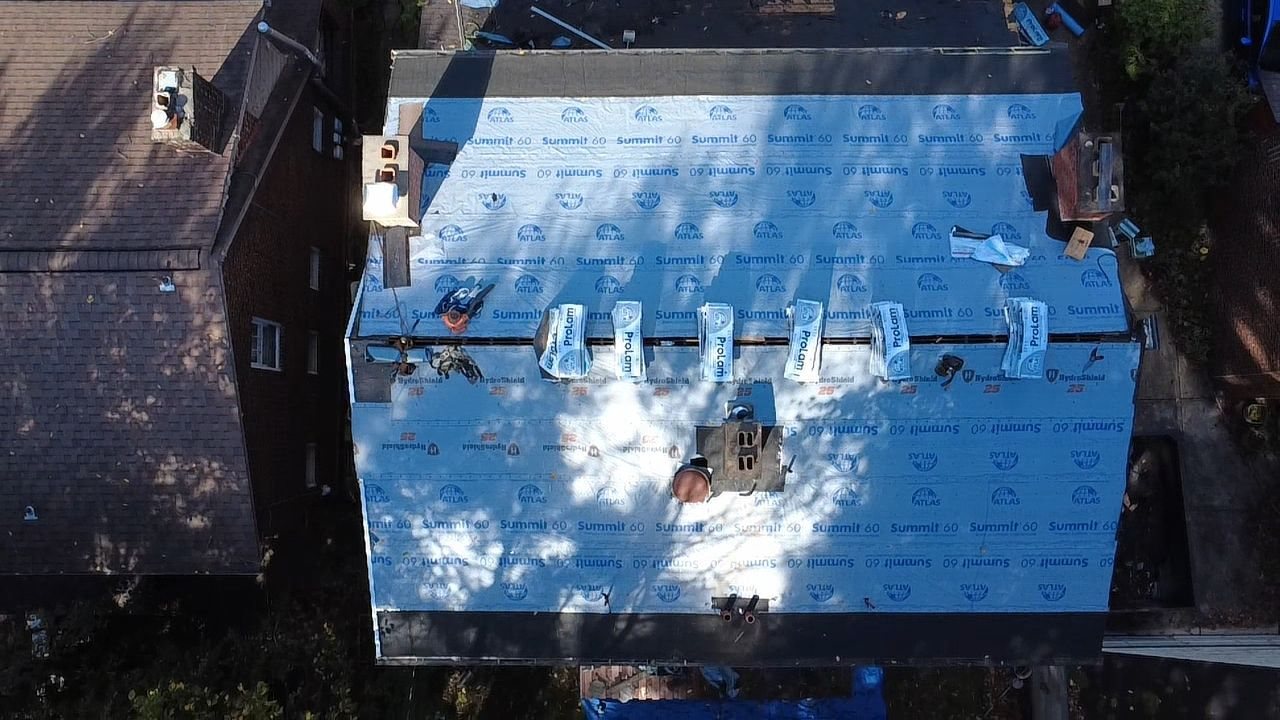
Synthetic underlayment covering a whole roof deck with shingle bundles staged on top, Pittsburgh, Alan Construction.
Why ice dams punish an already weak roof
Ice dams form when heat escaping into the attic warms the roof deck, melts the snow on top, and that meltwater refreezes at the cold eaves. Water pools behind the ice ridge and gets pushed backward, uphill, under the shingle courses. On the roof side, the backup is a membrane along the eaves, and our guide on where ice and water shield should be installed explains how far up it should run.
Now add a missing shingle to that picture. The dam doesn’t need to force water anywhere, because you’ve already given it an open door. This is one of the most common paths to winter roof damage we see on older Pittsburgh houses, where attics often run warm and heat leaks straight into the rafter bays.
How much does it cost to replace missing shingles?
A missing shingle repair is one of the smallest jobs a roofer does, which is exactly why waiting is such a bad trade. The table below shows how quickly the scope grows once water gets past the shingle layer.
| Repair scope | Relative size of the job | What drives it |
|---|---|---|
| A few missing or blown off shingles | Smallest | Access, pitch, color matching |
| One section of roof replaced | Small | Material waste, sealing in cold weather |
| Leak repair after water gets in | Moderate | Finding the entry point, flashing work |
| Decking or structural repair | Large | Sheathing removal, extent of rot, interior damage |
| Full asphalt shingle replacement | Largest | Roof size, layers to tear off, complexity |
Steep pitches and third story access add labor to any repair. Color matching on a roof more than ten years old is rarely perfect, because granules fade, and we’d rather tell you that up front than surprise you later.
When it does work out, homeowners notice. Dylan L. wrote in his Google review: “I had part of my roof done a few years ago and they matched the shingle color exactly.”
The jump between the top two rows of the table and the bottom two is the whole argument for calling before the snow flies.
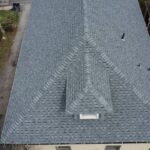
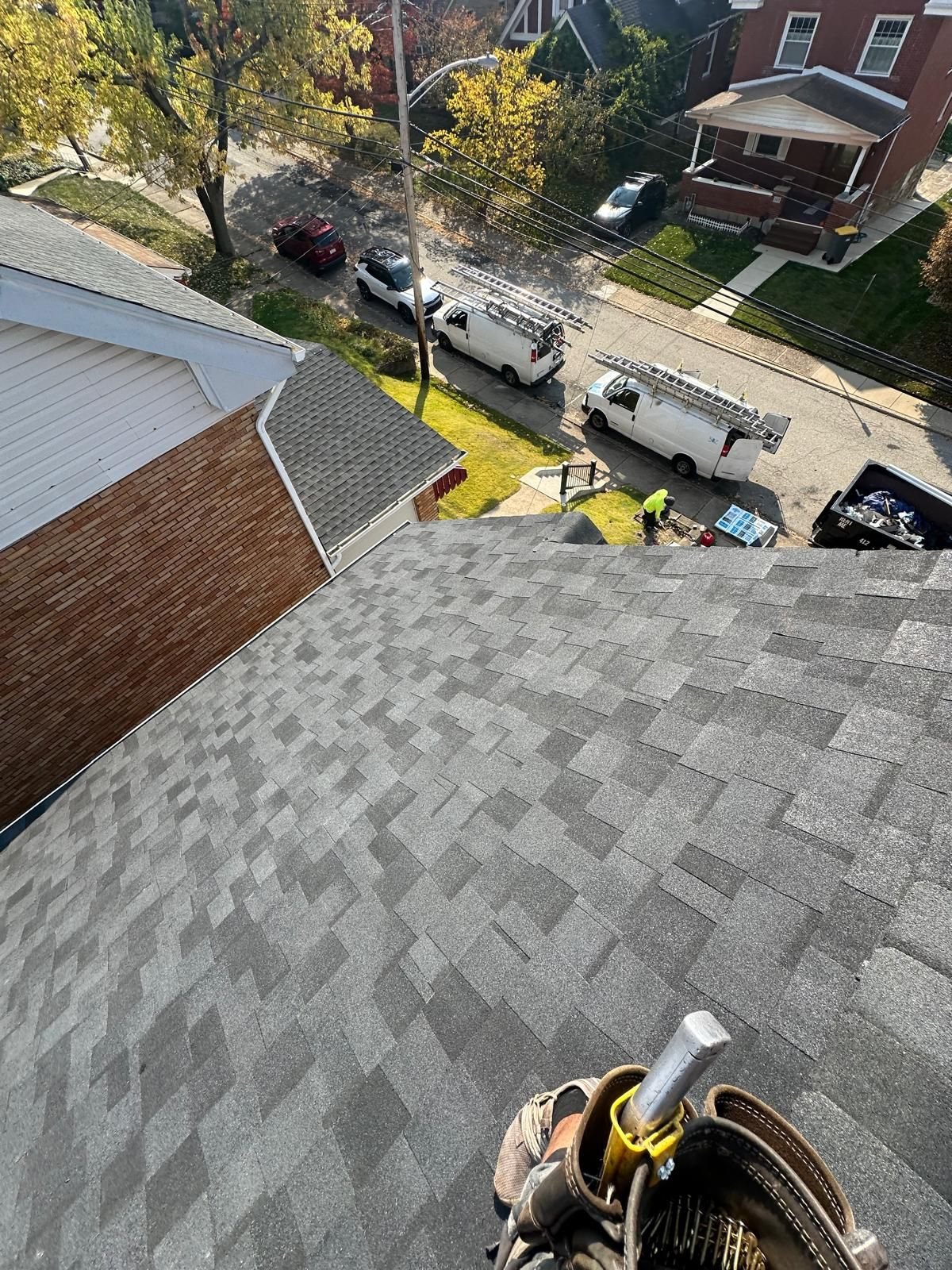
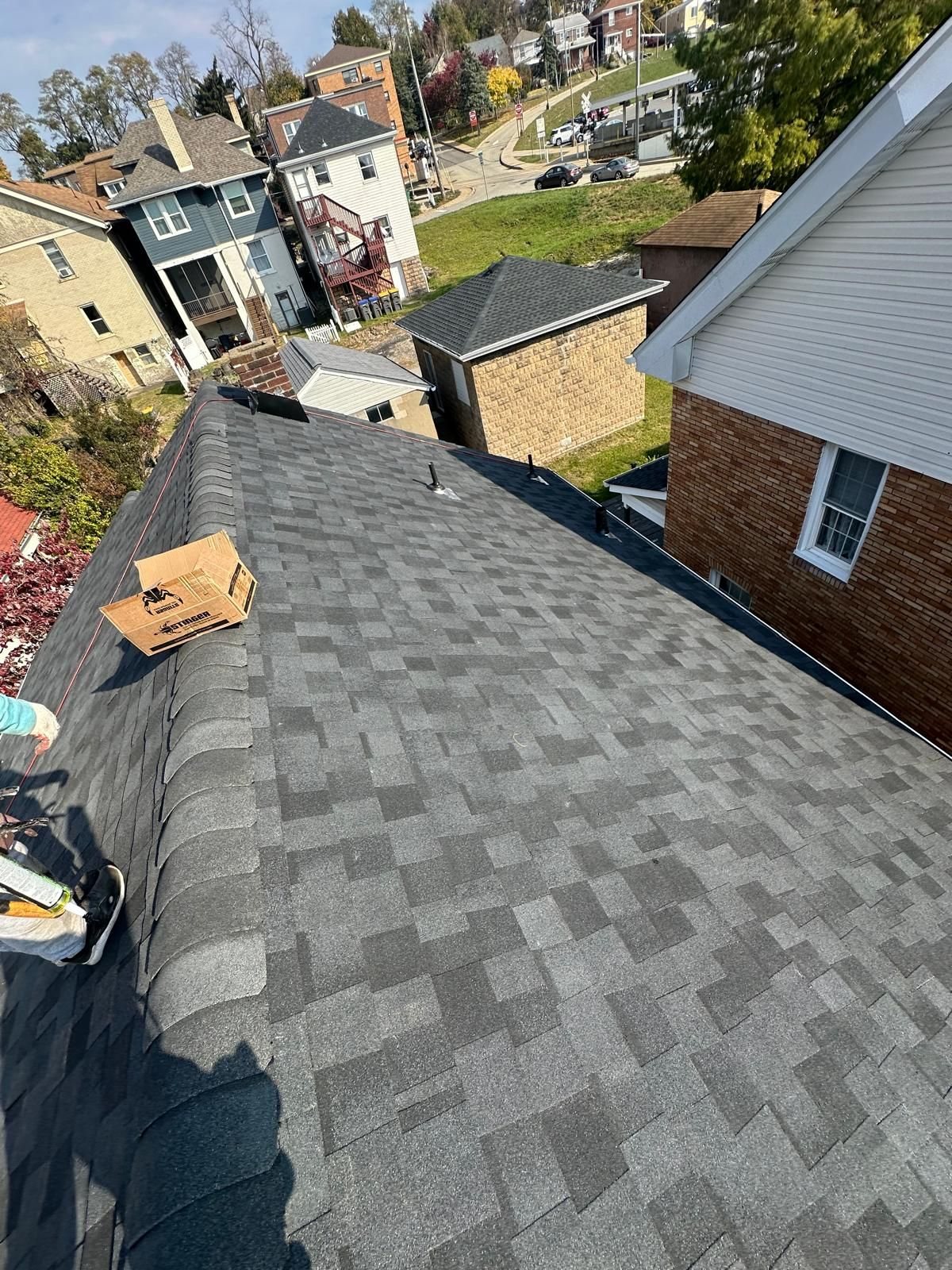
New gray shingles running down a Pittsburgh roof toward the street, Alan Construction.
What time of year is the cheapest to replace a roof?
Crews tend to be less booked once the fall rush winds down, which can make scheduling easier in late fall and winter. Whether that changes the price depends on the contractor and the job, so get a free written estimate and compare.
There’s a real tradeoff, though. Asphalt shingles rely on warmth to activate their sealant strips, and in cold weather that bond may not set until spring. Good crews hand seal shingles when it’s cold for that reason. Our practical advice: planned winter work can be fine with the right cold weather methods, but don’t pick a January replacement if a spring date works. Our post on whether it’s too late to replace a roof in winter covers the timing in detail.
What is the typical lifespan of roof shingles?
Standard three tab shingles were generally built for about 20 years, and architectural shingles usually last longer. Warranty numbers on the wrapper assume good ventilation and a clean install, and many warranties are prorated, so read the fine print. Our guide on how long a new roof lasts goes deeper.
Age matters for your repair decision. If your roof is past 20 and losing shingles in ordinary wind, that isn’t bad luck. The asphalt is getting brittle and the sealant is giving up across the whole field. At that point, repeated patching can cost more over a few years than one replacement.
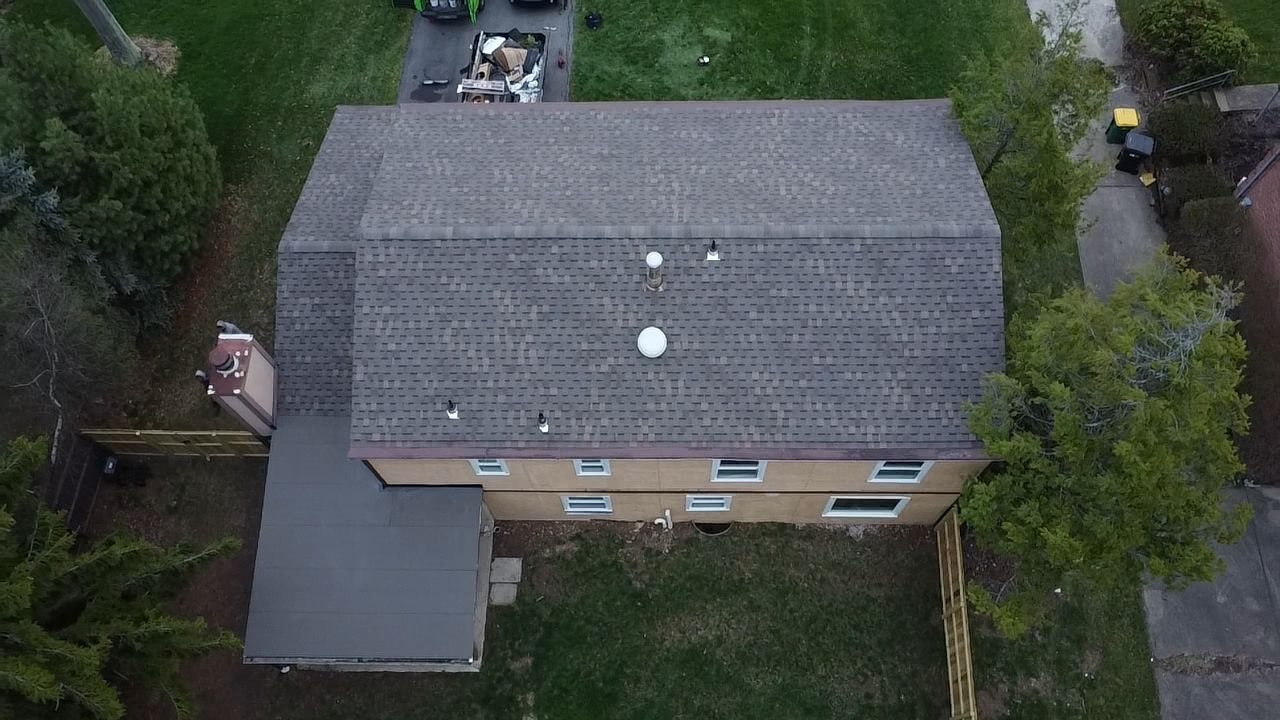
Drone view of a new gray roof on a long ranch house in Pittsburgh, Alan Construction.
What we check before the first real snow
A ground level look with binoculars catches more than people expect. Look for:
- Gaps in the shingle field or shingles sitting crooked
- Lifted or curled edges
- Exposed nail heads
- Piles of granules at the bottom of downspouts
- Dark streaks where the mat underneath is showing through
Then check inside. Attic staining, damp spots on the roof boards and daylight at the sheathing seams tell you water is already getting in. If you’re weighing a patch against a new roof, our post on roof replacement vs. repair walks through the decision.
One last thing. Take dated photos now, before winter. If you end up filing an insurance claim in March, photos of the damage from a November windstorm are worth far more than your memory of it.
Missing shingles on your roof? Contact Alan Construction for a free, no obligation estimate before the snow starts.