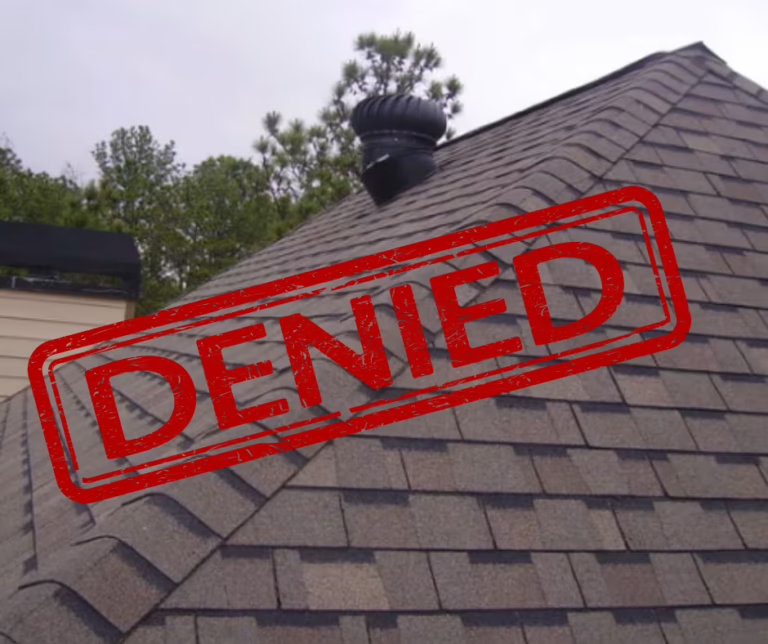
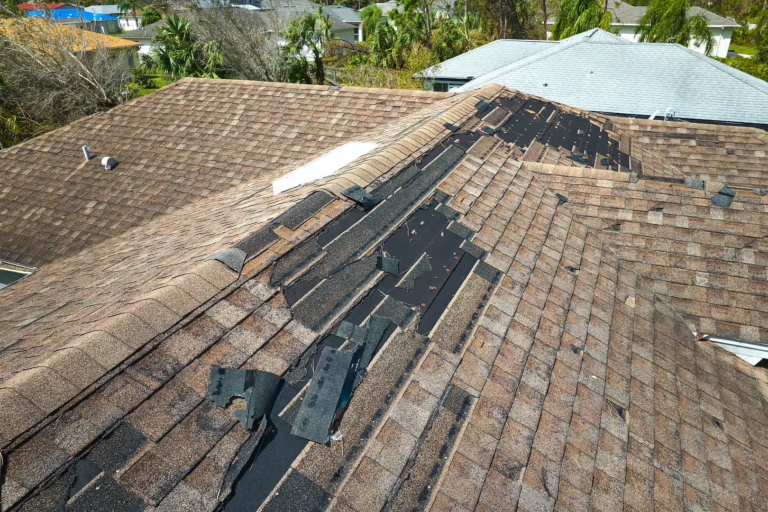
Roofing underlayment matters in Upper St. Clair because it’s the water resistant layer that stops wind driven rain and ice dam meltwater once something gets past the shingles above it. In a climate that freezes and thaws all winter long, that hidden sheet is often the only thing standing between a storm and your roof deck. If you’re already seeing stains or soft spots, a roof repair in Pittsburgh that fixes the layer underneath is what actually stops the leak.
We’ve been in plenty of attics around the South Hills where the roof looked fine from the driveway and the wood deck above was dark and soft at the edges. The failure rarely starts with the shingles. It starts with a thin layer nobody ever sees. Homeowners spend hours comparing shingle colors, which is reasonable, but the material underneath decides how forgiving your roof will be on the worst weather day of the year.
Short answer: use a quality synthetic underlayment across the roof and self adhered ice and water membrane at the eaves, valleys and every penetration. That combination handles Upper St. Clair winters best.
What is roofing underlayment?
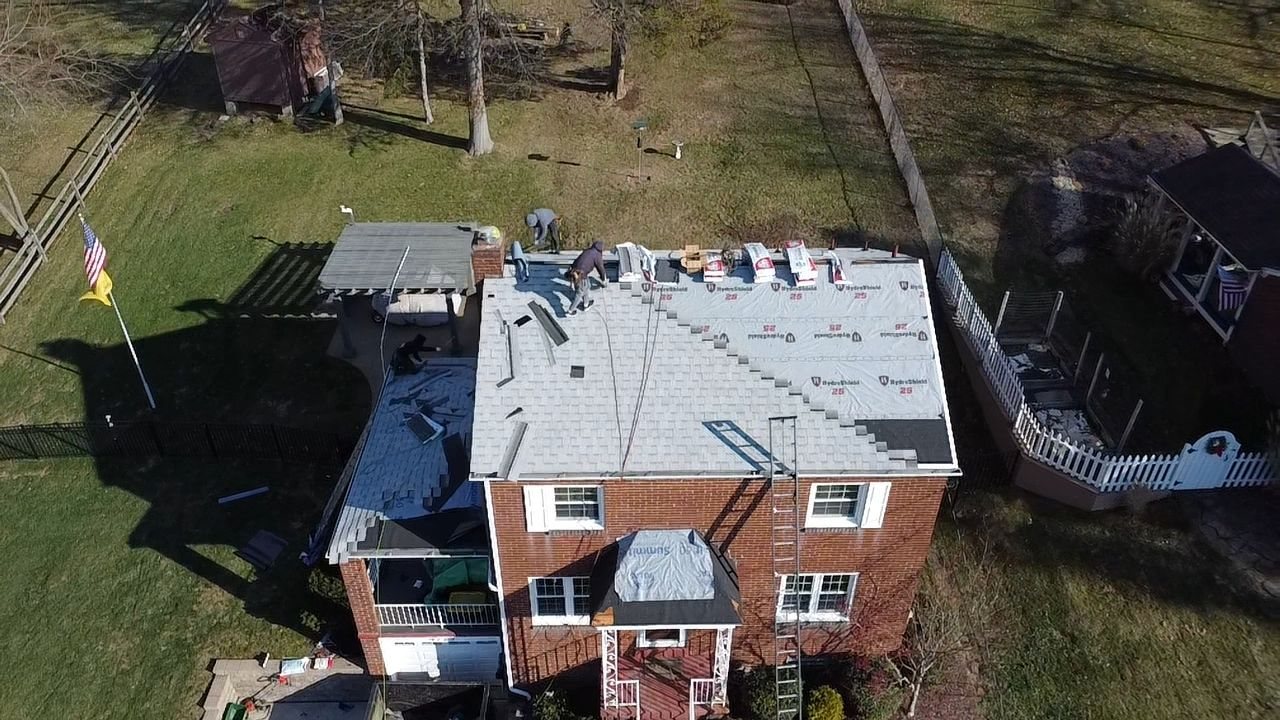
Roofing underlayment is a protective sheet installed directly over the wood roof deck, underneath the shingles. Picture a raincoat worn under a jacket. Shingles are the visible defense: they shed most of the water, take the sun and give the roof its look. Underlayment is the backup that catches whatever slips past them.
It also does quiet work during the job itself. Once the old roof is torn off, underlayment keeps the deck dry until the new shingles are fastened down, which matters when a summer storm rolls over Route 19 with little warning.
Drone view of a brick home in Pittsburgh with underlayment on the roof, Alan Construction.
A good crew treats underlayment as part of a complete system. A rushed crew treats it as a line item to shave.
Why do roofs have underlayment?
Because shingles leak. Not always, but predictably, under conditions we see every year. Wind lifts a shingle tab just long enough for rain to drive sideways beneath it. Ice at the gutter line pushes water backward, up the slope, against gravity. Nail holes, dish mounts and tired flashing create openings that shingles alone were never designed to seal.
The residential building code Pennsylvania uses requires underlayment on shingle roofs for exactly this reason, and shingle manufacturers require it for warranty coverage. Install the wrong product, or skip it in the wrong spot, and warranty coverage can quietly shrink. Underlayment also buys time. A roof with a strong secondary barrier can lose a shingle in February and hold on until it’s fixed. A bare deck won’t survive the first storm.
Why roofing underlayment matters in Upper St. Clair winters
Our part of Pennsylvania punishes roofs in a specific way. The snow total is not the real problem. The problem is the swing: afternoons above freezing, nights well below it, over and over through the winter. Snow melts on the warm upper roof, runs toward the cold overhang, and refreezes into a ridge of ice at the eaves. Water then backs up behind that ridge and sits on the roof instead of running off it.
Standing water finds every gap. Shingles are built to shed moving water, not to hold back a pond, so the layer underneath has to carry that load.
Now add our mature tree canopy, which drops debris into valleys, plus the steep dormered rooflines common throughout the township. That combination is the practical argument for quality underlayment that homeowners in Upper St. Clair can depend on when the thaw comes.
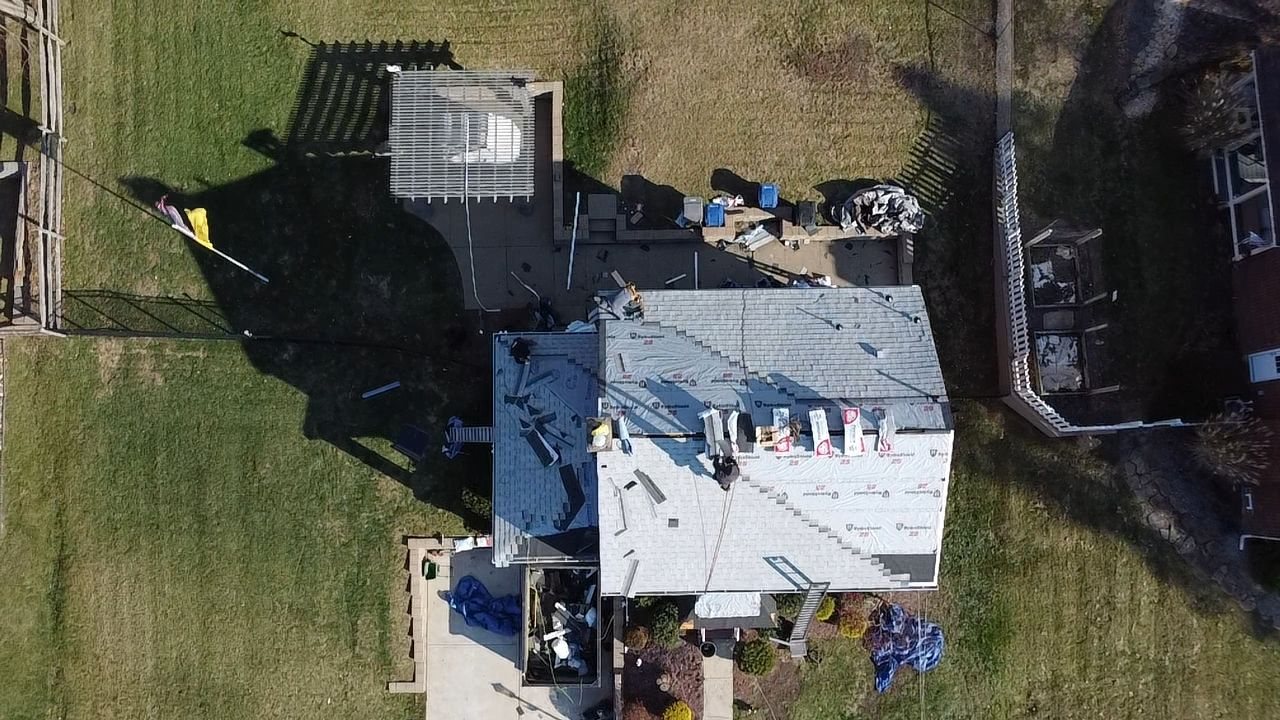
Aerial shot of a Pittsburgh roof covered in underlayment mid project, Alan Construction.
What are the three types of roofing underlayment?
Three categories cover nearly every home roof: asphalt saturated felt, synthetic, and self adhered membrane, which most crews call peel and stick or ice and water shield. They are not interchangeable. Each one has a job and a weak point worth understanding before you sign a contract.
| Type | What it is | Strengths | Tradeoffs |
|---|---|---|---|
| Asphalt felt (#15 or #30) | Paper mat soaked with asphalt, the traditional tar paper | Lowest material cost, meets code, widely available | Tears easily, wrinkles when wet, gets brittle in cold |
| Synthetic | Woven polypropylene or polyethylene sheet | Strong tear resistance, lighter, handles sun and temperature swings | Costs more than felt, still fastened with nails, needs sound attic ventilation |
| Self adhered membrane | Rubberized asphalt membrane that bonds to the deck | Waterproof, seals around nail shanks, best defense against ice dams | Highest material cost, slower to install, usually used in targeted areas |
What is the best underlayment for a roof?
For most homes in our area, the best answer is a combination rather than a single product. Run a quality synthetic across the open field of the roof, then use self adhered membrane at the eaves, in the valleys and around every penetration. Synthetic gives you durability and fast, clean coverage over large areas. Peel and stick gives you a true waterproof seal exactly where our water problems begin.
If you have to prioritize, spend it at the edges. Where code requires an ice barrier, and around Pittsburgh it typically does, it runs from the eave edge to at least 24 inches inside the exterior wall line, and that strip is where most winter leaks we chase actually start. We’d rather see the vulnerable areas protected correctly than thin coverage spread evenly across the deck. For the full zone by zone breakdown, see where ice and water shield should be installed.
The three places we inspect first
Eaves and gutter lines
This is where ice forms and where water reverses direction. If the membrane stops short of the heated wall line inside, backed up meltwater can slip past it and travel into the soffit, the wall cavity or a bedroom ceiling. A few extra feet of membrane here is small next to the cost of drywall repair.
Valleys
Valleys carry the runoff from two roof planes at once. They also collect leaves, pine needles and shingle granules, which hold moisture against the roof for days. A full width run of self adhered membrane through every valley is one of the most valuable upgrades on a job.
Penetrations and flashing
Chimneys, plumbing stacks, bath fans, skylights and sidewall transitions are permanent holes in an otherwise continuous surface. Underlayment should tie into the flashing at each one, lapped so water always travels over the layer below. Reused flashing on a new roof is a shortcut worth questioning.
Signs your underlayment has already given up
You can’t see underlayment without pulling shingles, but it tells on itself in other ways. Watch for:
- Ceiling stains that appear only after a driving rain or a thaw
- Dark streaks or soft spots on the attic side of the roof deck
- Rusty nail tips poking through the deck
- A musty attic smell on a humid day
Curling shingles and heavy granule loss in the gutters usually mean the layer beneath is aging too.
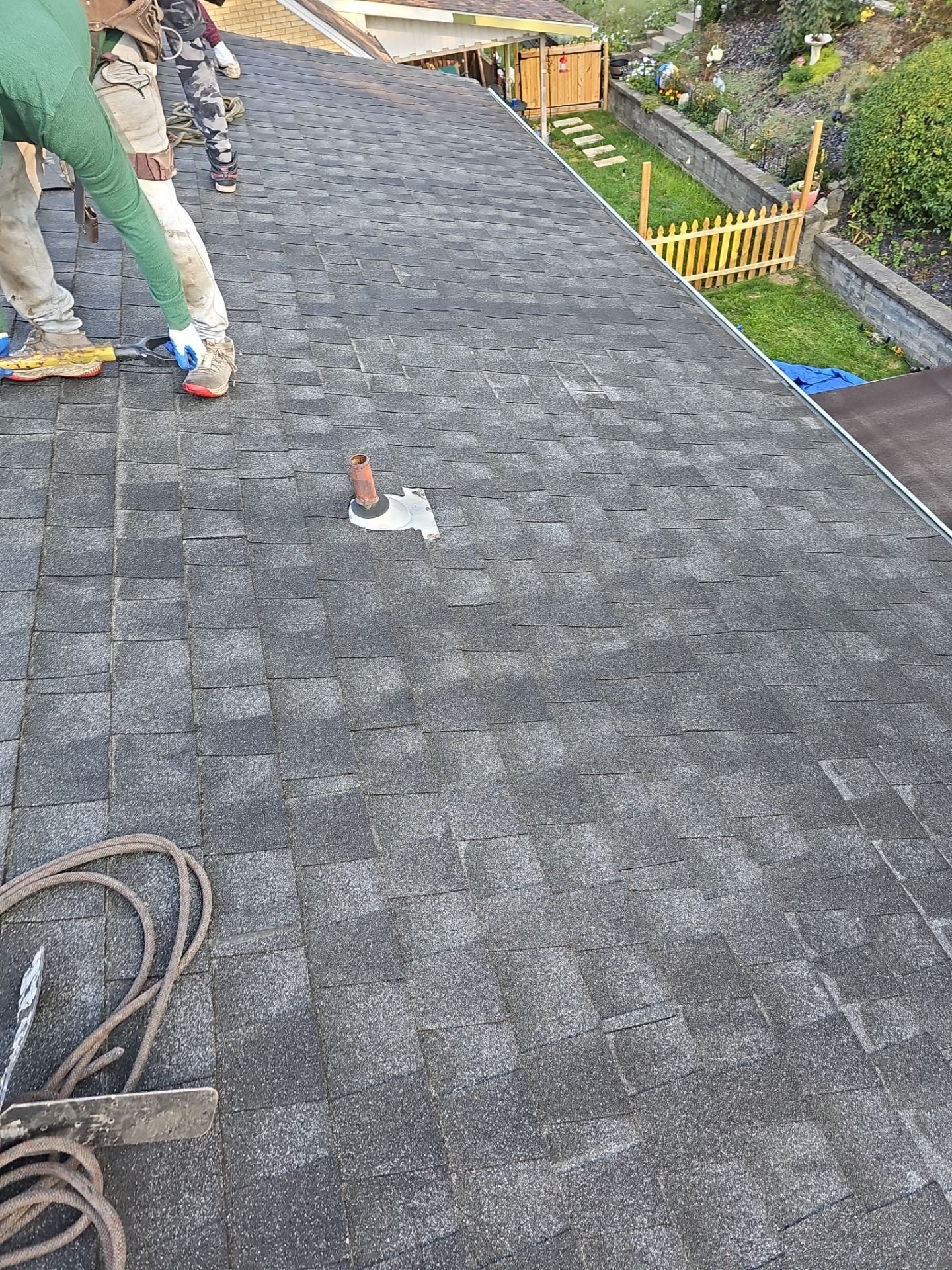
New gray shingles on a Pittsburgh roof slope, with an air hose coiled during installation, Alan Construction.
One thing we want to be direct about: repeated small leaks in the same spot are not bad luck. They are a system problem. Patching the same valley a third time costs more over the years than fixing the cause once.
What to ask before you hire a roofing contractor
Estimates rarely spell out what goes under the shingles, which is exactly why you should ask. A trustworthy contractor will name the product, explain where it goes, and put both in writing. Vague language like “industry standard materials” is a signal to slow down and ask again. Our guide to understanding your roofing estimate covers the other line items to check.
Four questions worth asking on every estimate:
- Which underlayment product will you use, by brand and name?
- How far up from the eaves will the ice barrier extend?
- Will the deck be inspected and any rotted sheathing replaced before installation?
- Does the finished assembly meet the shingle manufacturer’s installation requirements?
On our jobs, we install Atlas shingles, including Pinnacle Pristine, and we’re glad to walk you through every layer that goes under them.
Timing your project the smart way
Underlayment goes on best when temperatures cooperate. Self adhered membranes need warmth to bond properly, and rushing a deck installation in a cold snap invites problems that won’t show up until the following winter. Late spring through early fall is the easiest window, and the calendar tends to fill up.
If you’re weighing exterior projects together, we covered scheduling in more depth in Thinking About Replacing Your Roof and Siding? Here’s Why Timing Matters. Doing the work together also keeps the water management details consistent where the roof meets the walls.
Shingles are what your neighbors notice. Underlayment is what your house depends on. Knowing why roofing underlayment matters changes how you read an estimate, because it moves your attention from the visible layer to the one doing the hard work in February. Ask what’s going on that deck, get the answer in writing, and you’ll end up with a roof that quietly earns its keep for decades.
Wondering what’s under your shingles? Ask for a free, no obligation estimate and we’ll explain every layer before any work starts.