A roofing estimate should spell out every part of the job: tear off, decking repairs, underlayment, ice and water shield, flashing, ventilation, shingles, disposal, permits and warranty. If a line item is vague or missing, that’s the part of the roof you can’t compare, and it’s usually where problems or surprise charges come from later.
We’ve been doing roof replacement in Pittsburgh since 2003. This guide walks through what each line on a roofing estimate means, what a good one looks like, and the questions to ask before you sign, with photos from our own jobs. There are no price figures here: the only honest number is the one written for your house after someone walks the roof.
Short answer: A good roofing estimate names the exact materials, says what happens to the old roof and the deck under it, covers flashing, ventilation, cleanup and permits, and puts the warranty and payment terms in writing.
What a Roofing Estimate Should Include
Here’s the quick version. Use this table as a checklist when you lay two or three estimates side by side.
| Line item | What it means | What to look for |
|---|---|---|
| Tear off | Removing the old shingles, underlayment and nails down to the wood deck | How many layers are coming off |
| Decking | The boards or plywood the roof is nailed to | How rotted wood is handled and approved |
| Underlayment | The water resistant layer between deck and shingles | Synthetic or felt, and where it goes |
| Ice and water shield | A self adhered membrane for the leak prone spots | Eaves, valleys, chimneys, skylights |
| Flashing and drip edge | Metal at edges, walls, chimneys and valleys | New or reused, and pipe boots included |
| Ventilation | Intake and exhaust vents that let the attic breathe | Ridge vent or box vents, and intake |
| Shingles and accessories | The roofing itself plus starter strip and ridge cap | Brand, product line and color |
| Disposal and cleanup | Dumpster, hauling and nail sweep | Who protects the yard and sweeps for nails |
| Permits | Any permit your municipality requires | Who pulls it and whether it’s included |
| Warranty and terms | Manufacturer and workmanship coverage, payment schedule | Both warranties in writing |
The estimate should also list the contractor’s name, street address and Pennsylvania registration number, plus a rough start and finish date. If the total is what’s holding you back, ask about roof financing before you put the project off another season. Now let’s go line by line.
Tear Off: Taking the Old Roof Down to the Deck
Tear off is the removal of everything on top of the deck: shingles, old underlayment, nails, vents and worn flashing. On a full replacement, we take the roof down to the wood so we can see what we’re building on.
Your estimate should say how many layers are coming off. Plenty of older Pittsburgh houses have two layers of shingles, and a second layer means more weight, more labor and more debris. If one estimate assumes one layer and another assumes two, they aren’t pricing the same job.
Watch for an estimate that skips tear off and lays new shingles over the old ones. It hides the deck and can shorten the life of the new roof, so ask why in writing.
Decking: The Line Item Nobody Can See Yet
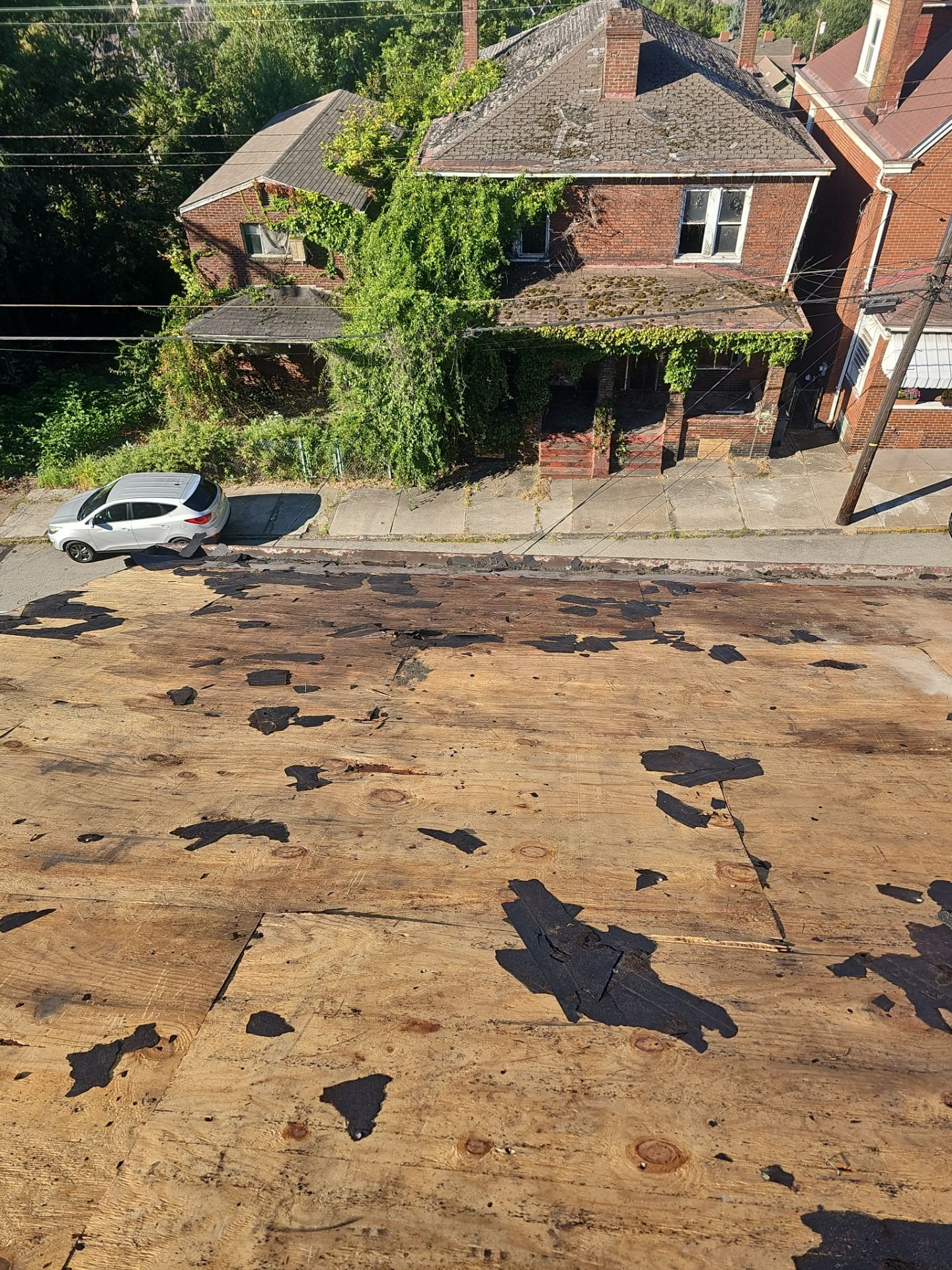
The deck is the wood under your shingles. Nobody can see all of it until the old roof is off, so a fair estimate handles decking as a clearly stated allowance or a set rate for each sheet of plywood or run of boards that has to be replaced.
That’s normal. What’s not normal is an estimate that says nothing about the deck at all, then a big change order on install day.
Ask how you’ll be told about bad wood. On our jobs, if we find soft or rotted decking, we show you what we found before it gets replaced.
Roof deck exposed after tear off on a Braddock job, with scraps of old felt still on the boards. Alan Construction.
One of our customers, Andrew S., put it this way in his Google review: “Alan was thorough in his assessment of my roof, while providing a transparent explanation along with a fair estimate for replacement.” That’s what a decking clause should feel like. No surprises, just a clear rule agreed to before anyone climbs a ladder.
Underlayment and Ice and Water Shield
Underlayment is the layer that goes over the whole deck before shingles. Most roofers now use synthetic underlayment instead of old felt paper because it’s tougher, lies flatter and holds up better if rain comes during the job. Your estimate should name which one you’re getting.
Ice and water shield is a self adhered membrane that seals around nails. It goes where water backs up or runs heavy: along the eaves, in valleys, and around chimneys, skylights and walls.
Self adhered underlayment going down on a low slope roof in Imperial, with membrane rolls staged. Alan Construction.
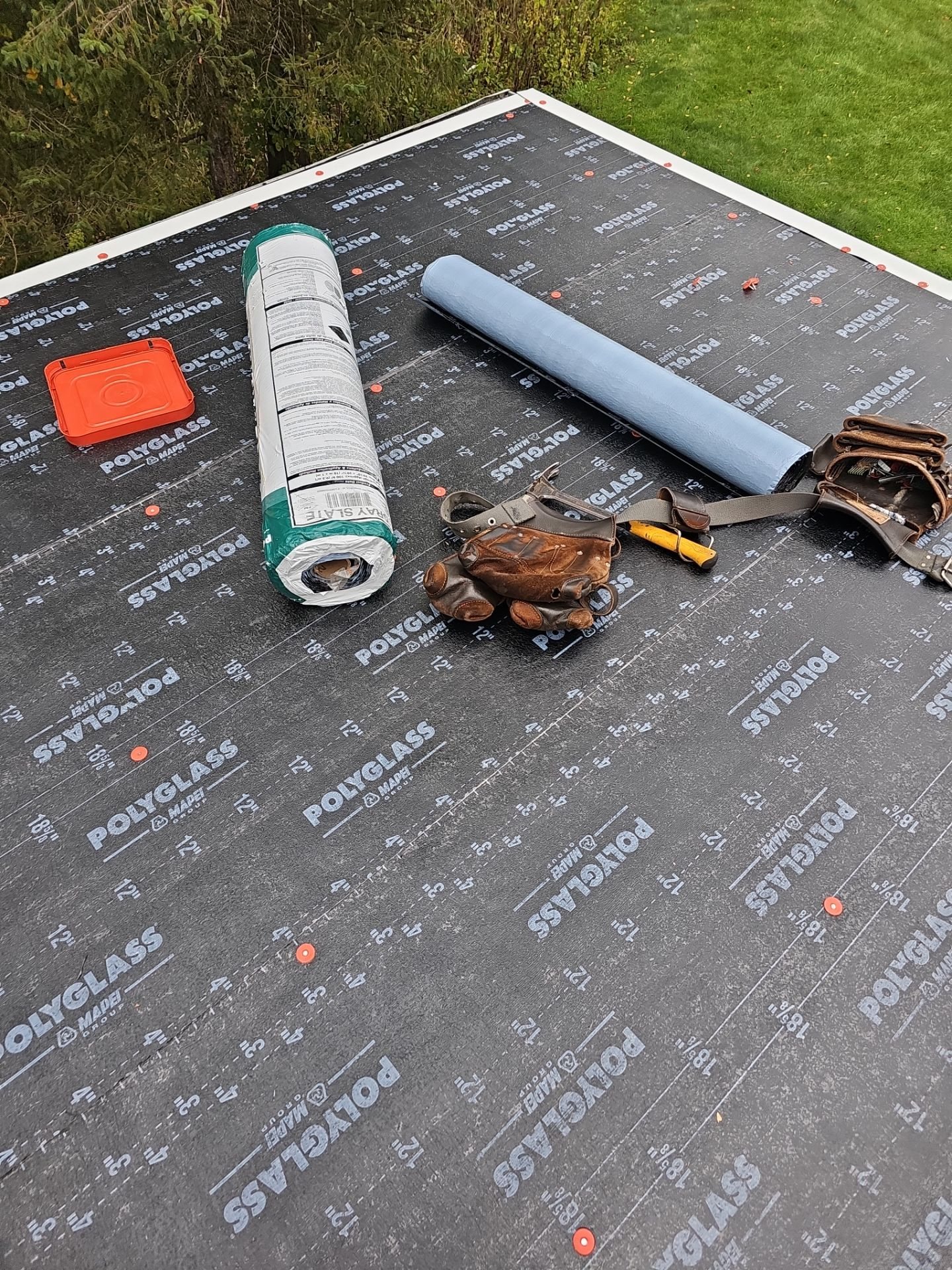
Pittsburgh winters make this line item matter. Snow melts during the day, refreezes at the cold roof edge overnight, and the backed up water looks for a way under the shingles. A good estimate tells you exactly where ice and water shield is going, not just that it’s “included.” For more on placement, read our guide on where ice and water shield should be installed.
Flashing, Drip Edge and Pipe Boots
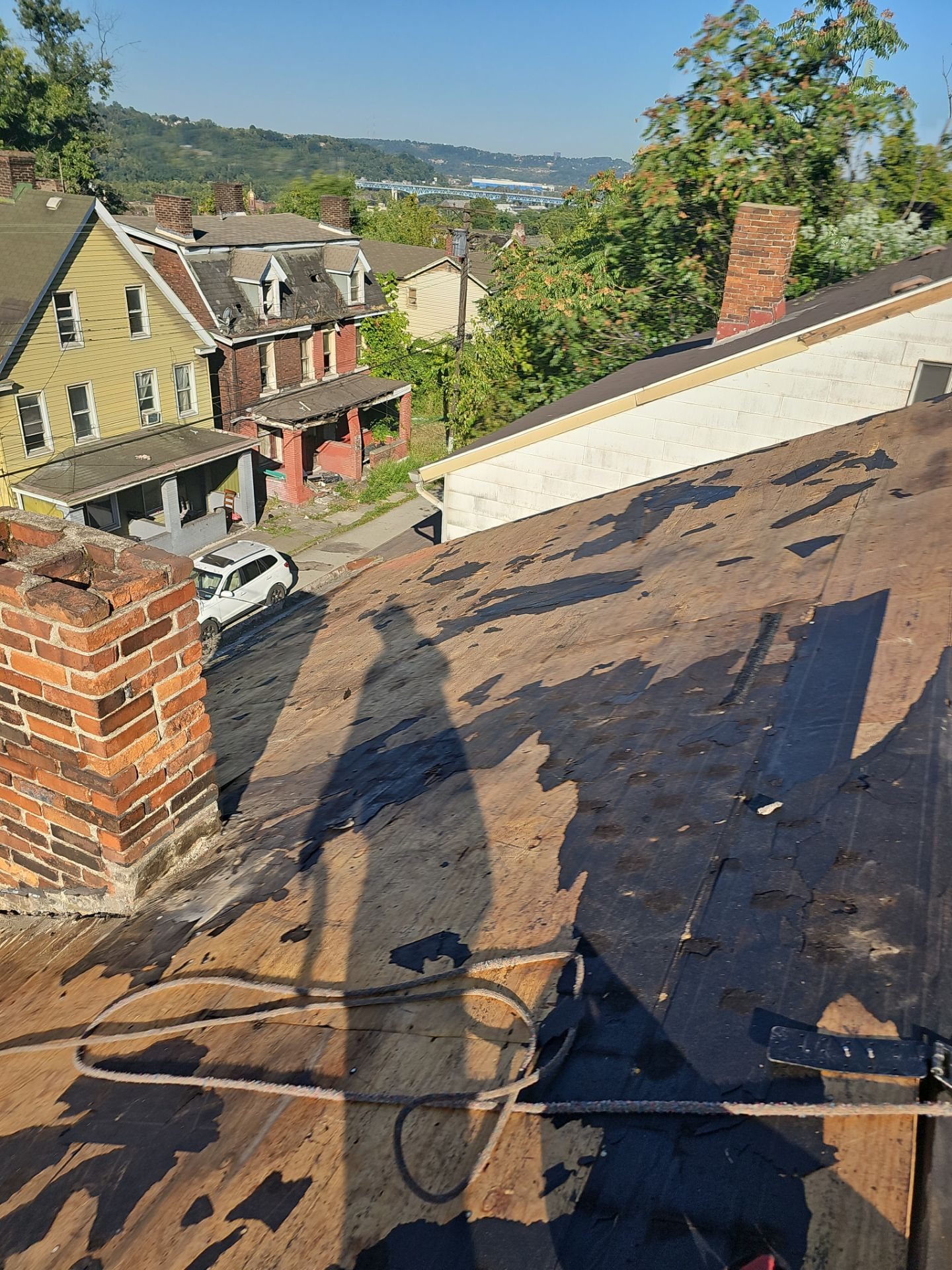
Most roof leaks don’t start in the middle of a roof. They start where the roof meets something: a chimney, a wall, a skylight, a plumbing vent. That’s where flashing does its job.
Your estimate should say whether flashing is being replaced or reused. Chimney flashing, step flashing along walls and valley metal should be listed. So should new pipe boots, the rubber collars around plumbing vents, which often crack long before the shingles wear out.
Stripped roof deck beside a brick chimney on a Braddock job, ready for new flashing. Alan Construction.
Drip edge is the metal strip along the eaves and rakes that steers water into the gutter and keeps it off the fascia boards. Current residential building code calls for it on shingle roofs, so if an estimate doesn’t mention it, ask.
Ventilation: Why Vents Show Up on a Roofing Estimate
An attic needs air coming in low, usually through soffit vents, and going out high, through a ridge vent or box vents. When that balance is off, heat and moisture build up in the attic. In summer that bakes the shingles from below. In winter it leads to frost on the underside of the deck and helps ice dams form at the edges.
On a replacement, the roofer should check the existing setup and write down what they plan to do: keep the current vents, swap box vents for a continuous ridge vent, or add intake where there isn’t enough. Manufacturers also expect proper ventilation for their warranty, so this isn’t an optional extra.
If one estimate includes a ridge vent and another doesn’t, that’s a real difference. Ask each contractor to explain their plan for your attic. Our post on why attic ventilation matters before cold weather goes deeper.
Shingles, Starter Strip and Ridge Cap
“Architectural shingles” isn’t enough on an estimate. You want the brand, the product line and the color written down so you know exactly what’s going on your house and can check it against another bid.
We install Atlas shingles, including Atlas Pinnacle Pristine, and we put the product name on the estimate. The manufacturer’s page lists the warranty and algae protection, so you can read it yourself instead of taking anyone’s word for it.
Look for the accessory pieces too:
- Starter strip along the eaves and rakes, which seals the first course so wind can’t lift it.
- Hip and ridge cap shingles that finish the peaks.
- Matching components from the same manufacturer, which some warranties expect.
Disposal, Cleanup, Permits and Warranty
Disposal covers the dumpster, hauling and landfill fees for the old roof. On tight city lots with alleys and steep driveways, where the dumpster can sit and how debris gets to it is part of the plan.
Cleanup should be on paper: tarps over landscaping and AC units, and a magnetic sweep for nails. We run a magnetic nail sweep on every job before we leave.
Permits vary by municipality. Some boroughs and townships want one for a replacement, others don’t. The estimate should say who checks and who pulls it.
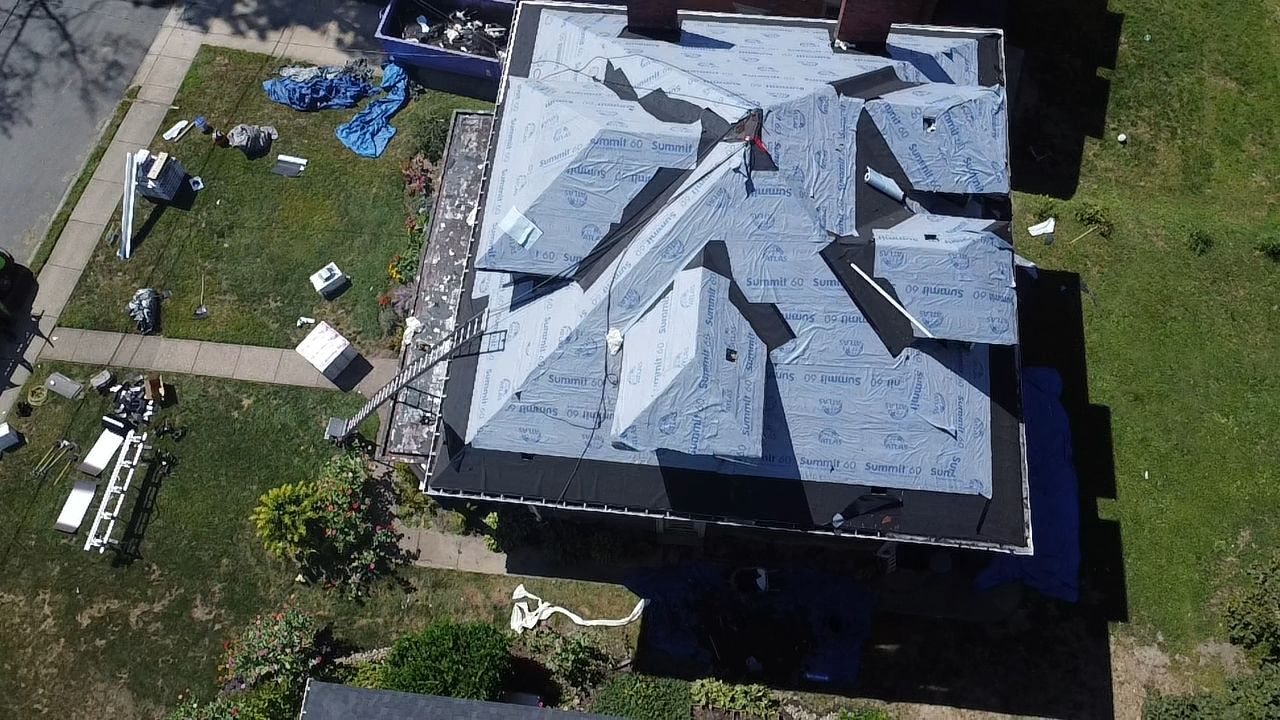
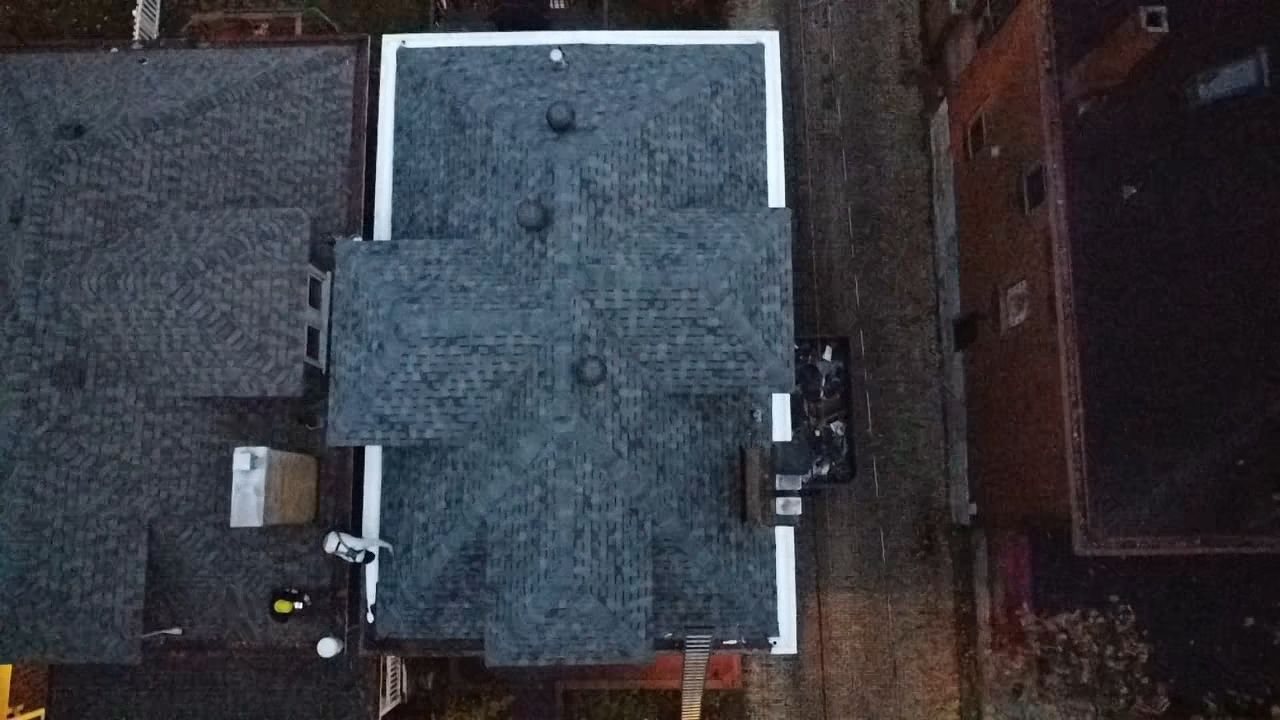
Drone view of a hip roof wrapped in underlayment in Pittsburgh, with tarps and debris staged in the yard. Alan Construction.
Warranty comes in two parts. The manufacturer covers the materials. The contractor covers the installation, called the workmanship warranty. Ask how long each lasts, what voids them, and who registers the manufacturer warranty. Get both in writing.
What Drives the Number on a Roofing Estimate
Here’s what actually moves the total on your roofing estimate, and why two houses on the same street can get very different quotes:
- Size, measured in squares. One square covers a hundred square feet of roof.
- Pitch. Steep roofs need more safety gear and slower work.
- Complexity. Hips, valleys, dormers and chimneys mean more cutting and flashing.
- Layers to remove and how much of the deck needs replacing.
- Material choice, from asphalt shingles to metal, slate or tile.
- Access, like tight lots, steep yards or no driveway for a dumpster.
- Add ons such as new gutters, gutter guards, skylights, or soffit and fascia work.
How to Compare Roofing Estimates Side by Side
The lowest bottom line isn’t the best deal if it leaves out ice and water shield, reuses old flashing or says nothing about the deck. Line the estimates up with the table above and check each row. Where one bid is silent, call and ask.
A few habits help:
- Get every estimate in writing. A verbal number can’t be compared.
- Make sure each contractor actually went on or around the roof and measured it.
- Ask what’s not included, especially decking, permits and extra layers.
- Be wary of a price that’s only good if you sign today.
That last one matters. Marti S. wrote in her Google review that she chose us because “His price was his price. It was not going to increase it if I waited till another day to make my decision.” That’s how it should work. For more warning signs, see our list of red flags to watch for when getting a new roof.
Your Rights in Pennsylvania Before You Sign
Pennsylvania’s Home Improvement Consumer Protection Act sets rules for the contract that follows your estimate. Among other things, the contract has to be in writing and include:
- The contractor’s name, address, phone number and registration number.
- A description of the work, the materials and specifications that can’t change without a signed change order.
- Approximate start and completion dates, and the total price.
- The down payment amount, listed separately from any special order materials.
- A notice that you can cancel within three business days of signing.
On larger jobs, the law also limits how big a deposit a contractor can take. Before you sign, look up the contractor on the Attorney General’s HIC search. Ours is PA#126638. Our guide to what a Pennsylvania HIC number means explains how to check.
Want a roofing estimate that explains every line? Schedule your free estimate and we’ll walk your roof and go over it with you, item by item.