Pennsylvania does not issue a state roofing license, so a licensed roofing contractor here is one that is registered with the Pennsylvania Attorney General as a Home Improvement Contractor (HIC), carries the liability insurance the law requires, and writes contracts that follow state law. An unlicensed roofer is someone who skipped that registration, and when you hire one, most of the protections Pennsylvania gives homeowners go out the window.
We’ve been replacing and repairing roofs around Allegheny County since 2003, and we still get calls from homeowners trying to fix work done by a crew that took a deposit and disappeared. This guide explains what “licensed” really means in Pennsylvania, what changes when you hire someone who isn’t registered, and how to check any of the roofing contractors in Pittsburgh you’re considering in about ten minutes.
Short answer: In Pennsylvania, “licensed” means HIC registered and insured. Ask for the HIC number, look it up on the Attorney General’s site, and get a written contract that shows that number before anyone touches your roof.
Does Pennsylvania Require a Roofing License?
No. The Pennsylvania Department of Labor and Industry says plainly that the Commonwealth has no licensure or certification requirements for most construction contractors. There’s no roofing exam and no state board that tests roofers.
What Pennsylvania does have is the Home Improvement Consumer Protection Act, usually called HICPA. Since 2009 it has required contractors who do home improvement work above a modest yearly threshold to register with the Attorney General’s Office. Any roofer who replaces roofs for a living clears that threshold quickly, so for practical purposes every real roofing company working on houses in Pittsburgh should be registered.
On top of the state registration, some municipalities run their own contractor licensing and permit rules. The City of Pittsburgh has a contractor license for certain kinds of work, and boroughs and townships around Allegheny County each set their own permit requirements. A contractor who works here every day should know what your municipality expects without having to look it up.
What Makes a Licensed Roofing Contractor in Pittsburgh
When a homeowner asks us whether we’re licensed, here’s what that question really covers in Pennsylvania:
- An active HIC registration. The registration number starts with “PA” and must appear on every advertisement, estimate, proposal and contract the company gives you. Ours is PA#126638.
- Liability insurance. To register, a contractor has to show proof of liability insurance for both personal injury and property damage at minimum amounts set in the law, and the contract has to state the coverage they carry.
- Workers’ compensation. A roofing company with employees on your roof should carry workers’ comp. Ask for the certificate along with the liability policy.
- Current renewal. HIC registration renews every two years. An expired number is the same as no number.
- Written contracts that follow HICPA. More on that below, because it’s where most homeowners lose their protection without realizing it.
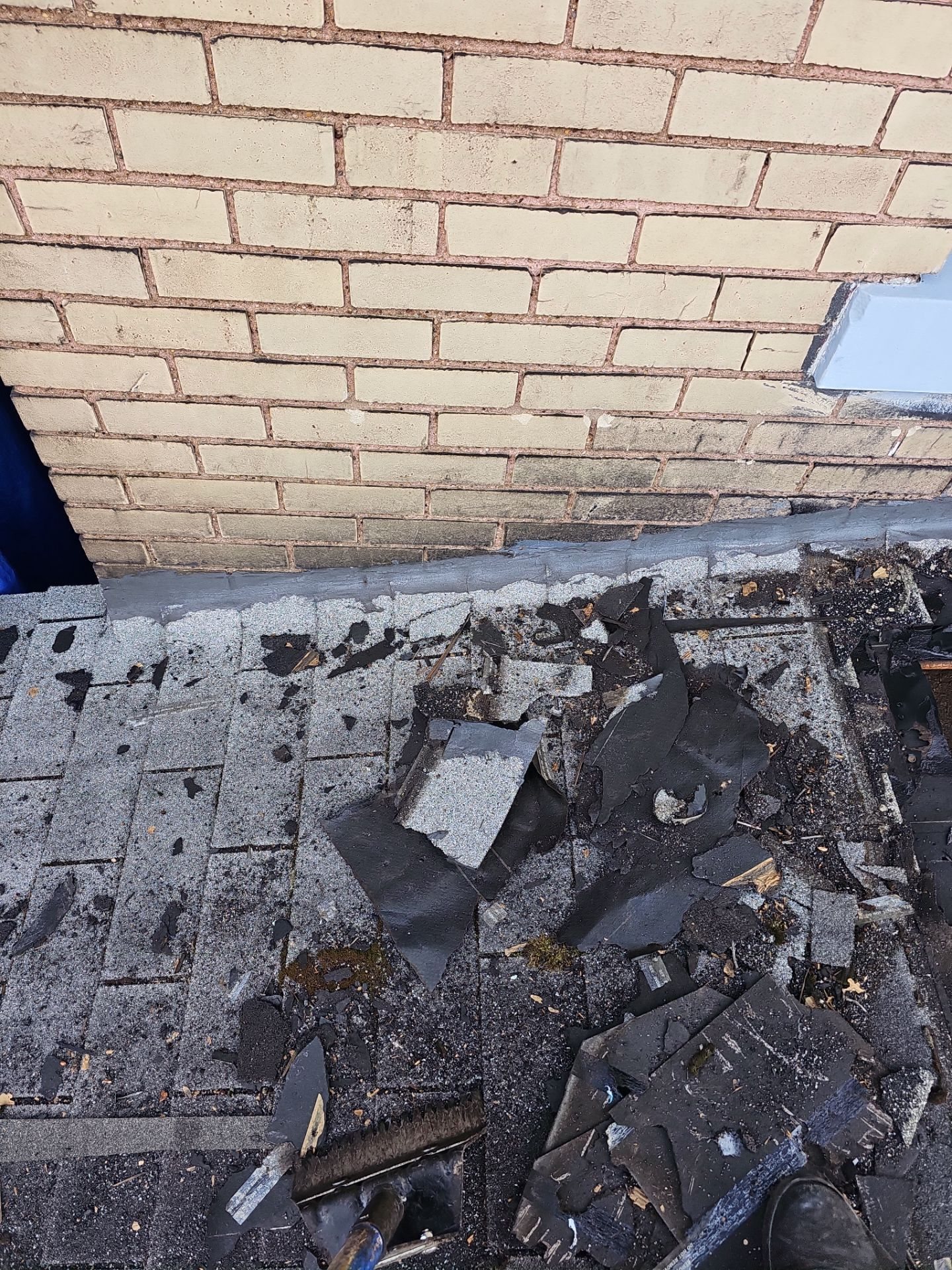
This is what a roof looks like halfway through a tearoff. Old shingles and nails are coming off by the ton, the crew is working on a steep pitch, and debris is falling toward the yard, the gutters and the walls of the house.
Tearoff day is when insurance stops being paperwork. If a worker falls or a load of debris goes through a window, the question of who pays gets answered by the policies the roofer carries. With an uninsured crew, that question can land on you.
Old shingle debris on a stripped roof in McKeesport, Alan Construction.
Licensed vs Unlicensed Roofers: Side by Side
The difference doesn’t show up on the day of the estimate. Both roofers might show up in a truck, both might be friendly, and the unregistered one is often the cheaper number. The difference shows up when something goes wrong.
| What you get | Registered and insured roofer | Unregistered roofer |
|---|---|---|
| HIC number you can verify | Yes, on the contract and the estimate | None, or a number that doesn’t match their name |
| Liability insurance | Required to register, amount stated in the contract | Often none, or a lapsed policy |
| Workers’ comp for the crew | Certificate available on request | Rarely carried |
| Written contract with a cancel window | Three business days to cancel without penalty | Handshake deal or a one page quote |
| Deposit limits | Follows the state cap on down payments | Large cash deposit up front |
| Somewhere to complain | Attorney General complaint and enforcement | Small claims court, if you can find them |
| Warranty support later | A local company still answering the phone | A disconnected number |
The Real Risks of Hiring an Unregistered Roofer
Injuries on your property
Roofing is dangerous work. If an uninsured worker gets hurt on your roof, their medical bills and lost wages have to come from somewhere. Your homeowners policy may or may not respond, and even if it does, the claim goes on your record. A properly insured contractor keeps that risk on their policy instead of yours.
Damage to your house or your neighbor’s
Dropped bundles, torn gutters, a tarp that blows off during a storm and lets water into a bedroom. These things can happen on any job. A registered contractor has liability coverage to fix it. An unregistered one has every reason to stop answering your texts.
Once the old shingles come off, you find out what the decking really looks like. On older Pittsburgh houses it’s common to find soft or rotted boards that nobody could see from the ground.
An honest contractor stops, shows you photos, explains what needs replacing and puts any change in writing before going further. A fly by night crew either shingles right over the bad wood or uses it as a surprise charge after the fact. Pennsylvania law says the specifications in your contract can’t be changed without a written change order signed by both of you.
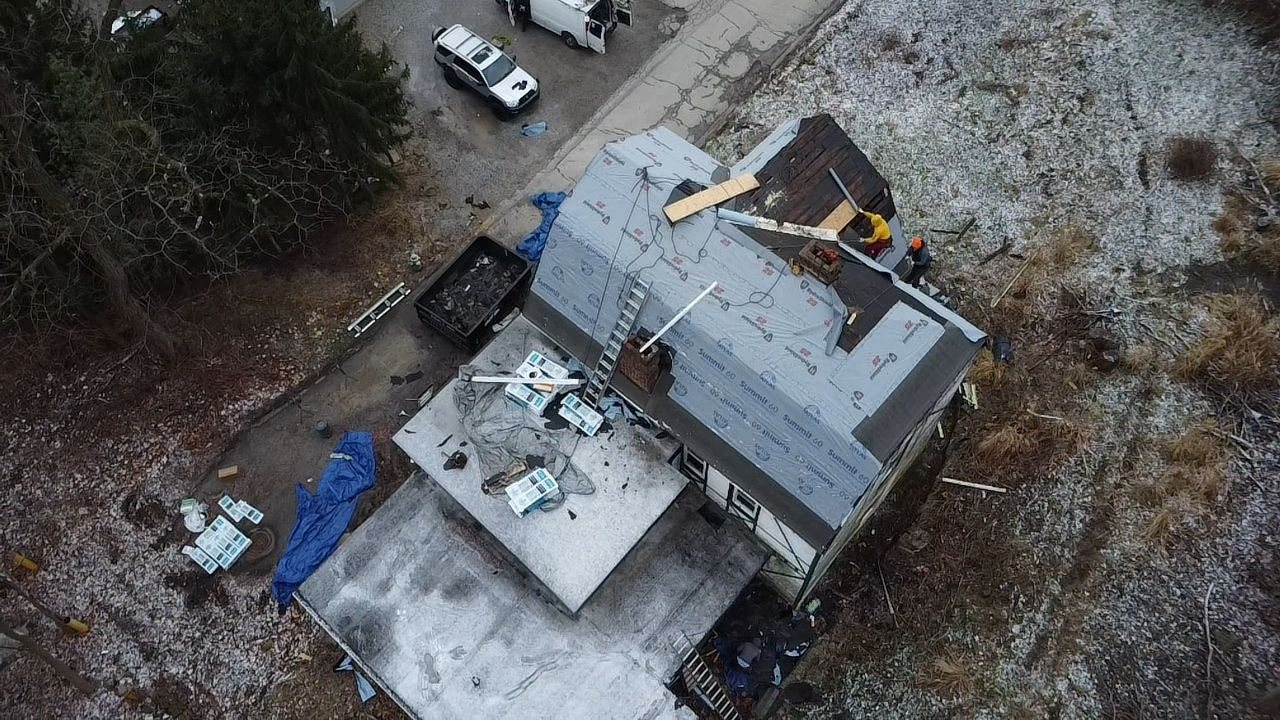
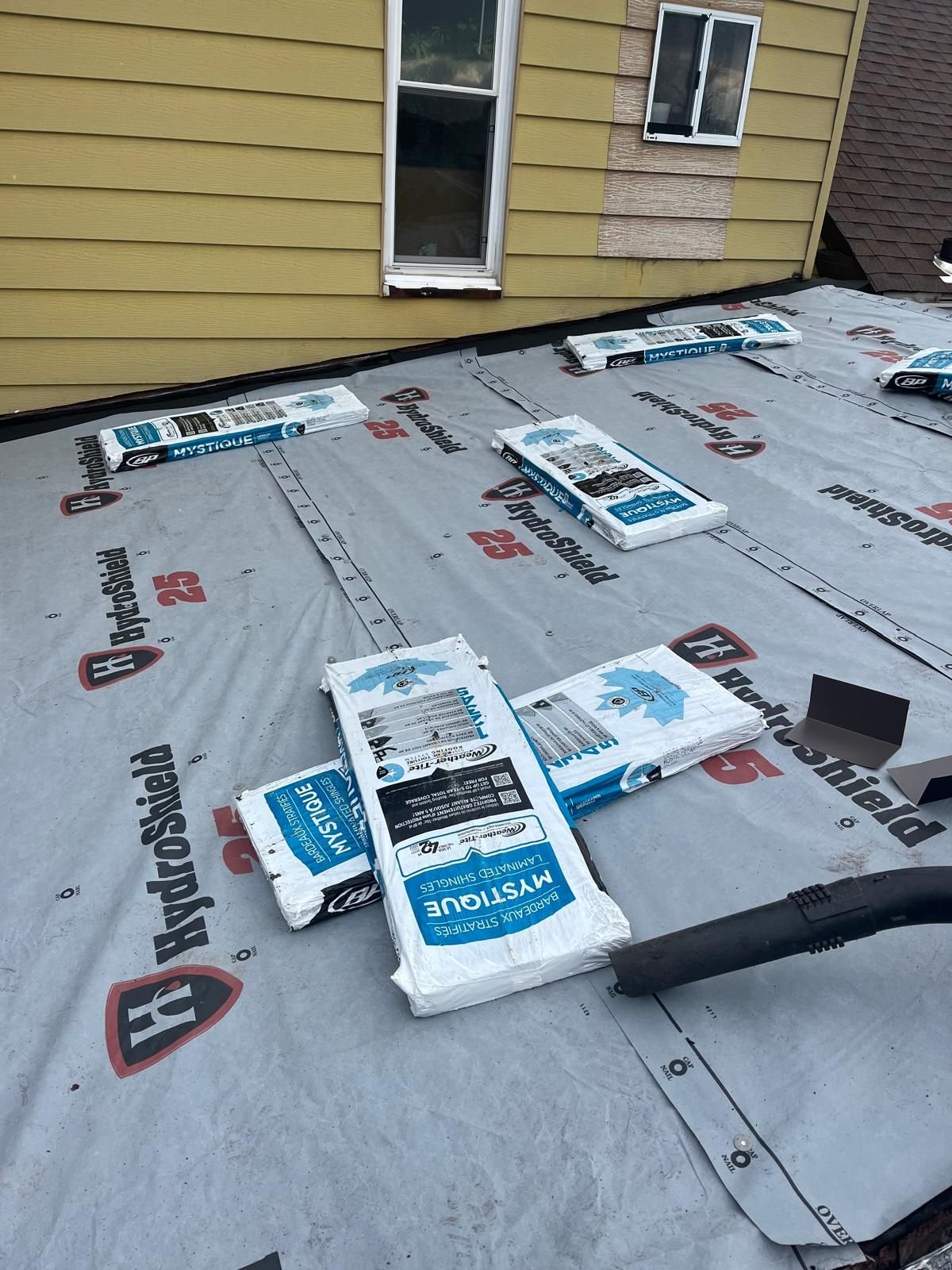
Roof in progress with new plywood and underlayment in Pittsburgh, Alan Construction.
Deposits that disappear
The most common story we hear is simple: a homeowner paid a big deposit, the roofer ordered nothing, and then stopped showing up. HICPA makes it a crime, called home improvement fraud, to take an advance payment and fail to do the work or return the money. That law has teeth, but it helps a lot more when the contractor has a registered name and address the state can find.
Work nobody stands behind
A roof is supposed to last decades. If a flashing detail leaks two winters from now, you want to call a company that’s still in business and still has its name on your contract. A roofer with no registration and no office has nothing tying them to the job once they’re paid.
How to Check a Roofer’s License in Pennsylvania
Checking takes less time than reading three online reviews. Here’s the order we’d follow if we were the homeowner:
- Ask for the HIC number. A legitimate contractor gives it to you immediately. It should already be printed on the estimate.
- Look it up. Search the number or the business name on the Attorney General’s HIC search. Make sure the registration is active and the business name and address match the paperwork you were handed.
- Get the insurance certificate. Ask for proof of liability insurance and workers’ comp, then call the insurance agent listed on it to confirm the policy is current.
- Ask about permits. Ask whether your municipality requires a permit for your job and who will pull it. A contractor who suggests skipping a required permit is not doing you a favor.
- Read the reviews. Look at the company’s Google reviews and ask for addresses of recent jobs in your part of town.
- Get everything in writing. No contract, no work. No exceptions.
If you want the full background on the registration itself, including how the number works and what to look for in the search results, read our guide to what a Pennsylvania HIC number is and how to look one up.
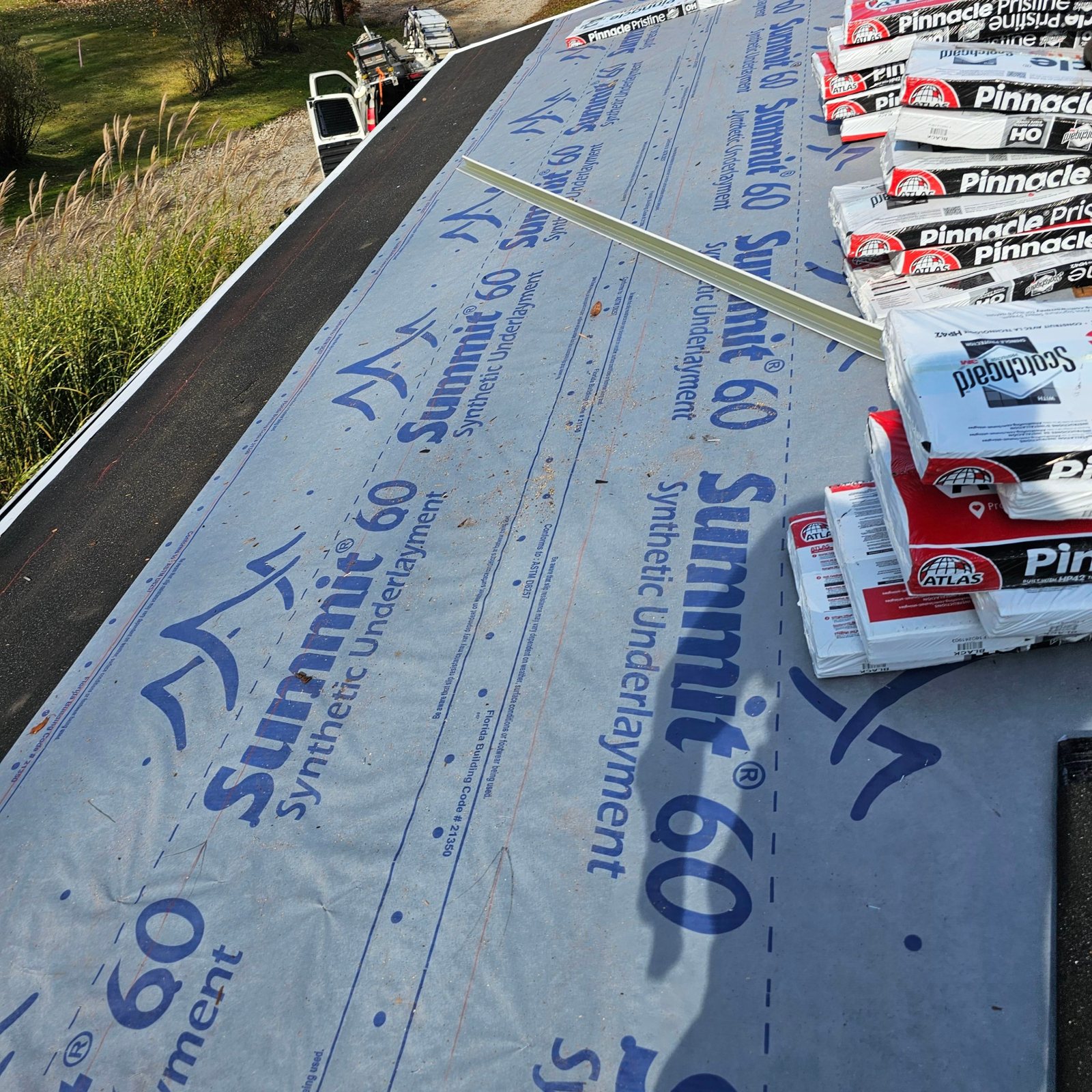
Your contract should describe the job down to the materials. That means the shingle line, the underlayment, the flashing work and how much decking replacement is included.
We install Atlas shingles, including Pinnacle Pristine, and the contract says so. If a roofer’s quote just says “new roof” with a single total, you have no way to compare it to anyone else’s and no way to hold them to it later.
For a line by line look at what belongs in a quote, see how to read a roofing estimate and what you’re paying for.
Synthetic underlayment with shingle bundles staged on a roof in Natrona Heights, Alan Construction.
What Your Roofing Contract Must Include Under PA Law
This is the part of HICPA most homeowners never hear about. Under the law, a home improvement contract is not valid or enforceable against the homeowner unless it meets these requirements. A registered contractor’s paperwork should already include all of it:
- It’s in writing, legible, and shows the contractor’s HIC registration number.
- It’s signed by you and by the contractor or their salesperson.
- The contractor’s name, street address and phone number. A post office box alone doesn’t count.
- The date of the agreement, plus an approximate start date and completion date.
- A description of the work and the materials, with specifications that can’t change without a signed change order.
- The total price, the down payment and any special order materials, listed separately.
- The names, addresses and phone numbers of any subcontractors known at signing.
- The amount of liability insurance the contractor carries.
- The Attorney General’s toll free consumer number.
- A notice that you can cancel within three business days of signing without penalty.
The law also says a contractor can’t demand or take payment before the contract is signed, and on larger jobs the deposit is capped at one third of the contract price, plus the cost of any special order materials written into the contract. The Attorney General’s HIC registration page links to the full act if you want to read it yourself.
After a big windstorm, door knockers show up in Pittsburgh neighborhoods. Some are honest. Plenty aren’t registered, push you to sign that day, and want cash before any material shows up.
Pressure is the biggest tell. One of our customers, Marti S., put it this way in a Google review: “His price was his price. It was not going to increase it if I waited till another day to make my decision.”
We walk through more warning signs in red flags to watch for when getting a new roof in Pittsburgh.
Synthetic underlayment covering a roof deck with shingle bundles staged on top in Pittsburgh, Alan Construction.
Why We Put Our Credentials Up Front
Alan Construction LLC is a Pittsburgh roofing company based on Stanley Street in the 15207 zip code. We’re registered as a Pennsylvania Home Improvement Contractor, PA#126638, licensed and insured, and BBB Accredited with an A+ rating. Our HIC number is on our estimates and contracts because the law says it has to be, and because we’d rather you check us out than take our word for it.
Our estimates are free and come with no obligation. We look at your roof in person, explain what we’d do and why, and put it in writing. Greg J. noticed that difference: “Alan construction was the only company that actually came to our house to give us an estimate, not just driving by or looking at google images.”
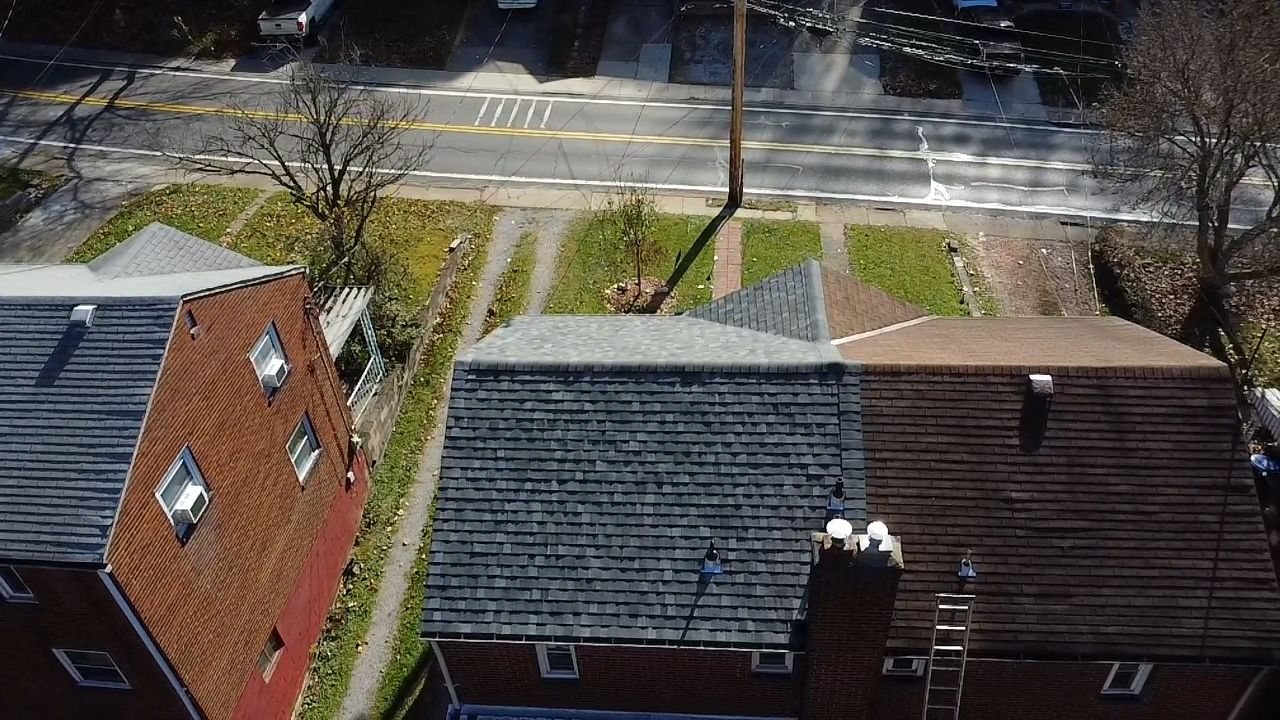
If your roof was damaged in a storm, we work with your homeowners insurance and meet the adjuster on site. You can read more about our storm damage repair work. Most of our roof replacements are finished in one day, and we run a magnetic nail sweep across the yard before we leave.
Want a registered, insured crew to look at your roof? Request your free estimate and we’ll walk the roof with you and put everything in writing.