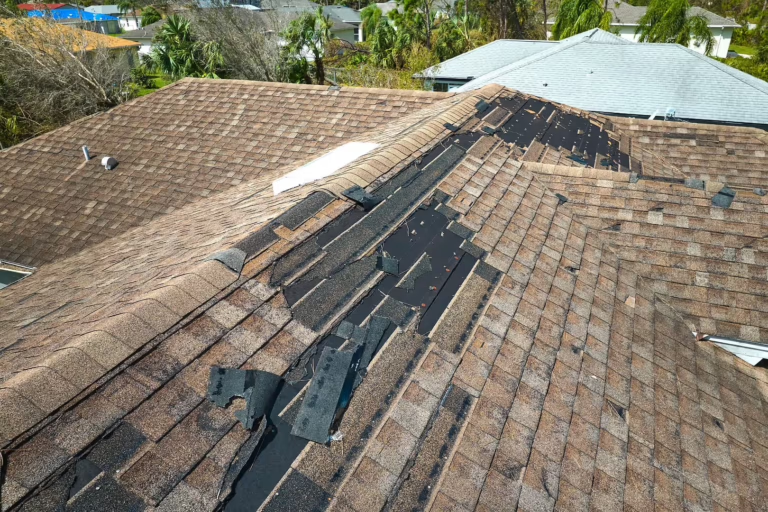
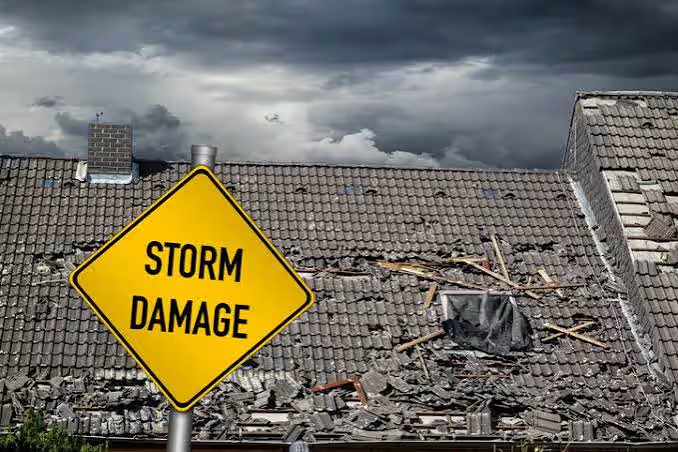
Fall storms cause siding damage from wind in three main ways: strong gusts unhook panels at the nail hem, wind driven rain gets pushed up behind the laps, and flying debris cracks vinyl that has stiffened in the cold. Limbs punch holes. Once one panel unlocks, water starts feeding the wall behind it, and that hidden part is usually the bigger repair.
The pattern repeats every October in Pittsburgh. A front rolls through around dinnertime, gusts hit the gable facing the storm, and by morning the homeowner sees one panel flapping and assumes it’s a quick fix. Sometimes it is. Other times that loose panel is the only visible symptom of a wall that has been taking on water for a while. The same storm often lifts shingles too, which is where our storm damage roof repair in Pittsburgh service comes in: we check the roof and the walls in one visit.
How Wind Damages Siding: The Mechanics
Siding is not a waterproof shell. It’s a rainscreen, a shedding layer that dumps most of the water and lets the housewrap underneath handle the rest. Wind breaks that arrangement in two ways. It creates suction that lifts panels off their locks, and it drives rain sideways at pressures the wall was never meant to handle.
Quality vinyl siding is tested to resist strong wind loads. So why do panels come loose in an ordinary fall gust? Almost always installation or age. Nails driven tight instead of leaving room for the panel to float. Nails placed at the edge of the slot instead of the center. Panels locked so hard they can’t expand. The material passed the lab test; the wall didn’t.
The three failures we see most
- Loose or missing panels at corners and gables, where wind pressure concentrates
- Cracked panels along the lower courses, where cold, brittle vinyl meets a wind blown branch
- Soft, dark sheathing behind an otherwise clean looking wall, the damage nobody finds until a course comes off
What Are the Common Causes of Siding Damage?
Wind and impact get the headlines, but quieter causes do more harm over time on older homes. Improper fastening is number one. Thermal movement is a close second: vinyl expands and contracts noticeably across a Pittsburgh year, and a panel nailed solid in July can buckle or split by January.
After that comes water getting in at penetrations: hose bibs, dryer vents, meter bases and light blocks. These get caulked once at install and never touched again. Add impact from hail and debris, and pest or woodpecker damage on wood siding, and you’ve covered most of what causes siding storm damage on Pittsburgh homes.
Why Fall Is Harder on Siding Than Summer
Autumn stacks three stresses that summer doesn’t. Temperature swings get wide and fast: a warm afternoon can drop toward freezing overnight, and vinyl gets less forgiving of impact as it cools. Trees are still fully leafed in early fall, so they catch more wind and shed more limbs than they will in January.
September and October also bring long, soaking rains with gusty bands mixed in. That combination, saturated sheathing followed by a wind event, is what turns minor gaps into real repairs.
Housing age compounds all of it. Pittsburgh has a lot of older homes, and many are on their second or third siding job, over sheathing that has already been nailed through again and again.
What Is Considered Storm Damage to a Roof?
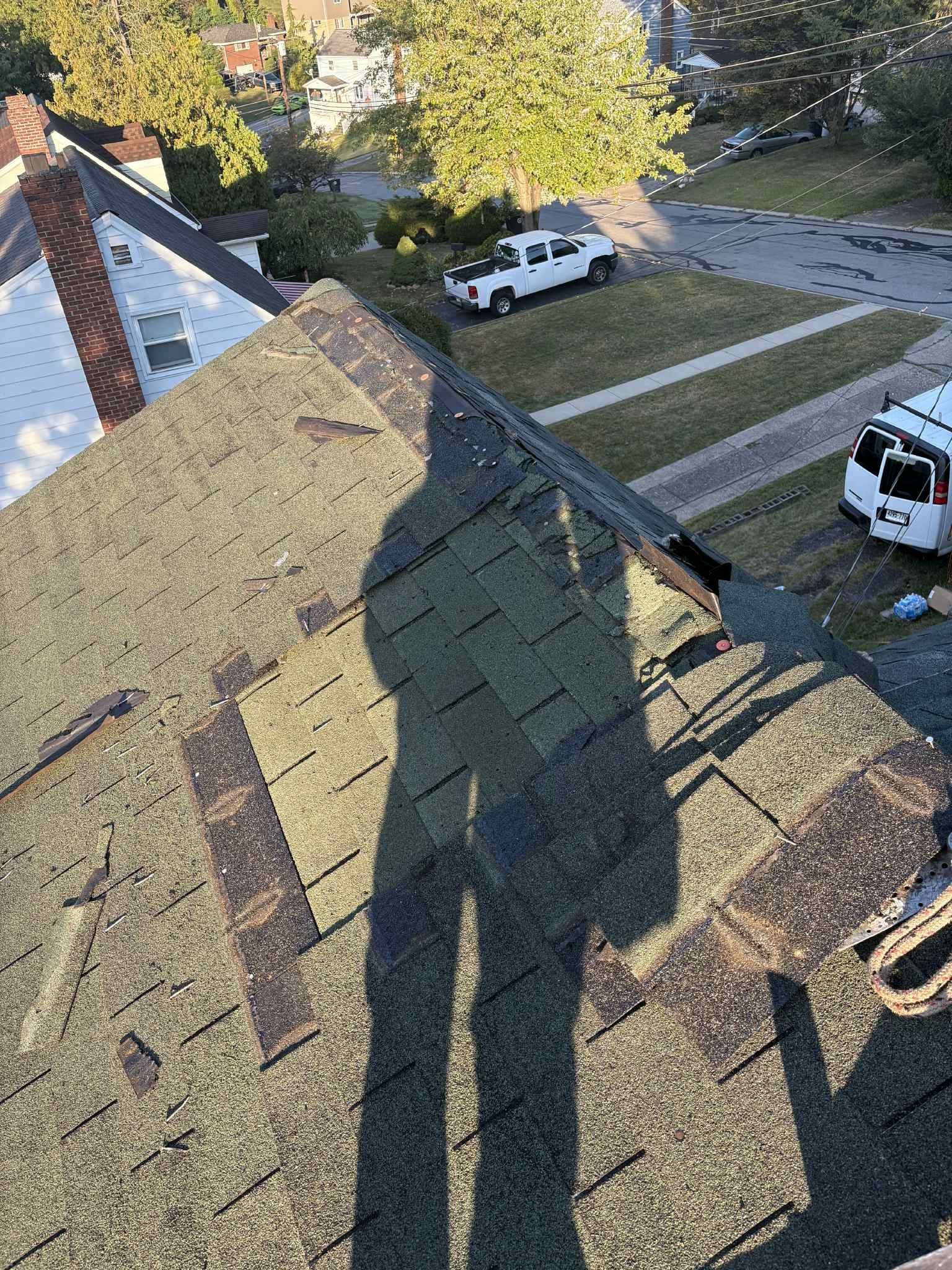
Adjusters use a functional damage standard, not an appearance standard. On asphalt shingles, that means creased or lifted tabs, granule loss down to exposed mat, punctures, and hail bruises that feel soft under thumb pressure.
Missing shingles and displaced ridge caps count. Curling and weathering from age, like the worn shingles in this photo, usually do not. That’s why a roofer’s written report that ties damage to a specific storm matters so much.
Old weathered shingles on a Pittsburgh roof slope before tearoff, Alan Construction.
Roof and siding damage travel together more often than people expect, because the same gust that lifts a shingle course also pulls at the wall right below it. If a storm took shingles off one slope, check the wall on that side before you call anyone.
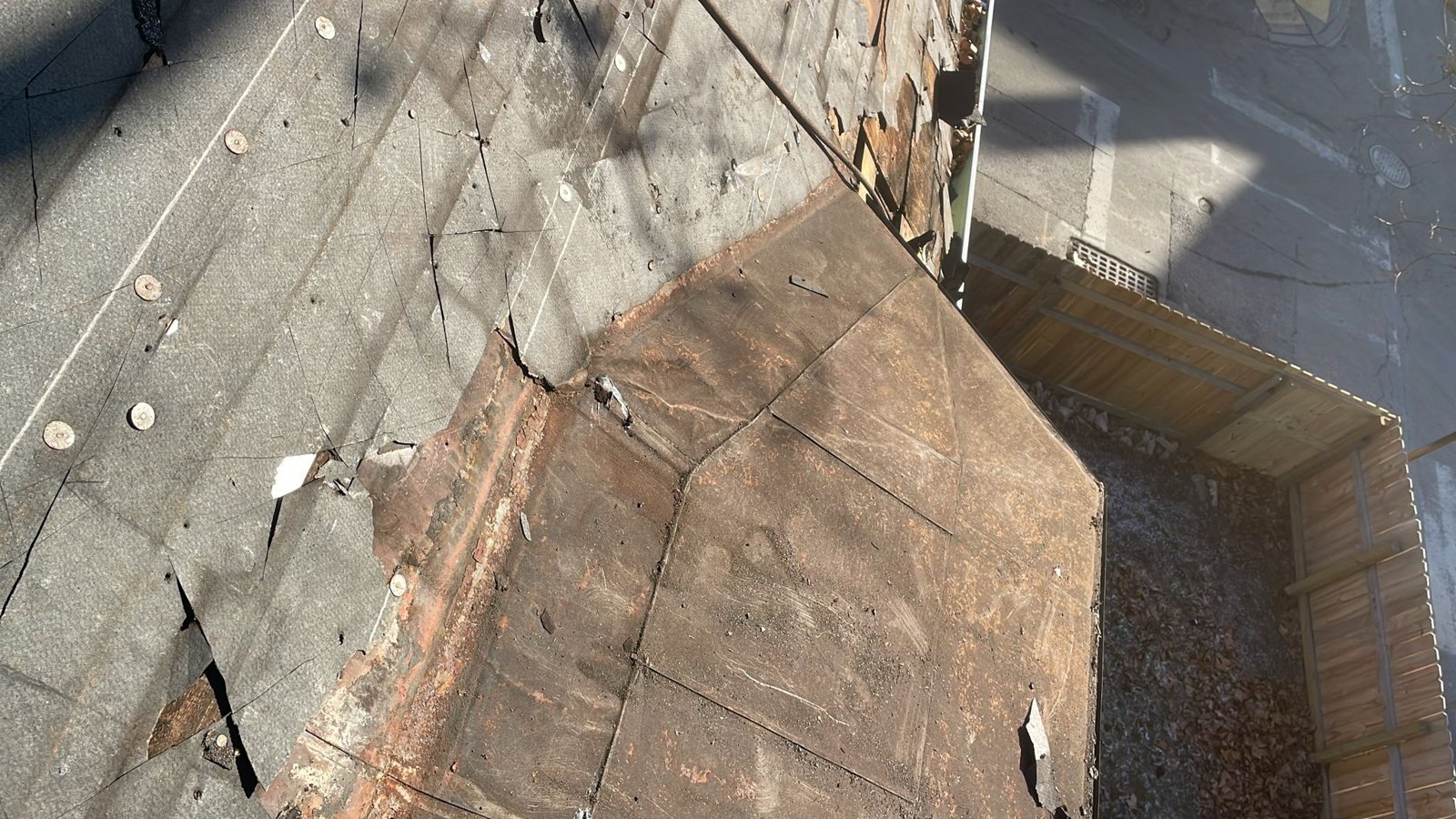
Pay special attention where a roof meets a wall. Old flashing at that joint is a common place for wind driven rain to get behind siding. For a full checklist, see our guide to roofing and siding damage after a storm.
Worn rolled roofing and old flashing on a low slope roof in Pittsburgh, Alan Construction.
Will Insurance Cover Siding Damage From Wind?
Usually, yes. Standard homeowners policies generally cover sudden wind and hail damage. What gets denied is wear, neglect and slow water intrusion. If an adjuster can show the panel was already loose or the sheathing rot started before the storm, you’re paying.
Two things protect you: dated photos of your exterior taken before storm season, and a written contractor report tying specific damage to a specific weather event. Our guide on filing an insurance claim for storm damage covers the steps.
Color matching is the other fight. Discontinued siding lines are common on older Pittsburgh homes, and policies vary on whether they’ll pay to redo an entire wall so it matches. Read your policy’s matching language before you file.
What Type of Siding Is Most Resistant to Hail Damage?
Fiber cement and steel lead the category. Fiber cement is dense enough to shrug off moderate hail without cracking, and steel dents rather than shatters. Insulated vinyl performs noticeably better than hollow back vinyl because the foam backing absorbs impact instead of letting the panel flex and split.
| Siding type | Hail resistance | Wind performance | Notes for Pittsburgh |
|---|---|---|---|
| Fiber cement | Excellent | Excellent | Heavy; needs correct flashing and paint upkeep |
| Steel | Excellent | Excellent | Dents visibly; rarely breaks through |
| Insulated vinyl | Good | Very good | Strong vinyl option for impact |
| Standard vinyl | Fair | Good if installed right | Brittle below freezing |
| Engineered wood | Good | Good | Vulnerable at cut edges if unsealed |
| Aluminum | Poor | Good | Dents permanently |
For most homes, a thicker or insulated vinyl panel is the practical answer, a real step up in durability without turning a repair into a renovation.
What Siding Should You Avoid?
Thin builder grade vinyl is the one we’d steer you away from in this climate. It works for a few years, then cracks the first cold night a baseball finds it. Aluminum is second: it holds up structurally but dents permanently, and one hailstorm can leave a whole wall looking hammered.
Be cautious with older hardboard products and any wood siding on a home you don’t plan to maintain on a schedule. Both perform well when painted and sealed. Both fail fast when they aren’t. Our post on siding materials to avoid goes deeper.
Our Post Storm Walkaround
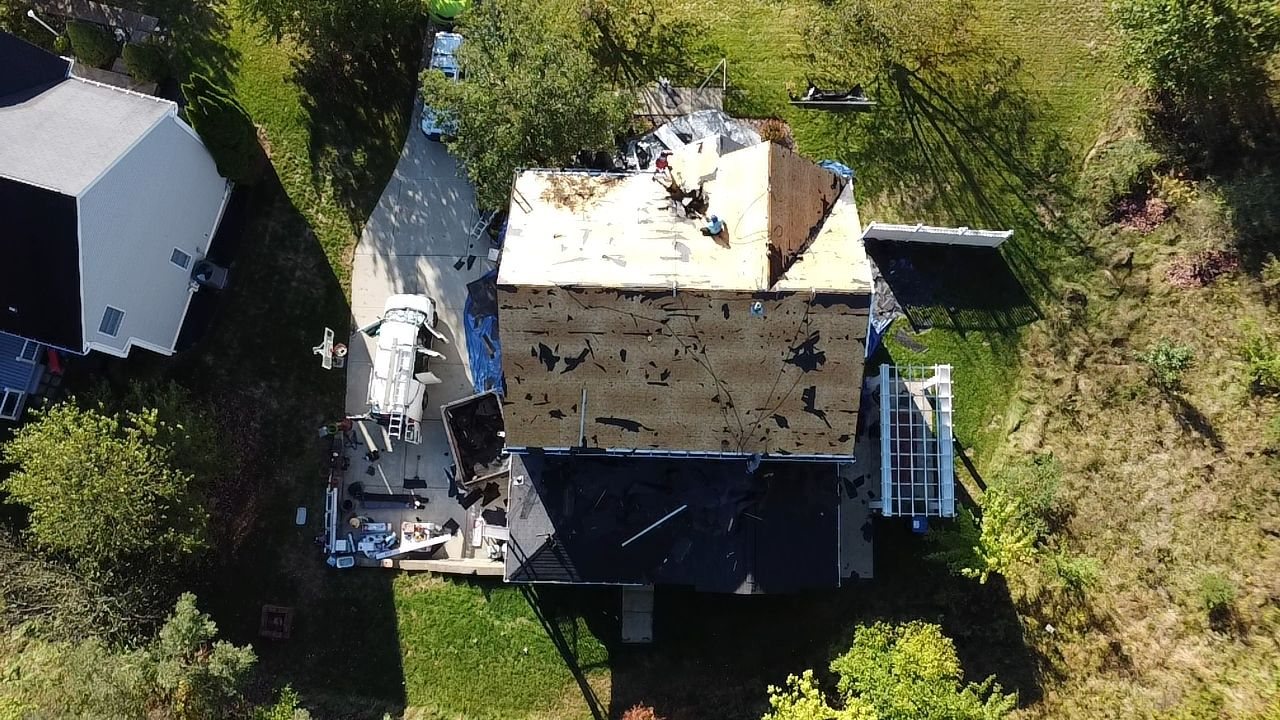
Start at ground level and circle the house once, slowly, looking up at the laps for anything that isn’t in a straight line. Then check corners, the J channel around windows, and the bottom starter strip. Push gently on a few panels and feel whether they’re still locked.
Look for granules in the gutters and dents in soft metal like downspouts and vent hoods; those are your hail indicators. If the roof needs work too, it’s often smart to plan roof and siding together.
Drone view of a Pittsburgh house mid tear off with exposed roof decking, Alan Construction.
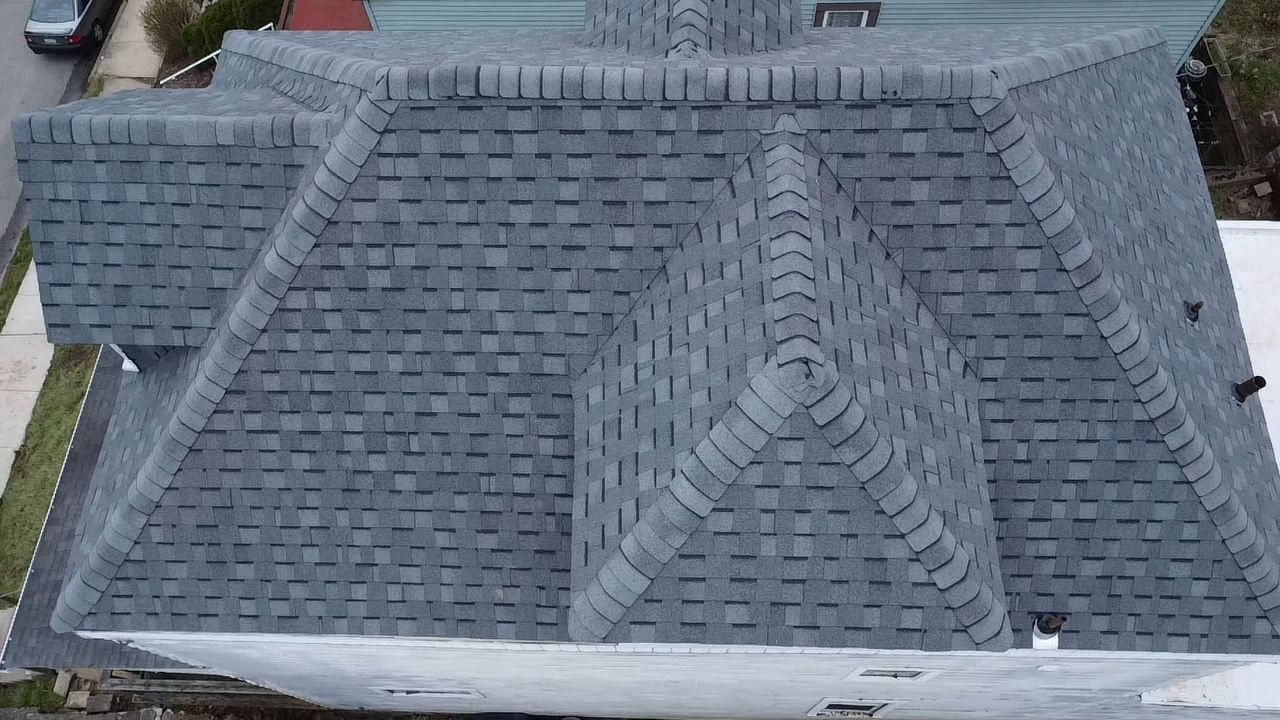
From the yard, check that the ridge caps along the top of the roof still sit flat and straight, like the new ones in this photo. Inside, check the top corners of rooms on outside walls for staining, and go into the attic with a flashlight. Photograph everything before you touch it.
Fast action keeps a small repair small. Sean W. put it this way in his Google review: “Piece of siding flew off in a windstorm friday night, I called saturday afternoon and they came out sunday morning to replace it for my family.”
Close aerial view of a new hip roof with ridge caps in Pittsburgh, Alan Construction.
If you find soft sheathing or water tracking, that’s the point to call for siding repair in Pittsburgh rather than patching from a ladder. One panel is a repair. A soft wall is a project. Knowing which one you have, before the first hard freeze, is the whole game.
Siding or shingles loose after a storm? Request a free estimate and we’ll check your walls and roof together.