Should an older Squirrel Hill home get full frame or insert window replacement? Insert replacement is the better value when the existing frame is square, dry and structurally sound. Full frame replacement is the right call when the frame is rotted, racked or hiding failed flashing. The house decides, not the sales brochure.
That answer sounds simple. In practice, the decision gets muddy fast, because two houses on the same block can need two different approaches. One home can have original frames that are still solid, while a sill a few streets over crumbles under a screwdriver. This guide walks through how to tell the difference, what drives the cost of each method, and where homeowners tend to overpay. If you want the bigger picture first, start with our page on window replacement in Pittsburgh.
Short answer: choose an insert when the old frame is sound and square; choose full frame when there is rot, water damage or an opening that is out of square.
What Older Squirrel Hill Homes Are Actually Working With
Much of Squirrel Hill was built in the early 1900s. That means real wood frames, plaster interiors, brick or stone exteriors, and window openings built by hand rather than stamped out to a standard size. Many of these homes still have their original weight and pulley double hung windows, complete with sash cords, iron weights and a hollow pocket in the jamb that has been leaking air for a century.
Here’s the part people miss. Those weight pockets are empty space, and they run the full height of the opening on both sides. Sealing them is often a bigger comfort win than the glass itself, so any conversation about replacing windows in an older home should start there, not with rating charts.
Full Frame vs Insert Window Replacement: The Core Difference
The distinction comes down to how much of the old window leaves the house.
Insert replacement
An insert, sometimes called a pocket window, keeps your existing frame and exterior trim. The crew removes the sash, the parting bead and the hardware, then fits a complete new window unit inside the original opening.
Interior casing and exterior brick mold stay in place, which matters a lot in a home with original woodwork or a stone surround you’d rather not disturb. Inserts are faster to install and less invasive.
The trade off is glass area. Because the new frame nests inside the old one, you lose a little visible glass on each side. On a wide living room window, nobody notices. On a narrow bathroom window, you might.
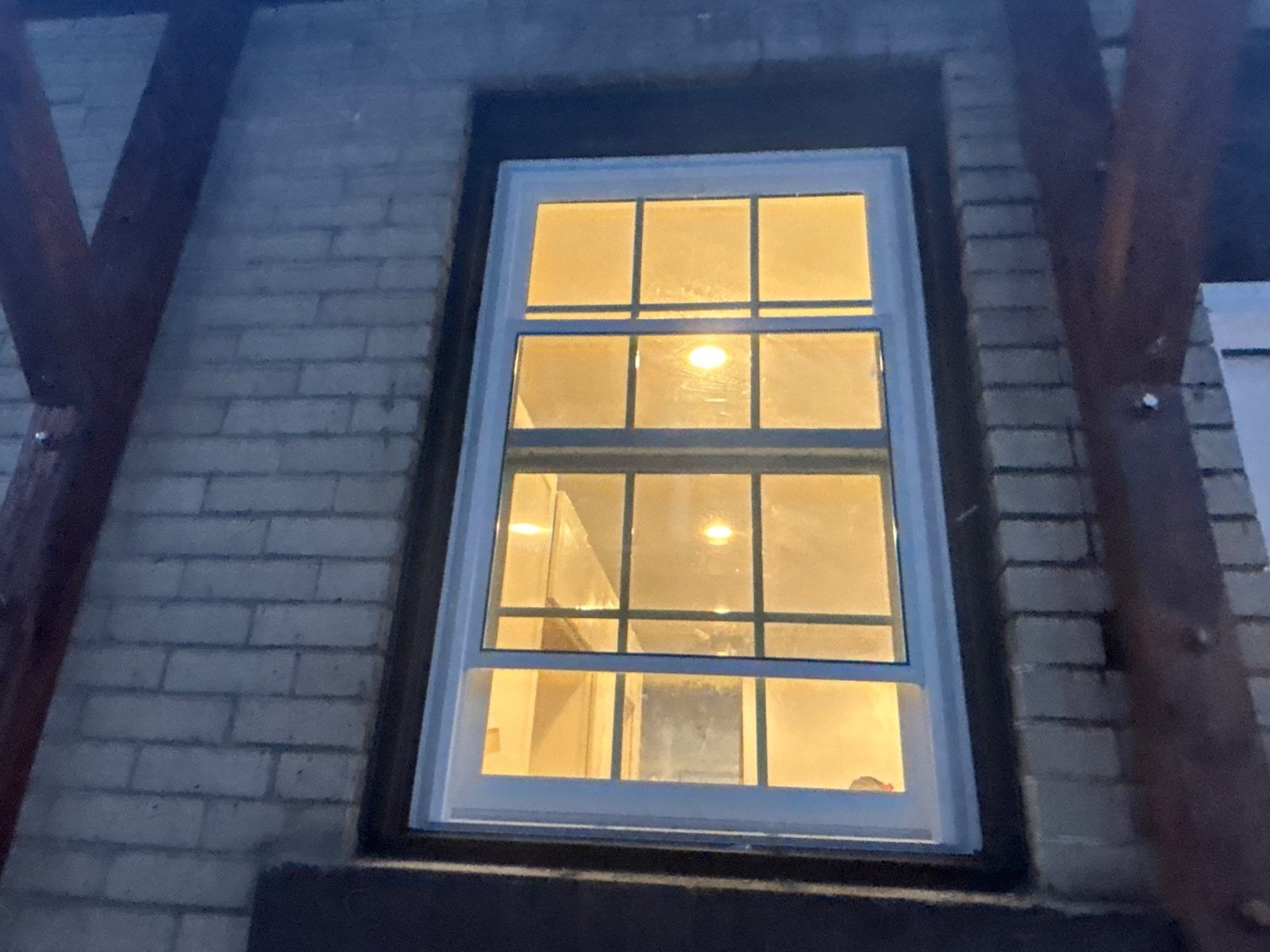
A new double hung window lit from inside at dusk, set in a light brick wall with dark trim. Alan Construction job, Pittsburgh.
Full frame replacement
Full frame goes down to the rough opening. Sash, jambs, sill and often the interior and exterior trim all come out, exposing the framing lumber underneath.
That lets a crew inspect for rot, correct an out of square opening, seal the gaps around the new unit properly, and install new flashing and a sill pan that actually sheds water.
It costs more and takes longer. But when there’s hidden water damage, full frame is the only honest option. An insert would just seal the problem inside the wall.
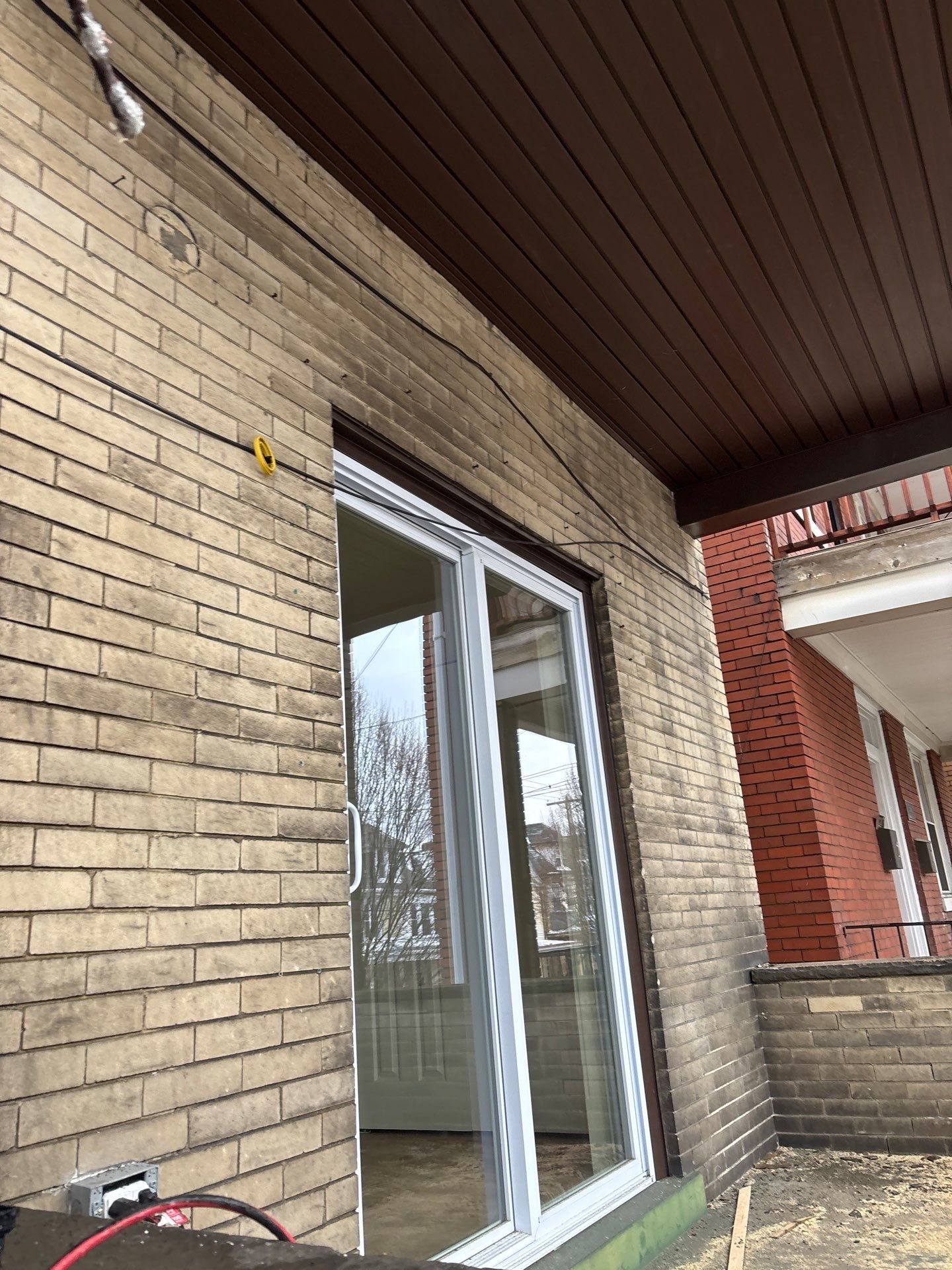
A new white sliding door set into a light brick wall on an upper porch. Alan Construction job, Pittsburgh.
| Insert replacement | Full frame replacement | |
|---|---|---|
| Existing frame | Stays | Removed |
| Interior trim | Undisturbed | Usually replaced |
| Glass area | Slightly reduced | Same or larger |
| Rot inspection | Not possible | Built in |
| Time per opening | Shorter | Longer |
| Relative cost | Lower | Higher |
| Best when | Frame is sound and square | Frame is damaged or racked |
What Drives the Cost of Each Method
Every house prices out differently, so we don’t publish numbers, but the factors are predictable. Access, floor level and whether the crew is working around brick, stone or aluminum capping all move the labor. Full frame work sits at the higher end because it adds demolition, framing corrections, flashing and trim carpentry.
Watch for the extras that don’t appear on a first quote. Federal lead safe work rules apply to renovation work that disturbs paint in homes built before 1978, and that covers nearly every house in this neighborhood. Interior painting, exterior capping and disposal are also often quoted separately. Ask for a line item breakdown before you compare bids, or you’ll be comparing two different scopes of work.
The window itself matters too. A vinyl insert, a fiberglass unit and a wood clad full frame window in a custom size are very different products, and specialty shapes add more. The free estimate is where those choices get priced against your actual openings.
Why Are Big Box Store Windows So Cheap?
Big box pricing is real, but it usually reflects a basic product and a subcontracted install. The advertised unit is typically a builder grade vinyl window in a stock size, with a thin frame, basic balances and a warranty that covers the glass more generously than the labor.
Installation often gets bid out to whichever crew is available, so quality varies by who is assigned to your street that week.
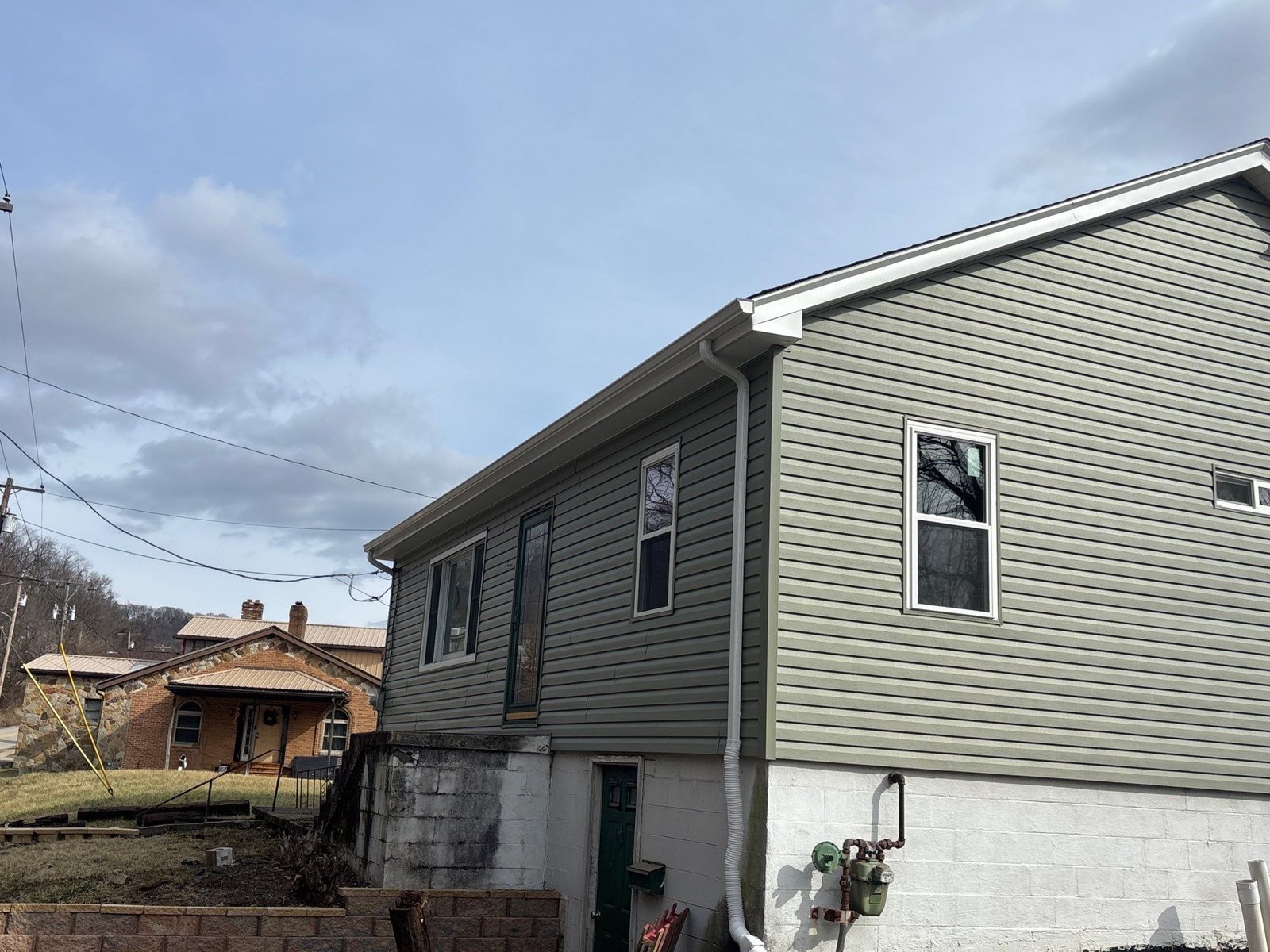
The side of a house finished in new green vinyl siding, with the windows trimmed in. Alan Construction job, Monongahela.
There’s also a scope difference. Stock sizes rarely match century old hand built openings, so the gap gets filled with foam and trim rather than a properly sized unit. That works fine on a newer tract home. On a 1915 foursquare with settled framing, it’s how you end up with a window that binds after two winters. Not every big box job goes wrong, but the price is low because something was removed from the equation, and it’s worth knowing what.
Is It Worth Replacing 20 Year Old Windows?
Sometimes, but not automatically. A vinyl window from the mid 2000s likely already has double pane sealed glass, which means you’ve captured most of the available energy savings. If the seals are intact, the balances work and there’s no fogging between the panes, replacement is a comfort and appearance decision more than an efficiency one.
Replace them when you see failed seals, condensation inside the glass, sashes that won’t stay up, warped vinyl or hardware that’s no longer made. Those are functional failures, not cosmetic ones. Meanwhile, a century old single pane sash behind a storm window is a much stronger candidate. The ENERGY STAR guidance on residential windows is a useful neutral reference for comparing performance ratings before you shop. Our guide to drafty window repair or replacement walks through the warning signs one by one.
How to Decide in Five Minutes
Open the window. Does the sash move smoothly, or does it stick and drop? Press a screwdriver tip into the sill at the corners and along the bottom edge. If it sinks in, that’s rot, and you’re looking at full frame.
Then check the opening with a level and look for daylight or gaps at the corners.
Finally, look at your interior trim. If it’s original, unpainted or otherwise irreplaceable, that pushes toward an insert. If it’s already been replaced with modern stock, full frame costs you nothing sentimental.
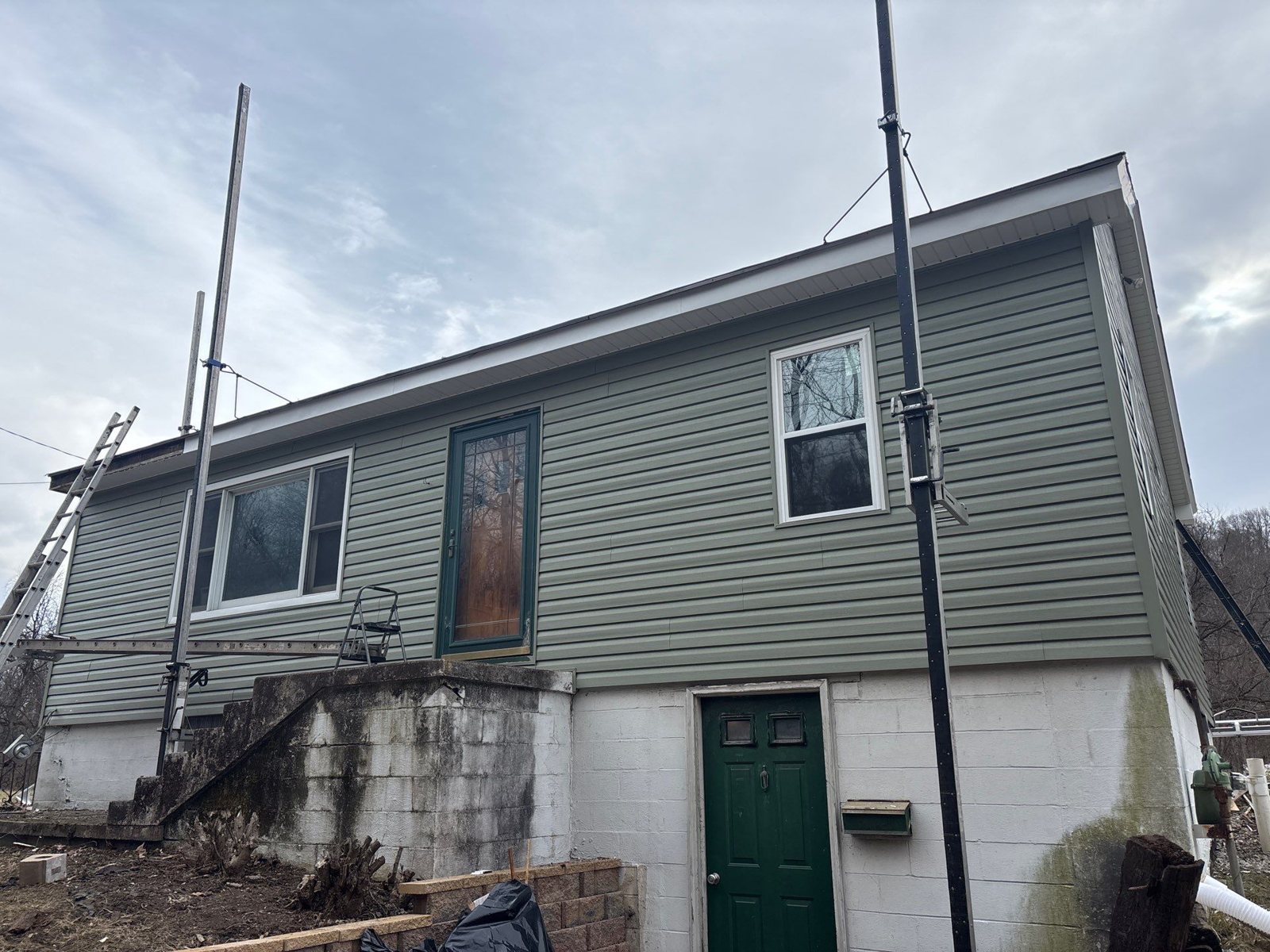
Green vinyl siding above a block foundation, with staging poles still up. Alan Construction job, Monongahela.
What to Expect During the Project
Most homeowners are surprised by how quickly the install itself moves once the windows arrive, and inserts generally go faster per opening than full frame work. The bigger wait is usually manufacturing, since replacement windows are built to order. We cover the full sequence in how long it takes to replace a window.
Plan for interior access, moved furniture and some dust regardless of method. Full frame projects also need dry weather, since openings sit exposed while flashing goes in. Before you sign, run through our questions to ask a window contractor so you know exactly which method is being quoted.
The honest summary: neither method is universally better. Insert wins on cost and speed when the bones are good. Full frame wins on durability and water management when they aren’t. A contractor who recommends one before inspecting your sills is selling a product, not solving a problem.
Not sure whether your frames can take an insert? Request a free, no obligation estimate and we’ll check every sill and opening before recommending a method.