Should you hang gutters yourself? On a low, simple roofline, with a steady ladder, a helper and a free weekend, yes, you can. On a two story house with valleys, a steep pitch or tired fascia boards, we would hire it out, because the labor you save disappears the moment water starts landing against your foundation.
So it is not a flat no. It is a “depends,” and the details matter more than most DIY guides admit. Alan Construction has been serving Pittsburgh since 2003, and we handle gutter installation in Pittsburgh along with the roofing, soffit and fascia work that sits right behind every gutter. Here is the straight answer we give homeowners who ask this question with a tape measure already in hand.
Short answer: a single story run on a garage or porch is a fair DIY job. Tall, steep or complicated rooflines, seamless systems and rotted fascia are jobs for a crew.
Can You Hang Gutters Yourself? Our Honest Answer
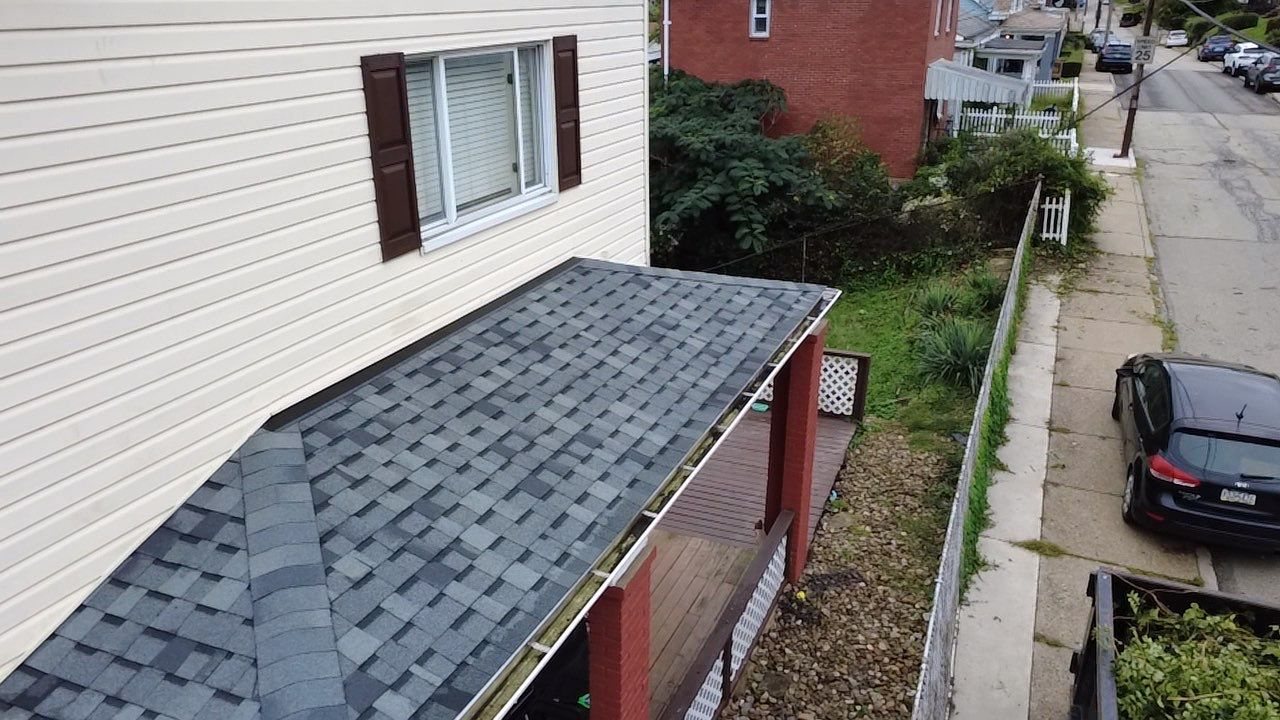
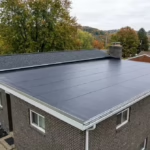
If you have a single story ranch, a detached garage or a low porch roof like this one, you can do this. Handy homeowners hang clean, working runs on short, low edges all the time. The work itself is not mysterious: you measure, you slope, you hang, you seal.
The trouble starts when the roofline climbs. Two stories, multiple valleys, a steep pitch and shaky ladder footing turn a satisfying Saturday into a real hazard. Match the job to your comfort level, not to the savings.
New gray shingles on a low porch roof, with the gutter running along its edge, Pittsburgh. Alan Construction.
Is It Worth It to Install Your Own Gutters?
On paper, doing it yourself is tempting. You skip the labor, and sectional aluminum or vinyl gutters are easy to find at any big box store. For a short, low run, that math can work.
Here is what the shelf tag hides:
- Seams. Sectional gutters come in ten foot pieces, which means joints, and joints are where leaks start.
- Pitch. Bad slope pools water, and standing water rots fascia and pulls hangers loose.
- Do overs. Fixing a botched DIY run, plus the fascia it soaked, often costs more than having it done right the first time.
- Your time. A long weekend on a ladder is a real cost, even if nobody writes it on an invoice.
If you want to know what actually drives the cost of a professional job on your house, a free estimate will tell you more than any national average.
Can a Beginner Install Gutters?
A true beginner can, on the right house. We would never send someone new up two stories, but a low, simple roofline is fair game with the right prep. The core skills are learnable in an afternoon: you read a level, you drive screws into solid wood, and you seal a joint cleanly.
What separates a beginner from a disaster is patience and a second set of hands. You need someone holding the far end while you fasten. You need to dry fit the whole run before you commit a single screw. And you have to accept that “close enough” on slope is not close enough, because your eyes will lie to you about level every time.
Should You Install Gutters Yourself or Hire a Pro?
A quick side by side usually makes the decision obvious. Here is how we lay it out for homeowners on the fence.
| Your situation | Lean DIY | Lean pro |
|---|---|---|
| Roofline | Single story, simple | Two story, multiple valleys |
| System type | Sectional, short runs | Seamless, custom lengths |
| Tools on hand | Ladder, drill, level | You would need a gutter machine |
| Help available | A reliable second person | Working alone |
| Fascia condition | Solid, painted wood | Soft, stained or rotted |
| Comfort at height | Steady on the ladder | Nervous past the third rung |
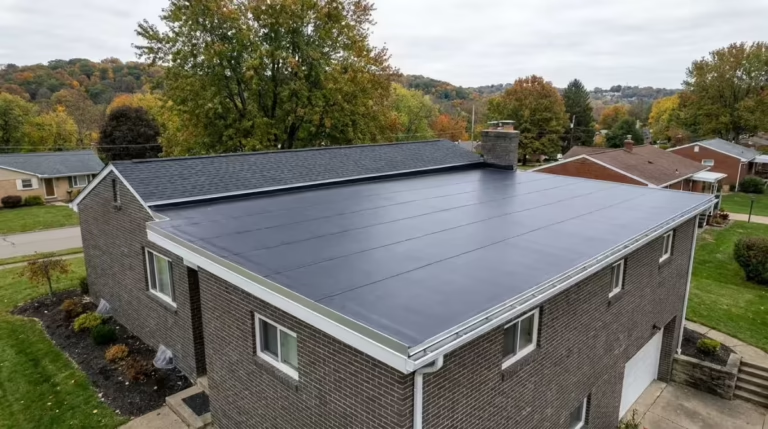
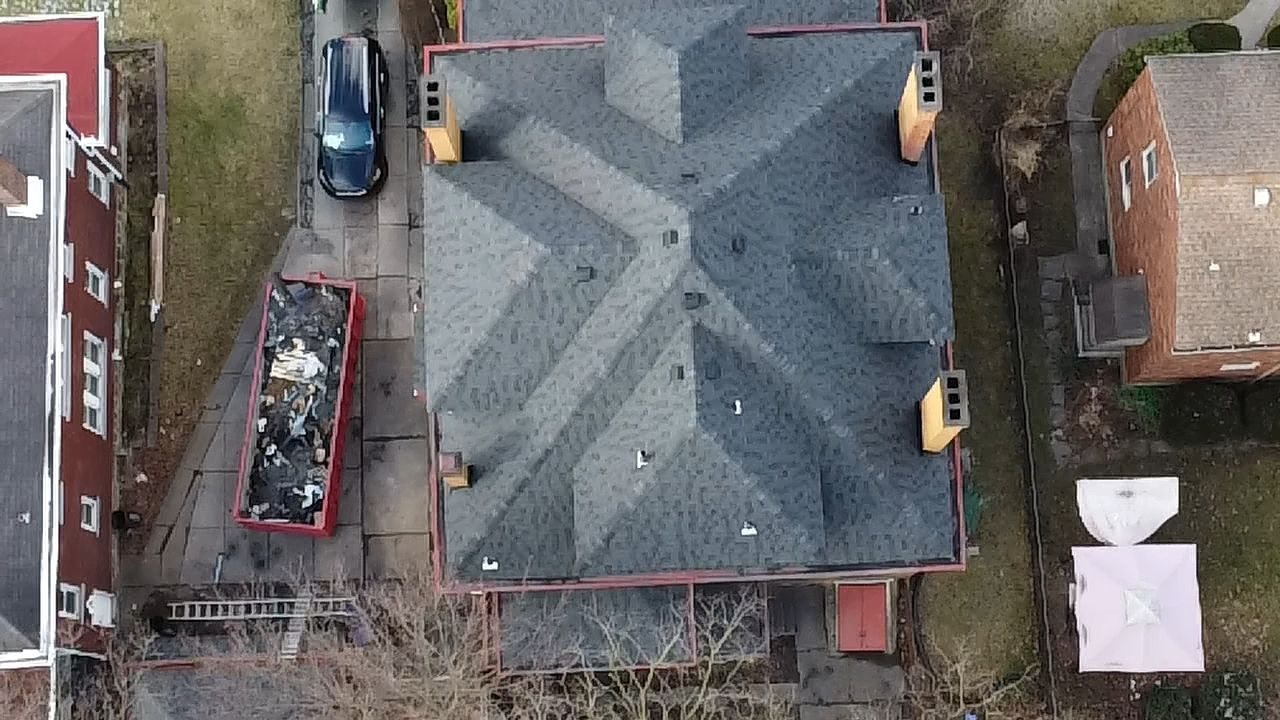
Notice how the right column keeps circling back to seams, height and wood. A hip roof like this one ends at an eave on every side, so it needs gutters all the way around, with corners to miter and several downspouts to place.
Pros form seamless runs on site to the exact length of each eave, so there are no ten foot joints to fail down the road. That one feature is why most homeowners with anything beyond a basic roofline come out ahead hiring the job out.
Aerial view of a new gray hip roof in Pittsburgh, with eaves on all four sides. Alan Construction.
What Do Roofers Say About Gutter Guards?
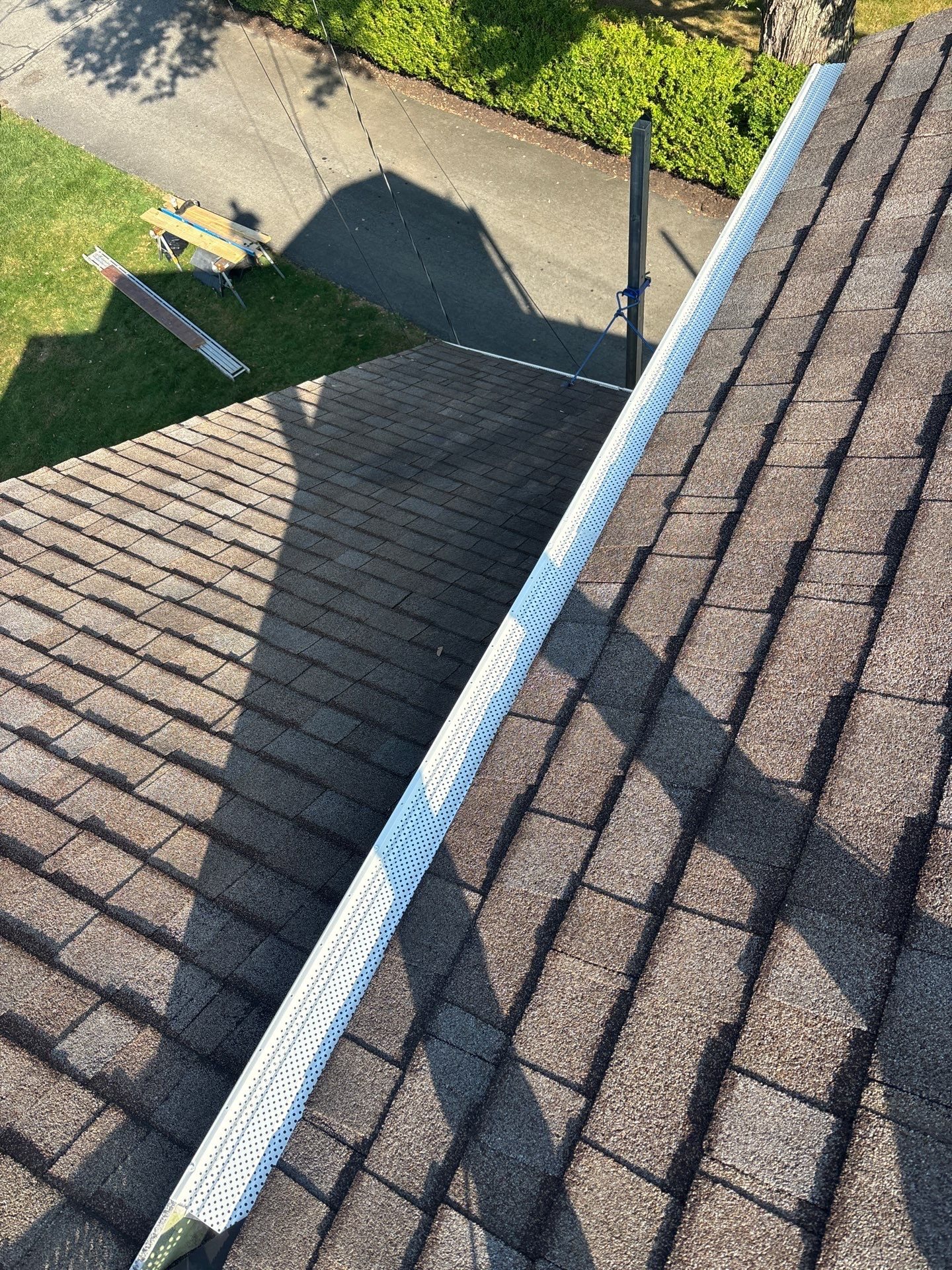
This question rides along with almost every gutter project, so here is the plain answer. Most roofers, us included, see guards as helpful but not magic. A good guard cuts down on cleaning, keeps leaves and seed pods out of the trough, and discourages birds from nesting in your runs.
Around Pittsburgh, where mature oaks and maples drop a heavy load every fall, that is real value. We cover the leaf season in more detail in our post on how gutter guards help during fall leaf season.
New white gutter with a guard running along a shingle roof edge in Carnegie. Alan Construction.
The caveats are just as real. A guard has to fit the gutter and the roof edge exactly, and some styles tuck under the first course of shingles, which needs care so the roof is not damaged. Micro mesh still needs an occasional brush off, and heavy ice can overwhelm any system in a hard winter. Guards plus a yearly look beat guards alone, and neither one replaces gutters that were hung correctly from the start.
The Mistakes We See Most Often on DIY Jobs
If you are still set on doing this, good. We respect it. Here are the few things that separate a run that lasts from the ones we get called out to fix.
Plan your slope before you cut
Gutters must fall toward the downspout, roughly a quarter to half an inch for every ten feet of run. Snap a chalk line first, then trust the line, not your eye.
Seal every single seam
Running ten foot sectional pieces? Overlap them by a few inches in the direction the water flows, and lock them with quality gutter sealant and rivets or screws. One sloppy joint will drip quietly for years.
Anchor hangers into solid wood
Fasten your hangers into the fascia board about every 24 inches, never into soft or rotten trim. Loose hangers sag, and sagging gutters pool water. Plan a downspout for every 30 feet or so of run so the water always has somewhere to go. If your gutters are already drifting, our guide on how to tell if your gutters are pulling away from the roofline walks through the warning signs.
Why Pittsburgh Homes Are Their Own Animal
Our housing stock is old, and our weather is hard on it. Freeze and thaw cycles, ice at the eaves and decades old fascia boards mean a job that would be routine on a newer house can hide surprises here.
The gutter is only as strong as the wood behind it. When we pull old gutters, we often find fascia that needs replacing before anything new can hang on it. That is why we look at the gutters, soffit and fascia together.
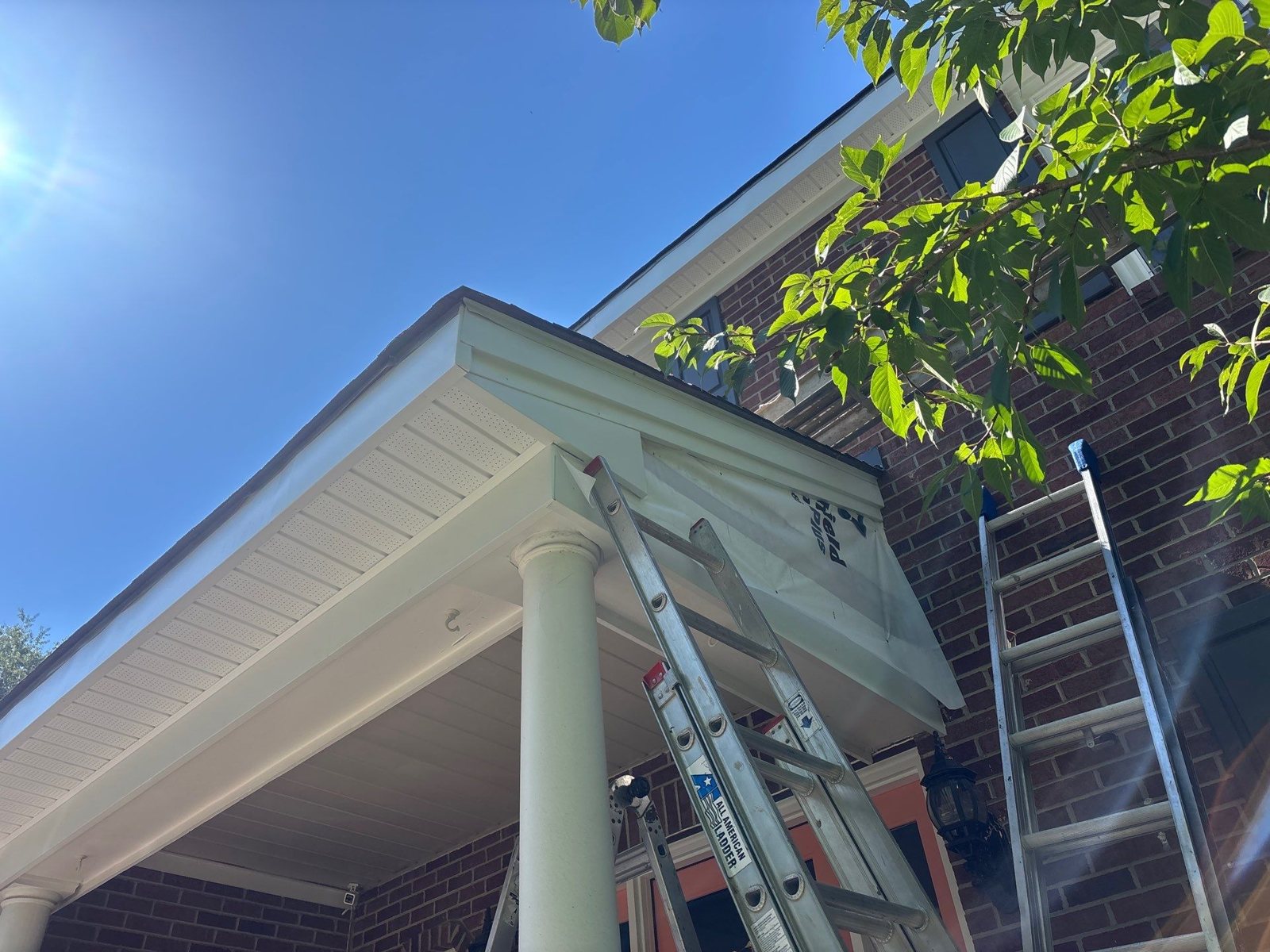
New white soffit and porch trim on a brick home in Pittsburgh, ladders still up. Alan Construction.
If you are not sure whether your current gutters are already doing damage, take a slow walk around the house after a storm. Our post on how to tell if your gutters are causing water damage shows exactly where to look.
Our Final Take on DIY Gutters
Here is where we land after years of this work. If the house is low and simple, the day is clear and you have a helper, go for it and enjoy the satisfaction. If the roofline is tall or complicated, hire it out and sleep easy. There is no shame in either call.
What we do not want is for you to learn the slope rule with water in the crawl space. Measure twice, respect the ladder, and when the job grows bigger than your weekend, that is exactly what our crews are here for.
Not sure whether your roofline is a weekend project or a crew job? Ask Alan Construction for a free, no obligation estimate and we will look at your gutters, fascia and roof edge together.