Gutter guards help Highland Park homes during fall leaf season by blocking oak, maple, and sycamore debris before it settles into the trough, so water keeps moving toward the downspouts instead of spilling over the fascia. The result is fewer clogs, less overflow against the foundation, and far fewer ladder trips during the busiest six weeks of the year.
That’s the short version. The longer version is more interesting, because Highland Park is not an average neighborhood when it comes to falling leaves. It has one of the densest mature tree canopies in the city, paired with housing stock old enough to remember the Model T. Those two facts change the math on gutter protection.
Why Highland Park’s Tree Canopy Is Harder on Gutters Than You Think
Walk down Sheridan, Bryant, or North Highland in late October and look up. You’re standing under oaks and maples that have been growing since before most of these homes were built, and their canopies extend well past the property lines. Leaves don’t just fall on your roof. They land, dry out, blow into the valleys, and funnel straight into the gutter line.
Then there’s the timing. Sycamores and ash drop early, maples go next, and pin oaks hang on stubbornly into late November. So a homeowner who cleans once in mid-October is often looking at a full gutter again by Thanksgiving. I’ve seen plenty of houses where a single careful cleaning was simply not enough.
Add the housing stock. Many Highland Park homes are 1900s-to-1930s builds with steep roof pitches, deep overhangs, wood fascia, and original half-round or narrow K-style gutters. Steep pitches move water fast, which means a partially clogged gutter overflows sooner rather than later. Wood fascia and soffits don’t forgive repeated saturation.
How Gutter Guards Help Highland Park Homes During Fall Leaf Season
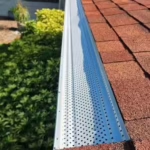
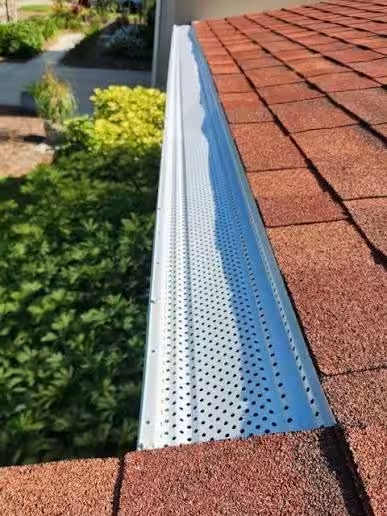
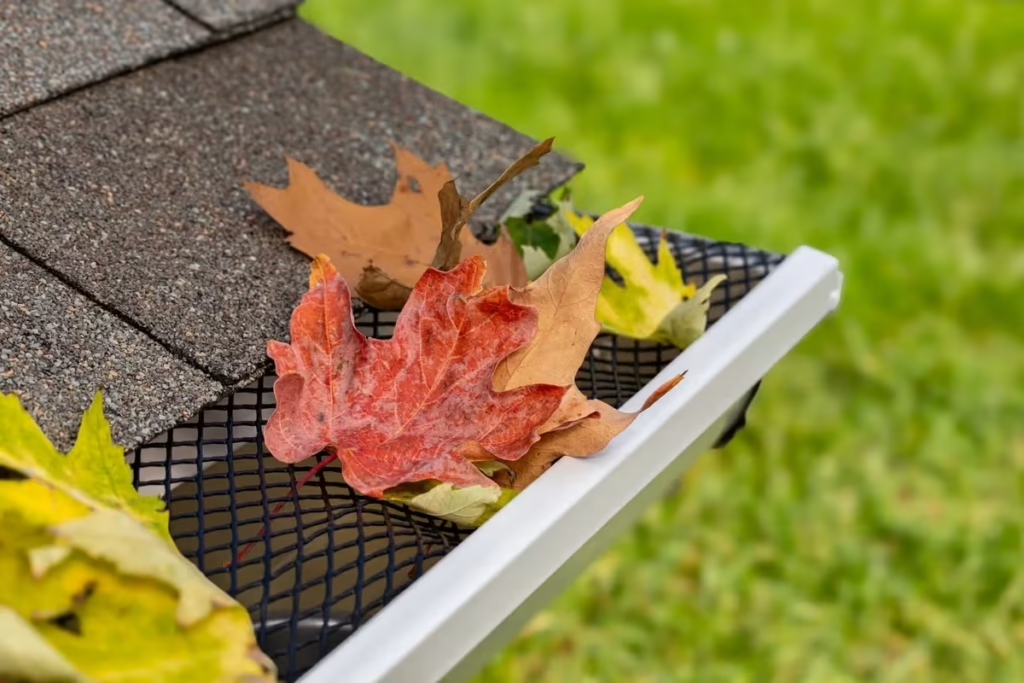
The mechanism is simple. A guard covers the open top of the gutter so water can pass through while leaves stay on the surface, dry out, and blow off. Instead of a trough packed with wet organic sludge, you get a channel that stays open through a heavy October rain.
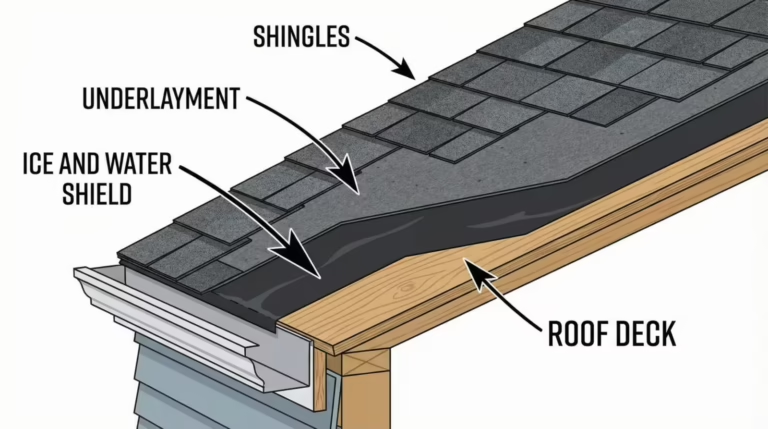
That matters more here than in a newer suburb. When a clogged gutter overflows on an older home, the water runs down behind the gutter, soaks the fascia board, and finds the soffit. Repairing rotted trim on a three-story Victorian is not a cheap afternoon. Preventing the saturation in the first place is dramatically less expensive than fixing what it causes.
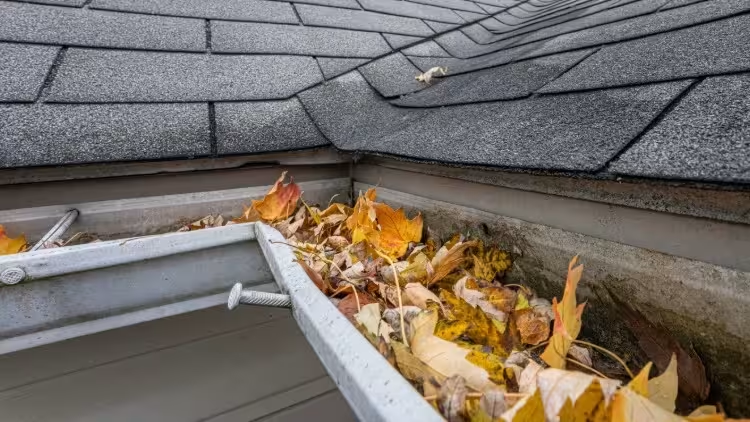
There’s a winter payoff too. A gutter full of packed leaves holds water, that water freezes, and you get ice buildup at the eave line. Quality gutter guards Highland Park homeowners install in September or early October reduce that standing water, which reduces the freeze-thaw cycle that pulls hangers loose and stresses the roof edge.
The Main Types of Guards, Compared
Not all guards behave the same way under a hardwood canopy. Here’s how the common systems stack up.
| Guard Type | How It Handles Leaves | Fit for Highland Park | Watch Out For |
|---|---|---|---|
| Micro-mesh (stainless) | Blocks leaves, seeds, and shingle grit | Strongest option under mature hardwoods | Higher cost; needs a surface rinse |
| Perforated aluminum screen | Stops whole leaves, lets fine debris pass | Good mid-range choice | Maple seeds and grit can slip through |
| Reverse curve / hood | Water wraps in, debris slides off | Works when pitch and install are right | Very install-sensitive; more visible |
| Foam insert | Sits in trough, filters debris | Rarely a good long-term pick | Traps seeds, degrades, grows algae |
| Brush insert | Debris rests on bristles | Budget stopgap only | Leaves mat on top; frequent removal |
If your home sits directly under pin oaks or silver maples, the fine-mesh systems are usually worth the premium. Broad-hole screens hand you a slower version of the same clog.
What Is the Downside to Gutter Guards?
Cost is the honest first answer. A quality professionally installed system is a real investment, and cheap plastic snap-in guards from a big-box store often crack under UV exposure within a few seasons. You’re not saving money if you replace them twice.
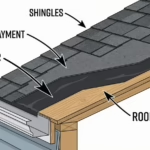
Second, guards can fail when installed poorly. Some systems require sliding a panel under the first course of shingles, which can affect a roof warranty if it’s done incorrectly. Others sag or detach under wet snow load if the hangers underneath were already tired. The guard is only as good as the gutter it sits on.
Third, no guard eliminates maintenance. Fine debris still collects on top of mesh, valleys still concentrate a heavy volume of leaves in one spot, and downspouts still need to be checked. A guard reduces the work. It does not delete it.
Do Roofers Recommend Gutter Guards?
Most do, with conditions. The recommendation usually depends on tree exposure, roof pitch, and the condition of the existing gutters, and industry testing consistently shows that a well-matched system reduces clogs while a poorly matched one just moves the problem to the surface. This independent guide from This Old House walks through the testing and cost tradeoffs in useful detail.
Where roofers push back is on homes that don’t need them. A ranch with no overhanging trees and clean sightlines may do fine with two cleanings a year. Highland Park is generally the opposite case. Heavy canopy, tall homes, and hard-to-reach roof sections make the ladder work risky enough that guards start paying for themselves quickly.
Most contractors will also insist on fixing the gutter before adding protection. Sagging sections, loose spikes, undersized downspouts, and improper pitch all need correcting first. Installing a guard over a failing gutter is like putting a lid on a cracked bucket.
Do You Still Have to Clean Gutters if You Have Gutter Guards?
Yes, but far less often. Most homeowners go from three or four cleanings a year to one, and sometimes to a quick inspection instead. The nature of the work changes too. Rather than scooping wet muck out of a trough, you’re brushing dried debris off a surface and confirming that water still runs freely.
Focus on three places. Check the roof valleys, where leaf volume concentrates. Check the downspout openings, where seeds and grit collect. And check the guard surface itself after the last oak leaves drop, usually mid-to-late November in this part of the city.
If you want a season-by-season checklist tailored to Pittsburgh neighborhoods, this walkthrough on Pittsburgh Gutter Cleaning: Seasonal & Neighborhood Tips is a practical companion to this article.
What Are the Pros and Cons of Leaf Guards?
Here’s the balanced view, without the sales pitch.
Pros
- Fewer clogs and dramatically less overflow during heavy fall rain
- Reduced ladder work, which matters a lot on two- and three-story homes
- Less standing water, which means less ice buildup at the eave
- Discourages birds, squirrels, and wasps from nesting in the trough
- Extends the working life of the gutter by reducing weight and corrosion
Cons
- Meaningful upfront cost, especially for stainless micro-mesh
- Poor installation can void a roof warranty or cause sagging
- Fine grit and seeds still require occasional surface cleaning
- Low-end plastic and foam options fail fast under sun and freeze cycles
- Some styles are visible from the ground and change the roofline look
For a home under mature hardwoods, the pros usually win. For a home with an open lot and short gutter runs, the case is weaker.
A Fall Timeline That Actually Works Here
Late September is when I’d start. Inspect the gutters, check the pitch, and confirm the downspouts drain away from the foundation, not into it. If you’re installing guards, this is the window, because you want them on before the first real drop.
Mid-October is your first clear. Even with guards, get eyes on the valleys and downspout openings after the maples let go. Late November is the second check, once the oaks finally give up. Building fall gutter maintenance around those three touchpoints keeps you ahead of the freeze instead of chasing it.
Getting the Install Right the First Time
The guard gets the attention, but the gutter underneath does the work. Proper pitch, hangers spaced tightly enough to carry snow load, correctly sized downspouts, and sealed seams matter more than the brand name on the mesh. On older Highland Park homes with fascia that’s already been repaired once or twice, a competent installer checks the wood before hanging anything on it.
If you’re weighing options, get an evaluation that looks at your specific tree exposure and roof geometry rather than a flat quote per linear foot. Professional gutter installation Pittsburgh homeowners rely on should start with a diagnosis, not a product recommendation. That’s the difference between a system that lasts twenty years and one you’re arguing about next October.