Yes, new windows can reduce traffic noise in Pittsburgh’s East End, though no window is truly soundproof. Soundproof windows, more accurately called noise reducing windows, use laminated or mixed thickness glass and airtight installation to take the sharp edge off road noise. The improvement depends on the glass, the frame, the quality of the seal and how close your home sits to traffic.
That’s the short version. The longer version matters more, because the difference between a window that dulls a bus and a window that just looks nice comes down to a few specific choices and one honest conversation with your contractor. Below, we walk through what actually blocks sound, what the ratings mean, and what a realistic result feels like in a Shadyside brick foursquare or a Bloomfield rowhouse. For how we handle the install itself, see our page on window replacement in Pittsburgh.
Short answer: going from old single pane or failed double pane windows to laminated glass in a tightly sealed frame makes a clear, noticeable difference. It quiets traffic; it does not erase it.
Why East End Traffic Sounds Louder Inside Than You’d Expect
The East End has a specific acoustic personality. Penn Avenue, Baum Boulevard, Fifth, Forbes, Highland and Washington Boulevard carry steady traffic past homes that sit close to the curb. Add PRT buses, delivery trucks and the Parkway East humming in the background, and you get low frequency sound that travels well and doesn’t stop at bedtime.
Then there’s the housing stock. Many of these homes are a century old, with original wood sash windows, weight pockets in the frames, and decades of paint and settling. Narrow lots and hard surfaces like brick, pavement and retaining walls bounce sound rather than absorb it. A wall might block noise reasonably well, but the window is the thin spot in an otherwise thick envelope.
Can Windows Reduce Noise?
They can, and they’re usually the highest leverage thing you can change. Sound behaves a lot like water: it finds the weakest opening and pours through. A small gap around an old sash can undo the performance of every other surface in the room.
Blocking sound comes down to three things: mass, separation and airtightness. Heavier glass resists vibration. Air space between panes interrupts the transfer. Tight seals stop sound from sneaking past entirely. Miss the third one, and expensive glass underperforms ordinary glass that was installed properly.
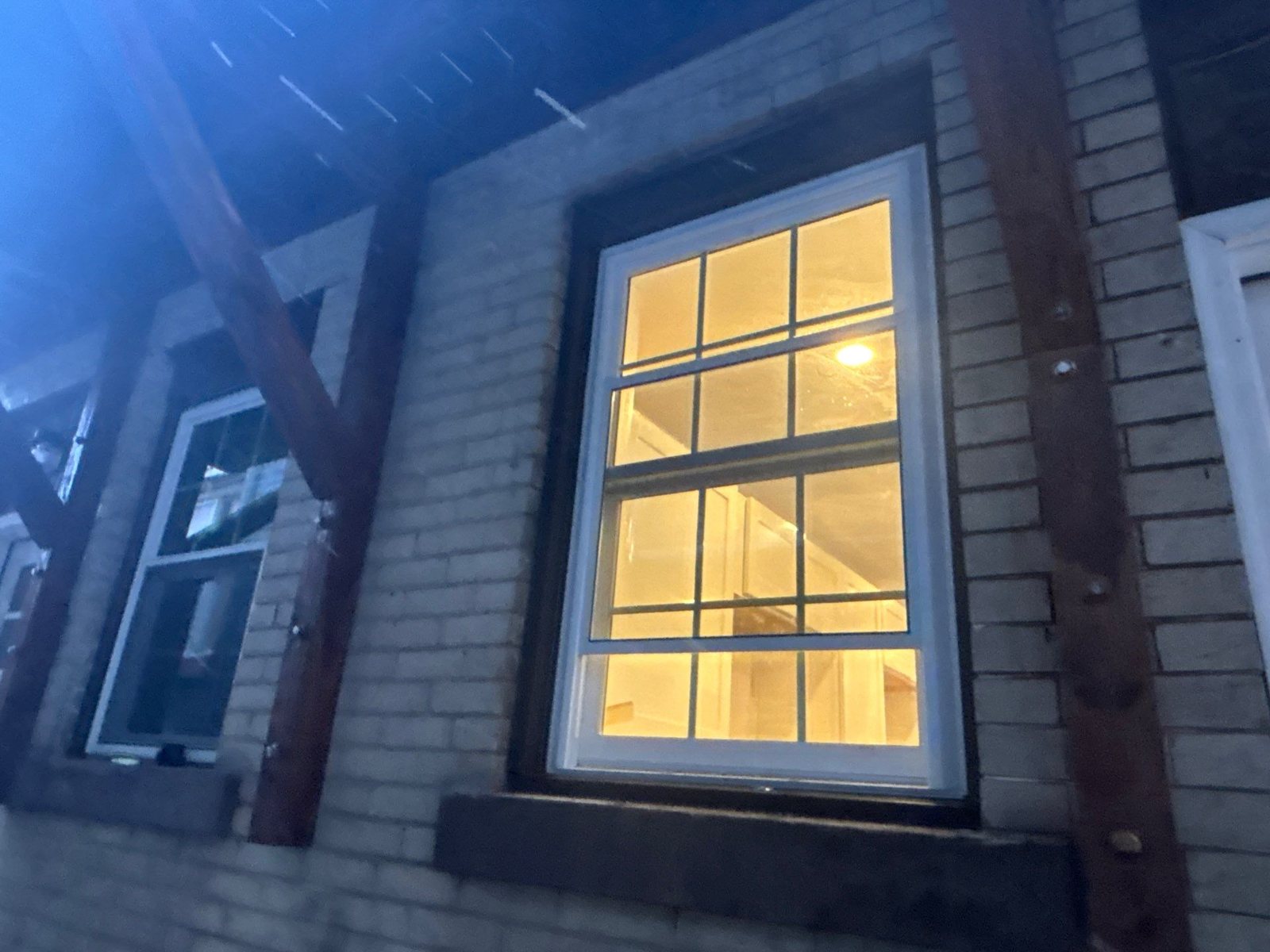
New windows with grids lit from inside a brick facade at night. Alan Construction job, Pittsburgh.
Traffic noise is treated as a genuine livability issue at the federal level. The Federal Highway Administration’s highway traffic noise program exists because road noise interferes with how people live in their homes. If your street feels loud, you’re not imagining it.
What Makes Soundproof Windows Quiet
Glass thickness and lamination
Laminated glass, two layers bonded with a plastic interlayer, is the workhorse of sound control. That interlayer absorbs vibration instead of passing it along. Pairing panes of different thicknesses helps too, because mismatched glass disrupts different frequencies rather than resonating together at one.
Air space and frame material
Wider air gaps between panes generally do better than narrow ones. Frame material matters more than people assume: vinyl and wood dampen sound better than aluminum, which tends to carry vibration. Triple pane sounds like the obvious answer, but for pure noise control, a double pane unit with laminated glass often beats it.
The seal around the opening
This is the unglamorous part, and it’s where projects succeed or fail. Low expansion foam, backer rod, sealant and proper flashing around the rough opening keep sound from bypassing the glass entirely.
Lab ratings assume a perfect installation. Your house is not a lab, which is why the same window can perform very differently in two homes.
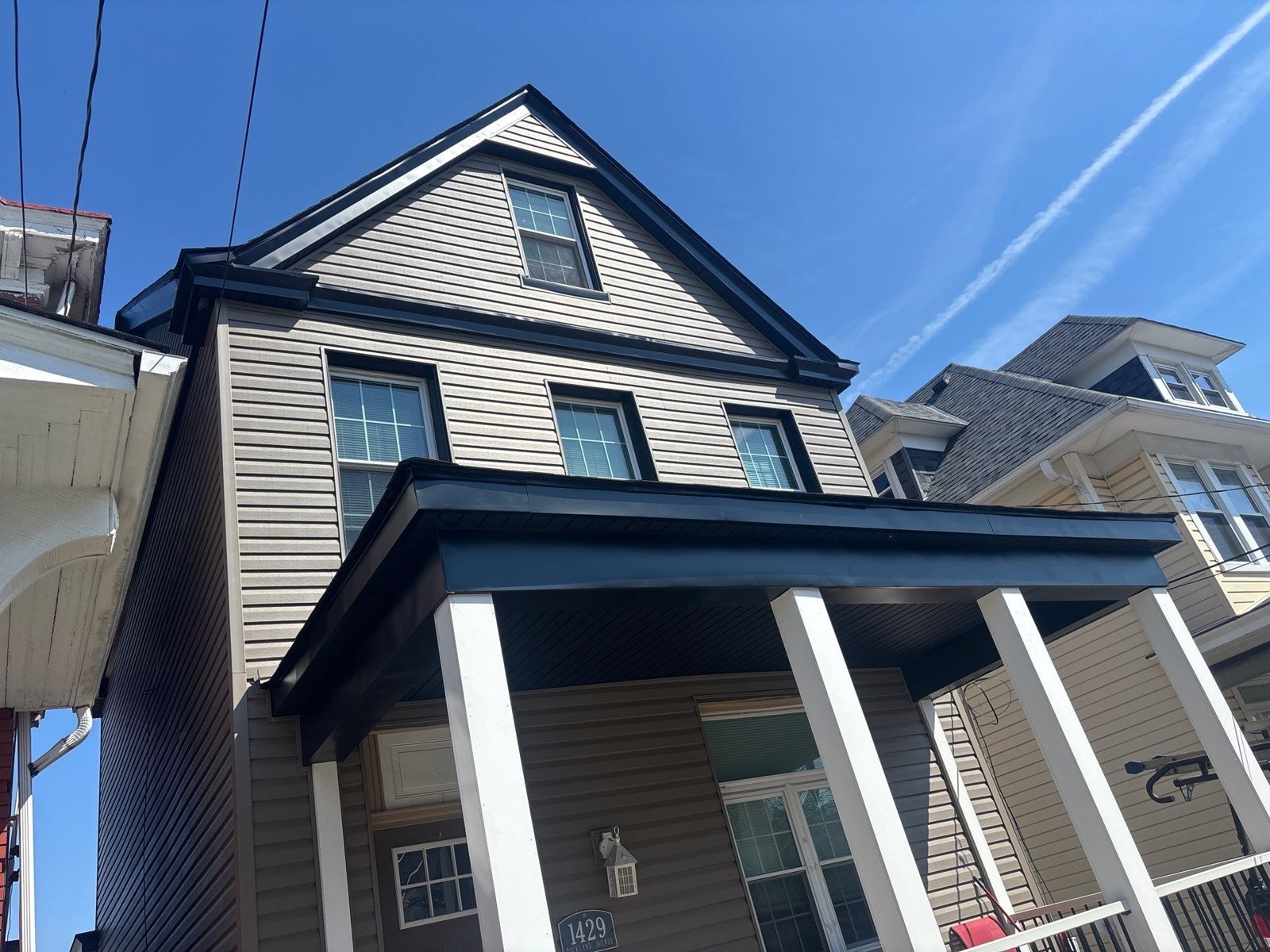
Tan vinyl siding with black trim around the windows on a porch front house. Alan Construction job, Pittsburgh.
Understanding the ratings
| Rating | What it measures | Why it matters here |
|---|---|---|
| STC (Sound Transmission Class) | How well the window blocks speech range sound | Voices, sirens, higher pitched noise |
| OITC (Outdoor Indoor Transmission Class) | How well it blocks low frequency outdoor sound | Trucks, buses and engine rumble |
| Tested assembly rating | The whole window unit, not just the glass | Closer to what you’ll actually hear |
For both ratings, a higher number means a quieter window. STC leans toward speech range sound. OITC measures the deeper rumble of trucks and traffic, which is what most East End homeowners are actually fighting. Ask for both numbers. If a salesperson can only produce one, that tells you something.
How Much Quieter Will It Get?
If you’re living with original single pane windows and storm units, expect a clear improvement. Moving to a laminated double pane package is one of the biggest jumps you can make. Sound is measured on a logarithmic scale, and a drop of about 10 decibels is generally heard as roughly half as loud.
If you already have decent double pane windows from the early 2000s, the gain is smaller but still real, especially if the seals have failed. A well executed window project on a Penn Avenue facing bedroom won’t deliver silence. It will deliver sleep.
Will Replacing Windows Reduce Noise?
Yes, but let’s define the win. You’re not chasing a recording studio. You’re chasing the moment when a passing bus registers as a low presence instead of an event that pulls you out of a conversation.
Most homeowners describe the change the same way: the sharp edges disappear first. Sirens soften. Motorcycle whine flattens out. Truck rumble is the last thing to go, because low frequencies are stubborn and require mass. Set that expectation up front and you’ll be happy with the result.
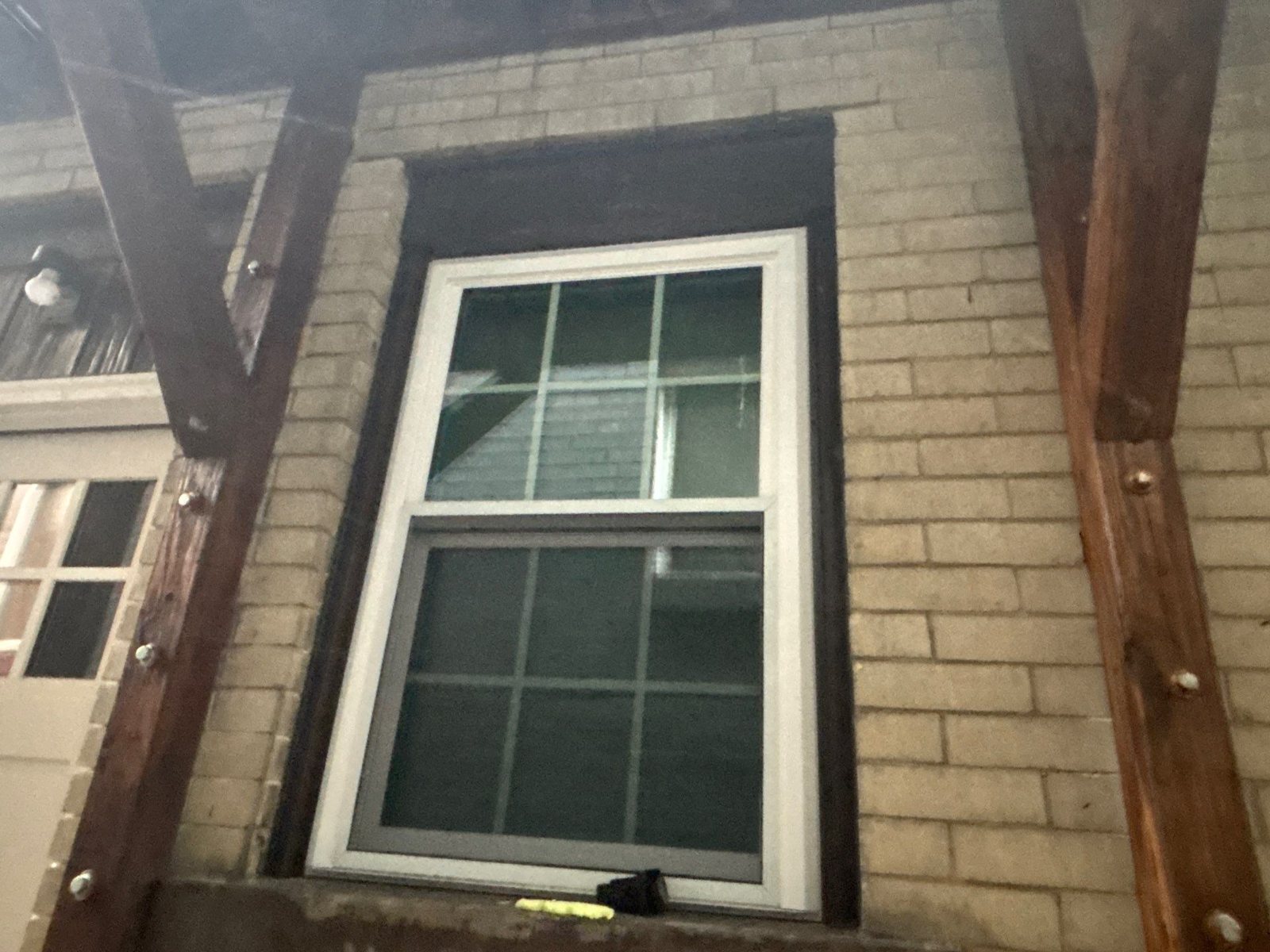
A new white double hung window with grids set in a light brick wall under a porch. Alan Construction job, Pittsburgh.
How to Reduce Traffic Noise Coming Through Your Windows
Not every fix is a replacement. Here’s a practical order of operations:
- Find the leaks. Weatherstripping, acoustic caulk and sealing gaps around trim often deliver the first noticeable improvement. Our guide to drafty window repair or replacement shows how to find them, and the gaps that let in cold air also let in noise.
- Soften the room. Heavy, lined curtains or cellular shades won’t stop trucks, but they take the edge off reflected sound inside the room.
- Add an interior storm insert. It creates a second air barrier and can be a strong middle option for historic homes where you want to keep the original sash.
- Rearrange what you can. Moving a bed away from a street facing wall, adding a bookcase along that wall, or laying down a thick rug all reduce how much sound the room amplifies.
When these measures stop being enough, noise reducing windows are the permanent answer rather than another workaround.
What Drives the Cost of Noise Reducing Windows
Acoustic upgrades like laminated glass, mismatched panes and wider air gaps add to the cost of a standard replacement window, and the size and style of each opening moves the number too.
Many homeowners take a smarter path: put the acoustic upgrade only on street facing bedrooms and living rooms, and choose standard energy efficient windows for the quiet rear of the house.
That single decision keeps the budget in check without costing you comfort where it counts. Your free estimate should price both options side by side.
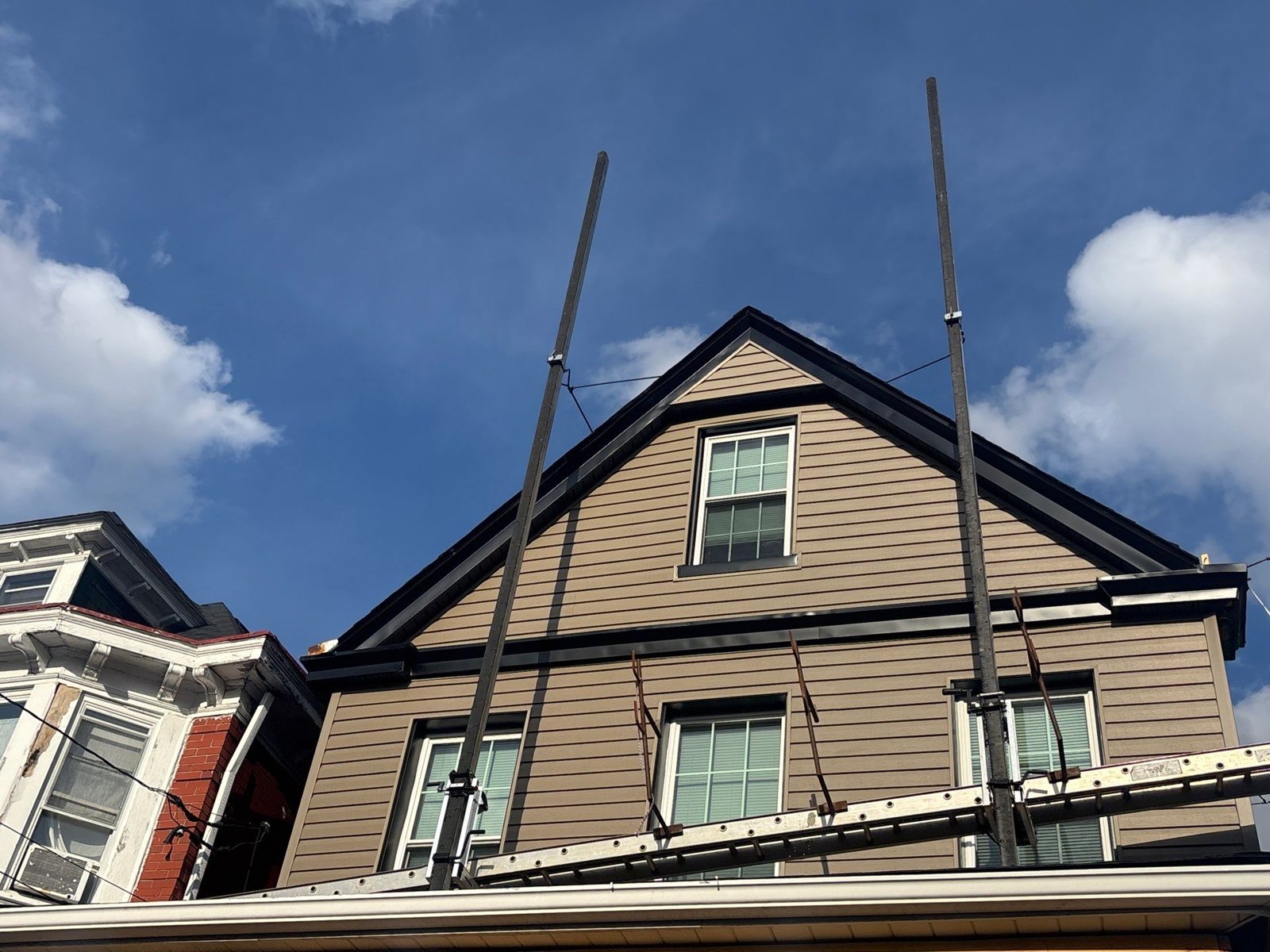
A gable end with new tan siding and black trim around the windows, with staging poles in front. Alan Construction job, Pittsburgh.
Choosing a Contractor Who Won’t Waste Your Money
Ask for tested assembly ratings, not glass only numbers. Glass tested in isolation can look great and then underperform once it’s mounted in a mediocre frame with a sloppy seal. Ask how they’ll seal the rough opening, and ask what happens if they find rot behind the trim, because in a 1915 home, they might.
Before you sign anything, read our list of questions to ask a window contractor in Pittsburgh. It covers the specifics worth raising during an estimate, and it’ll help you tell a thorough installer from a fast one. In acoustic work, the installer matters as much as the product.
New windows are one of the few home improvements that pay you back twice: quieter rooms and better comfort from the same project. Be specific about which rooms bother you most. Be realistic that a bus will still be a bus, just a quieter one. And spend your budget where the noise actually is.
Tired of hearing every bus on your street? Request a free, no obligation estimate and we’ll look at your street facing rooms and price the quieter options side by side.