If you are a homeowner thinking about replacing or upgrading your gutters, the options can feel overwhelming. Different materials, different profiles, wildly different price points. I want to break it all down in a way that actually helps you pick the right system without overpaying or underperforming.
What Is the Best Type of Gutter to Install?
For most homeowners, seamless aluminum gutters in a 5-inch or 6-inch K-style profile are the best overall choice. They resist rust, hold up well across climates, and typically last 20 to 30 years with minimal upkeep. Aluminum is also lightweight, which makes the installation process smoother and less labor-intensive.
That said, the best type of gutter to install depends on your specific situation. Budget, rainfall volume, home style, and even your willingness to maintain the system all play a role. If you want to explore the full range of best gutter materials and professional installation options, it is worth consulting with a local contractor who understands your region’s weather patterns.
Choosing the Best Gutter Materials for Longevity
Not all gutter materials are created equal. Aluminum is the most popular for good reason. It is affordable, corrosion-resistant, and available in dozens of colors to match your home’s exterior. For a standard residential installation, aluminum checks nearly every box.
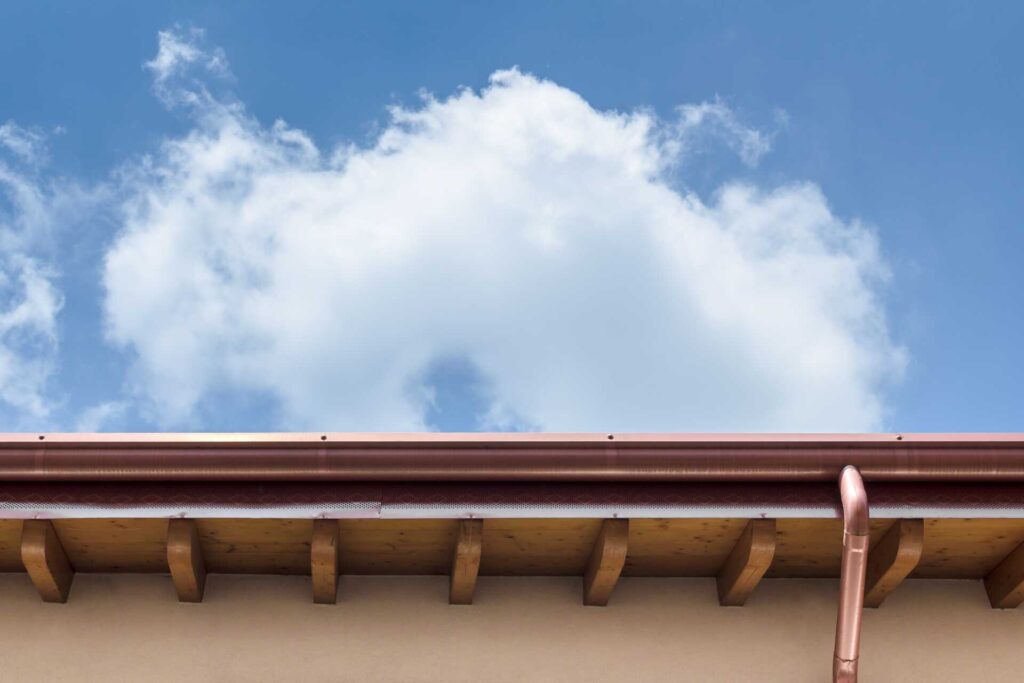
Copper sits at the premium end. It can last 50 years or more and develops a distinctive patina over time. The tradeoff is cost, typically $25 to $50 per linear foot installed. Vinyl is the budget-friendly option, but it cracks in cold climates and generally only lasts 15 to 20 years. Steel offers excellent strength but needs protective coatings to prevent rust.
| Material | Lifespan | Rust Resistance | Best For |
|---|---|---|---|
| Aluminum | 20 – 30 years | Excellent | Most homes, best overall value |
| Copper | 50 – 100 years | Excellent | Historic homes, premium aesthetics |
| Galvanized Steel | 15 – 20 years | Moderate (needs coating) | Heavy weather, storm-prone areas |
| Vinyl | 15 – 20 years | Will not rust | DIY projects, mild climates |
Seamless vs. Sectional Gutters: Which Should You Choose?
This is one of the biggest decisions you will face. Seamless vs. sectional gutters comes down to a balance between upfront cost and long-term performance. Sectional gutters are cheaper and easier to install yourself since they come in pre-cut pieces that connect together. However, every seam is a potential leak point.
Seamless gutters are fabricated on-site from a single continuous piece of metal, custom-cut to your roofline. They have roughly 70 to 80 percent fewer leak points than sectional systems. They cost 30 to 50 percent more upfront, but over a 10-year window, the total cost of ownership tends to even out.
Which Is Better, Seamless Gutters or Regular Gutters?
If your budget allows for professional installation, seamless gutters are the better investment almost every time. They look cleaner on the home, they perform more reliably, and they last longer. The smooth, unbroken profile also means less debris buildup in the channels, which translates to fewer clogs.
Regular sectional gutters still have their place. If you are handy, sectional aluminum can work for a garage or secondary structure. For your primary home, though, I would recommend going seamless.
Aluminum vs. Copper Gutters: Breaking Down the Differences
When comparing aluminum vs. copper gutters, think of it as a question of value versus luxury. Aluminum gives you reliable performance at a reasonable price. It handles rain, snow, and humidity without rusting, and it comes in a wide variety of colors so you can match it to your trim or siding.
Copper is beautiful, no getting around that. It ages gracefully and adds real curb appeal on older or architecturally distinctive homes. But it requires professional installation due to its weight, and the material cost is three to five times higher than aluminum. For most homeowners, aluminum delivers the best return on investment.
Which Is Better, Half-Round or K-Style Gutters?
K-style gutters are the standard on most American homes today, and for good reason. Their flat back mounts flush against the fascia board, they hold more water than half-round profiles of the same width, and their decorative front edge gives them a clean, modern look. They are available in both 5-inch and 6-inch sizes.
Half-round gutters have a classic, curved appearance that works well on older homes and historically designated buildings. Some homeowner associations actually require them. They are slightly less efficient at moving water and cost a bit more to install. If your home has traditional architecture, half-round may be the right fit. For everything else, K-style wins.
Why Gutter Guards Are Worth the Investment

No matter which gutter type or material you choose, I strongly recommend adding gutter guards to your system. They keep leaves, twigs, pine needles, and other debris out of your channels, which means fewer clogs and less time on a ladder. A recent survey found that roughly 71 percent of homeowners who installed gutter guards cleaned their gutters once a year or less afterward.
Gutter guards typically add $7 to $20 per linear foot to your project cost. That is not insignificant, but it pays for itself in reduced maintenance and fewer emergency repairs. If you live in an area with lots of trees, this is not optional. It is essential. For seasonal maintenance tips specific to your area, check out this helpful guide on Pittsburgh Gutter Cleaning: Seasonal & Neighborhood Tips.
How to Choose the Right Gutter Size
Most residential homes do well with standard 5-inch K-style gutters paired with 2×3-inch downspouts. If your roof has a steep pitch or you live in a region with heavy downpours, upgrading to a 6-inch system is smart. A 6-inch gutter handles about 40 percent more water volume than a 5-inch one.
Box-style gutters with 7 or 8-inch widths are typically reserved for commercial buildings. For residential projects, a 5 or 6-inch K-style profile in seamless aluminum gives you the best combination of performance and value.
Final Thoughts on Finding the Best Type of Gutters to Install
Gutters are one of those home improvements that do not get much attention until something goes wrong. A failing system can lead to foundation damage, basement flooding, rotting fascia, and erosion. Investing in the right system now saves you from expensive problems down the road.
For most homes, seamless aluminum K-style gutters in a 5 or 6-inch width deliver the best balance of durability, cost, and curb appeal. Pair them with quality gutter guards and you have a system that will protect your home for decades. If you want to explore your options further or compare best gutter materials for your specific property, connecting with an experienced local installer is the best next step. For a deeper dive into gutter types and materials, This Old House’s gutter guide is an excellent resource worth reading.