Pittsburgh weather has a way of testing every roof in the city. Between freeze-thaw cycles, sideways rain off the rivers, and the occasional summer hailstorm, asphalt shingles around here work harder than they do in most parts of the country. So when something goes wrong overhead, the question becomes whether you patch it or pull the whole thing off. I’ve watched homeowners agonize over this decision, and honestly, it doesn’t have to be that complicated once you understand a few key signals.
This guide walks through what actually matters when deciding between fixing what you have and starting fresh. No fluff, no scare tactics. Just straight talk about what makes sense for a home in Western Pennsylvania.
Why Pittsburgh Roofs Age Differently
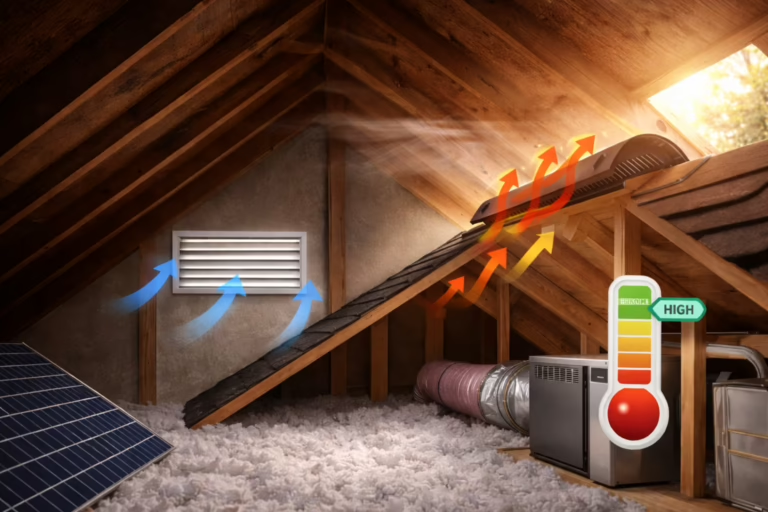
Our climate is rough on roofing materials. Shingles expand in July humidity and contract during January cold snaps, and that constant movement breaks down the asphalt binder over time. Add in ice dams, which form when attic heat melts snow that refreezes at the eaves, and you’ve got a recipe for premature wear.
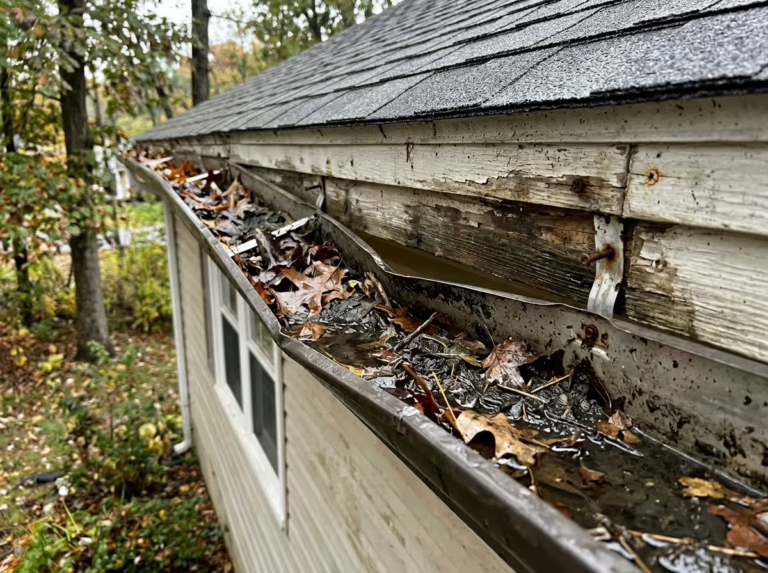
Most asphalt roofs in Allegheny County last around 20 to 25 years. If yours is pushing that range, you’re probably already seeing the signs. Granules in the gutters, curled edges, the occasional shingle in the yard after a storm. These are the small clues that tell a bigger story.
When Repair Makes Sense
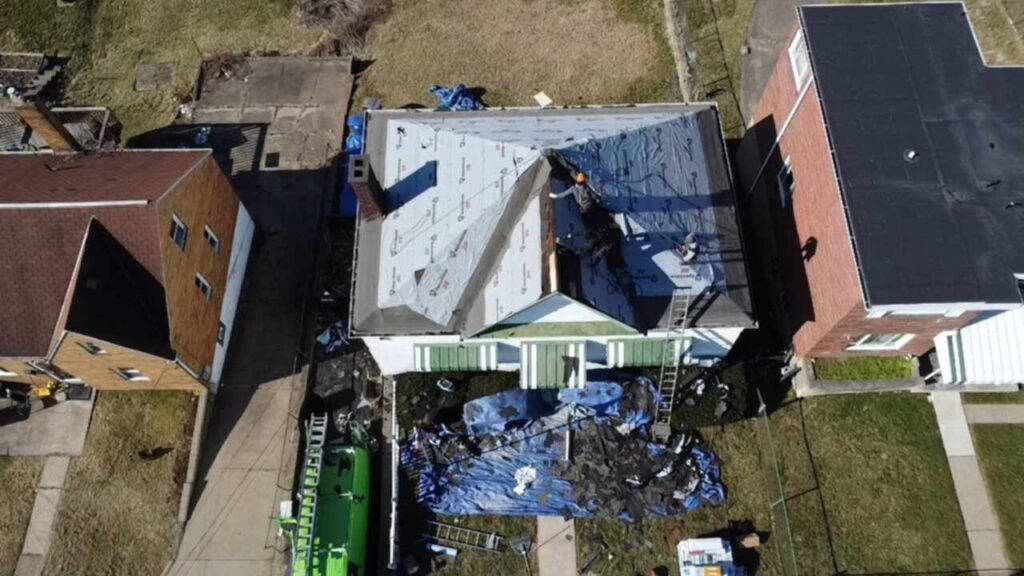
Not every problem calls for a full tear-off. If your roof is under 12 years old and the damage is isolated, repair is almost always the smarter move. A few missing shingles after a windstorm, a piece of bent flashing around the chimney, or a small leak that hasn’t soaked the decking yet are all classic candidates for a quick fix.
The math here is pretty simple. A targeted roof repair Pittsburgh homeowners typically need will run a fraction of what a replacement costs, and it can extend the life of an otherwise solid roof by several years. I’ve seen 8-year-old roofs get patched after a fallen branch and go on performing beautifully for another decade and a half.
The trick is catching damage early. A small leak ignored for one winter can become rotted decking by spring, and that changes the equation entirely. Annual inspections, especially after our wet winters, are the cheapest insurance you’ll ever buy.
What is the 25% Rule in Roofing?
The 25% rule is a guideline contractors use to help homeowners decide between repair and replacement. The idea is straightforward. If the cost of repairs reaches 25% of what a full replacement would cost, you’re better off replacing the roof entirely.
Some experts push this threshold to 30 or 40%, depending on the age of the roof. The logic is that pouring money into an older system rarely pays off. You’re essentially renting time on a roof that’s going to fail anyway, and every patch job becomes a sunk cost.
I lean toward the stricter end of this rule when a roof is over 15 years old. At that point, you’re not really fixing problems. You’re delaying the inevitable, and the delay usually costs more in the long run.
Roof Replacement vs. Repair: When Should You Do Each in Pittsburgh Based on Age?
Age is the single biggest factor in this decision. Here’s a quick reference that captures how I think about it:
| Roof Age | General Recommendation |
|---|---|
| 0-10 years | Repair almost always makes sense |
| 10-15 years | Repair, unless damage is widespread |
| 15-20 years | Evaluate carefully, lean toward replacement |
| 20+ years | Replacement is usually the right call |
Of course, age isn’t the only variable. A 12-year-old roof that survived a major hailstorm might need replacement, while a well-maintained 18-year-old roof could still have life left. But as a starting point, this framework holds up well for most Pittsburgh homes.
When to Repair or Replace a Roof
Beyond age, there are a handful of signals that tip the decision firmly toward replacement. Sagging rooflines are the most serious. That’s structural, and it means water has been working on the decking or rafters for a long time. If you see a dip or wave when you look at the roof from the street, call a Pittsburgh roofing contractor immediately.
Widespread granule loss is another red flag. Asphalt shingles rely on those granules to protect against UV damage, and once they’re gone, the shingle itself starts breaking down quickly. If your gutters look like a sandbox after every rain, the roof is telling you something.
Two layers of shingles also force the issue. Pennsylvania code generally allows a maximum of two layers, and once you’re at that limit, any future work requires a full tear-off. If you’re already at two layers and damage shows up, replacement is the only real option.
Why Timing Matters in Western PA
Fall is the sweet spot for roof replacement Pittsburgh projects. September through November typically brings stable temperatures, lower humidity, and fewer rain delays. Asphalt shingles seal best when daytime temps sit between 45 and 85 degrees, and fall hits that range consistently.
Spring works too, though April showers can throw off scheduling. Winter installations are technically possible but introduce real complications. Cold makes shingles brittle, sealants take longer to cure, and crews work slower in freezing conditions.
If you can plan ahead, aim for late September or early October. Contractors are busy then but not slammed, and you’ll get your roof buttoned up before the first hard freeze.
The Real Cost of Waiting
Procrastination is expensive in roofing. A roof that needed replacement two years ago but didn’t get one almost always costs more to address now. Water finds its way into decking, insulation gets soaked, drywall starts staining, and suddenly you’re not just buying a roof, you’re paying for interior repairs too.
I’ve seen homeowners delay because they were hoping to squeeze one more year out of an aging roof, only to wake up to a bedroom ceiling on the floor after a January thaw. The replacement they could have planned calmly in October becomes an emergency in February, and emergency work always costs more.
For a deeper look at the warning signs to watch for, this piece on Getting a New Roof? Red Flags to Watch for in Pittsburgh covers the specifics worth knowing.
Choosing the Right Contractor
The decision between repair and replacement is only half the battle. Picking the right crew to do the work matters just as much. Look for contractors who pull permits, carry proper insurance, and offer manufacturer-backed warranties on materials.
The National Roofing Contractors Association maintains useful homeowner resources at nrca.net, and I’d recommend skimming their guidance before you sign any contract. Ask for references, check reviews, and never pay the full balance upfront.
At Alan Construction, we’ve spent years working on Pittsburgh homes, and we know what these roofs need. Whether you’re weighing a small repair or planning a full replacement, we’ll give you an honest assessment instead of pushing the bigger ticket.
Final Thoughts
Roof Replacement vs. Repair: When Should You Do Each in Pittsburgh comes down to age, damage scope, and timing. Younger roofs with localized issues deserve repair. Older roofs with widespread problems deserve replacement. And almost every roof deserves an annual inspection, especially after a Pittsburgh winter has done its worst.
Trust your eyes, trust the numbers, and trust a contractor who explains the why behind the recommendation.