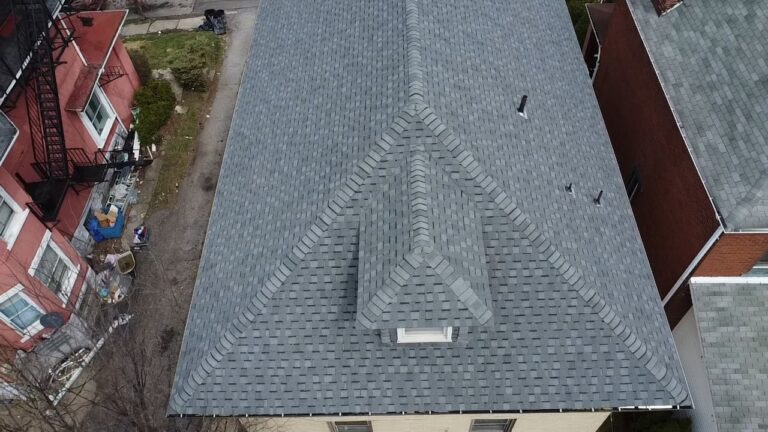
Is a new roof a capital improvement? In most cases, yes: the IRS generally treats replacing an entire roof as a capital improvement, so it isn’t written off as an ordinary repair in the year you pay for it. On a rental or commercial building the cost is capitalized and depreciated over time, and on the home you live in it’s added to your cost basis instead of being deducted.
We’re a Pittsburgh roofing contractor, not accountants, so nothing here is tax advice. We’ll explain the concepts, point you to the IRS pages your preparer will use, and show what paperwork from your roofer helps. And since the tax treatment doesn’t change when the bill is due, many owners look at roof financing before they sign.
Short answer: A full roof replacement is generally a capital improvement. Rental and business owners recover the cost through depreciation; homeowners add it to the home’s basis, which can lower taxable gain when they sell.
Is a New Roof a Capital Improvement? What the IRS Says
The IRS answers this question directly in a few places. Publication 523, which covers selling your home, includes “new roof” in its chart of improvements that increase basis. Publication 527, the guide for residential rental property, lists a new roof among its examples of improvements too.
The clearest statement is an IRS FAQ on roof, gutter and window replacements for rental property. It says replacing the entire roof is generally a restoration, because the roof is a major component of the building structure, which makes the replacement a capital improvement. It then says that improvement is generally depreciated over 27.5 years using the straight line method.
The common thread: the IRS describes an improvement as work that adds value, extends useful life, or adapts property to a new use. A complete new roof system does at least the first two. A patch on a leak just keeps the roof working the way it already did.
Capital Improvement, Capital Expense, Capitalize: Same Idea
The terms trip everyone up. Here’s how they fit together:
- Capital improvement is the work itself: a project that betters, restores, or adapts the property.
- Capital expense (or capital expenditure) is the money spent on that improvement.
- Capitalize means recording that money as part of the property’s basis instead of deducting it right away.
- Expense, used as a verb by accountants, means deducting a cost in the current year, which is what ordinary repairs usually get.
So when a landlord asks whether a roof should be “expensed or capitalized,” the question is really whether the job was a repair or an improvement. For a full replacement, the IRS answer above points to capitalize.
How the IRS Separates a Roof Repair From a Roof Replacement
For business and rental property, the line between repair and improvement comes from the IRS tangible property regulations. Accountants often shorten the test to three words: betterment, adaptation and restoration. If the work fits any one of them, it’s generally capitalized.
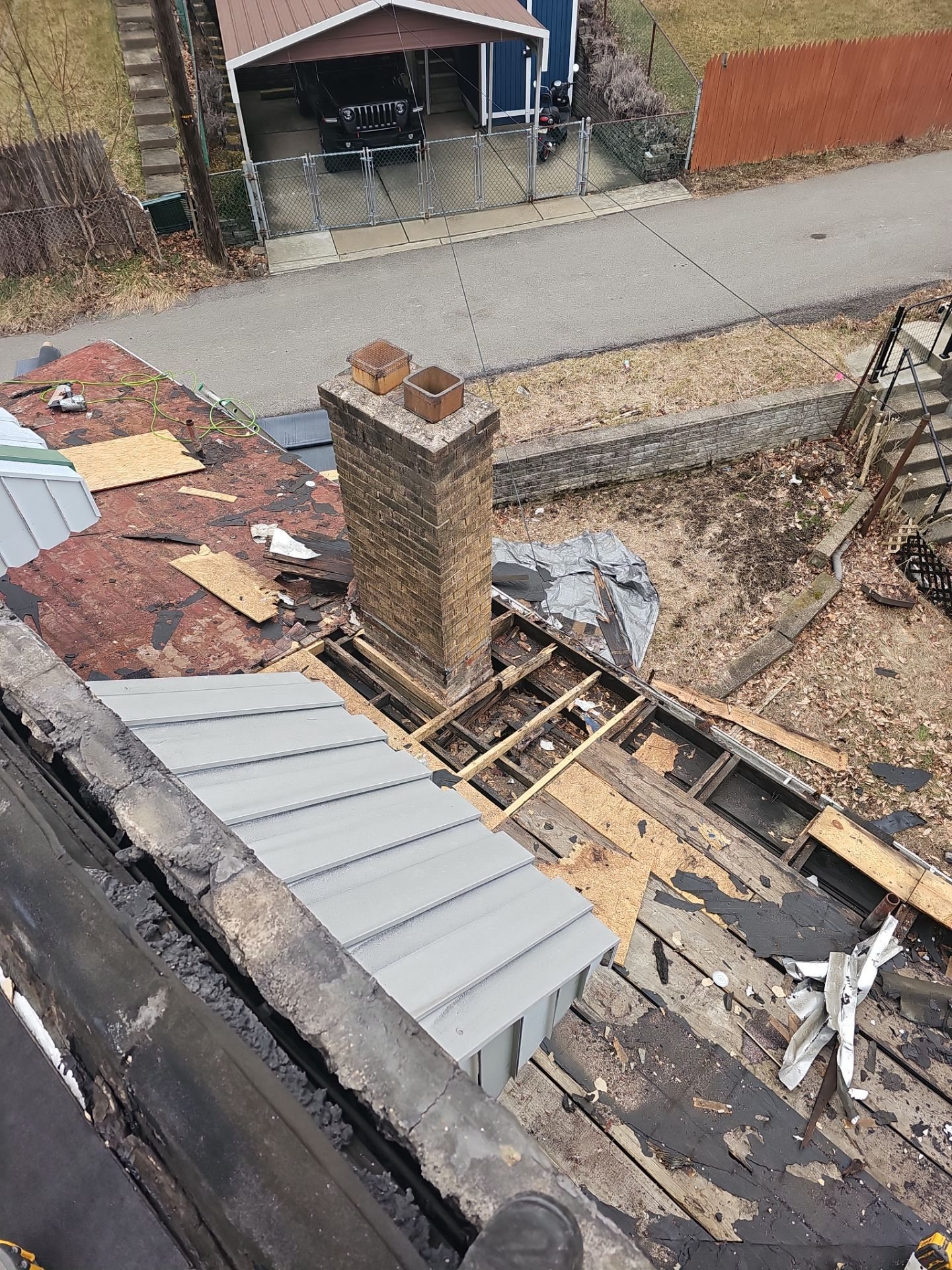
Restoration is the one that catches most roofs. Replacing a major component or a substantial structural part of the building counts, and the IRS FAQ treats the entire roof as exactly that.
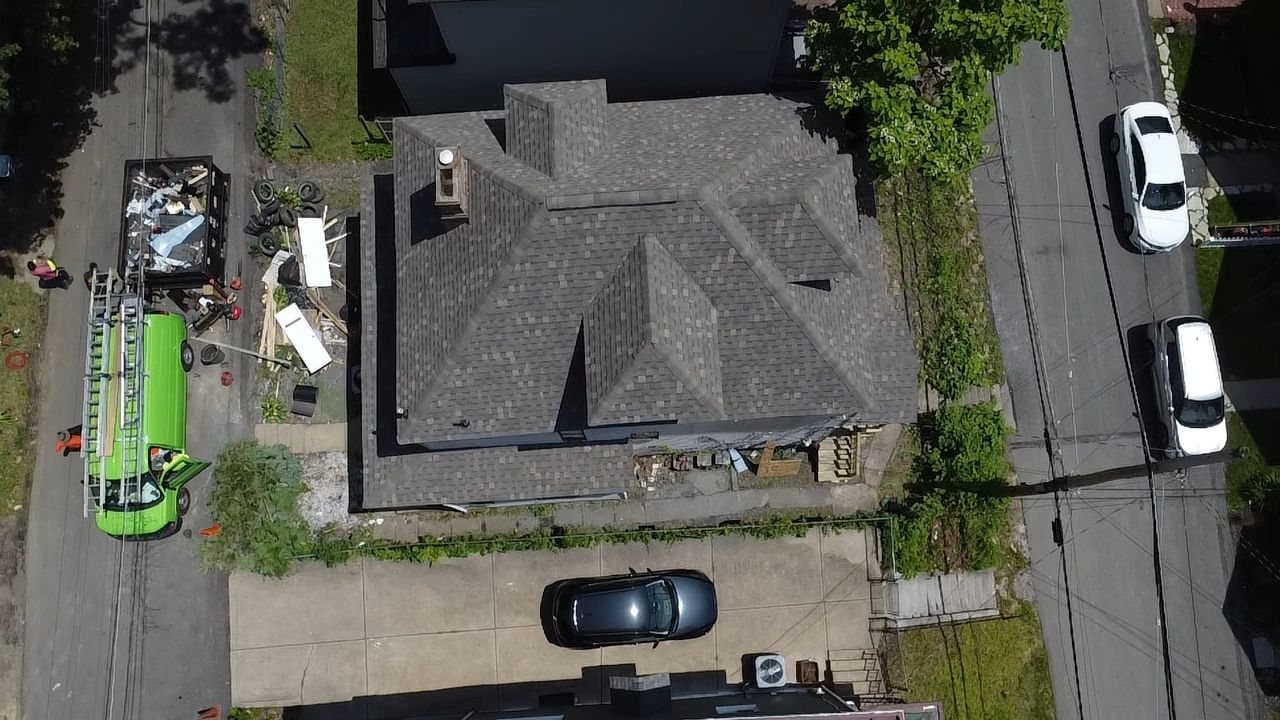
This is what a replacement looks like mid job: the old roofing comes off, right up to the chimney, and a whole new system goes on. That’s very different from swapping a handful of shingles.
Betterment covers work that makes the property materially better, like a meaningful upgrade in roofing material. Adaptation is converting a building to a new use, which is rare for a roof job.
Old roofing torn off around a brick chimney on a Pittsburgh job, Alan Construction.
Common roof jobs and how they’re usually viewed
A general guide; your preparer makes the final call.
| Roof work | Usually treated as |
|---|---|
| Replacing a few shingles blown off in a windstorm | Repair |
| Resealing or replacing flashing around a chimney, vent or skylight | Repair |
| Patching a leak on a rubber (EPDM) flat roof | Repair |
| Full tear off and new shingle roof | Capital improvement (restoration) |
| Replacing the entire membrane on a flat roof | Capital improvement (restoration) |
| Upgrading to a different, better roofing material | Capital improvement (betterment) |
| Small repairs done as part of a full replacement | Usually folded into the improvement |
The gray area is a partial replacement, say one slope of a gable roof or the back section over an addition. Whether that counts as restoring a major component depends on how much of the roof was replaced, so give your preparer the measurements. If you’re still deciding which way to go on the roof itself, our guide to when to repair and when to replace a roof in Pittsburgh walks through the roofing side of that choice.
A New Roof on the Home You Live In
For a primary residence, the answer most homeowners get is the one they don’t want: a new roof generally isn’t deductible. You can’t depreciate your own home, and personal repairs aren’t deductible either.
What you do get is a higher basis. IRS Publication 523 explains that improvements are added to your home’s basis, and a higher basis can reduce the taxable gain when you eventually sell.
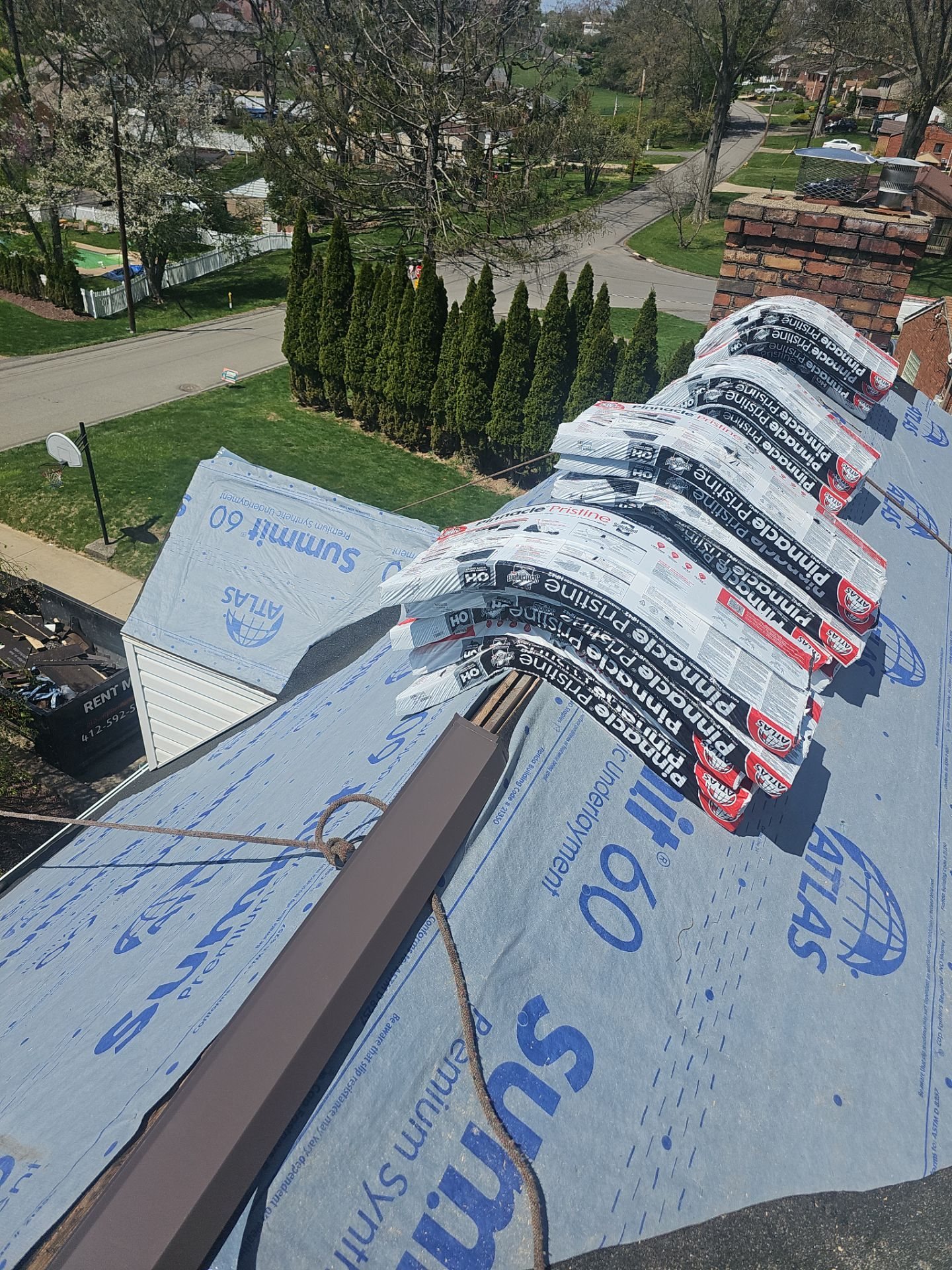
That basis includes the whole system you paid for, not just the shingles: underlayment like the synthetic layer in this photo, flashing, vents, ridge cap and the tear off itself. Keep the final invoice with your house records, because the sale might be decades away.
Synthetic underlayment over the hips and ridges of a Pittsburgh roof, Alan Construction.
What about a home office or a 2026 tax credit?
If part of your home is used regularly and exclusively for business, a share of some home costs may apply. That’s a narrow rule, so ask your preparer.
As for credits, the federal Energy Efficient Home Improvement Credit covered certain doors, windows, skylights and other envelope items, and roofing wasn’t on the IRS list. The IRS also shows that credit applying only to property placed in service through 2025, so it isn’t a reason to time a 2026 roof.
Rental Properties, Duplexes and Commercial Buildings
If you own a duplex in the city, a few rental houses or a storefront with apartments upstairs, how a roof is classified changes your tax return for years.
Residential rental property. Per the IRS FAQ, a full roof replacement is generally depreciated over 27.5 years, straight line.
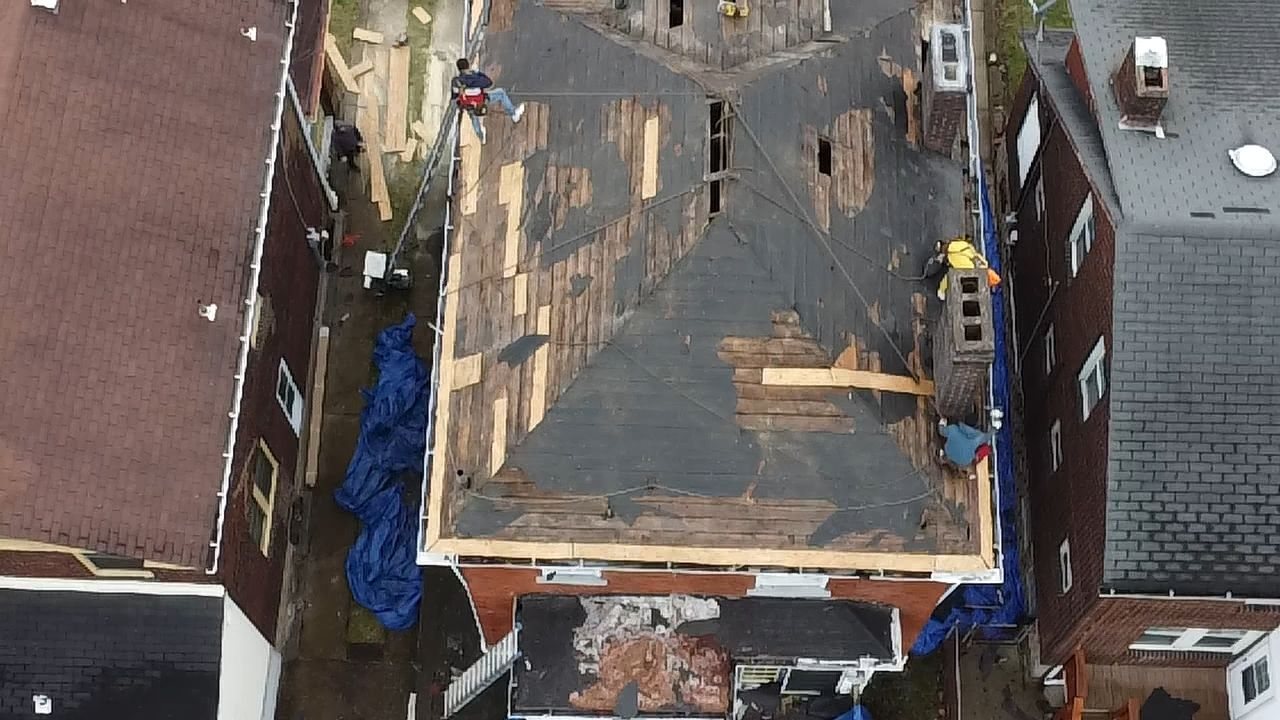
Commercial buildings. Nonresidential real property generally uses a 39 year recovery period. Flat and low slope roofs like this one are common on commercial and mixed use buildings around the city.
Owner occupied duplexes. If you live in one unit and rent the other, Publication 527 explains how expenses are divided between the personal part and the rental part.
Low slope roof mid tear off with tarps in place, Pittsburgh, Alan Construction.
Rules worth asking your CPA about
- Partial disposition. When an old roof comes off, part of the building’s basis may still be tied up in it. The regulations allow an election that can let owners recognize a loss on the removed roof instead of depreciating two roofs at once. It has to be done on time, so mention the replacement early.
- Safe harbors. The tangible property regulations include a routine maintenance safe harbor and a safe harbor for small taxpayers. Each has eligibility limits, and a full replacement often won’t fit, but your preparer should check.
- Section 179. Current law allows certain roof improvements on nonresidential buildings to be considered for Section 179 expensing. Whether it helps depends on the business, its income and the building type.
- Placed in service date. Depreciation generally starts when the improvement is placed in service, so the finish date on your invoice matters, especially near the end of the year.
What Your Roofer’s Paperwork Should Show
A vague invoice that says “roof work” invites guesswork from your preparer. Ask for a written scope and look for these items on the estimate and final invoice. Our guide to understanding your roofing estimate covers each line in more detail.
- Whether the job is a full tear off, a partial replacement or a repair
- The property address, and which building if you own several
- Materials used, such as underlayment, flashing and shingle line
- Separate lines for gutters, siding or other work
- The completion date
- The contractor’s Pennsylvania HIC registration number
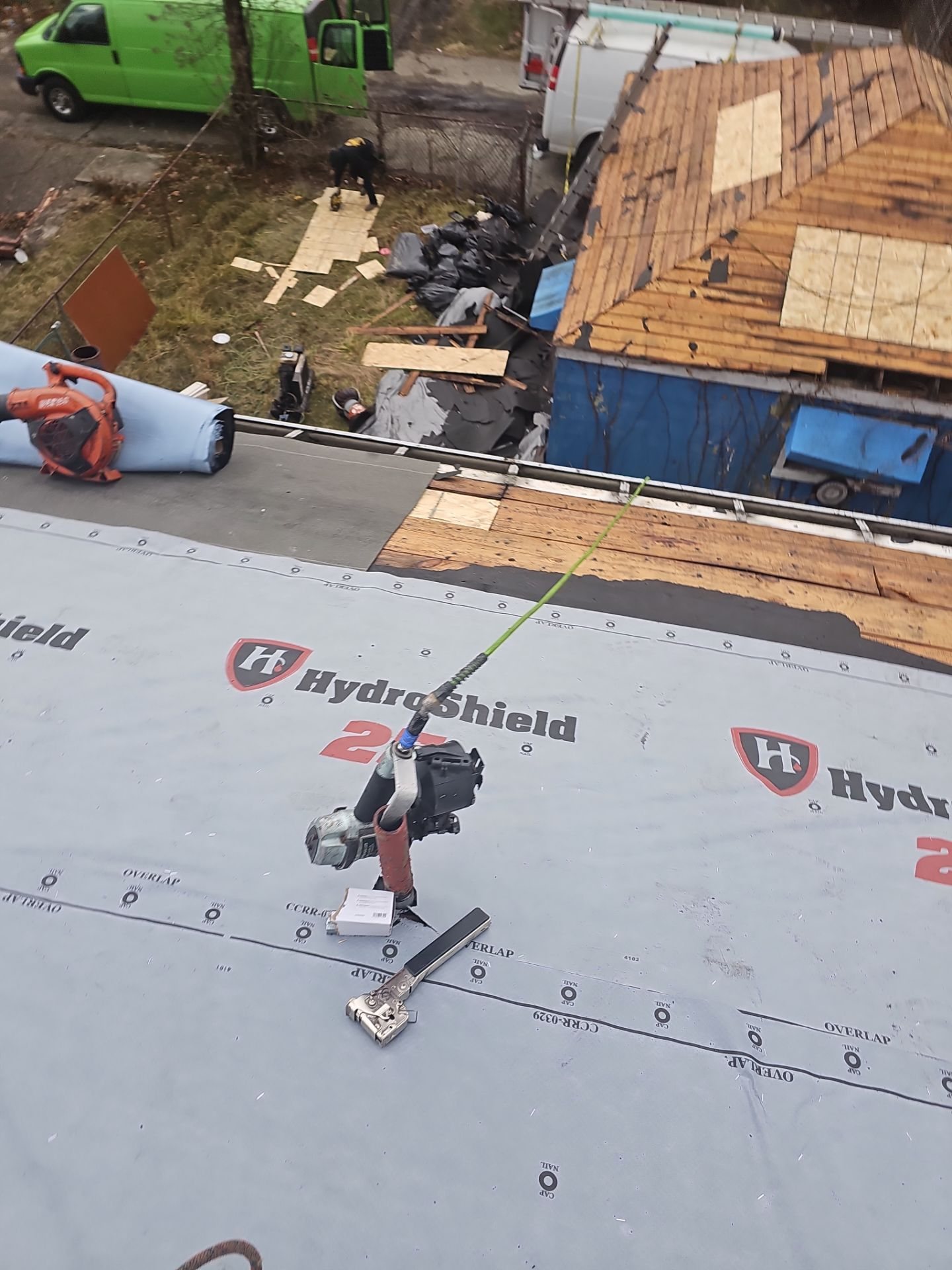
Dated photos help too. Shots of the stripped deck and new underlayment, like this one from a Clairton job, show at a glance that the whole system was replaced.
Synthetic underlayment going down beside a stripped roof deck in Clairton, Alan Construction.
One homeowner, Andrew S., described our estimate this way in a Google review: “Alan was thorough in his assessment of my roof, while providing a transparent explanation along with a fair estimate for replacement.” That kind of clear scope is what your preparer wants to see.
We’re registered as a Pennsylvania Home Improvement Contractor, PA#126638, and that number belongs on any contract for residential work. If you haven’t checked a contractor’s registration before, our guide on what a Pennsylvania HIC number is shows how.
Storm Damage, Insurance Money and Your Basis
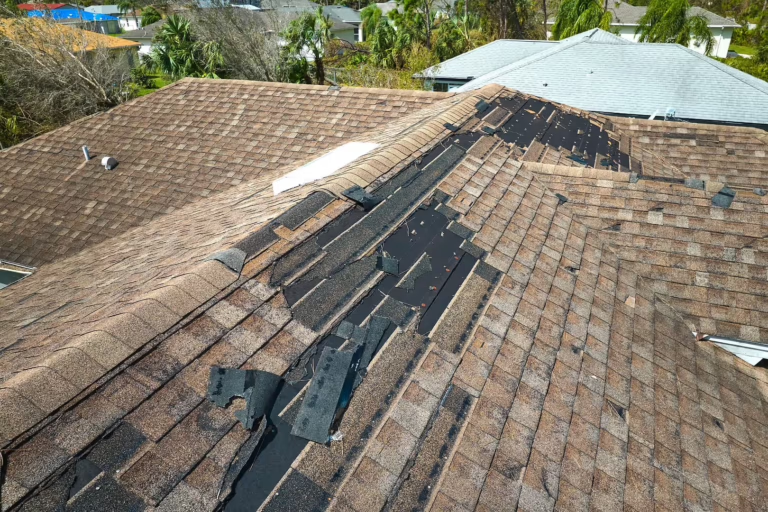
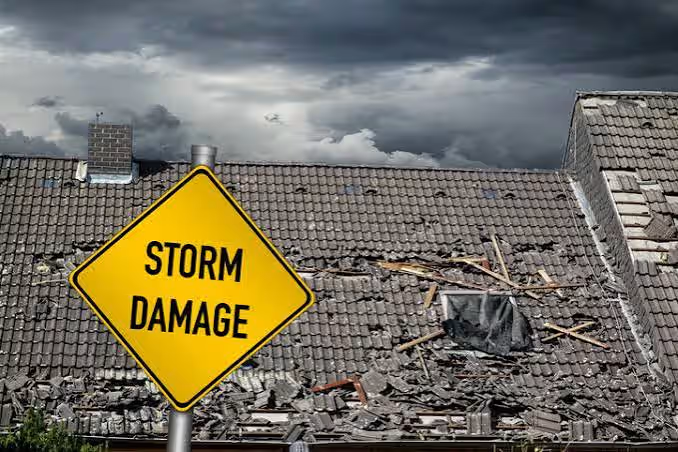
Some roofs get replaced after wind or hail damage through an insurance claim. We work with homeowners insurance on storm claims and meet the adjuster, but the tax side of a payout is its own topic. A roof replaced after a storm is still generally a restoration, and insurance money or a casualty loss can change your basis, so give your preparer the adjuster’s paperwork along with the invoice.
Paying for the Roof While the Tax Benefit Plays Out
The catch with a capital improvement is timing: any tax benefit arrives slowly, over decades of depreciation or at a future sale, but the roofer gets paid when the job is done.
That’s why we offer financing through Enhancify, a lender network that lets you compare options. Most of our roofing jobs are finished in one day, with a magnetic nail sweep at the end, so the disruption to tenants or your own household is short.
Whatever your situation, get a clear written scope from a registered contractor, keep the invoice and photos, and let your CPA classify it. Our roof replacement estimates are free and come with no obligation.
Planning a roof replacement on your home, rental or commercial building? Request a free estimate and we’ll give you a clear written scope your accountant can work with.