Roof replacement in Robinson Township, PA is the exterior upgrade that should come first, because the roof protects everything else on the outside of your house. Once the roof is sound, siding, gutters, soffit and fascia, and windows finish the job and give you an exterior that holds up to western Allegheny County weather for decades.
Robinson Township sits about 12 miles west of downtown, and its streets mix split-level homes, townhome communities and single-family houses, some built decades ago and some fairly new. We have been doing residential roofing in Pittsburgh since 2003, and we work all over the west side of the county, including nearby Coraopolis, Carnegie, McKees Rocks and Oakdale. This guide walks through each part of the exterior, the signs that it’s time, and the order that saves you money and headaches.
Short answer: Start with the roof, then handle soffit, fascia and gutters, then siding and windows. Doing them in that order, or all at once, keeps flashing, trim and drainage tied together the right way.
Why roof replacement in Robinson Township, PA comes first
Every other exterior upgrade depends on water staying off and out of the house. If the roof is leaking, new siding gets stained from behind, new windows get wet framing around them, and new gutters fill with shingle granules. That’s why we tell homeowners to look at the roof before spending on anything else.
Robinson is hilly, and many homes sit up on ridges or open slopes where they take the full force of wind and driving rain. Pittsburgh winters bring freeze and thaw cycles that work water into any weak spot, and summer heat bakes shingles that are already tired.
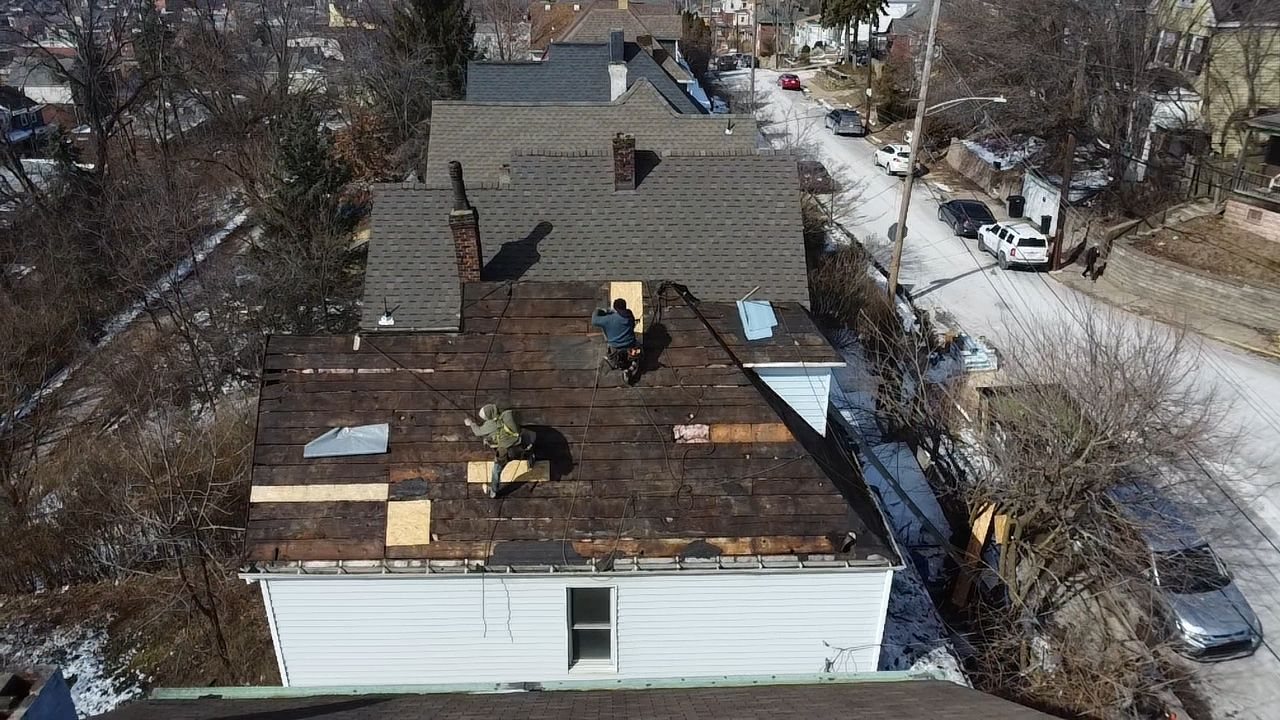
A full tearoff is the only honest way to replace a roof. We strip every old layer down to the wood so we can see the decking, fix what’s soft, and start clean.
Hillside homes like this one catch more wind than a house tucked into a flat street. On lots like that we pay extra attention to the starter course, the ridge and the rake edges, because that’s where wind lifts shingles first.
Drone view of a roof stripped to the deck in a hillside neighborhood in Pittsburgh, Alan Construction.
Signs your roof is ready to be replaced
- The roof is past about 20 years old, or you don’t know how old it is.
- Shingles are curling, cracking or missing, especially after a windstorm.
- You’re finding granules in the gutters or at the bottom of the downspouts.
- There are water stains on ceilings, or daylight shows through the attic boards.
- The roofline sags, or the decking feels soft when someone walks on it.
Age alone doesn’t decide it. A well vented roof can outlast its expected life and a badly installed one can fail early. Our guide on how often a roof should be replaced breaks down lifespans by material and the warning signs we look for.
What a new roof on a Robinson home involves
Most of the roofs we replace in the township are asphalt shingle. We install Atlas shingles, including Atlas Pinnacle Pristine, and we also do metal, slate, tile and rubber flat roofs for porches, additions and low slope sections. Split-levels often have a lower pitch roof over one wing, so it’s common for one house to need two different roofing systems.
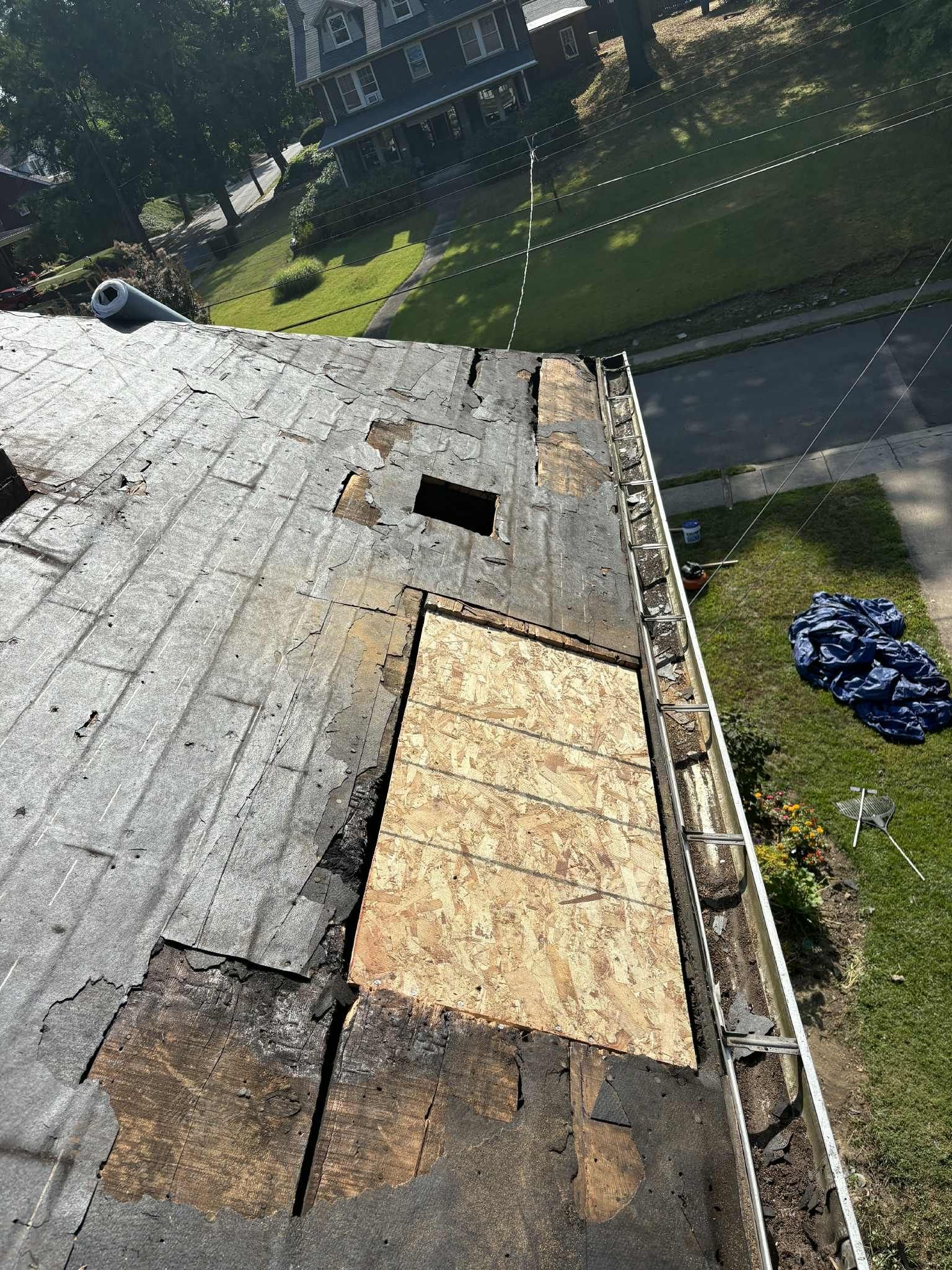
This is what we find when gutters have overflowed for years. The roof boards along the eave rot first, because that’s where water backs up and sits.
We cut out the bad wood and patch it with new plywood before any underlayment goes down. If the fascia behind the gutter is soft too, we replace it at the same time so the new gutters have something solid to hang on.
Rotted roof boards with a new plywood patch near the gutter on a Pittsburgh home, Alan Construction.
Here’s how a typical replacement day goes for us:
- We protect your landscaping, siding and windows with tarps.
- The crew tears off the old shingles and underlayment down to the deck.
- We replace any rotted or soft decking.
- Ice and water shield goes along the eaves and in the valleys, with synthetic underlayment over the rest of the roof.
- New flashing goes in at walls, chimneys, vents and skylights, along with drip edge.
- Shingles and ridge vent go on.
- We clean up and run a magnetic nail sweep over the yard and driveway.
Most roofing jobs are finished in one day.
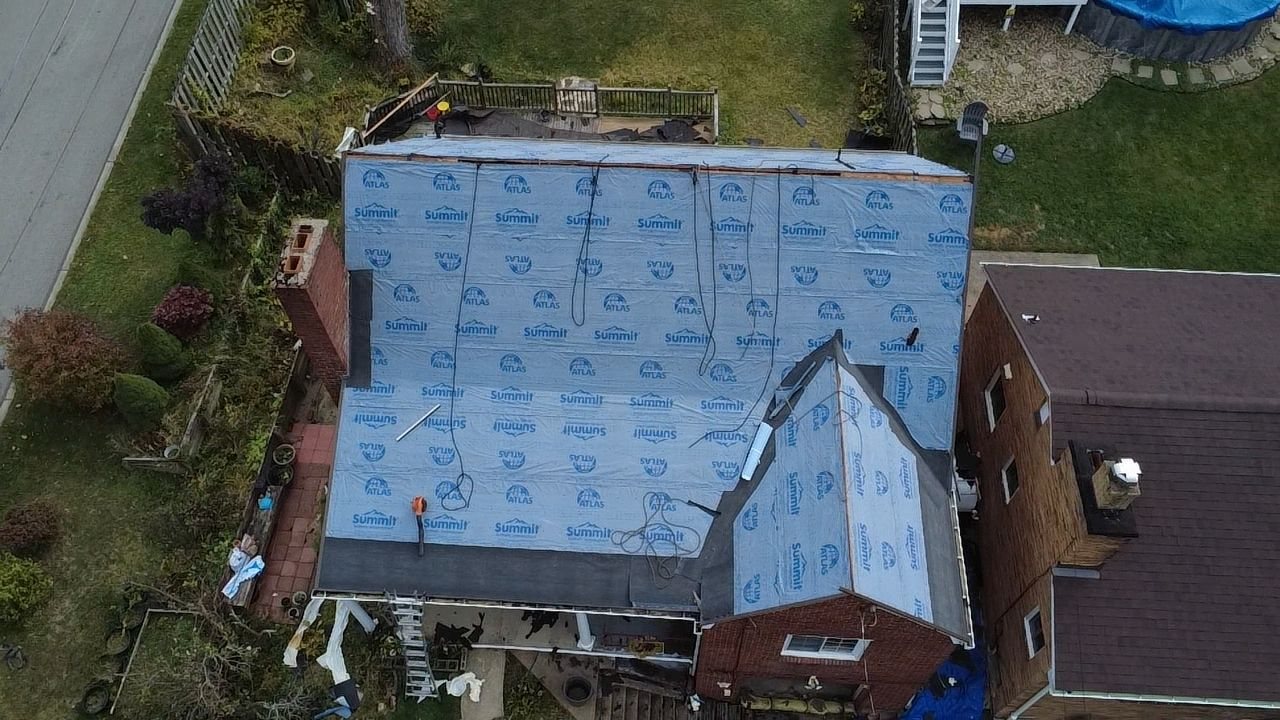
Underlayment is the layer most homeowners never see, and it’s one of the most important. It’s the backup that keeps wind driven rain out if a shingle ever lifts.
On every replacement we run ice and water shield at the eaves and valleys, where ice and slow moving water cause leaks, and cover the rest of the deck before a single shingle goes on.
Aerial view of blue underlayment covering a whole roof in Pittsburgh, Alan Construction.
Soffit, fascia and gutters: the drainage system
Gutters, fascia and soffit work as one system. The fascia is the board the gutters hang from, and the soffit closes in the underside of the overhang and lets fresh air into the attic. When one part fails, the others usually follow.
When to replace soffit and fascia
Look for peeling paint on wood fascia, soft spots you can press a screwdriver into, gutters pulling away from the house, or birds and squirrels getting into the overhang. Older homes often still have painted wood here. We replace it and wrap or cover it so it doesn’t need repainting every few years. If you want the full rundown, read what soffit is and why your house needs it.
Gutters and gutter guards
On a wooded lot, leaves clog gutters every fall. Clogged gutters overflow, the water runs behind the fascia, and that’s how you end up with the rotted roof edge in the photo above. New gutter systems sized for the roof, with downspouts that carry water well away from the foundation, matter even more on a sloped lot where water can run back toward the house. Gutter guards cut down on cleaning if your lot is heavily wooded.
The best time to replace gutters is right after a new roof, or on the same job. The drip edge, the fascia and the gutters all meet at the same spot, and doing them together means they fit and drain the way they should.
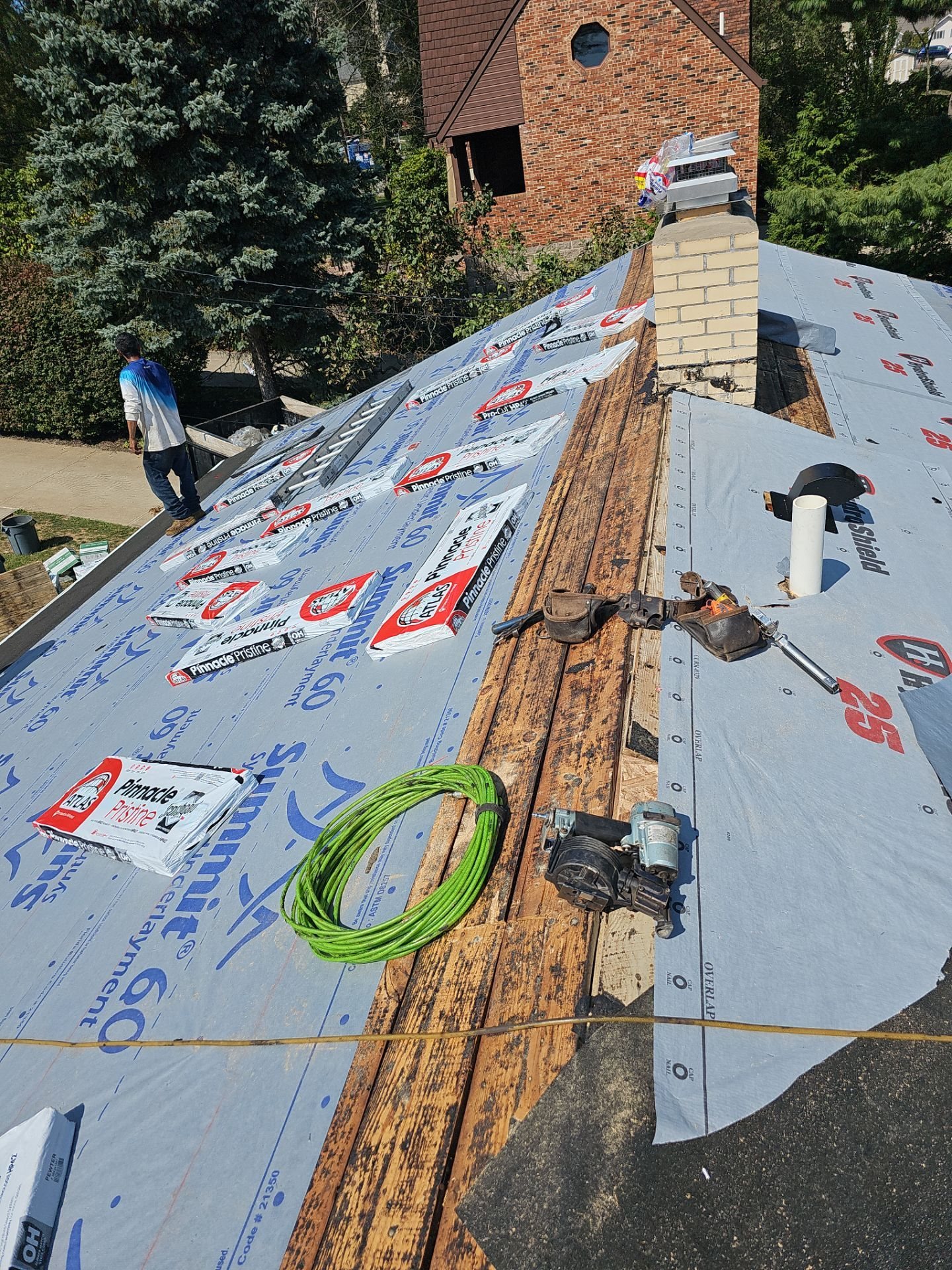
The open slot along the peak is where the ridge vent will go. Warm, damp air leaves the attic through the ridge while fresh air comes in through vented soffit.
That’s why soffit matters to your roof. If the soffit is solid or blocked, the ridge vent can’t do its job, the attic runs hot in summer and damp in winter, and shingles wear out sooner.
Underlayment down and the ridge cut open for venting on a roof in Bethel Park, Alan Construction.
Siding upgrades for Robinson homes
Siding is the biggest visual change you can make to a house. Older homes in the township may still have aluminum or original wood siding that’s faded, dented or rotting, while townhomes and newer builds usually have vinyl that can crack or come loose in a windstorm.
We install vinyl siding with new trim and flashing around doors and windows. Some homeowners also look at fiber cement for a heavier, painted wood look. Whatever you choose, what’s under the siding matters as much as the panels: house wrap, flashing at windows and doors, and proper trim keep water out of the walls.
We often recommend planning the roof and siding together. Colors coordinate, the flashing where the roof meets a wall gets done once, and you deal with one crew and one cleanup. Our post on replacing your roof and siding at the same time explains why timing matters.
As one customer put it after a combined job: “Just recently did a roof and siding job with them. They were very professional, punctual, and reasonable.” (J W., Google review)
Window replacement
Older single pane windows, or early double pane units with failed seals, let in drafts and fog up between the glass. Modern double pane windows make rooms more comfortable and quieter.
Signs your windows are due include fogging between panes, sashes that won’t stay open, soft or rotted sills, and drafts you can feel on a windy day. Window work fits naturally with siding because the trim and flashing around each opening get redone either way. Doing both on one job means everything is sealed together instead of patched.
Townhomes, split-levels and single-family homes
Each kind of house in Robinson Township has its own quirks:
| Home type | What we watch for | Planning tip |
|---|---|---|
| Split-level | Two roof levels, a wall where the upper roof meets the lower one, and a lower pitch section that sheds water slowly | Step flashing at that wall is the most common leak point, so it gets replaced on every job |
| Townhome | Shared roof lines and walls with neighbors, and community rules on colors and materials | Check your HOA or community association rules before picking shingles or siding colors |
| Older single-family | Multiple shingle layers, plank decking, wood fascia and original windows | Expect some decking and fascia repair, and plan the exterior as one project |
| Newer single-family | Original builder grade shingles and gutters nearing the end of their life | Upgrading underlayment, ventilation and gutters with the first replacement pays off for years |
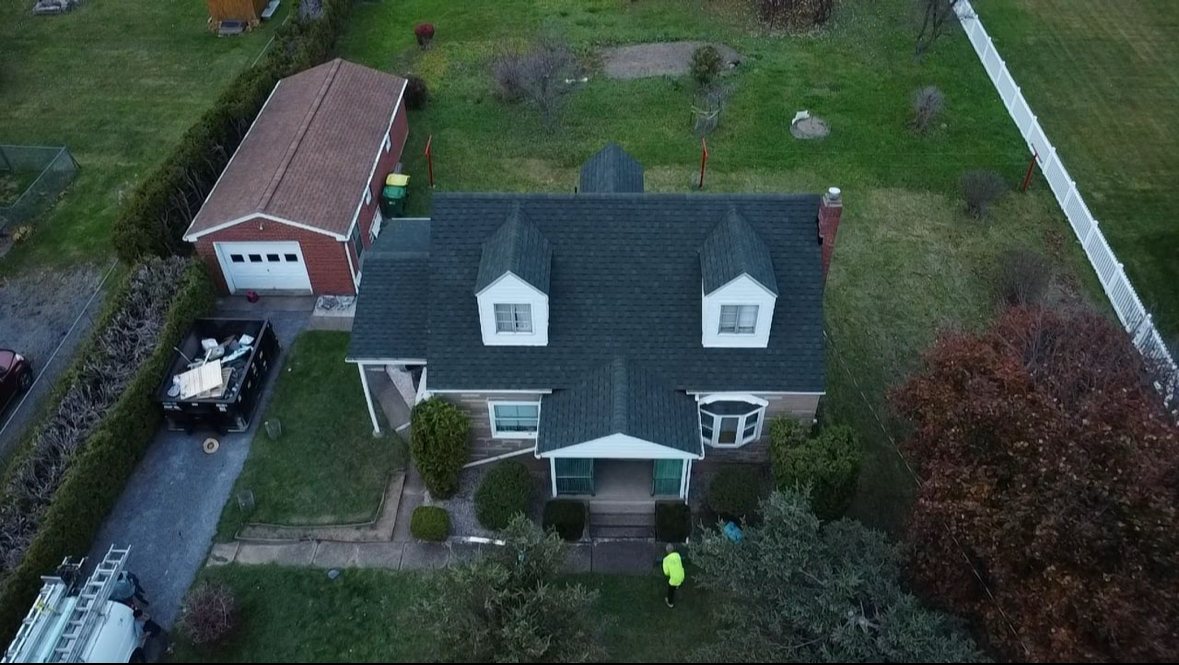
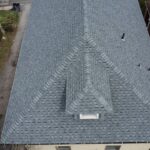
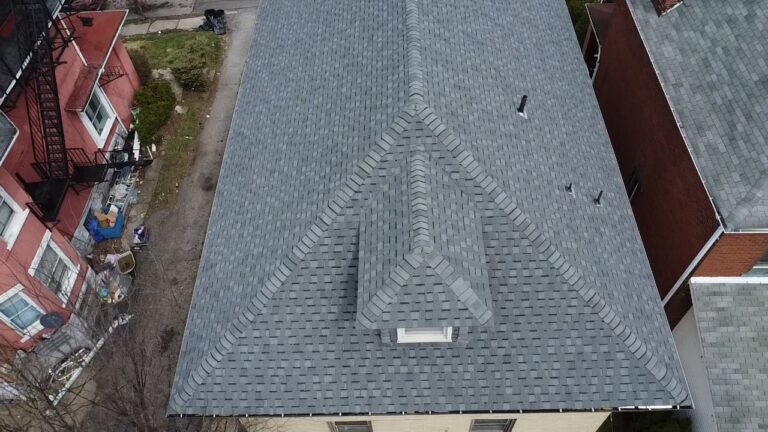
A finished roof changes how the whole house reads from the street. Dark shingles like these pair well with lighter siding and white trim, and dormers get clean, tight flashing where they meet the main roof.
On a full exterior project, we pick shingle and siding colors together so the house looks finished instead of patched.
Drone view of a house with dormers and a finished dark shingle roof in Butler, Alan Construction.
How to plan and choose a contractor
A few things protect you no matter who you hire:
- Check the HIC registration. Pennsylvania requires home improvement contractors to register with the Attorney General. Ours is PA#126638.
- Get it in writing. A written estimate should spell out tearoff, decking repair, underlayment, flashing, ventilation and cleanup.
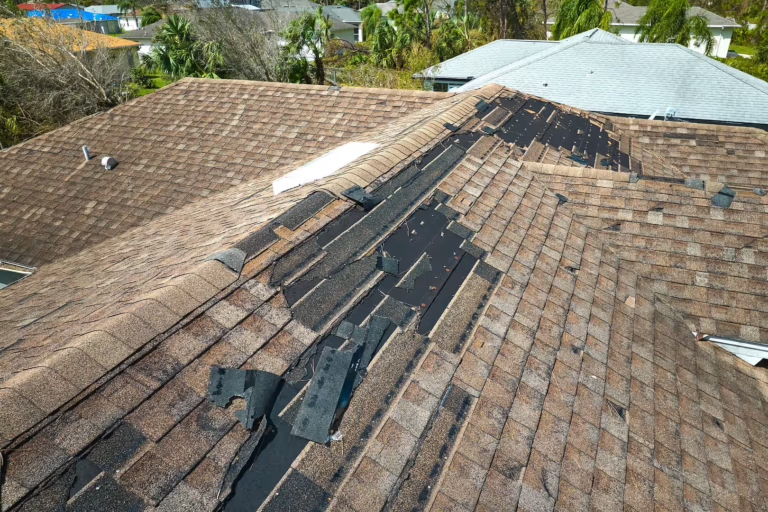
- Ask about storm damage. If wind or hail caused the damage, we work with your homeowners insurance and meet the adjuster.
- Look at financing. We offer financing through Enhancify if you’d rather spread out the cost of a bigger project.
Cost depends on the size and pitch of the roof, how many layers come off, how much decking is bad, the materials you pick and how many parts of the exterior you do at once. The only way to know is an estimate at your house, and ours are free with no obligation. We’re licensed, insured and BBB Accredited with an A+ rating.
Planning a new roof or a full exterior upgrade in Robinson Township? Request your free estimate and we’ll come out, look at the whole house and give you a clear written plan.