How often do roofs need to be replaced? For most Pittsburgh homes with architectural asphalt shingles, plan on a new roof about every 20 to 25 years, while older 3 tab shingles tend to give out closer to 15 to 20 years. Metal, tile and slate last far longer, and how well the roof was installed and vented matters as much as the material.
We have been doing roof replacement in Pittsburgh since 2003, and the age on paper is only the starting point. A 22 year old roof with good ventilation can have a few seasons left, while a 14 year old roof that was nailed badly over wet decking can already be failing. This guide covers lifespans by material, why our weather shortens them, the warning signs we look for, and how to plan the next roof before it plans itself.
Short answer: Replace an asphalt shingle roof roughly every 20 to 25 years, sooner if you see curling shingles, granules in the gutters, leaks in more than one spot or a sagging roofline. Get a professional inspection once your roof passes 15 years.
How often do roofs need to be replaced, by material?
The material you put on sets the clock. These are typical ranges for a roof that was installed correctly, vented properly and looked after. A poorly installed premium roof can fail before a well installed basic one.
| Roofing material | Typical lifespan | What we see on Pittsburgh homes |
|---|---|---|
| 3 tab asphalt shingles | 15 to 20 years | Common on roofs from the 1990s and early 2000s, often the ones we replace first |
| Architectural asphalt shingles | 25 to 30 years | The standard choice today on most of our replacements |
| EPDM rubber flat roof | 20 to 30 years | Rear additions, porches, garages and low slope rowhouse roofs |
| Metal roofing | 40 to 70 years | Sheds snow well, a good long term option |
| Clay or concrete tile | 50 years or more | Less common here, needs a structure that can carry the weight |
| Natural slate | 75 to 100 years or more | Older city homes; the slate often outlives the flashing and fasteners |
If you want the longer version of these numbers, including what shortens each one, read our guide on how long a new roof lasts.
Why Pittsburgh roofs often land at the short end
Our weather is hard on roofs. Winters bounce above and below freezing for weeks, so water gets into small gaps, freezes, expands and pries them open a little wider every cycle. Snow that melts during the day and refreezes at the cold eaves at night builds ice dams that push water back up under shingles.
Spring and summer bring heavy rain and wind storms that lift tabs and break the seal strips. Many neighborhoods sit on wooded hillsides, so roofs stay shaded and damp, and moss and algae get a foothold on north facing slopes.
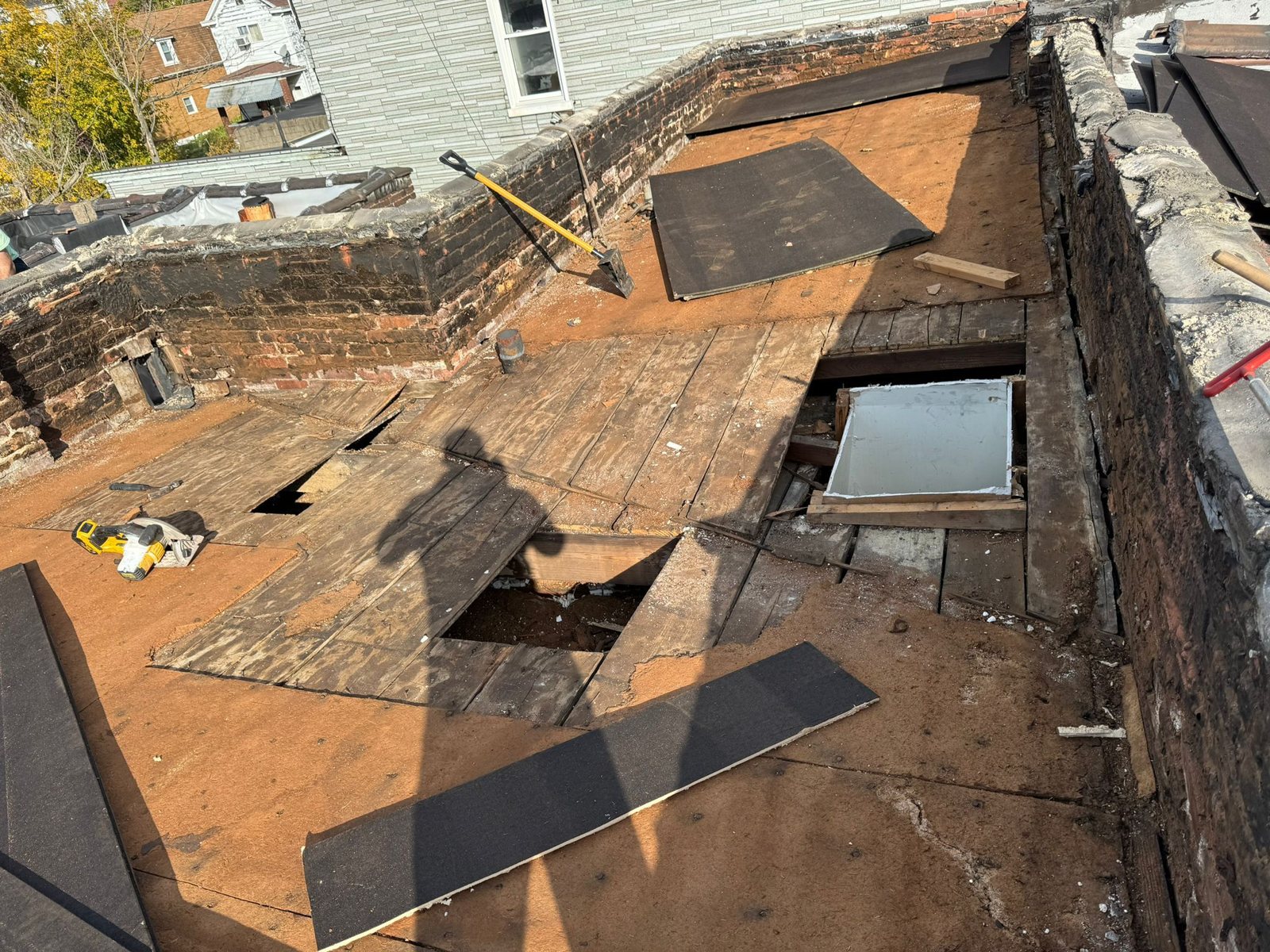
Then there is the housing itself. A lot of older Pittsburgh homes have board decking instead of plywood, and attached rowhouses, like the ones in Mount Oliver, often have low slope rear roofs where water sits longer and shared drainage between neighbors can send one home’s problem next door.
This is what years of slow leaks do to old boards. From the street the shingles looked tired, not dangerous. Once they came off, the wood underneath had rotted through in spots. That is the hidden cost of waiting.
Old board decking with rotted holes, exposed on a low slope roof in Pittsburgh, Alan Construction.
Signs it’s time to replace your roof
Age tells you when to start paying attention. These signs tell you the roof is actually wearing out.
The roof is past 15 to 20 years old
Once an asphalt roof passes 15 years, get it looked at even if nothing seems wrong. That inspection tells you whether you have five good years left or one.
Curling, cracked or missing shingles
Shingles that cup at the edges, crack across the middle or blow off in ordinary wind have lost their flexibility and their seal. A few can be swapped out. Widespread curling means the whole roof is at the end.
Granules in the gutters
The sandy granules protect the asphalt from the sun. Some loss after a new install is normal. Heavy piles in the downspouts on an older roof mean the shingles are breaking down fast.
Leaks in more than one spot
One drip near a vent or chimney is usually a flashing or pipe boot problem we can repair. Stains in several rooms, or the same leak coming back after repairs, point to a roof that is failing as a system.
Daylight, stains or a sagging deck
Go into the attic on a sunny day. Light coming through the boards, dark water stains on the wood, or a dip in the roofline seen from the street all mean moisture has been getting in for a while. A sagging deck is a replacement conversation, not a repair.
Moss and heavy dark streaks
Moss holds water against the shingles and lifts their edges. Light algae staining is mostly cosmetic, but thick moss on an older roof speeds up the end.
Should you replace a roof that isn’t leaking?
Sometimes, yes. Roofs rarely go from fine to pouring water overnight. The decline is slow and mostly out of sight: brittle shingles lose their grip, small amounts of water wick into the decking, and the wood softens long before a stain shows up on your ceiling.
Replacing on your schedule also beats replacing on the roof’s schedule. A planned job lets you compare estimates, pick your shingle and color, and book good weather. An emergency job happens when it happens, often after the inside of the house has already taken damage. If you plan to sell in the next few years, a worn out roof also becomes one of the first things a buyer’s inspector writes up.
Repair or replace: how we make the call
Not every problem needs a new roof. If the damage is in one area and the roof is in the first half of its life, a repair is the right answer and we will tell you so. Our roof repair service covers flashing, pipe boots, blown off shingles and storm damage.
Replacement makes more sense when the damage is spread across the roof, when you are calling a roofer every year for a new leak, or when the roof is near the end of its expected life anyway. A common rule of thumb among roofers is that once repairs approach about 30 percent of what a new roof would run, you are better off putting that money toward replacement. We walk through more examples in roof replacement vs. repair in Pittsburgh.
What to do if your roof is leaking right now
Move valuables away from the drip and put a bucket under it. If the ceiling is bulging with trapped water, a small hole at the low point lets it drain into the bucket instead of bringing the drywall down. Stay off the roof, especially when it is wet.
Then call a roofer. Water runs along rafters and decking before it drips, so the wet spot inside is often several feet from the actual opening. A slow drip in one storm can wait a day or two. Steady water near wiring or framing is an emergency.
If wind or hail caused it, the roof’s age matters for your claim. We work with homeowners insurance on storm damage and meet the adjuster on site. Our guide on how old a roof can be before insurance won’t cover it explains why. Suzanna M. wrote in her Google review: “We then hired them to replace our roof which was damaged in the windstorm from last spring, and they worked with us and our insurance company to thoroughly replace and repair everything.”
What a roof replacement with us looks like
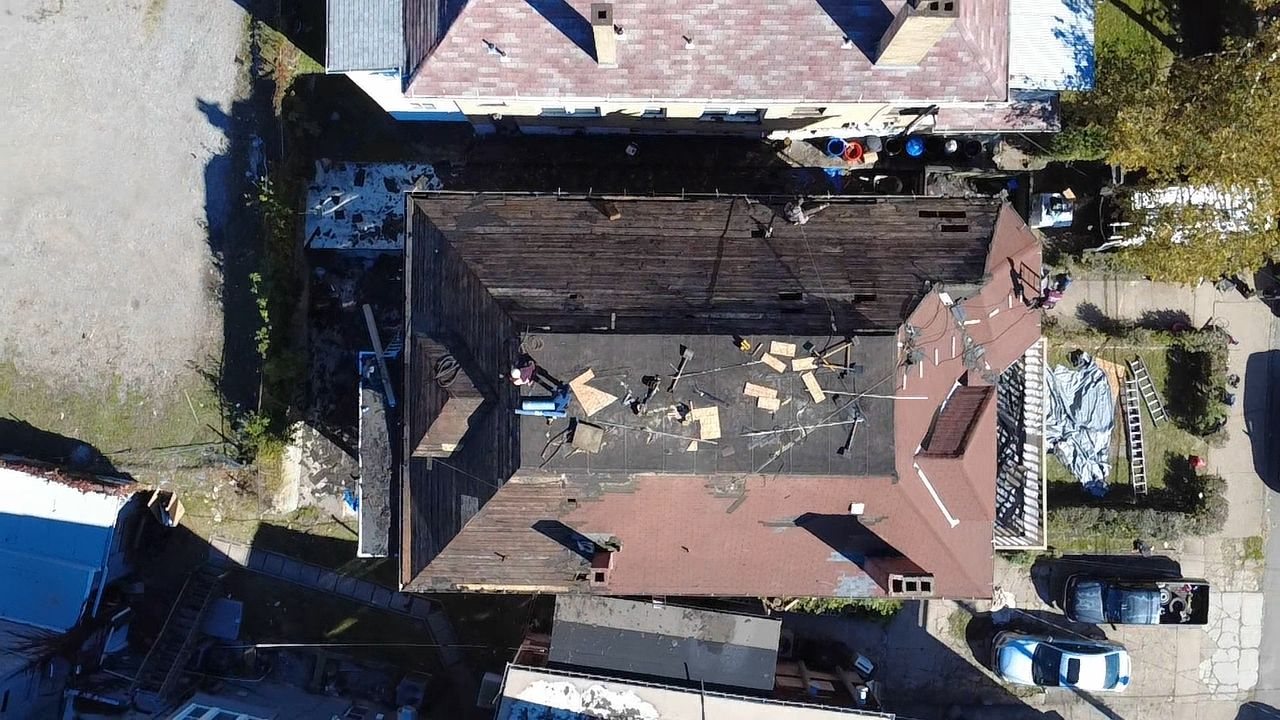
We tear the old roof off down to the deck. Laying new shingles over old ones hides problems and traps heat, and a full tearoff is the only way to see what the decking really looks like.
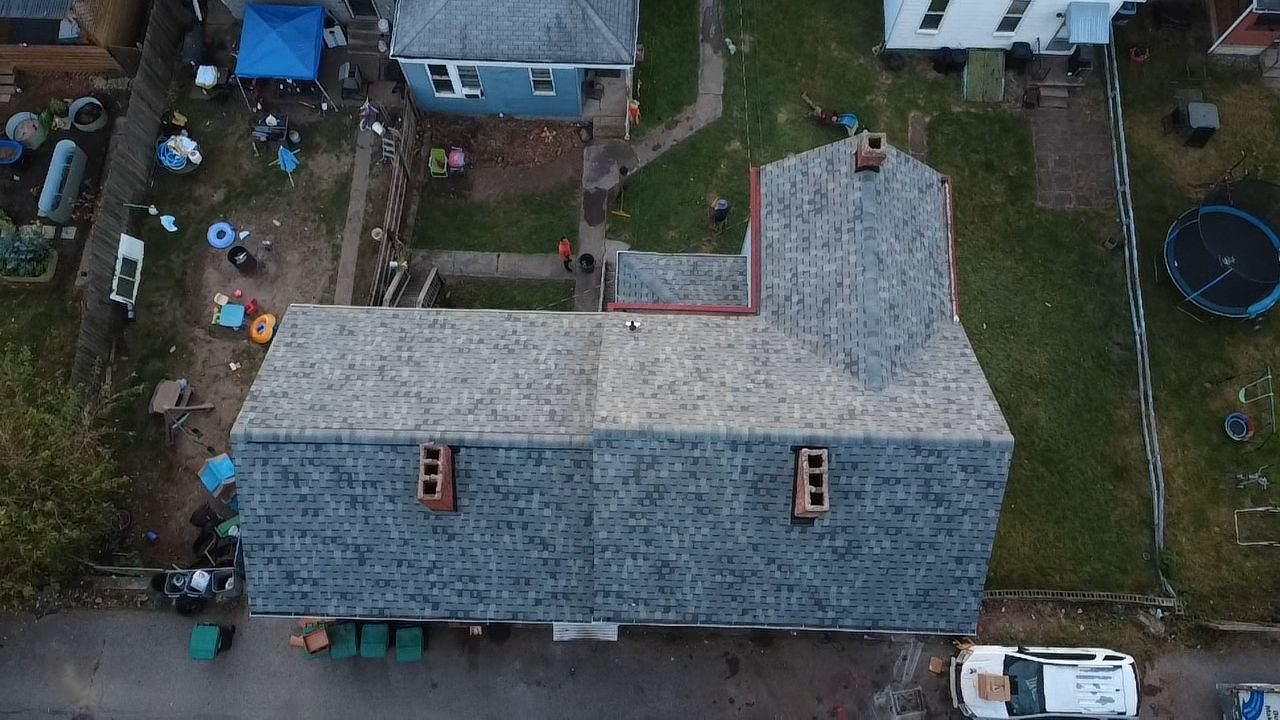
Most of our roofing jobs are finished in one day. When the crew packs up, we run a magnetic sweep over the yard, driveway and beds to pick up nails.
Drone view of a roof partway through tearoff in Pittsburgh, Alan Construction.
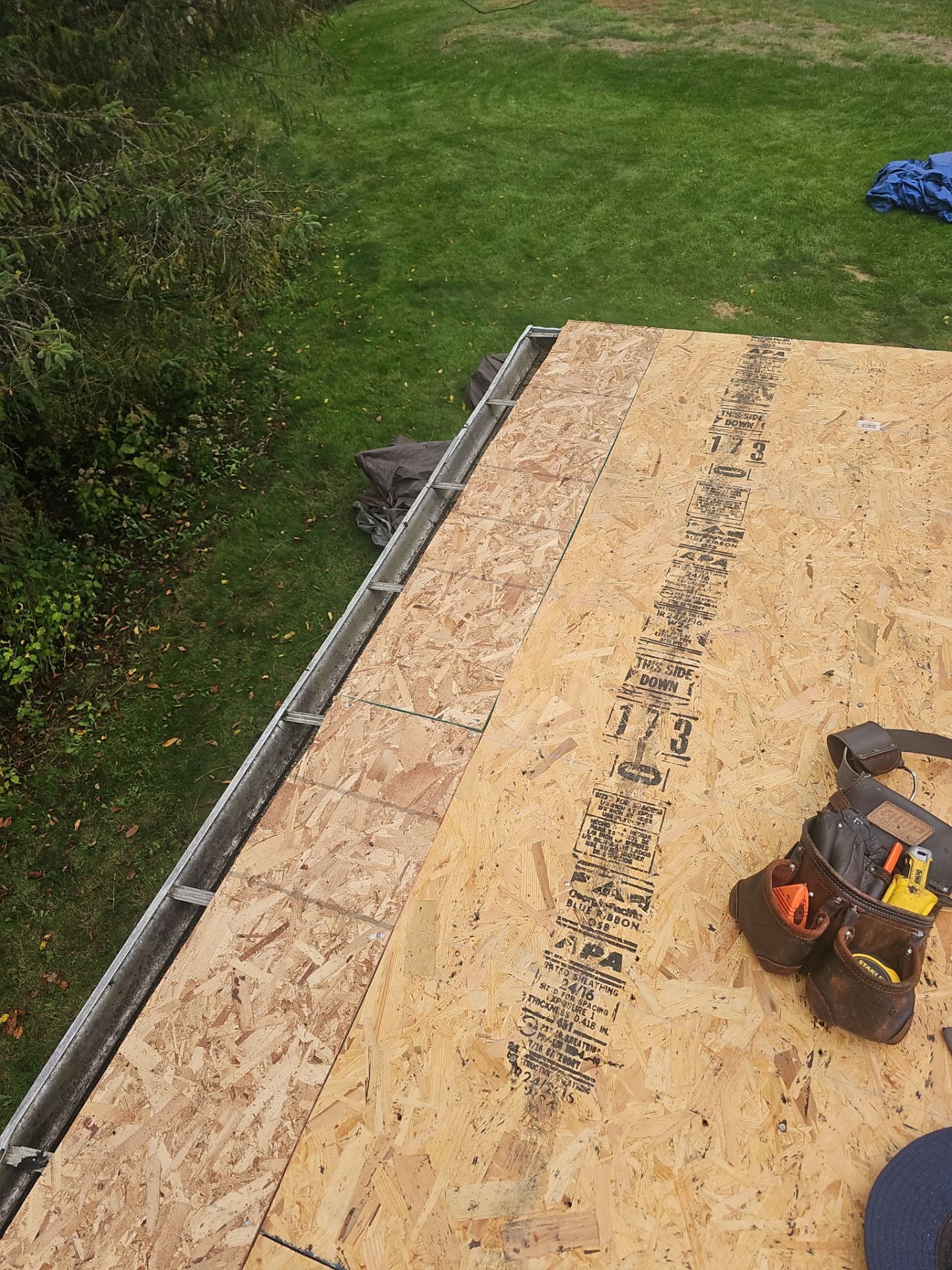
Any soft, rotted or delaminated decking gets cut out and replaced before anything else goes down. New shingles nailed into bad wood will not hold, no matter how good the shingle is.
If we find bad boards once the old roof is off, we show you photos and explain the options before we go further. You are never guessing about what is under your roof.
Fresh OSB decking along the gutter edge on a roof in Imperial, Alan Construction.
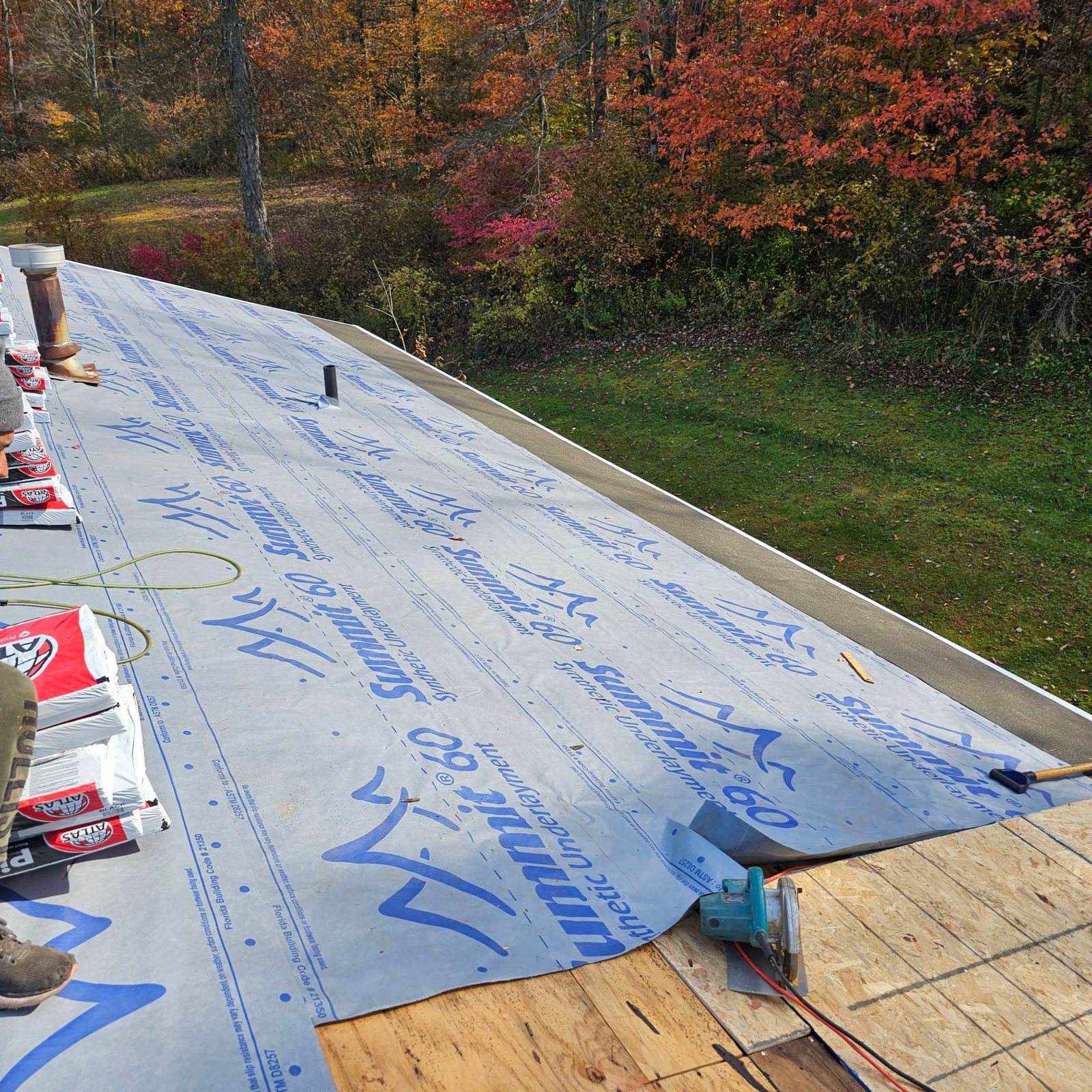
Over the deck goes underlayment, then the shingles. We install Atlas shingles, including Pinnacle Pristine. Atlas says Pinnacle Pristine uses 3M Scotchgard Protector to help prevent the black streaks caused by algae, which matters on our shaded, damp hillsides.
Andrew S. described his job this way: “Alan was thorough in his assessment of my roof, while providing a transparent explanation along with a fair estimate for replacement.”
Synthetic underlayment down and the first shingle courses started on a roof in Natrona Heights, Alan Construction.
Before you hire anyone, check that the contractor is registered. Pennsylvania requires home improvement contractors to register with the Office of Attorney General, and our registration number is PA#126638. If the timing is tight on your budget, we also offer roof financing through a lender network.
How to get the most years out of your next roof
You can’t change the weather, but you can keep it from shortening your roof’s life.
- Clean the gutters at least twice a year, in late spring and after the leaves drop, so water doesn’t back up under the roof edge.
- Trim branches that hang over or rub on the roof, and clear leaves out of the valleys.
- Make sure the attic is vented. Trapped heat and moisture cook shingles from underneath and help ice dams form.
- Have the roof inspected after any big wind or hail storm, and every couple of years once it passes 10 years old.
- Fix small problems like a cracked pipe boot or loose flashing right away, before water gets to the deck.
- Keep a folder of your install date, invoices and repairs. It helps with warranties, insurance claims and planning.
Not sure how much life your roof has left? Request a free, no obligation estimate and we’ll inspect it and give you a straight answer, repair or replace.