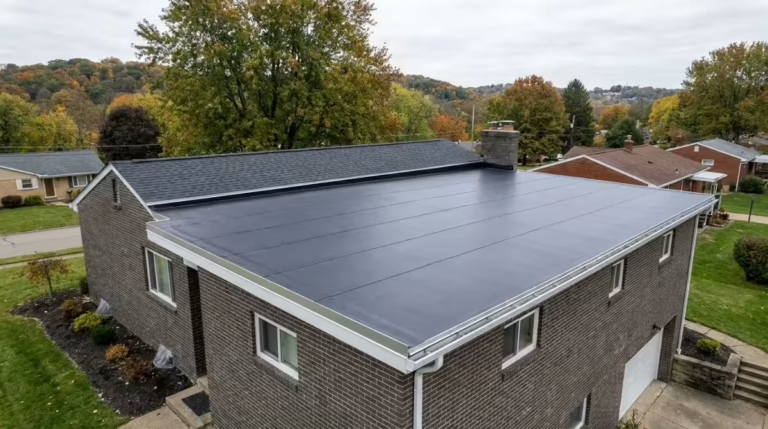
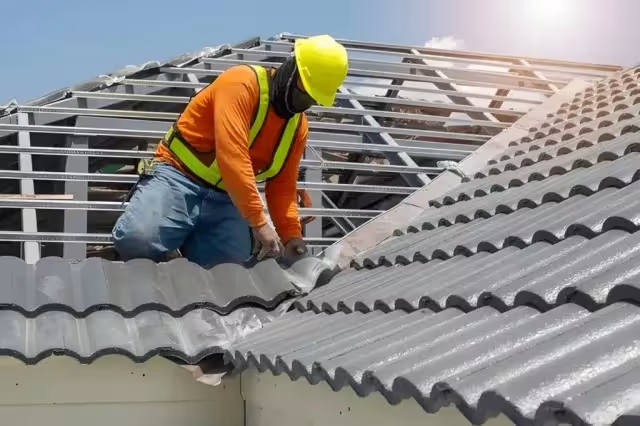
When it comes to flat roof repair in Pittsburgh, patch the roof when damage is small and isolated, recoat it when the membrane is still sound but showing its age, and replace it when leaks keep coming back, the insulation underneath is wet, or the roof has reached the end of its life. Condition matters more than age.
That’s the short answer, but the right call for your porch, rowhouse, or garage depends on what’s actually happening under the surface. Flat roofs hide problems well, and a leak showing up in your ceiling may have started several feet away. Below, we’ll walk through how each option works, when it makes sense, and what to look for before you call a contractor for professional roof repairs.
Why Do Flat Roofs Struggle in Pittsburgh?
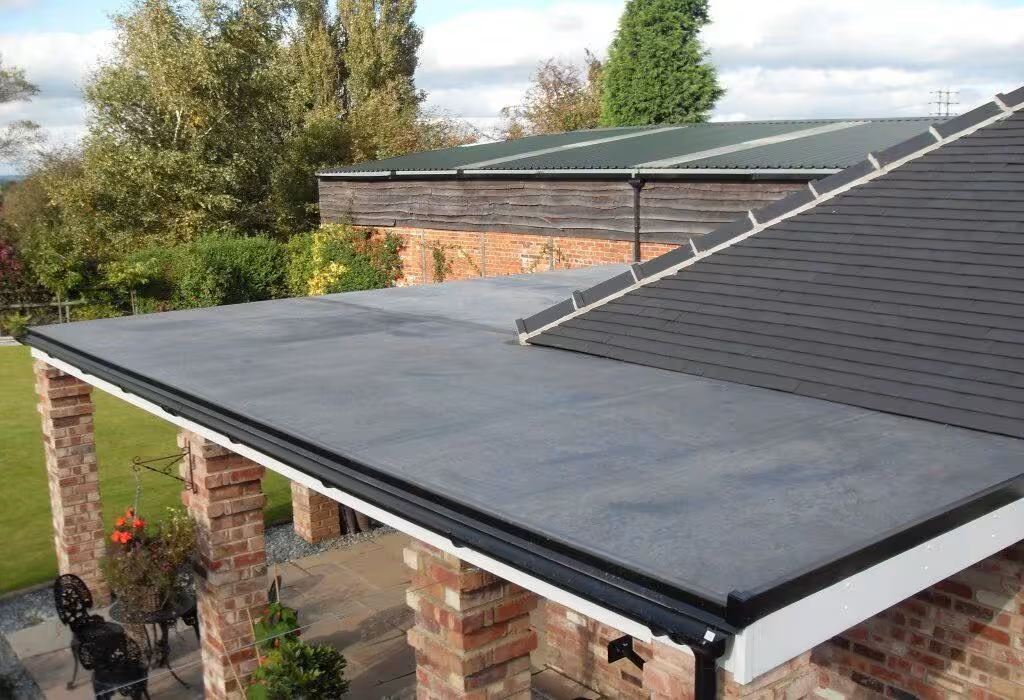
Flat and low-slope roofs are everywhere in Pittsburgh, from the back additions on Lawrenceville and Bloomfield rowhouses to porch roofs in Dormont and detached garages all over the South Hills. They’re practical, but our climate is hard on them. Western Pennsylvania sees dozens of freeze-thaw cycles each winter, and every time water seeps into a small crack, freezes, and expands, that crack gets a little bigger.
Drainage is the other big issue. A “flat” roof should still have a slight pitch toward a drain, scupper, or gutter, but older homes settle over time, and many porch and addition roofs were never pitched well to begin with. Water that sits for more than a couple of days after a storm, known as ponding, breaks down roofing materials faster and finds every weak seam. Add heavy, wet snow loads and clogged downspouts from fall leaves, and it’s easy to see why flat roofs here need regular attention.
What Are the Signs Your Flat Roof Needs Attention?
Some warning signs are obvious, like water stains on the ceiling or a drip during heavy rain. Others are easy to miss unless you get up on the roof or look closely from a window. Watch for:
- Standing water that remains 48 hours after rain
- Blisters, bubbles, or soft spots in the roofing surface
- Cracks, splits, or alligator-like cracking on older tar or modified bitumen roofs
- Seams or edges lifting, especially on rubber (EPDM) roofs
- Flashing pulling away from walls, chimneys, or where a porch roof meets the house
- Moss, algae, or vegetation growing in low spots
- Sagging areas, which can point to wet or damaged decking
If you notice any of these, it’s worth having the roof inspected before winter sets in. Small problems found in the fall are almost always easier to handle than the ones discovered in February.
When Does Patching a Flat Roof Make Sense?
Patching is the right choice when the damage is limited to a specific spot and the rest of the roof is in good condition. A puncture from a fallen branch, a failed seam, a small blister, or flashing that has come loose around a vent pipe are all good candidates for a targeted repair.
The key is making sure the patch is compatible with the existing roof. Rubber needs to be repaired with rubber-compatible materials, and modified bitumen needs its own approach. A quick fix with the wrong product or a bucket of roofing tar might stop a leak for a season, but it often fails during the next freeze-thaw stretch and can make a proper repair harder later.
Patching stops making sense when you’re chasing leaks year after year. If a roof needs several patches in different areas, that’s usually a sign the whole system is wearing out.
When Is Recoating the Better Choice?
Recoating applies a liquid-applied coating, such as silicone or acrylic, over the existing roof to create a fresh, seamless waterproof layer. It can extend the life of a roof that’s aging but still structurally sound, and it reflects sunlight, which helps on hot summer days.
Recoating works best when the membrane is weathered rather than failing. The surface needs to be cleaned and prepped, minor repairs need to be made first, and the insulation and decking underneath must be dry. Coating over trapped moisture seals the problem in, and it will keep deteriorating out of sight.
It’s also important to choose the right coating. Some coatings handle ponding water better than others, which matters on older Pittsburgh roofs with poor drainage. A good contractor will check for moisture and talk through which product fits your roof instead of recommending the same coating for every job.
When Is It Time to Replace Your Flat Roof?
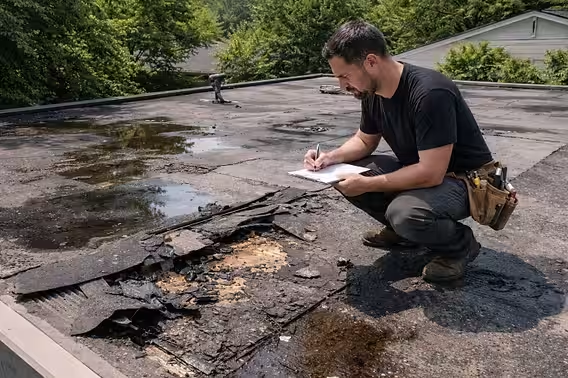
Replacement is the right move when the problems go beyond the surface. That includes widespread leaks, multiple layers of old roofing already stacked on the house, saturated insulation, rotted or sagging decking, or a membrane that’s cracked and brittle across most of the roof. At that point, patching and recoating only buy time.
Replacement also gives you a chance to fix the root causes. A contractor can correct the pitch with tapered insulation, improve drainage, and install new flashing where the roof meets brick walls and parapets. Many Pittsburgh homeowners choose EPDM for replacement because it handles temperature swings well, and you can read more about why in our post on the rise of rubber flat roofs in Pittsburgh.
Patch, Recoat or Replace: How Does It Differ for Porches, Rowhouses and Garages?
Porch Roofs
Porch roofs are small, but they take a beating. They often sit right below a gutter line, collect runoff from the main roof, and have flashing where they tie into the house. Many leaks start at that connection point, which means a flashing repair may solve the problem. If the porch ceiling shows sagging or rot, though, the decking likely needs attention, and replacement is the safer path.
Rowhouse and Addition Roofs
Rowhouses in neighborhoods like the Strip District, Polish Hill, and the South Side often have flat roofs bordered by party walls and parapets. Flashing along shared walls is a common trouble spot, and older built-up tar roofs may have been layered over more than once. These roofs benefit from a careful inspection, since stacked layers can hide moisture and make recoating a poor investment.
Garage Roofs
Detached garages frequently get less maintenance than the house, so problems can go unnoticed for years. Because garages often aren’t heated, small leaks may not seem urgent, but water can rot the decking and framing quickly. If the structure is still solid, patching or recoating can work well. If the roof deck is soft, plan for replacement.
What Should You Expect When Hiring a Flat Roof Contractor?
A good contractor will start with an inspection rather than a sales pitch. That means getting on the roof, checking seams and flashing, looking at drainage, and checking for moisture underneath the surface. They should explain what they found and why they’re recommending a patch, recoat, or replacement.
What Affects the Cost of Flat Roof Repair?
Several factors influence the cost of the project, including the size of the roof, the type of existing material, how many layers need to be removed, whether decking or insulation needs replacing, access to the roof, and any drainage improvements. Rowhouses with tight access or roofs that require hauling materials through narrow alleys can add complexity.
Questions to Ask Before You Hire
Ask whether the contractor is licensed and insured in Pennsylvania, what materials they recommend and why, how they’ll handle any wet insulation or damaged decking found during the work, and what warranty covers the materials and labor. Clear, direct answers are a good sign you’re working with someone who knows flat roofs.
Flat Roof Repair FAQs
Can I recoat a flat roof that’s leaking?
Only after the leaks are found and repaired and the underlying materials are confirmed dry. A coating isn’t designed to fix active leaks on its own.
How often should a flat roof be inspected?
Twice a year is a good rule, ideally in spring and fall, plus after major storms. Fall inspections are especially useful in Pittsburgh before snow and freezing temperatures arrive.
Is ponding water always a problem?
Small amounts that evaporate within a day or two are common. Water that sits longer than 48 hours speeds up wear and should be addressed, often through drainage improvements or tapered insulation during replacement.
Can a new roof go over an old one?
Sometimes, but many older Pittsburgh homes already have multiple layers. Tearing off to the deck lets the contractor inspect for rot and moisture and gives the new roof a solid foundation.
Get Your Flat Roof Checked Before Winter
Whether it’s the roof over your front porch, the back of your rowhouse, or your garage, the sooner a problem is caught, the more options you’ll have. A small patch today can prevent a full replacement after a hard Western Pennsylvania winter. If you’re seeing standing water, stains, or worn seams, Alan Construction can inspect your roof and give you an honest recommendation on whether to patch, recoat, or replace. Learn more about our Pittsburgh roof repair services and contact our team to schedule your inspection.