Rubber flat roofs have become one of the most common roofing upgrades in Pittsburgh, PA, on row houses, back additions, porches, duplexes and commercial buildings alike. If you’re planning a flat roof installation in Pittsburgh, PA, EPDM rubber is usually the system to beat: it stays flexible through our freeze and thaw winters, holds up to summer sun, and keeps water out for decades when the drainage and flashing are done right.
Alan Construction has been serving Pittsburgh since 2003, and flat rubber roof installation is a regular part of our work on both homes and commercial buildings. This guide covers why rubber took over from tar and roll roofing here, how it compares with shingles, what a proper install includes, and when a leaking flat roof can be repaired instead of replaced.
Short answer: EPDM rubber is the go to flat roof for Pittsburgh because it stays flexible in the cold and resists UV in the summer. Good drainage and well flashed walls, chimneys and pipes are what make it last.
Why Rubber Flat Roofs Work in Pittsburgh
A rubber flat roof is usually EPDM (ethylene propylene diene monomer), a synthetic rubber membrane that comes in large sheets. On a small roof, a single sheet can often cover the whole area with no seams at all. On a bigger roof, the sheets overlap and are joined with primer and seam tape.
Our city gets all four seasons: hot, humid summers, heavy spring rain, snow, and long stretches of freeze and thaw. Older flat roof materials like tar and gravel or mineral surfaced roll roofing get brittle and crack as they expand and contract. EPDM is designed to move with temperature changes, which makes it far more resistant to cracking, splitting and the slow leaks that follow.
Rubber is also lightweight and needs very little maintenance compared with other flat roof systems. That combination is why it has become the standard choice on the flat and low slope roofs found all over Pittsburgh.
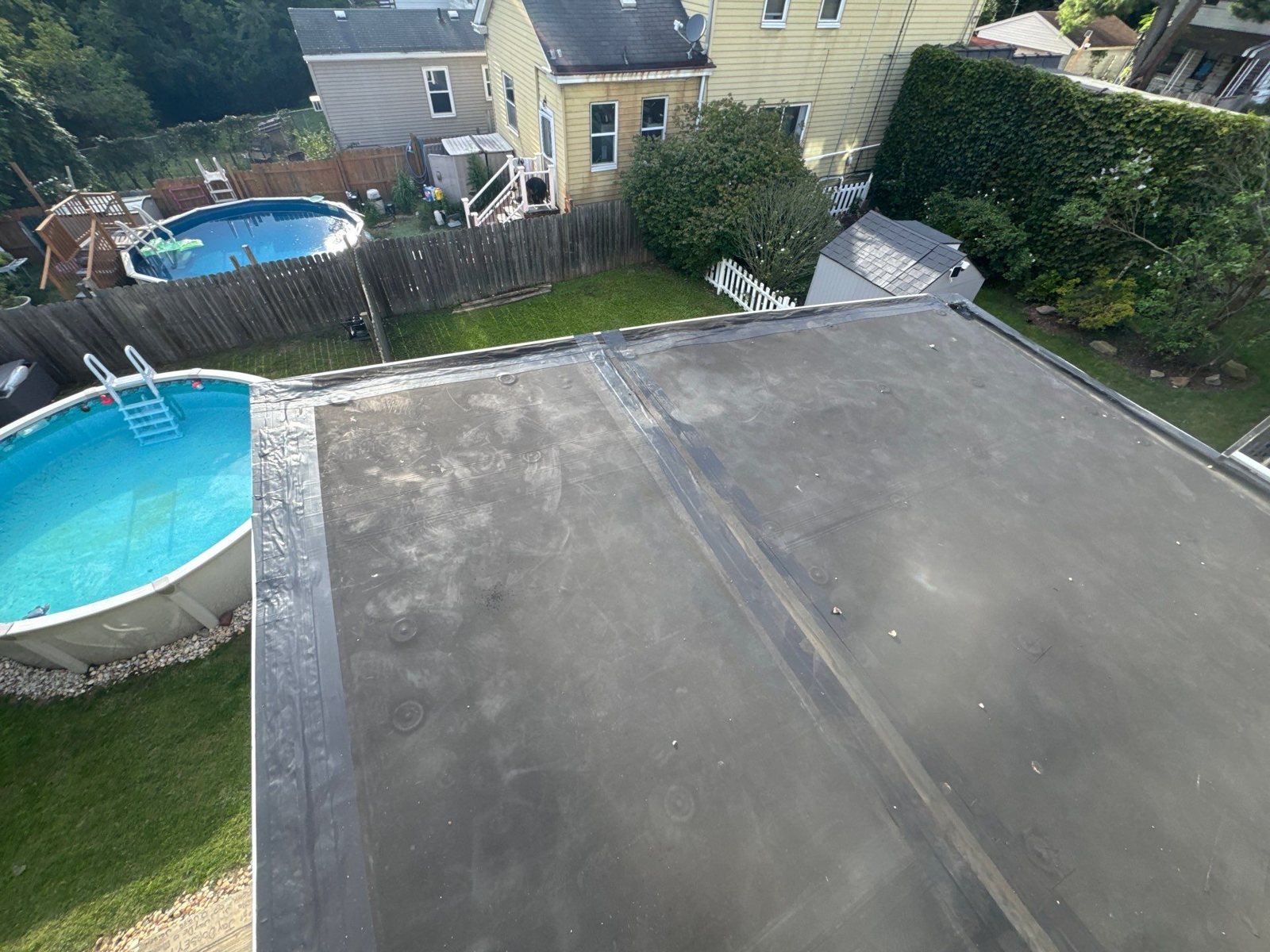
Back additions, kitchen bump outs and enclosed porches are where most Pittsburgh homeowners first deal with a flat roof. The main house has a pitched shingle roof, but the room off the back has a roof too flat to shed water the way shingles need to.
That’s exactly where rubber belongs. One homeowner put it this way in a Google review: “A few years ago, we hired them to install a rubber roof on a small back room. They did a great job and stopped the leaks that we were having.” (Suzanna M.)
Black rubber flat roof over a back addition beside a backyard pool in Pittsburgh, Alan Construction.
Shingles vs. Rubber Roofs: What’s the Difference?
Asphalt shingles are a water shedding system. Each course overlaps the one below it, and gravity carries the water down and off the roof. On a roof with little or no pitch, water slows down, wind pushes it back up under the laps, and leaks follow. That’s why the residential building code does not allow asphalt shingles on roofs flatter than two inches of rise per foot.
A rubber roof works differently. It’s a waterproofing membrane: one continuous layer adhered to the roof deck, with taped seams and flashed edges, so water can sit on it for a while without getting through.
| Feature | Asphalt shingles | EPDM rubber |
|---|---|---|
| Where it works | Pitched roofs, 2 in 12 and steeper | Flat and low slope roofs |
| How it keeps water out | Overlapping courses shed water | One continuous membrane with taped seams |
| Weak spots | Wind driven rain and ponding on low pitch | Seams, edges and flashings if poorly installed |
| Best fit | The main roof of most houses | Additions, porches, row houses, garages, commercial roofs |
Most Pittsburgh houses with a flat section end up with both: shingles on the main roof and rubber on the low parts. When we replace one, we look at how the two tie together, because the joint between them is a common leak point.
Flat Roof Installation in Pittsburgh, PA: What a Good Job Includes
The difference between a rubber roof that lasts for decades and one that leaks in a few years is almost always in the details. A proper installation includes:
- Tear off to the deck. Old roll roofing, tar and layers of coating come off so the boards underneath can be inspected.
- Deck repair. Soft or rotted sheathing gets replaced. The membrane is only as good as what it’s adhered to.
- Drainage. Water should move to a gutter, scupper or drain instead of sitting in a low spot. Tapered boards can correct a roof that ponds.
- The membrane. As few seams as possible, and every seam primed and taped.
- Flashing. Every wall, parapet, chimney, vent pipe and curb gets its own flashing detail. Most flat roof leaks start at flashings, not in the open field of the roof.
- Edges. Metal drip edge or termination bar finishes the perimeter and ties the roof into the gutter.
Parapet walls are common on Pittsburgh row houses and storefronts. On a rubber roof, the membrane turns up the wall and is terminated and capped so water can’t get behind it.
You can also see the seams in this photo. On a roof this size, seams can’t be avoided, so the work is in making each one clean, primed and fully taped. A seam that was rushed is one of the first places a rubber roof opens up.
Black rubber flat roof membrane with a parapet and seams in Pittsburgh, Alan Construction.
Rubber Flat Roofs Through Pittsburgh’s Four Seasons
Winter: Snow and Freeze Thaw
Flat roofs don’t shed snow. It sits and melts slowly, so every low spot and every seam gets tested. EPDM stays flexible in the cold, which is why it outlasts tar and roll roofing here. Where a flat roof drains into a gutter, keep the gutter clear so meltwater has somewhere to go instead of freezing at the edge.
Spring: Heavy Rain
Spring storms show you how well a flat roof drains. Some water after a storm is normal, but water still standing a couple of days later means the roof has a low spot that should be corrected. Standing water adds weight and finds any weakness in a seam or flashing.
Summer: Heat and UV
EPDM handles sun and ozone well and doesn’t dry out the way asphalt products do. Standard black EPDM does absorb heat, so on a flat roof directly over a bedroom or living space, ask about a white membrane, which stays cooler in the summer.
Fall: Leaves and Branches
Leaves collect at drains, scuppers and gutters on flat roofs and can back water up. Branches that come down in a storm can puncture a membrane. A quick look after a windy day and a fall cleanout go a long way.
Where Rubber Flat Roofs Are Most Common in Pittsburgh
You’ll find rubber flat roofs across the city, especially where buildings are older and closely packed:
- Lawrenceville and Bloomfield: row houses, duplexes and rehab projects, plus newer townhomes built with flat rooflines.
- Shadyside, Squirrel Hill and East Liberty: a mix of older homes, multifamily buildings and rear additions with flat or low slope roofs.
- South Side: the dense streets of the Flats and the Slopes are full of row houses and converted buildings where rubber is the standard upgrade.
- North Side: from the Mexican War Streets to Allegheny West, older homes often have aging flat roofs that need a modern replacement.
- Strip District: newer construction with flat rooflines that pair naturally with rubber.
Ideal Applications: Homes and Buildings That Benefit Most
Rubber isn’t for every roof, but it’s the right answer in several specific cases:
- Row homes and townhouses: flat or low slope roofs with no room for a pitched design.
- Back additions, porches and garages: the low sections attached to a shingled house.
- Apartment buildings and duplexes: a practical, long lasting roof for multifamily owners.
- Commercial properties: storefronts, offices and warehouses with large flat roofs.
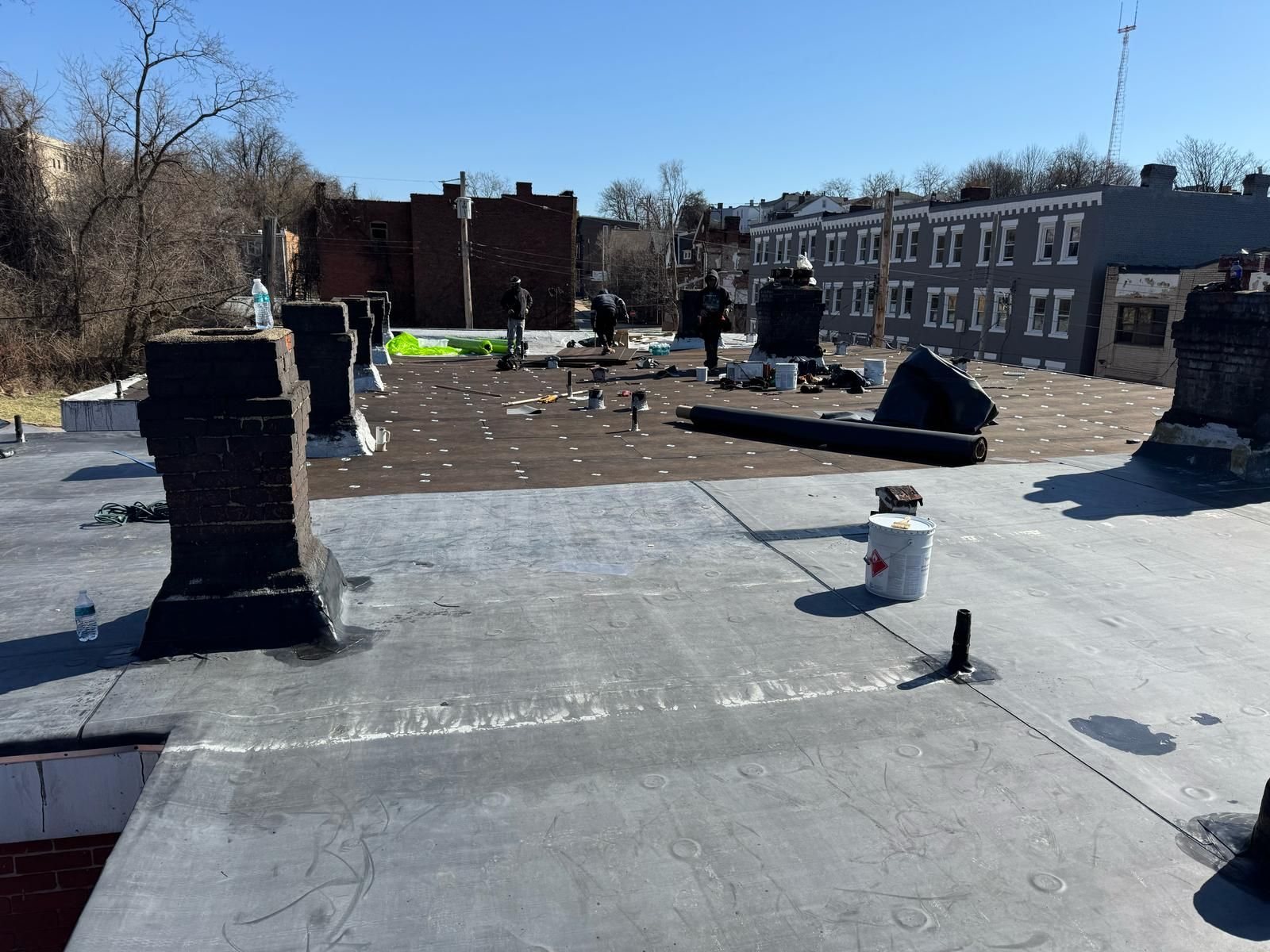
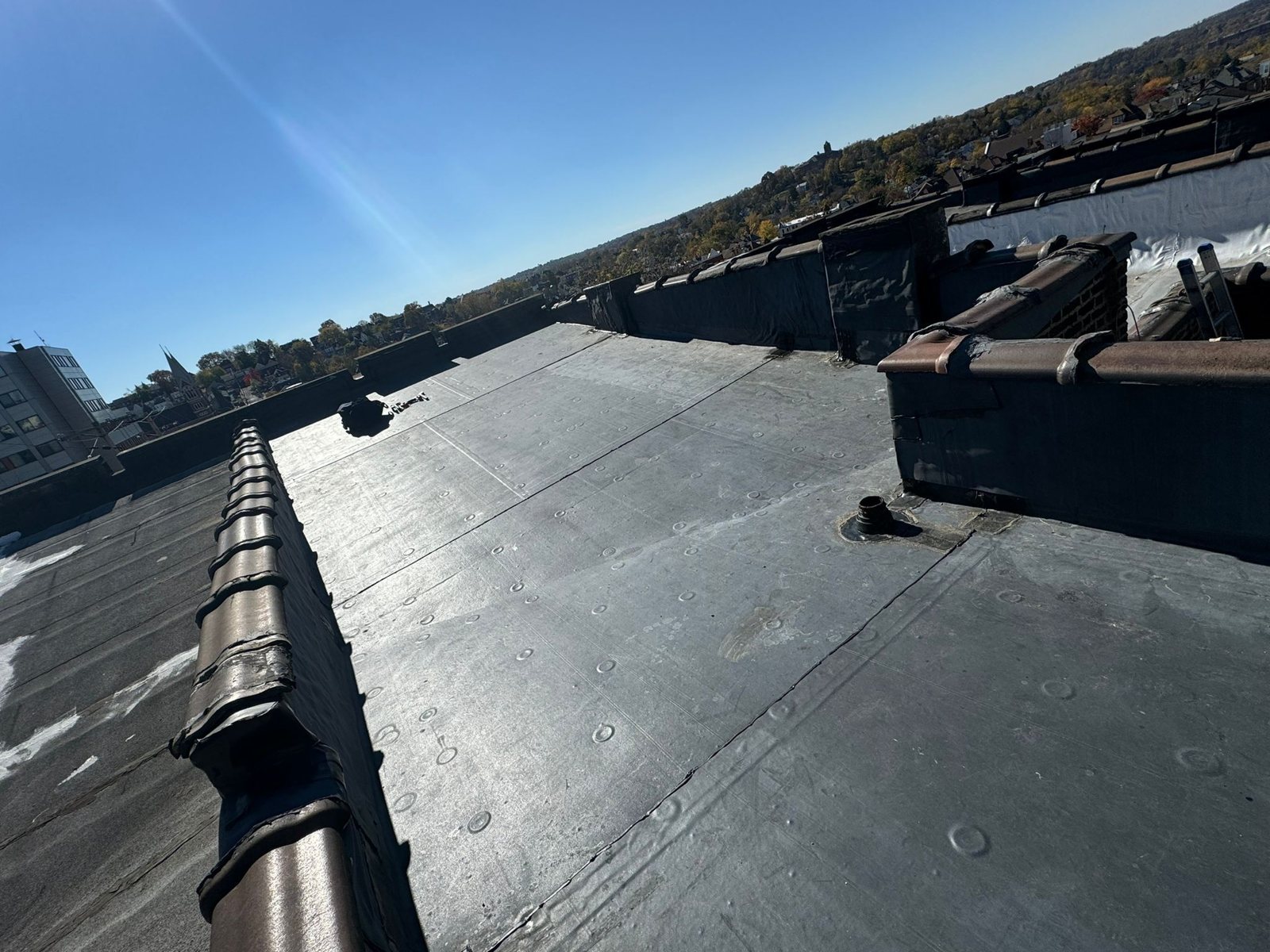
Alan Construction does commercial work as well as homes. This Pittsburgh commercial job was a full EPDM replacement on a long flat roof.
Every chimney and vent pipe you see here is a hole through the roof, and each one needs its own flashing. On commercial roofs with many penetrations, those details matter even more than the membrane itself.
New rubber roof with chimneys and vent pipes on a commercial building in Pittsburgh, Alan Construction.
Flat Roof Repair in Pittsburgh: Repair or Replace?
Not every leaking flat roof needs to come off. The most common problems we see are seams that have opened, flashing pulling away from a wall, cracked pipe boots, punctures, and roofs that have been patched with tar and coating so many times nobody can tell where the leak starts.
A repair usually makes sense when the roof is in good shape overall and the problem is in one spot, like a single seam or a pipe boot. Replacement makes more sense when the membrane is brittle or shrinking, there are leaks in several places, the deck underneath is soft, or the roof is old roll roofing or tar that has reached the end of its life. Our roof repair team will tell you honestly which one you’re looking at, and our guide to roof replacement vs. repair in Pittsburgh walks through the same decision for pitched roofs.
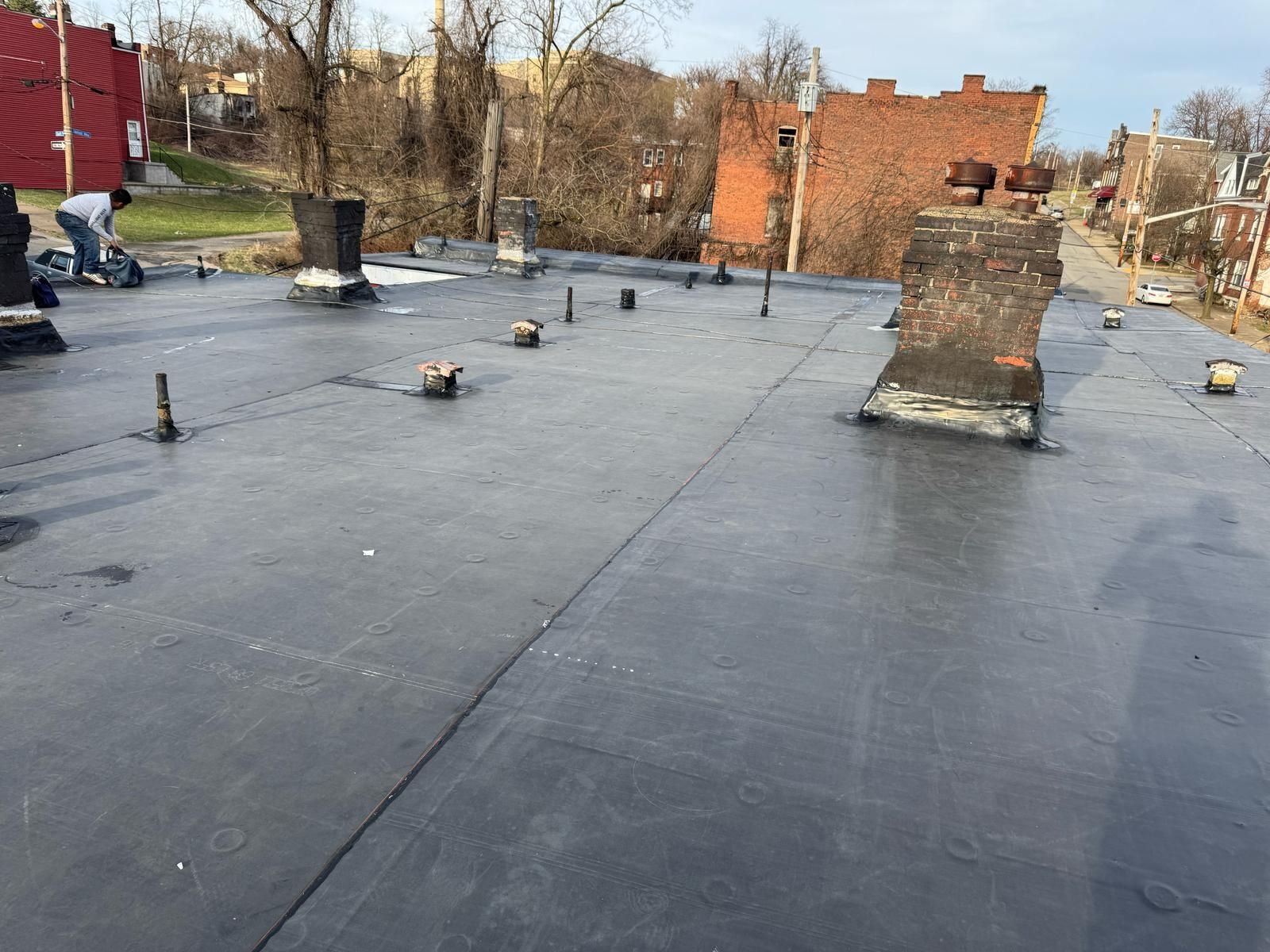
Pipe flashings and chimney flashing are the first places to check on any flat roof leak. Water finds the edge of a flashing long before it gets through an intact membrane.
Chimneys are a frequent trouble spot on Pittsburgh roofs of every type. Our guide to chimney flashing for Pittsburgh homes explains what good flashing looks like and why it fails.
Finished rubber membrane with pipe flashings and a chimney in Pittsburgh, Alan Construction.
Why Pittsburgh Property Owners Call Alan Construction for Flat Roofs
We’re a licensed and insured Pennsylvania home improvement contractor (PA#126638), BBB Accredited with an A+ rating, and we’ve been working on Pittsburgh roofs since 2003. Estimates are free and come with no obligation. Most of our roofing jobs are finished in one day, and we sweep the property with a magnet before we leave. If a storm caused the damage, we work with your homeowners insurance and meet the adjuster, and financing is available for larger projects.
Planning a flat roof installation or chasing a leak on a rubber roof? Request a free, no obligation estimate and we’ll look at the roof, the drainage and the flashing before we recommend anything.