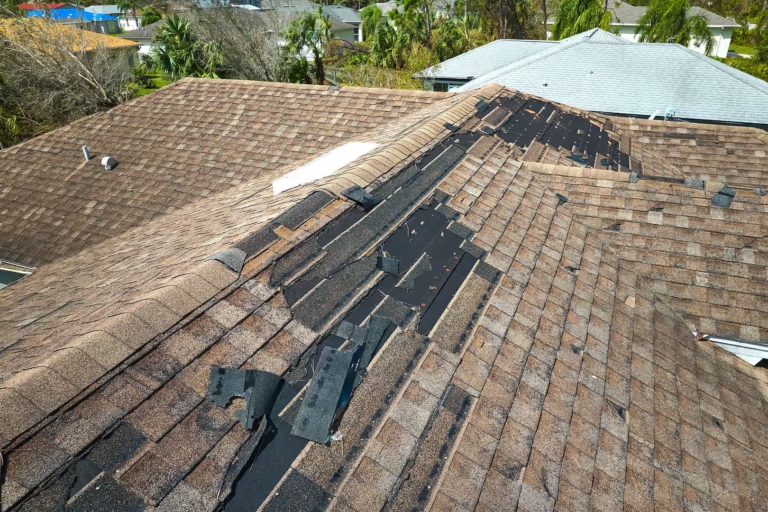
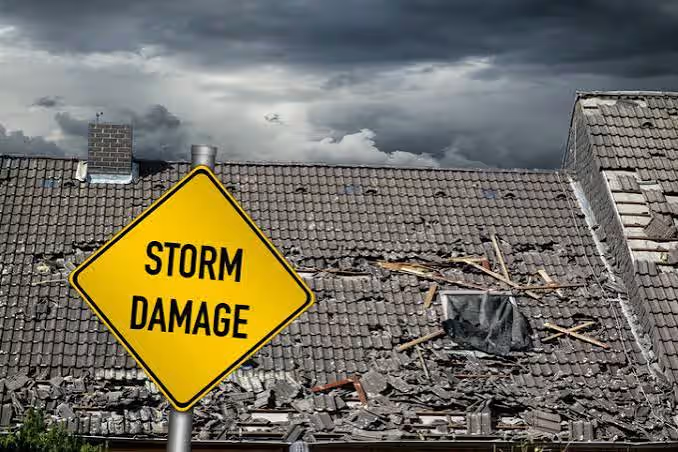
Slate is the longest lasting roofing you can put on a Pittsburgh house, and a well laid slate roof can go a century or more. Copper and standing seam metal come next, then clay or concrete tile, while architectural asphalt shingles give most homes around here the most years for the money.
That’s the short version. The longer answer depends on your roof’s pitch, the framing under it, how much shade and snow it sees, and above all how it’s installed. We’ve been doing roof replacement in Pittsburgh since 2003, and the early failures we get called out for usually start at the flashing, the valleys, the eaves or the attic, not in the middle of the roof.
Short answer: Slate lasts longest, followed by copper and other metal roofing, then tile. For most Pittsburgh homes, a properly installed architectural shingle roof is the best value per year of service.
Longest Lasting Roofing Materials, Ranked
The chart most home inspectors lean on is InterNACHI’s estimated life expectancy chart for home components. Here’s how its roofing numbers line up, with our notes on how each material behaves on Pittsburgh houses.
| Material | Typical life (InterNACHI) | Where it fits here | What to watch |
|---|---|---|---|
| Slate | 60 to 150 years | Older homes with steep roofs | Heavy; repairs need someone who knows slate |
| Clay or concrete tile | 100+ years | Houses framed for the weight | Very heavy; must be rated for freeze and thaw |
| Copper | 70+ years | Bay windows, porch roofs, accents | Rarely used for a whole roof |
| Metal (steel or aluminum) | 40 to 80 years | Snowy, exposed or low maintenance roofs | Snow sliding off; seam and fastener quality |
| Architectural asphalt shingles | About 30 years | Most Pittsburgh homes | Ventilation, ice and water shield, flashing |
| Three tab asphalt shingles | About 20 years | Older budget roofs | Wind lift and granule loss |
| EPDM rubber (flat) | 15 to 25 years | Rowhouse, porch and back room roofs | Seams, drains and standing water |
| Simulated slate | 10 to 35 years | Slate look without slate weight | Quality varies a lot by product |
Those ranges assume normal wear and regular maintenance. A poorly vented attic or a bad flashing detail can leave any roof well short of the chart.
What Pittsburgh Weather Does to a Roof
Our weather isn’t extreme in any one way. It’s hard on roofs because it changes so often.
- Freeze and thaw. Winter swings above and below freezing, sometimes in one day. Water in a crack or under a lifted shingle freezes, expands and opens the gap a little more each time.
- Ice dams. Attic heat melts snow on the upper roof, and the water refreezes at the cold eaves, then backs up under the shingles. That’s why ice and water shield along the eaves matters here.
- Wet springs and falls. Steady rain tests valleys, flashing and gutters.
- Humid summers and shade. On tree lined streets and north facing slopes, roofs stay damp, and moss and algae take hold.
- Wind on the hills. Houses on exposed hillsides catch gusts that lift shingle edges, especially on older roofs.
Slate: The Century Roof
Slate is quarried stone split into shingles. It doesn’t rot, it doesn’t burn, and good slate absorbs very little water, so freeze and thaw cycles do little to it. On Pittsburgh’s older homes you’ll still find slate roofs that have been in place for generations.
The weak points are everything around the slate. Nails rust out, flashing wears through, and one broken slate lets water in, so a leaking slate roof often needs a repair rather than a new roof. Walking on slate breaks it, so hire someone who knows how to work on it.
Slate is also heavy, and a house that wasn’t framed for it usually can’t carry it. If you have sound slate now, keep it. Synthetic slate gives a similar look at a fraction of the weight, but its life depends heavily on the product.
Metal Roofing: Long Life, and Snow Slides Off
Standing seam steel or aluminum roofing runs 40 to 80 years on InterNACHI’s chart. Panels lock together with raised seams and hidden fasteners, so there are few holes for water to find. Metal won’t crack in a hard freeze, and it sheds snow quickly, which helps on houses that tend to get ice dams.
That snow shedding has a downside. On a steep metal roof, snow can slide off in one sheet onto a walkway, a porch roof or a car. Snow guards solve it, and they belong in the plan for any metal roof above a door or path.
Exposed fastener panels are a different product, since their rubber washers age and need checking. Copper lasts longest of all, but around here it’s mostly used on bay windows and porch roofs.
Clay and Concrete Tile
Tile can outlast almost anything, and InterNACHI lists it at 100 years or more. It’s also one of the least common materials on Pittsburgh houses, for two reasons. Tile is very heavy, so the framing has to be checked and sometimes reinforced. And not every tile is made for a climate with real freeze and thaw cycles, so the product has to be rated for it.
When tile cracks, it’s usually from foot traffic or a falling limb, not age, and matching older profiles for repairs can take some searching.
Architectural Shingles: The Pittsburgh Workhorse
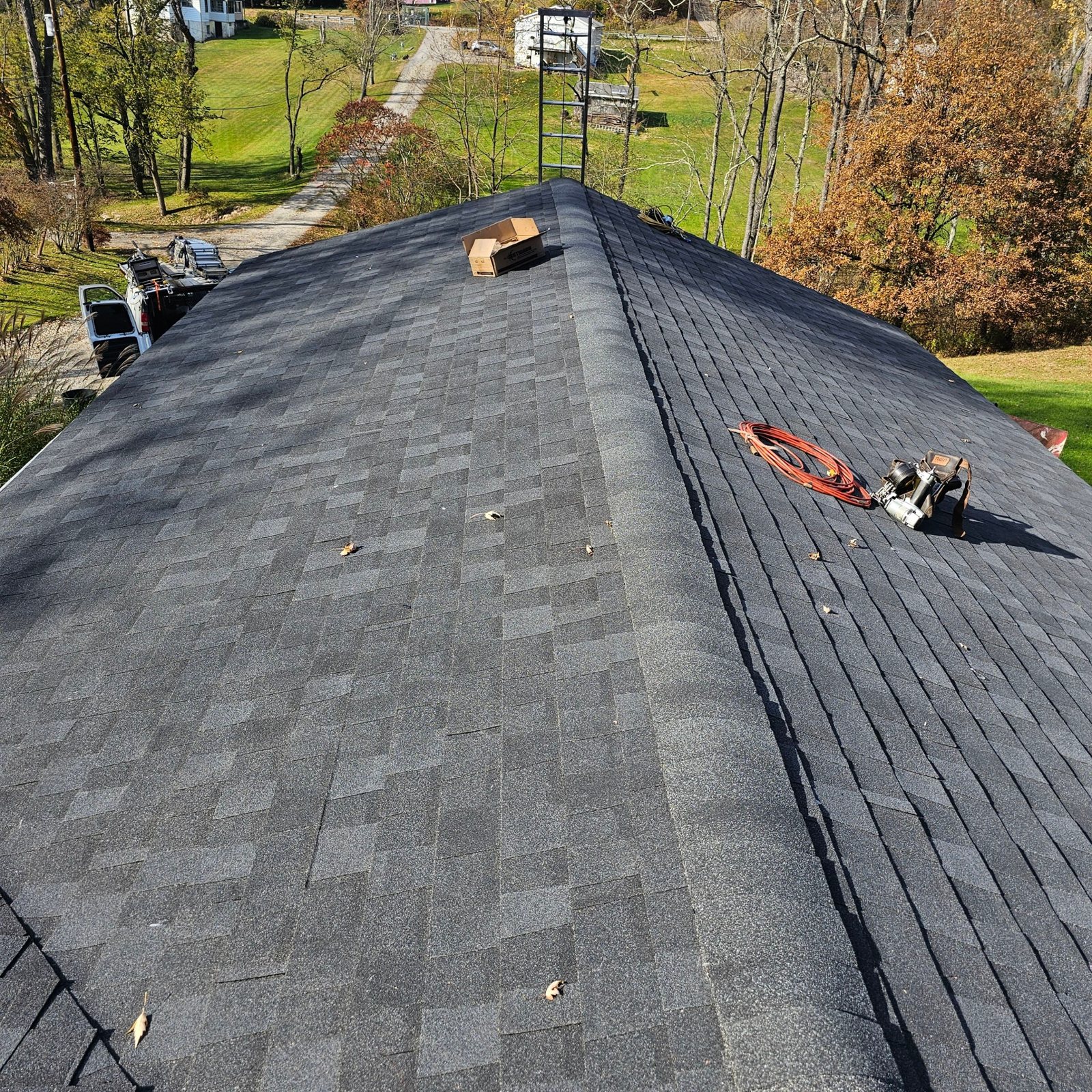
Most of the roofs we replace are asphalt, and nearly all of them go back on as architectural shingles. They’re thicker than the old three tab style, with laminated layers that give the roof depth and hold up better in wind.
InterNACHI puts architectural shingles at about 30 years and three tab at about 20. In practice, ventilation, sun exposure and the details at the edges decide the real number more than the warranty years printed on the bundle.
We install Atlas shingles, including Pinnacle Pristine, which Atlas makes with Scotchgard Protector to fight the black algae streaks you see on shaded roofs.
New gray architectural shingles meeting at the ridge on a Natrona Heights roof, Alan Construction.
Upgrading from three tab shingles
If your current roof is three tab, replacement is the time to move up. You get a heavier shingle and better wind resistance.
As any asphalt roof ages, watch for granule loss. A few granules in the gutters after a new install is normal, but bare patches on an older roof mean the shingles are wearing out. We explain the difference in why asphalt shingles lose granules and when to worry.
Flat Roofs: EPDM Rubber
Plenty of Pittsburgh rowhouses, porches, garages and back additions have flat or nearly flat roofs. Shingles don’t belong there, because water sits instead of running off. EPDM rubber is the usual answer, and InterNACHI rates it at 15 to 25 years.
A flat roof lasts longest when water drains off quickly and the seams and wall joints are done right. One homeowner, Suzanna M., wrote in her review: “A few years ago, we hired them to install a rubber roof on a small back room. They did a great job and stopped the leaks that we were having.”
For more on flat roofs, see why rubber flat roofs are catching on in Pittsburgh.
Installation Decides How Long Any Roof Lasts
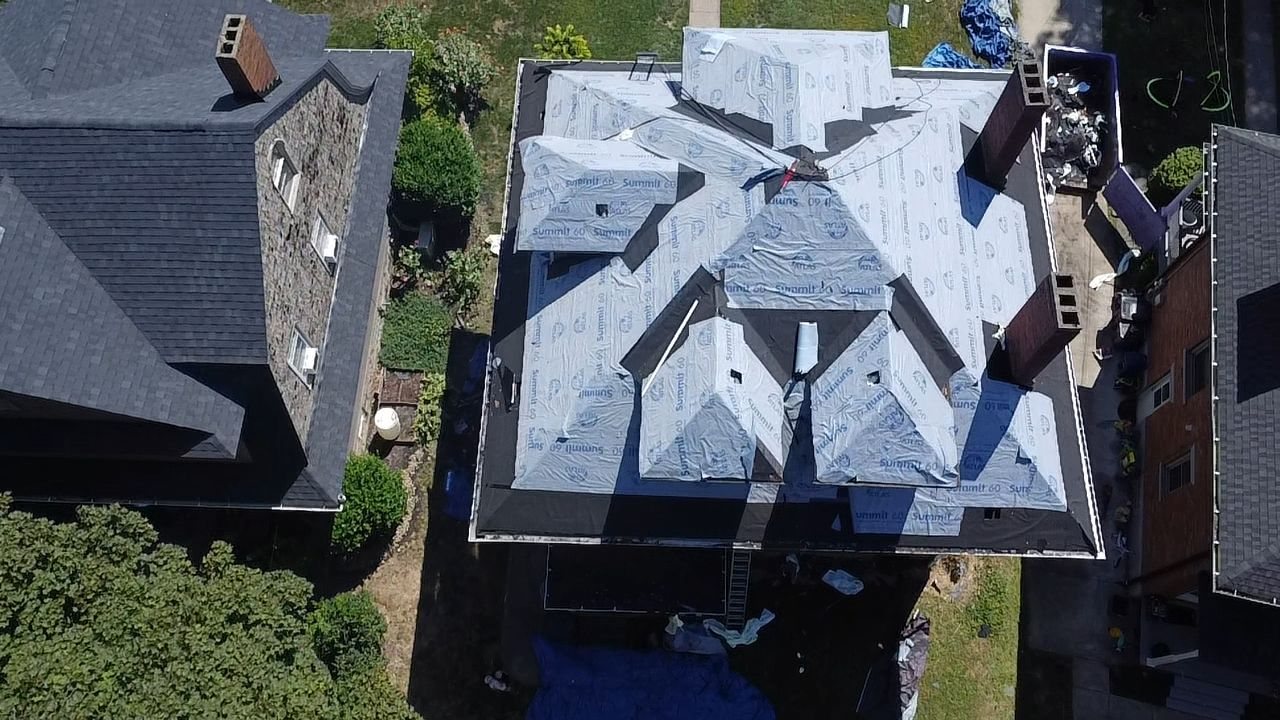
This roof shows why the details matter. Every dormer adds valleys, wall joints and corners, and each one is a place water can get in if the work is rushed.
Before shingles go on, soft or rotted decking should be replaced, ice and water shield should run along the eaves and into the valleys, and the rest of the deck should be covered in underlayment. That layer is what stops water when wind drives rain under a shingle. More in why roofing underlayment matters.
A Pittsburgh hip roof with many dormers wrapped in underlayment before shingles, Alan Construction.
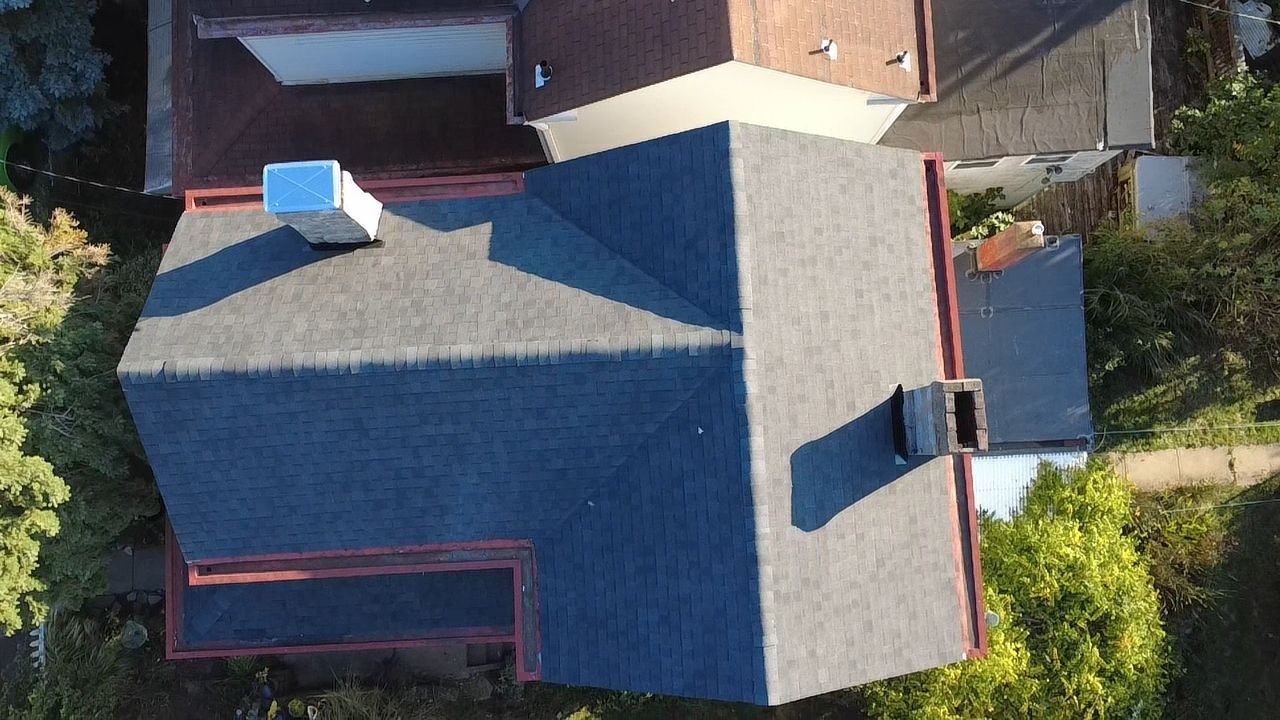
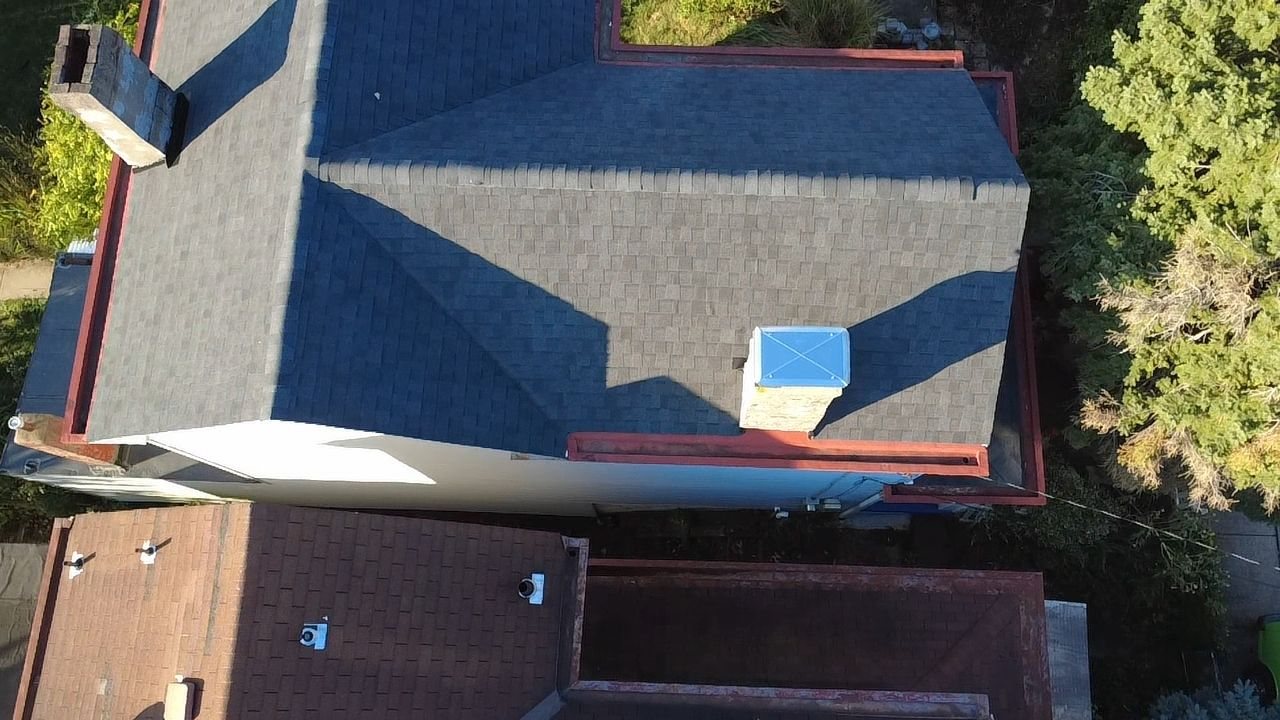
Chimneys, skylights and side walls are common leak points on any roof. Flashing has to be layered so water always runs over each joint, never into it.
On a replacement, ask for new step flashing and counter flashing around the chimney rather than reused old metal. A shingle roof rated for decades won’t get there if the chimney flashing gives out early.
Top down view of a finished gray shingle roof with a chimney in Bethel Park, Alan Construction.
Ventilation is the quiet factor. Air should come in low at the soffits and leave high at the ridge. When an attic can’t breathe, heat bakes the shingles from below in summer and feeds ice dams in winter.
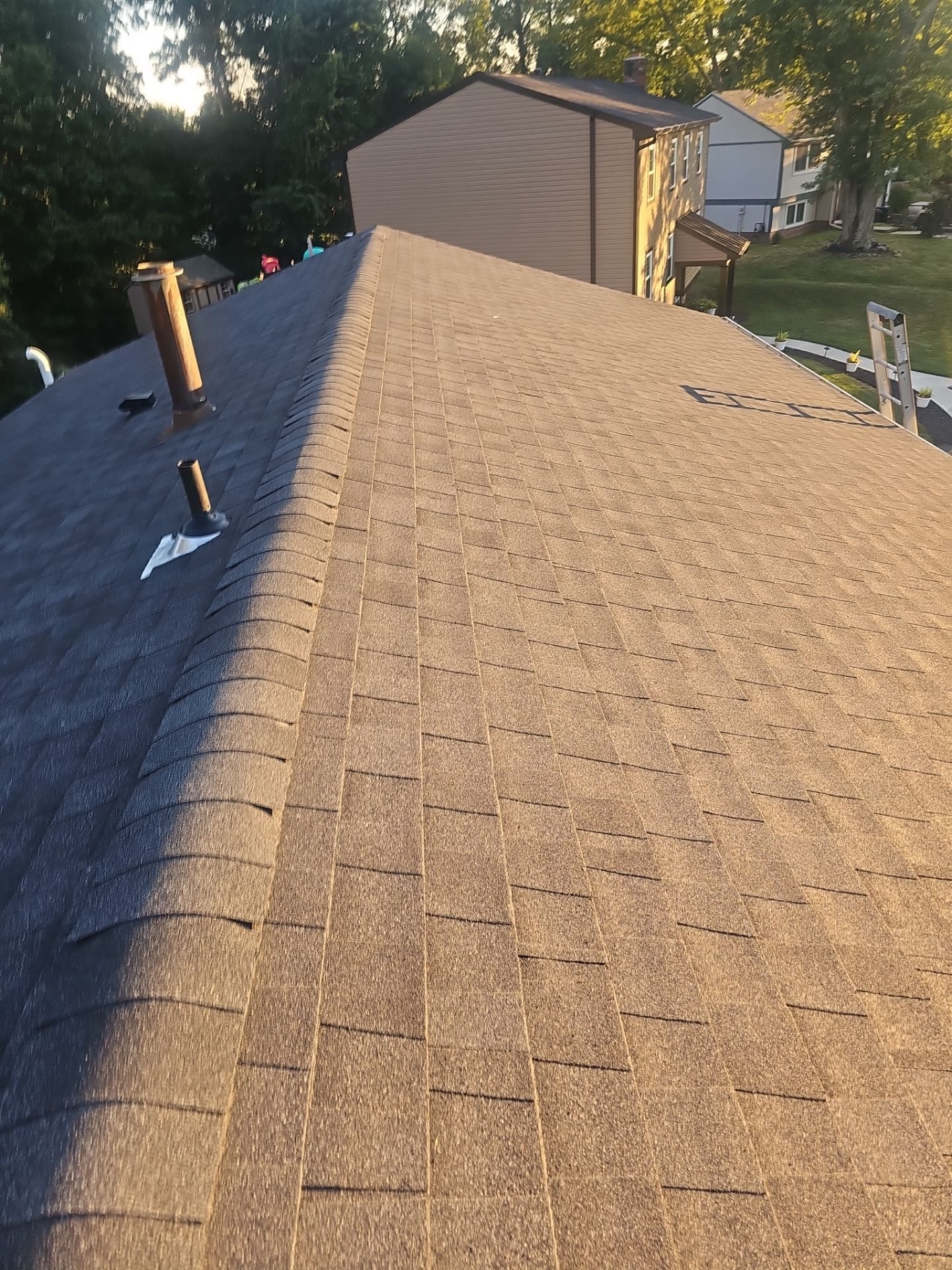
Small parts matter too. The rubber boots around plumbing vent stacks dry out and crack long before good shingles do, so they should be replaced with any new roof.
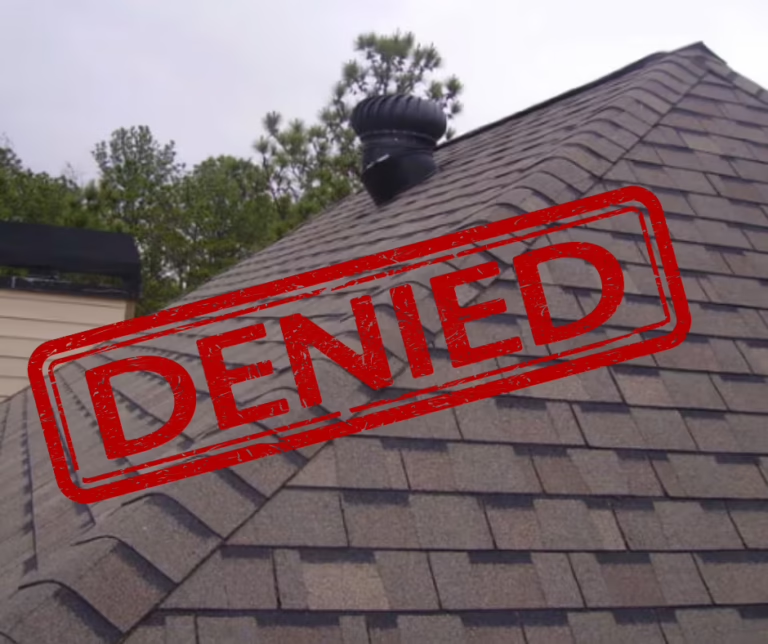
New brown shingle slope with the ridge line and a vent stack on a Pittsburgh home, Alan Construction.
Choosing the Right Material for Your House
Lifespan is only one question. Here’s what we look at when a homeowner asks what to put on:
- Roof shape and pitch. Very low slopes need a flat roof system, not shingles, while steep slopes suit slate and standing seam metal.
- Framing. Slate and tile need a structure built for their weight.
- How long you’ll stay. A century roof pays off best if you stay for decades.
- Historic rules. If your home is in a City of Pittsburgh historic district, changing the roofing material may need approval from the Historic Review Commission first.
As Geneva C. put it in her Google review: “He answered all my questions and recommended the best roof for my home.”
How to Make Your Roof Last Longer
- Keep gutters clean, especially after the leaves drop, so water can’t back up at the eaves. Gutter guards help on houses under big trees.
- Trim branches that hang over the roof.
- Look at the roof from the ground after wind storms. Missing or lifted shingles should be fixed right away, before winter water gets under them.
- Have a roofer look it over every few years once the roof passes 15 years old.
What Drives the Cost of a Long Lasting Roof
We don’t publish prices, because two houses on one street can price very differently. These things move the number:
- The material itself, from asphalt shingles up to standing seam metal and slate
- How many old layers have to be torn off
- How much decking is soft or rotted underneath
- Pitch, height and how many valleys, dormers and chimneys the roof has
- Flashing, skylight, ventilation and gutter work done at the same time
A free estimate covers all of that for your house, and we offer roof financing if you’d rather spread out the payments. We’re licensed and insured, registered as a Pennsylvania home improvement contractor (PA#126638), and most of our roofing jobs are finished in one day with a magnetic nail sweep before we leave.
Want to know which material fits your house and how many years your current roof has left? Ask for a free estimate and we’ll come out, look at the roof up close and walk you through your options.