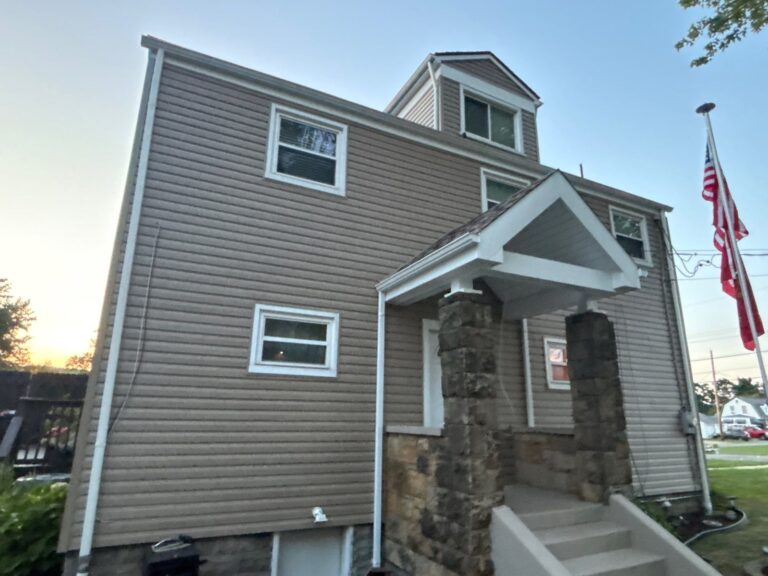
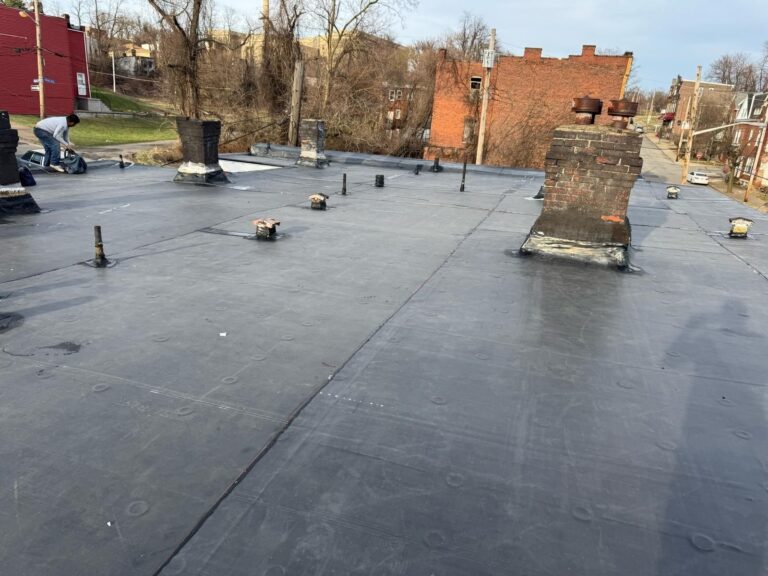
When should you replace siding instead of repairing it? A repair is usually enough when the damage is limited to a few panels, the sheathing behind them is dry and solid, and matching vinyl is still available. Replacement makes more sense when damage is spread across several walls, moisture has reached the wall structure, or the siding is simply worn out.
The tricky part is that siding rarely shows how deep a problem goes. A cracked panel might be an isolated hit from a stray branch, or it might be the first visible sign of water that has been working behind the wall for several seasons. A careful look matters before you decide. If you’re already leaning toward a full upgrade, see our page on siding installation in Pittsburgh.
Short answer: repair it when the damage is in one spot and the wall behind it is dry and firm. Replace it when you find soft or stained sheathing, damage on several sides of the house, or brittle, faded panels that crack when you touch them.
Signs Your Siding Can Be Repaired
Not every problem calls for new siding across the whole house. Repairs are often the right call when the damage is confined to one area and the rest of the exterior is still in good shape. Common repairable issues include:
- a handful of cracked or broken vinyl panels
- a few loose or unlatched pieces after a windstorm
- small holes from hail or flying debris
- a melted or warped spot where a grill sat too close to the wall
The Damage Is Localized
If the problem is limited to one side of the house or a small section, such as the spot where a gutter overflowed onto a wall, a targeted repair is usually practical. Surrounding panels should still be checked, since damage often reaches farther than it first appears.
The Wall Behind the Siding Is Sound
The most important question in any repair is what’s underneath. When a damaged panel comes off, the house wrap and sheathing should be dry, firm and free of staining or mold. If everything behind the siding checks out, swapping the damaged pieces solves the problem without a larger project.
When to Replace Siding Instead
Some situations make patching a short term fix at best. If you’re seeing any of the following, replacement deserves a serious look.
Moisture Has Gotten Behind the Siding
Soft or spongy spots in the wall, peeling paint or bubbling drywall on interior walls, musty odors and visible mold near the siding all mean water has been getting in for a while. At that point the concern isn’t just the siding but the sheathing and framing behind it. Repairing the surface without fixing the source can trap moisture and make the problem worse.
Damage Is Spread Across Multiple Walls
When cracks, warping or loose panels show up on several sides of the house, it usually points to aging material rather than a single incident. Repairing one wall at a time can end up costing more over the years than handling everything at once.
The Siding Is Simply Worn Out
Severe fading, brittleness, widespread warping and panels that crack when touched are signs the material has reached the end of its life. Older vinyl and aluminum siding, common on many mid century homes around Pittsburgh, gets brittle with age, which makes each repair harder to do cleanly.
When a house gets to this point, new vinyl on the worn walls is usually the better long term value. For more on what to watch for over time, read why it’s time to replace your siding in Pittsburgh’s suburban neighborhoods.
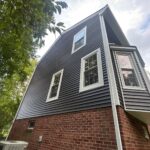
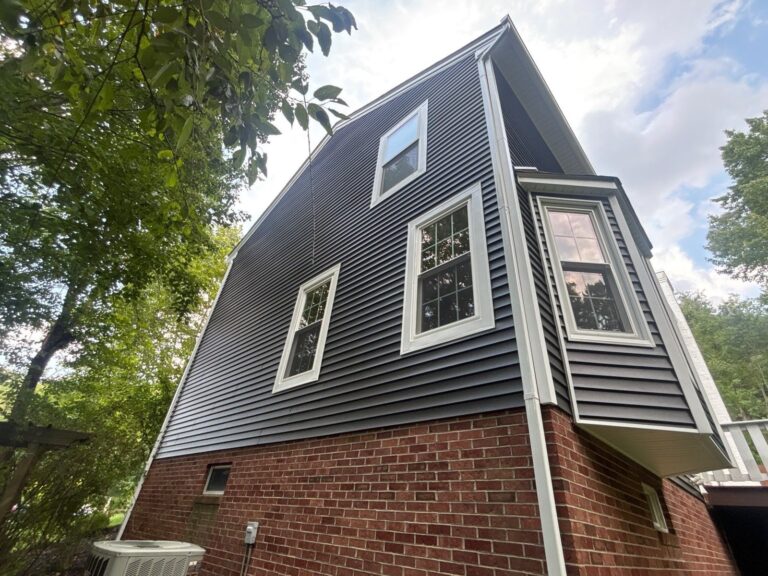
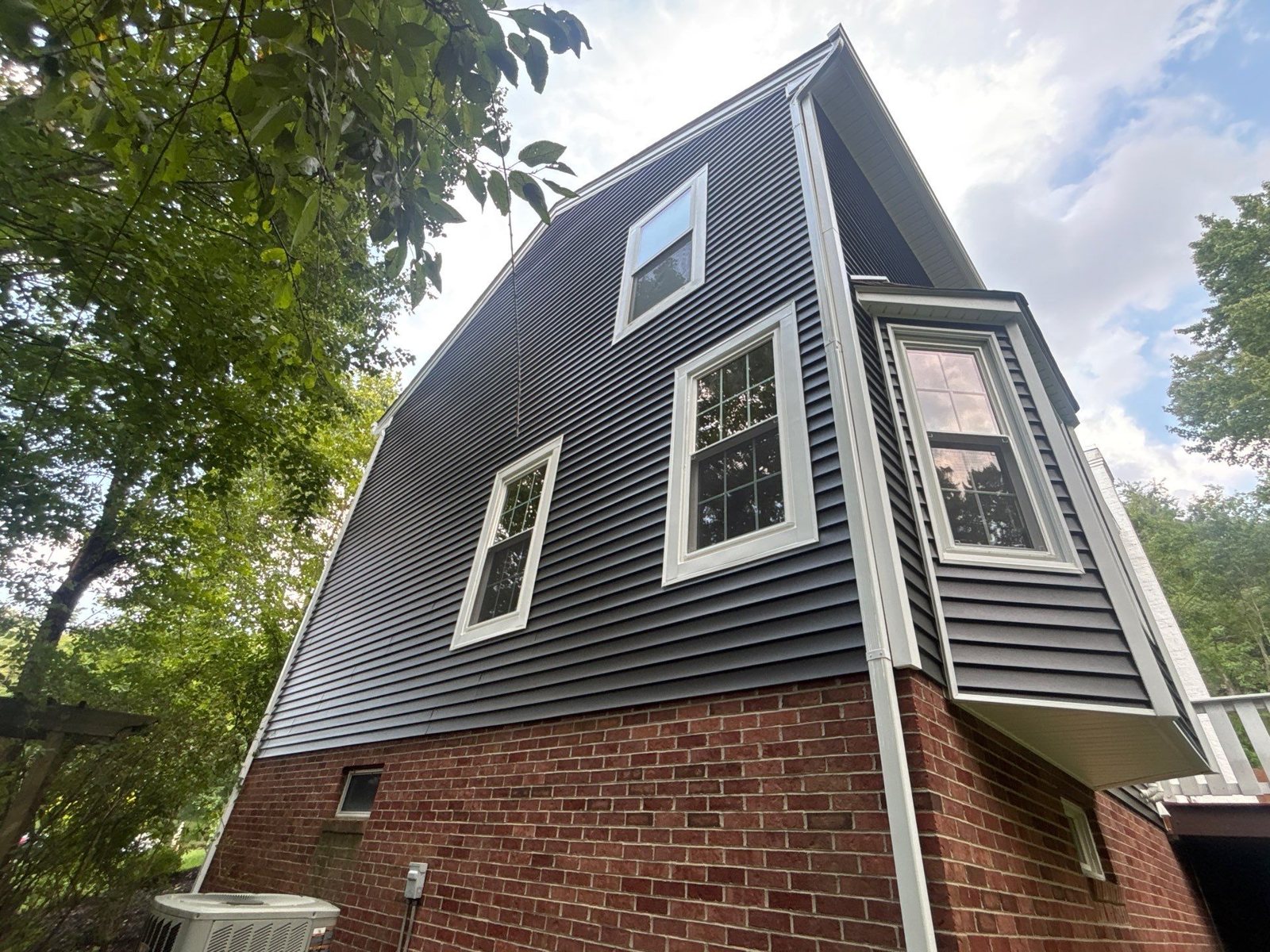
New dark gray vinyl siding on the upper story above a brick base in Pittsburgh, Alan Construction.
How Pittsburgh Weather Affects the Decision
Western Pennsylvania’s climate is hard on exterior materials, and it changes how long a repair will hold. Freeze and thaw cycles are the big factor. When water gets into a small crack or behind a loose panel, it freezes, expands and widens the gap a little more each time. A minor issue in November can be a much bigger one by March.
Look for the Water Source
Drainage is another local concern. Many Pittsburgh homes sit on hillsides or sloped lots, and older neighborhoods often have aging gutters and downspouts that send water straight down the walls.
If siding damage keeps showing up in the same spot, a good contractor looks at the gutters, grading, roof edge and the flashing around windows and doors rather than just swapping panels. Fixing the siding without fixing the water source usually means paying for the same repair again.
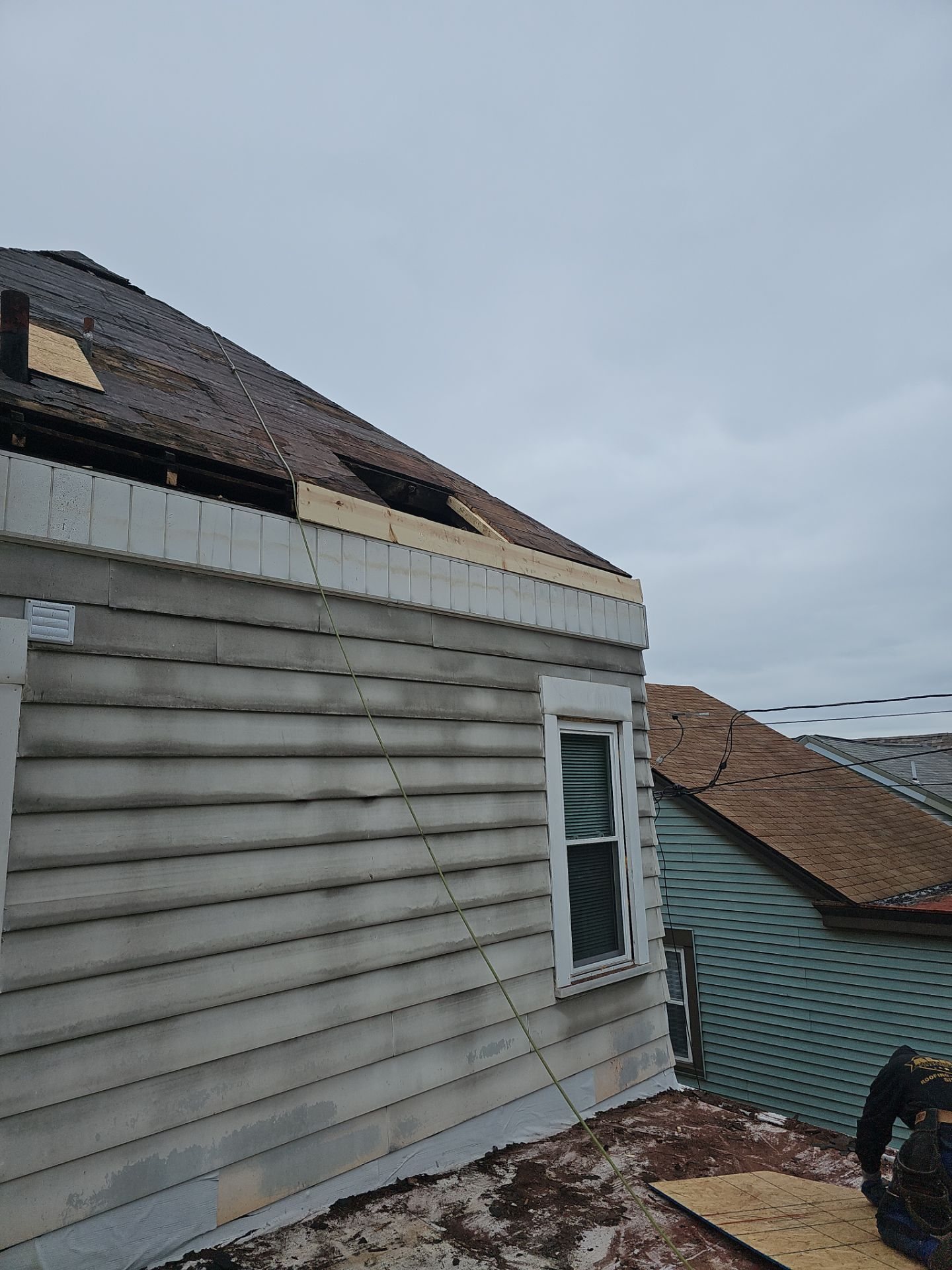
Gray siding wall below a roof edge with old decking in Pittsburgh, Alan Construction.
Older Homes Need a Closer Look
Houses in many of the region’s established neighborhoods have original wood clapboard under newer siding, outdated flashing details, or little to no house wrap.
What Should You Do About Storm Damaged Siding?
Storm damage is one of the most common reasons homeowners call about siding repair. High winds peel panels loose or snap the locking edges that hold them together, hail cracks and punctures vinyl, and falling limbs cause concentrated impact damage. For a closer look at what to watch for this time of year, see our guide on how fall storms can damage siding on Pittsburgh homes.
Steps to Take Right After a Storm
Once it’s safe, walk around the house and look for loose, missing, cracked or dented panels, paying close attention to corners and the side facing the wind. Take clear photos of everything, close ups and wider shots that show where the damage sits on the house.
If a panel has blown off and exposed the wall, cover the area temporarily to keep rain out until it can be properly repaired. Quick repairs matter, as one homeowner described:
“Piece of siding flew off in a windstorm friday night, I called saturday afternoon and they came out sunday morning to replace it for my family.” Sean W., Google review
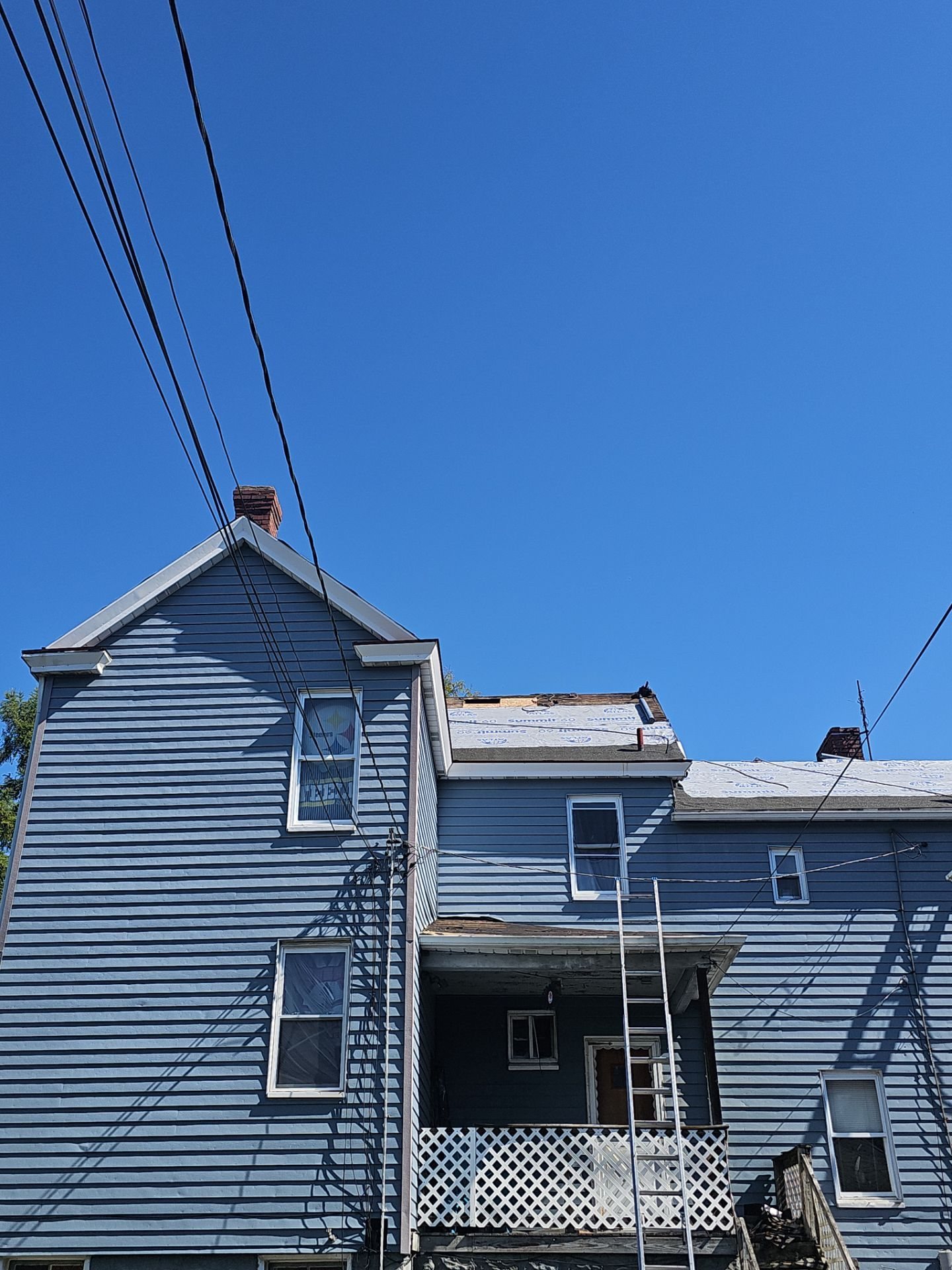
Blue sided house rear with a ladder against the upper porch in Glassport, Alan Construction.
Working With Your Insurance Company
If you plan to file a claim, document the damage before any permanent work begins and keep records of temporary fixes. Review your policy for how storm damage and material matching are handled, since coverage varies from one policy to the next. We work with homeowners insurance on storm claims and can meet the adjuster to go over what was damaged.
Why Color Matching Can Decide Repair or Replace
One of the most overlooked factors in siding repair is whether the new panels will actually match the old ones. Siding fades over years of sun, and manufacturers regularly discontinue colors and profiles. Even when the same product is still sold, a brand new panel can look noticeably brighter than the weathered siding next to it.
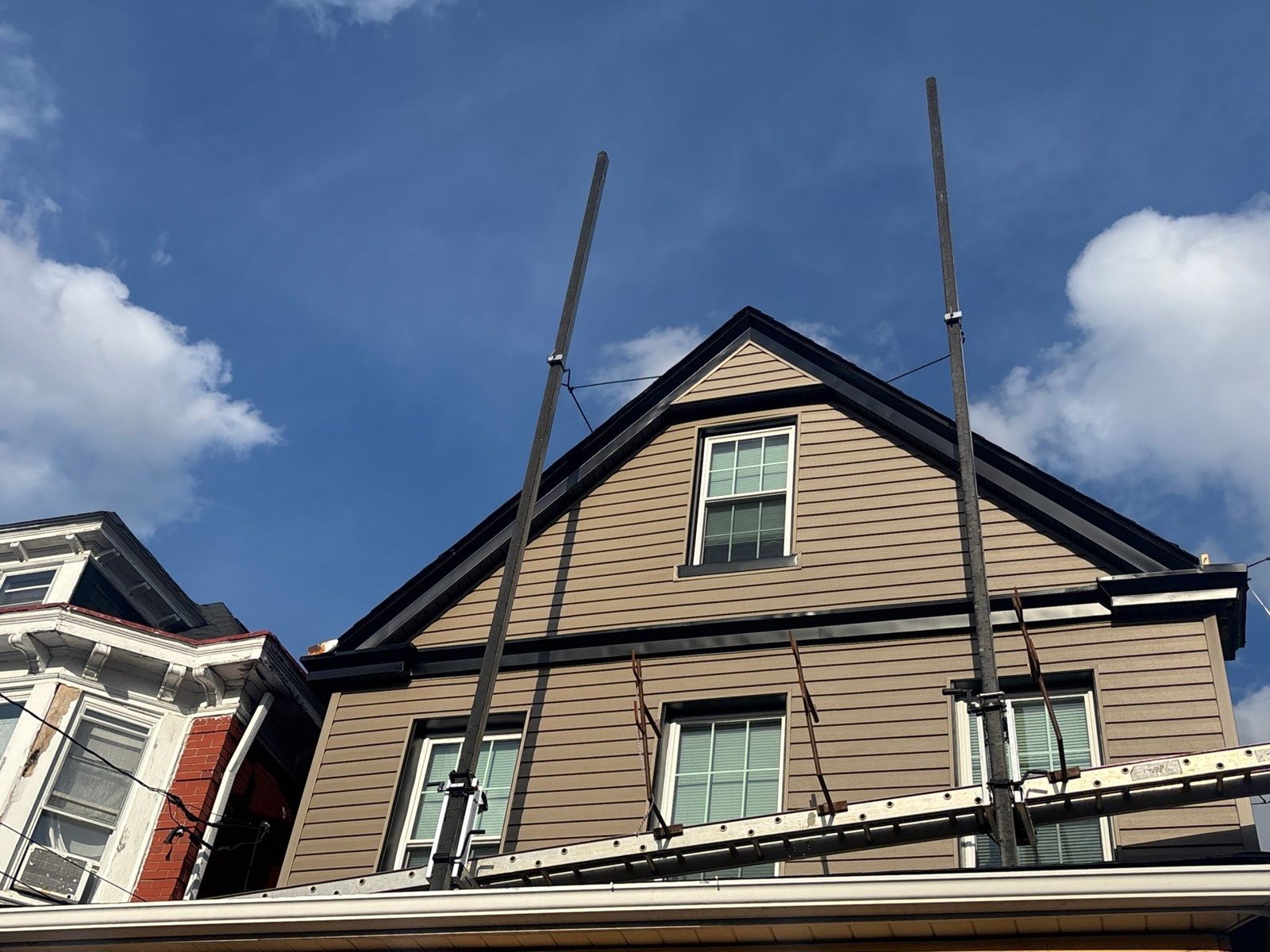
When an exact match isn’t possible and the damage is on a prominent wall, some homeowners choose to re side that entire wall or gable so the color stays consistent.
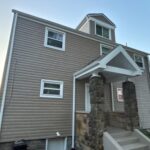
Gable end with new tan siding and black trim in Pittsburgh, Alan Construction.
There’s another option worth asking about. A contractor can sometimes take matching panels from a less visible spot, such as behind a deck or on a side wall, use them for the repair on the front of the house, and put new material in the hidden spot.
What Affects the Cost of Siding Repair?
Every project is different, so the cost depends on several factors rather than a set price per panel:
- Extent of the damage: especially if sheathing or house wrap has to be replaced along with the siding.
- Access: second story walls, steep hillside lots and tight spaces between homes may need extra equipment or setup.
- Material availability: hard to find or discontinued colors and profiles take more time to source.
- Related problems: damaged flashing or drainage issues found during the repair can add to the scope.
A detailed written estimate should spell out each of these items so you understand exactly what you’re paying for.
Choosing the Right Siding Contractor
The right contractor will give you an honest recommendation, even when that means a smaller job. Before hiring, ask whether they’ll remove damaged panels to inspect the wall behind them, how they plan to handle color matching, and whether they’ll check gutters and flashing for the source of the problem. Confirm they’re registered as a home improvement contractor in Pennsylvania and carry insurance.
Be cautious of anyone who pushes for full replacement without explaining why, or who offers a quick patch without looking at what’s underneath. A clear, written scope of work protects both you and the contractor.
Not sure whether your siding needs a repair or a replacement? Alan Construction will inspect the damage, explain your options honestly and give you a free, no obligation estimate. Contact us to schedule a visit.