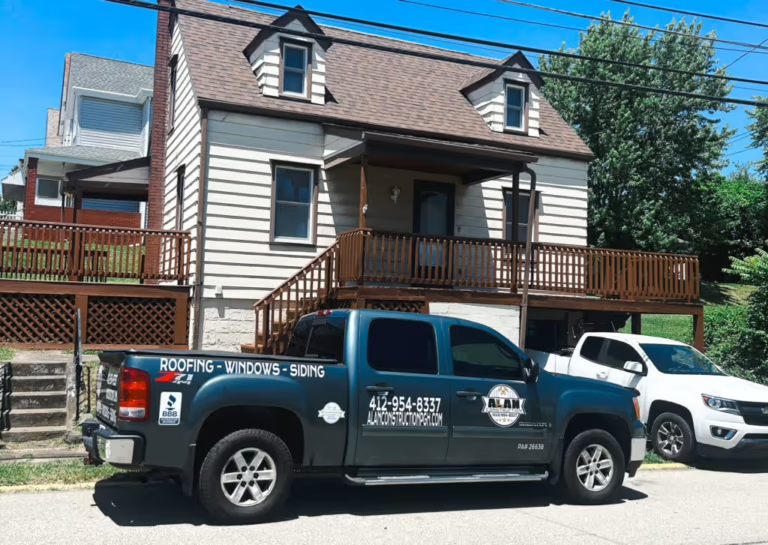
I have spent enough winters in Western Pennsylvania to know our weather does not politely knock before it arrives. It shows up all at once. One November morning you are raking leaves in a light jacket, and by the next you are scraping ice off the windshield in the dark. Your home’s exterior takes that whiplash even harder than you do, and the part of your house standing guard against every bit of it is the siding.
Most homeowners never think about siding until something goes visibly wrong. That is understandable. But the weeks before the first hard freeze are the single best time to give your exterior an honest look. Learning the signs your Pittsburgh home needs new siding before winter can save you a miserable, expensive surprise in January.
Why Pittsburgh Winters Punish Your Siding
Our climate is rough on building materials for one main reason: the freeze-thaw cycle. Temperatures here bounce above and below freezing dozens of times each winter, and the lake-effect moisture rolling in off Lake Erie only makes it worse. Water seeps into small cracks and seams, then freezes, expands, and pries those openings a little wider. Repeat that fifty times over one season, and a hairline gap becomes a genuine problem. Older neighborhoods feel this most, since siding installed decades ago was never built for the swings we see now. What held up fine in the 1990s can quietly reach the end of its life without much warning.
What Are the Signs That My House Needs New Siding?
The good news is that failing siding usually tells on itself. You just have to know what to look for. These are the red flags I point out to homeowners when we walk a property together.
Warping, Cracking, and Buckling
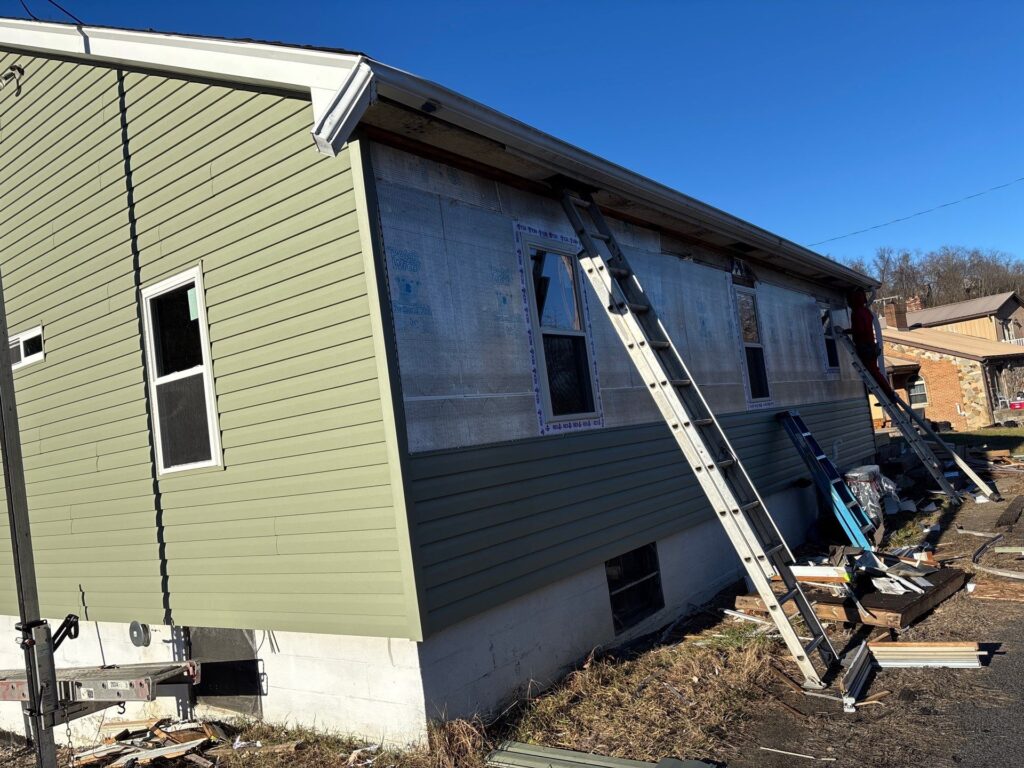
Panels that ripple, bow, or pull away from the wall have lost their grip. Visible cracks or holes mean your home’s protective envelope has already been breached. Once water finds a path in, the damage rarely stays on the surface.
Peeling Paint or Sagging Wallpaper Inside
This one surprises people. When you notice paint bubbling or wallpaper sagging on a wall that faces outside, the culprit is often moisture that slipped past the siding. By the time it shows up indoors, the barrier behind your panels has usually failed.
A Sudden Jump in Your Heating Bill
Compromised siding creates drafts and thermal leaks you cannot always feel. If your gas bill climbs and nothing about your routine has changed, warm air is likely escaping through gaps in the exterior. Your furnace ends up working overtime to cover the loss.
Mold, Mildew, and Rot
Persistent mold or soft, spongy wood is a clear signal of trapped moisture. Try a quick test: press firmly on a suspect panel. If it gives or crumbles, water has been sitting behind it. Wash the mold off and watch it come right back within a few weeks? Water is getting behind the boards.
Uninvited Pests
Cold weather sends insects and rodents hunting for warmth. Every crack, hole, or loose seam is an open door. Carpenter ants, woodpeckers, and mice all treat failing siding as a welcome mat into your walls.
The Real Cost of Waiting Until Spring
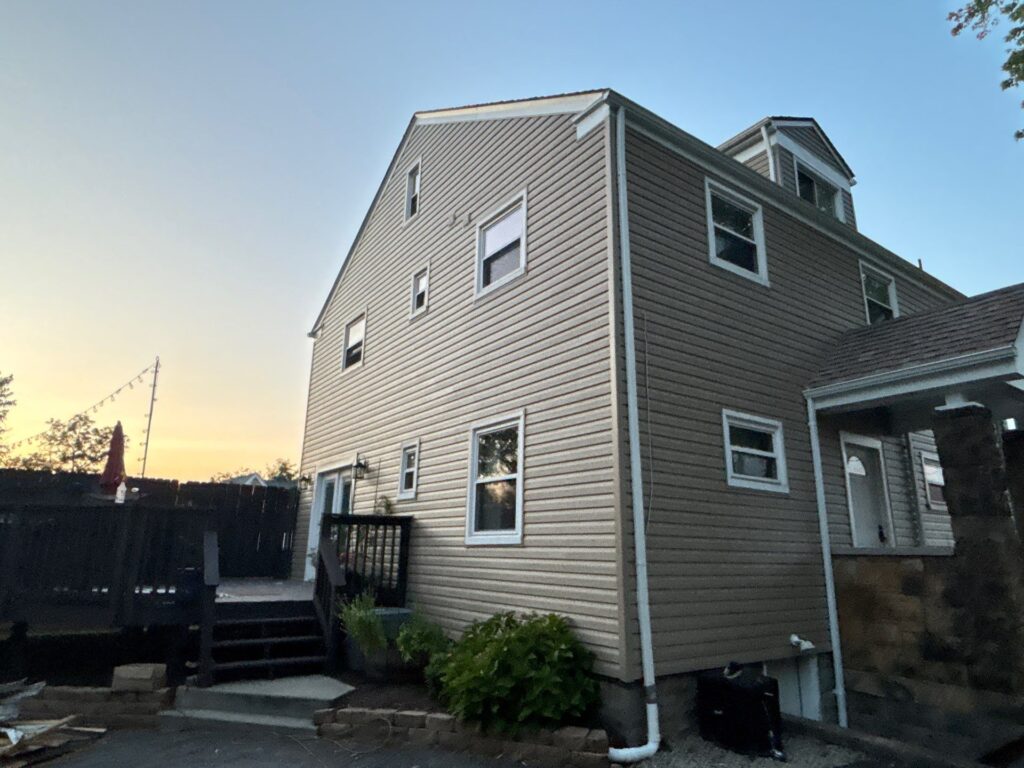
Here is the part that worries me most for homeowners who hesitate. That small gap you shrug off in October does not stay small. Water works into the opening, freezes overnight, and expands with startling force. I once pulled a few damaged panels off a home in Mt. Lebanon expecting a simple patch, and found sheathing so waterlogged it practically fell apart in my hands. A modest repair had quietly become a structural project. Winter does not wait for a convenient moment, and neither does the damage it leaves behind.
Can You Replace Siding During Winter?
Yes, you can. Siding installation happens year-round in our region, and booking in late fall or early winter often means shorter wait times than the spring rush. That said, extreme cold matters. Vinyl grows more brittle in frigid temperatures, and some caulks and sealants will not cure properly below a certain threshold. A seasoned crew plans around the forecast, works the warmer days, and reaches for cold-rated materials when needed. The takeaway is simple: winter work is absolutely doable, but it is not a weekend project for an amateur.
How Much Does It Cost to Redo Siding on a 1,500 Sq Ft House?
Cost is usually the first question, so let me be direct. For a 1,500-square-foot home, a full siding replacement generally runs somewhere between $8,000 and $27,000, depending heavily on the material you pick. Vinyl sits at the affordable end. Fiber cement and engineered wood cost more upfront but reward you with a longer life and a more upscale look. National cost data compiled by This Old House lines up with those ranges, and it points out something worth holding onto: new siding is one of the strongest home projects for return on investment. You are not simply spending money — you are protecting the far larger investment sitting underneath.
How Often Should Siding on a House Be Replaced?
There is no single expiration date, because condition matters more than the calendar. As a rough guide, quality vinyl lasts 20 to 40 years, while fiber cement can stretch 30 to 50 years or more. Our punishing climate tends to nudge materials toward the shorter end of those ranges. If your siding is pushing two decades and showing several of the warning signs above, it is time for a professional assessment rather than another season of hoping it holds. Installation quality plays a bigger role than most people realize, too. I have seen premium panels fail early simply because they were nailed too tight or lacked proper house wrap behind them, which is one more reason the crew you hire matters as much as the product on the truck.
Recognizing the Signs Your Pittsburgh Home Needs New Siding Before Winter
Think of the pre-winter walkaround as a five-minute insurance policy. Step back from the house and scan for warping, discoloration, and gaps. Walk the foundation line and look for openings where cold air or pests could slip in. Press on any panels that look tired. Then step inside and check exterior-facing walls for moisture stains. If you want a deeper breakdown of why our area is so hard on exteriors, the guide on the Top Reasons to Replace Your Siding in Pittsburgh’s Suburbs is worth a few minutes of your time.
Why Alan Construction Is Pittsburgh’s Go-To Siding Team
When it comes to protecting a home against Western Pennsylvania weather, local experience is not a luxury. It is the whole game. A crew that has lived through our winters understands how the freeze-thaw pattern attacks seams, which materials actually hold up here, and how to flash and seal for the moisture we really get. That is the standard Alan Construction brings to every single project. They pair genuine craftsmanship with a straight, no-pressure approach, which is exactly why so many neighbors trust them as their siding contractor instead of gambling on an out-of-town outfit chasing storm work. If you want the job done right the first time, this is the team I would put at the top of your list.
Don’t Wait for the First Hard Freeze
If you take away one thing, let it be timing. The best moment to address failing siding is before the temperature drops, not after the damage is done. A quality Pittsburgh siding upgrade does far more than sharpen your curb appeal. It seals out the cold, trims your heating bills, and shields the structure you have poured so much into. Give your exterior an honest look this week. If something seems off, get a professional opinion while the weather still cooperates. Your January self will thank you.