Drip edge is a strip of bent metal that runs along the bottom edges and the sloped sides of a shingle roof. It carries rainwater off the roof and into the gutter, so the water doesn’t curl back under the shingles and soak the wood behind your gutters.
It’s one of the smallest pieces on a roof, which is why it gets overlooked. Some older Pittsburgh roofs have no drip edge at all, or a rusted, bent strip that was nailed on decades ago. If you’re planning a roof replacement in Pittsburgh, drip edge should be written into the estimate, not left as an afterthought.
Short answer: drip edge is metal flashing at the eaves and rakes that sends water into the gutter and protects the roof deck and fascia. The International Residential Code requires it on shingle roofs, so a full replacement should always include it.
What Is Drip Edge on a Roof?
Picture the lowest row of shingles on your house. Under it, the plywood or board roof deck ends, and below that is the fascia board your gutter hangs on. Drip edge is the L shaped or T shaped metal that wraps that corner. One leg lies flat on the roof deck under the shingles. The other leg hangs down over the fascia, with a small kick at the bottom that throws water away from the wood.
Roofers talk about two edges:
- Eaves: the level bottom edges where water runs off and into the gutters.
- Rakes: the sloped edges on the gable ends of the house, where wind blown rain hits the side of the roof.
Drip edge belongs on both, and it comes in colors to match your trim.
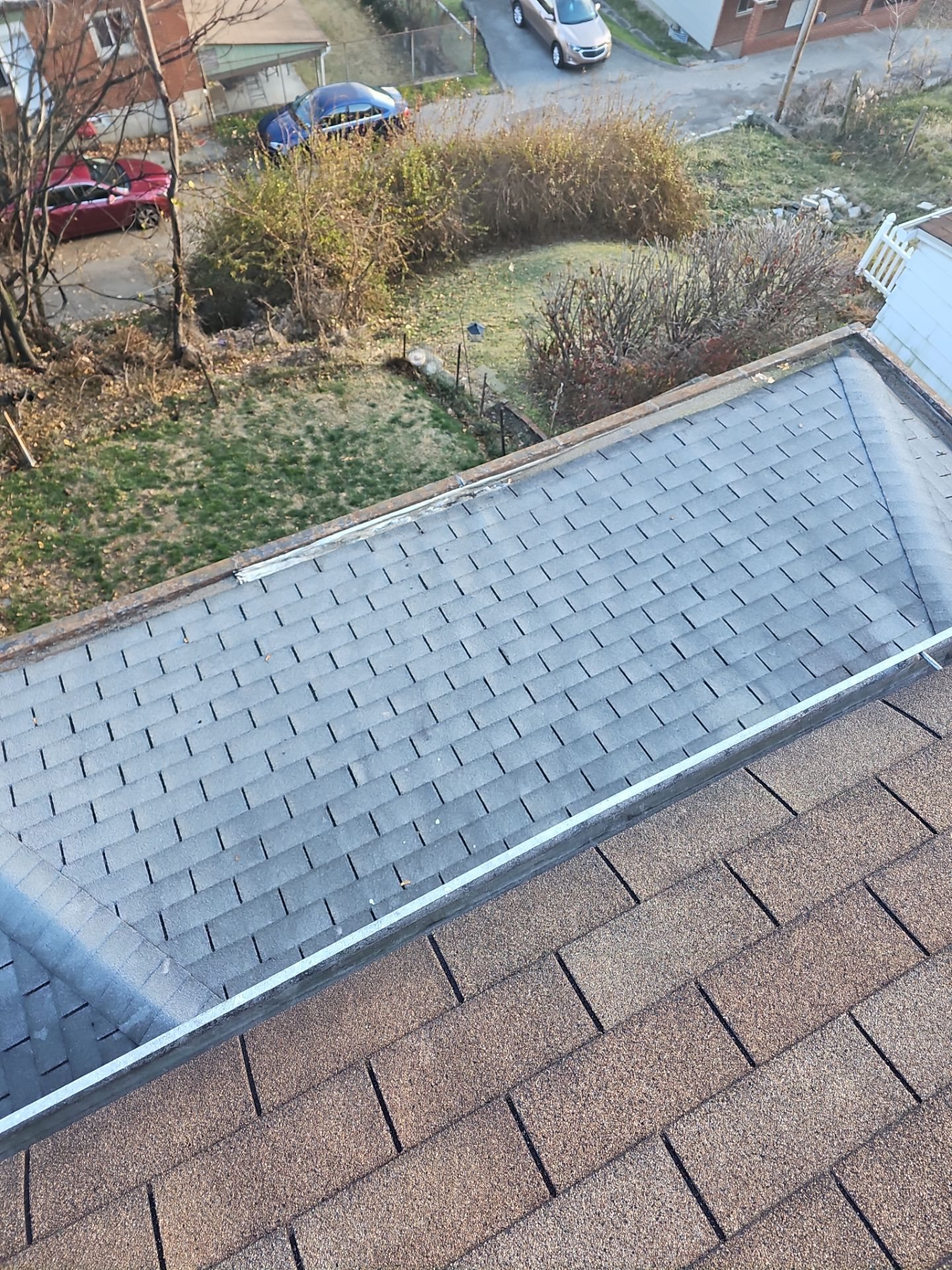
This is what finished drip edge looks like from the ground. The metal sits under the first course of shingles and folds down over the edge of the roof, so the shingles never hang over bare wood.
Water running down the roof drops off that metal lip instead of clinging to the underside of the shingles. Without it, rain can follow the edge back toward the house, which is exactly where you don’t want it.
Metal drip edge along the eave of a brown shingle roof in Pittsburgh, Alan Construction.
What Drip Edge Does for Your Roof
Water has surface tension. At the edge of a shingle, some of it rolls around and runs back along the underside. On a roof without drip edge, that water ends up on the edge of the roof deck and the top of the fascia board.
Over a few seasons, that’s how you get:
- soft, rotted edges on the roof deck that won’t hold nails
- fascia boards that rot and pull away, taking the gutter with them
- water running behind the gutter instead of into it, staining siding and soaking the ground near the foundation
- gaps at the roof edge where insects, birds and squirrels can get into the attic
In Pittsburgh, freeze and thaw cycles make edge water worse. Water that sneaks behind a gutter in December can freeze, expand and push the fascia and gutter apart a little more every winter. If you’re already seeing that, our guide on how to tell if your gutters are causing water damage covers the warning signs.
Is Drip Edge Required by Code?
Yes, on shingle roofs. Section R905.2.8.5 of the 2018 International Residential Code says “a drip edge shall be provided at eaves and rake edges of shingle roofs.” Pennsylvania’s Uniform Construction Code adopted the 2018 I Code series, which includes the IRC, with an effective date of February 14, 2022.
The same section spells out how drip edge has to go on:
| What the code says | What it means on your roof |
|---|---|
| Adjacent pieces overlap at least 2 inches | No gaps between lengths of metal where water can slip through |
| Extends at least 1/4 inch below the roof sheathing | The metal hangs past the deck so water drops clear of the wood |
| Extends at least 2 inches back onto the roof deck | A wide enough flange under the shingles to stay put and shed water |
| Fastened to the deck no more than 12 inches apart | Nailed often enough that wind can’t lift or rattle it |
| Underlayment over the drip edge at eaves, under it at rakes | Layers lap like shingles so water always runs over the next piece, never behind it |
That last line is the easiest one to get backward. At the eaves, the drip edge goes down first and the underlayment laps over it, so any water on the underlayment drains onto the metal and out. At the rakes it’s reversed: underlayment first, then drip edge on top, so wind driven rain can’t get under the felt from the side.
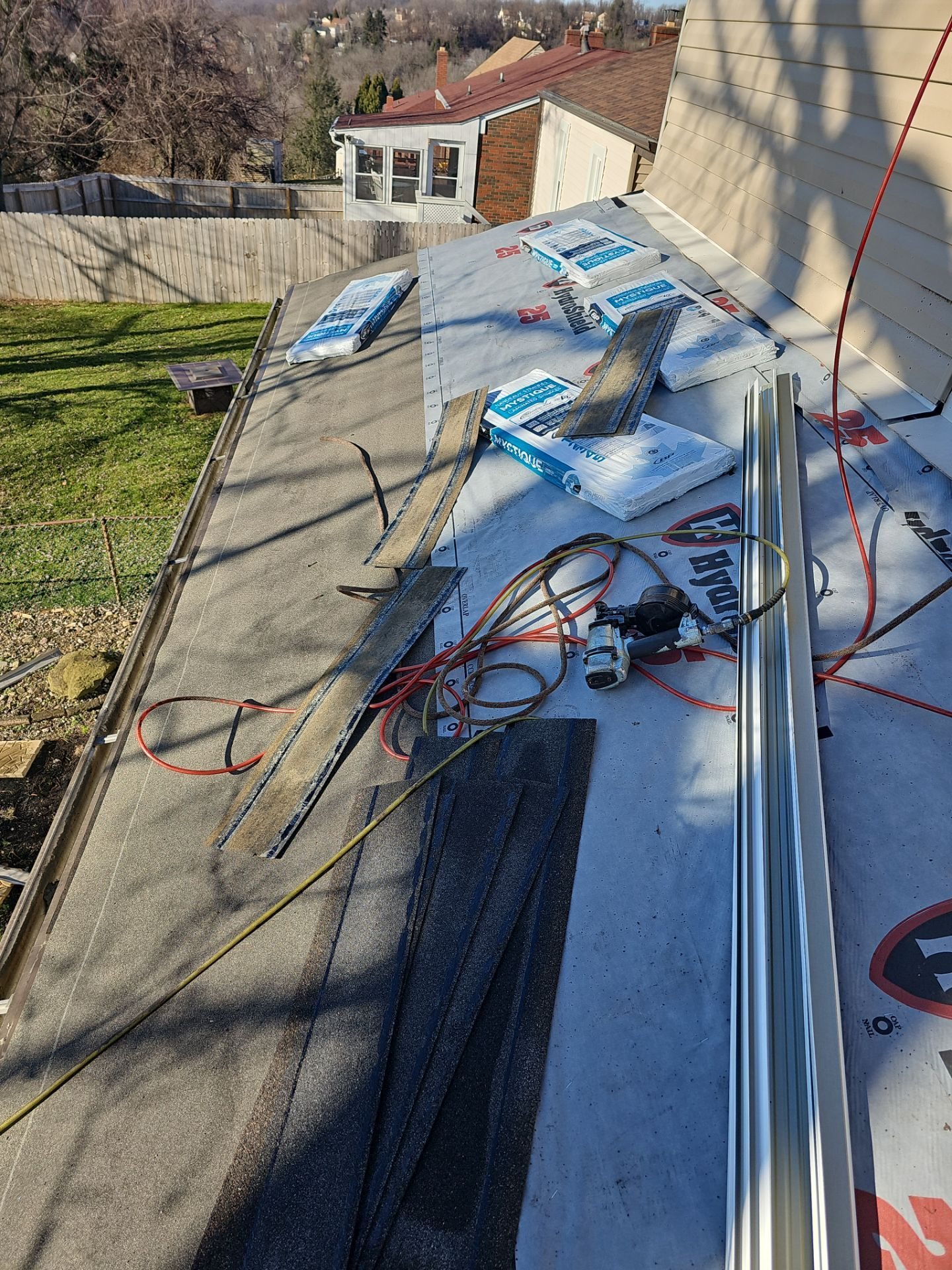
This shot was taken in the middle of an install in East Pittsburgh. The underlayment is down and the drip edge pieces are on the roof, ready to go on before the shingles.
Once the shingles are on, you can’t see whether the underlayment laps over the drip edge at the eaves or tucks under it at the rakes, so it has to be right the first time.
Underlayment with drip edge pieces on a roof during installation in East Pittsburgh, Alan Construction.
Types of Drip Edge
Drip edge comes in a few common shapes, called profiles. Suppliers often label them with letters, but the names vary, so go by the shape.
L style
A simple bend into an L shape, often sold as Type C. One flange goes on the deck, the other hangs over the fascia. It’s the most basic profile.
T style
Often sold as Type D. It has a small outward kick at the bottom, and that extra lip pushes water farther from the fascia and into the gutter.
Extended or gutter apron
Often sold as Type F. It has a longer drop leg, which helps when the metal needs to reach down behind a gutter so water lands inside it instead of behind it.
Material matters too. Most drip edge is aluminum or galvanized steel, with copper on some high end homes. Aluminum won’t rust and comes prefinished in trim colors.
Drip Edge and Your Gutters
Drip edge and gutters work as a team. The drip edge delivers the water and the gutter catches it. If the drip edge is missing, water runs behind the gutter even when the gutter is perfectly placed.
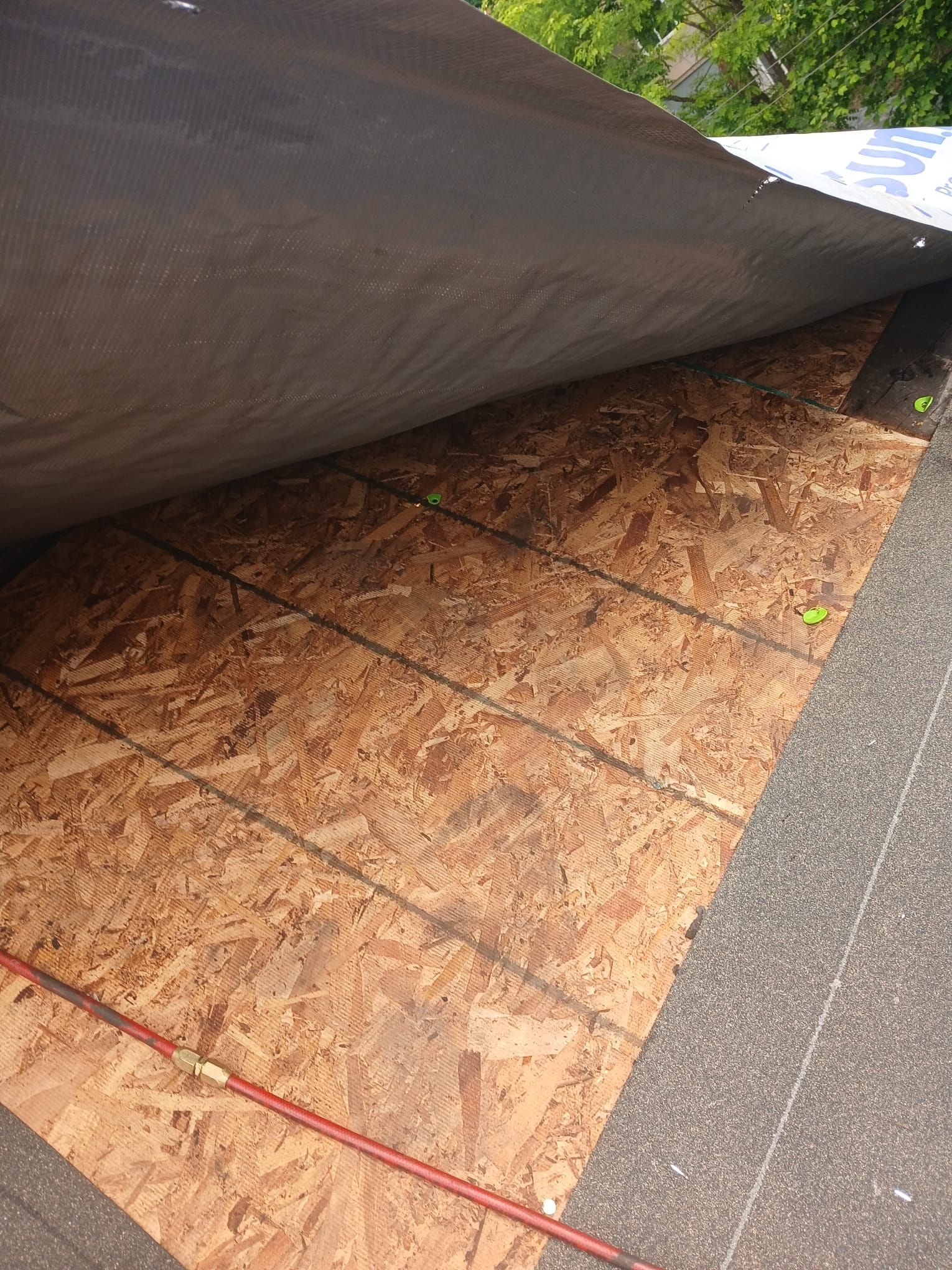
Here the new plywood decking runs right out to the drip edge. When old boards at the edge are soft, they get replaced before anything goes over them, because metal nailed into rotten wood won’t hold.
This is a big reason drip edge is best handled during a full tear off. With the old shingles off, you can see the deck edge, replace bad wood, and set the metal correctly instead of guessing.
New plywood roof decking along a drip edge in Pittsburgh, Alan Construction.
When rot has already reached the fascia, the fix goes beyond the roof edge. New fascia, and sometimes new soffit, needs to go in before the gutters go back up. Our post on what soffit is and why your house needs it explains how those parts fit together.
Why a New Roof Is the Right Time for Drip Edge
Drip edge can be added to an existing roof, but it’s a compromise. At the eaves, a roofer has to break the seal on the first row of shingles and slide the metal underneath without tearing them. At the rakes, the code wants the drip edge on top of the underlayment, which is hard to get right without lifting shingles.
During a full replacement, none of that is a problem. The old roof comes off, the deck gets checked, new drip edge goes on in the right order with the underlayment, and the new shingles go over a clean, straight edge. For the layers that go with it, read why roofing underlayment matters.
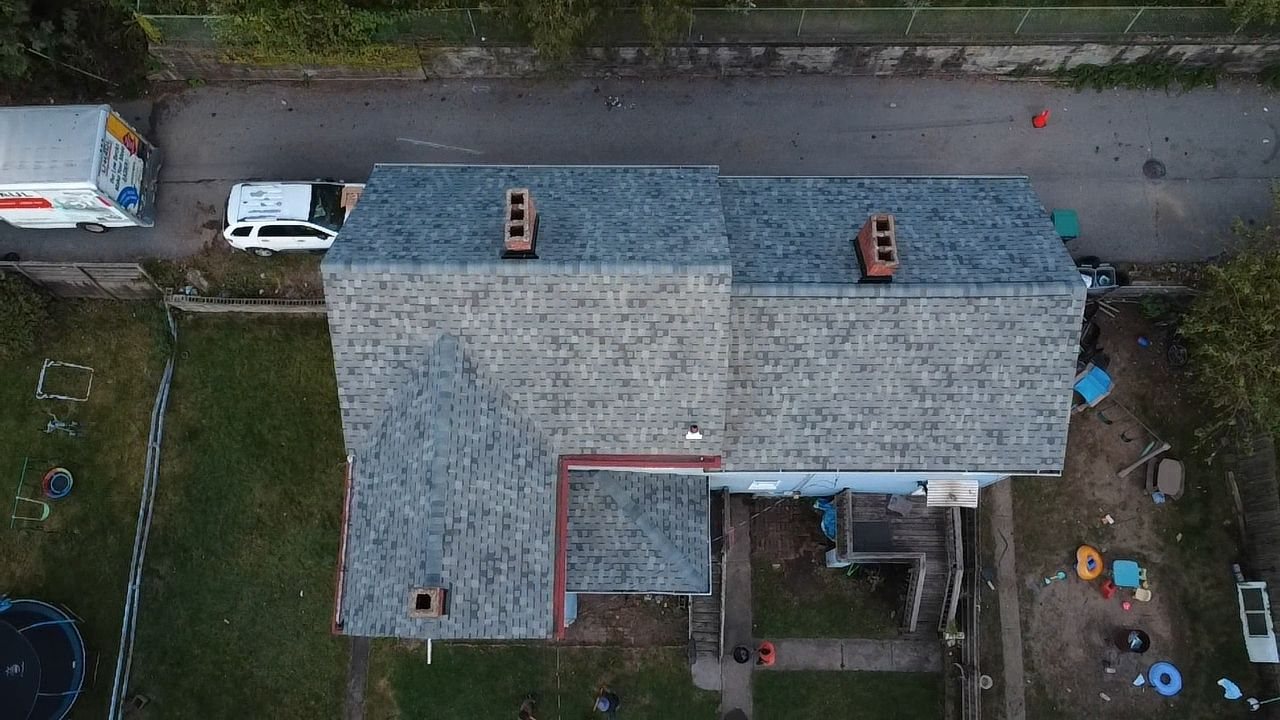
From above, you can see the drip edge as a thin red line along the edges of this new roof in Glassport.
A full replacement is the cleanest way to get every edge covered with the overlaps and fastening the code calls for.
Overhead view of a new gray roof with red drip edge in Glassport, Alan Construction.
What to Ask Before You Sign a Roofing Contract
Drip edge is a small part of a roofing job, and that’s exactly why it sometimes gets left out or reused. When you compare estimates, ask:
- Is new drip edge included at both the eaves and the rakes?
- Will the underlayment go over the drip edge at the eaves and under it at the rakes?
- What happens if the deck edge or fascia is rotted when the old roof comes off?
We’ve been replacing roofs in Pittsburgh since 2003, we’re registered with the state as PA#126638, and most of our roof replacements are finished in one day with a magnetic nail sweep at the end. As one homeowner wrote in a Google review, “They left no nails in my rock bed or grass” (Kenny K.).
Planning a new roof and want every edge done right? Request a free estimate and we’ll walk the roof with you and spell out exactly what’s included.