If your Wexford home needs new siding, a new roof, or both, the four things that matter most are the condition of what’s under the old materials, the order the work is done in, the right material for your house, and a registered contractor who handles roof and walls as one system. Get those right and Wexford, PA siding and roofing will protect the house for decades instead of years.
Wexford sits in the North Hills, north of the city, and its homes take the same freeze and thaw winters, wet springs and summer storms as every other Pittsburgh neighborhood. We’ve been working on Pittsburgh area homes since 2003. This guide walks through what we look at on a roof and siding project, what your options are, and how to plan the job. If you already know the siding has to go, our page on siding installation in Pittsburgh explains how we handle it from tear off to cleanup.
Short answer: Replace siding when it’s warped, cracked, soft or letting water in across whole walls, and replace a roof when leaks and worn shingles show up in more than one spot. If both are near the end, do the roof first and the siding right after.
What Wexford Homes Are Usually Working With
Wexford has a wide mix of houses, from established neighborhoods to newer subdivisions. Each style puts different demands on the roof and the walls.
- Colonials and two story homes: Tall walls mean a lot of siding area, and the upper walls take the most wind and sun. Many have a brick or stone front with siding on the sides and back.
- Split levels: Several roof planes meet walls at different heights, so step flashing and the siding around it matter more than on a simple roof.
- Ranch homes: Long, low roofs with a lot of eave length, which is where ice dams form in a hard winter.
- Cape Cods: Steep main roofs with dormers. Every dormer is a spot where roof and siding meet and water can sneak in.
- Newer contemporary homes: More roof valleys, more angles and more mixed materials, which means more transitions to get right.
If your home is in a plan with a homeowners association, check its exterior rules before you pick colors or materials. Some associations want approval for siding color, shingle color or trim changes, and it’s easier to get that sorted before the estimate than after the material is ordered.
Wexford PA Siding: Signs It’s Time to Replace
Siding is your home’s rain coat. When it starts failing, the damage usually happens behind it where you can’t see it. These are the signs we point out when we walk a house with a homeowner.
- Cracked, warped or buckled panels: One loose panel is a repair. Rippling across a whole wall means the siding or the way it was hung is the problem.
- Soft or rotted spots: Press on any tired looking area. If it gives, water has been sitting in the wall.
- Faded, chalky or peeling finish: Badly faded vinyl turns brittle, and peeling paint on wood means the wood is taking on water.
- Mold or mildew that keeps coming back: Often a sign of trapped moisture.
- Drafty rooms on one side of the house: Gaps and failed trim let air move through the wall.
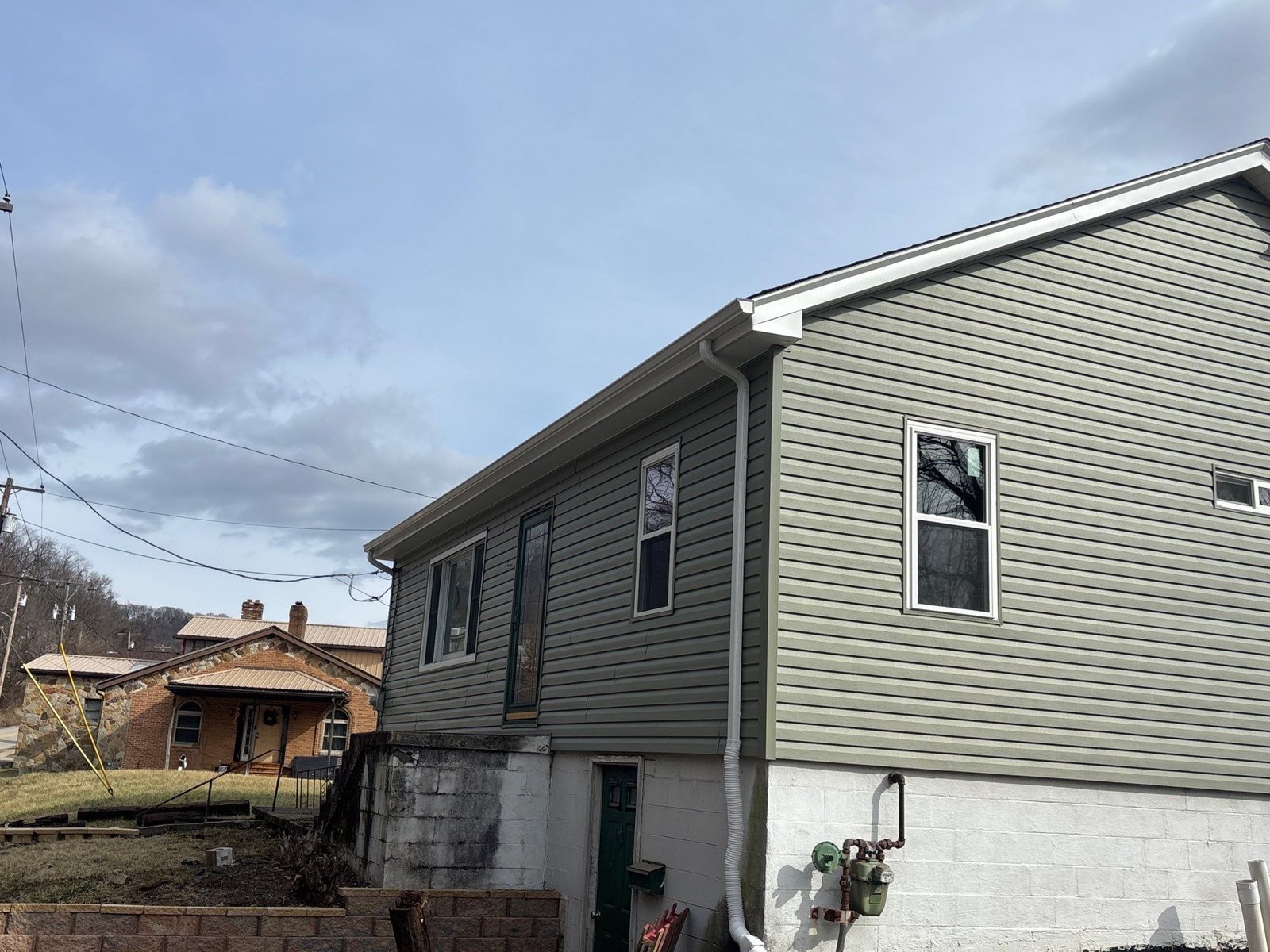
New green vinyl siding on the side of a Monongahela home, Alan Construction.
Not every problem means a full replacement. Our guide on how long different siding materials last in Pittsburgh covers what normal aging looks like for each material, so you can tell wear from failure. If you’re not sure, a contractor should pull a panel or two and look at the sheathing before telling you either way.
Siding Options for North Hills Homes
Most of the siding we install is vinyl, because it handles our weather well, never needs paint, and comes in a wide range of colors and profiles. It isn’t the only option, though, and the right pick depends on the house and how much upkeep you want.
| Material | Upkeep | What to watch for |
|---|---|---|
| Vinyl | Low: wash it once in a while | Thin, cheap panels can crack in hard cold. Quality and installation matter more than brand. |
| Fiber cement | Low to moderate: repaint over time | Heavy, needs careful cutting and sealing at the ends and around openings. |
| Engineered wood | Moderate: keep the paint in good shape | Must be kept off the ground and sealed at cut edges. |
| Natural wood | High: regular painting or staining | Rot and insects when the finish slips. |
| Brick or stone | Very low | Mortar joints and the flashing where it meets siding or the roof. |
Vinyl only performs as well as it’s hung. The panels have to be nailed loosely enough to expand and contract, because a panel nailed tight on a hot August day will buckle by February. The vinyl siding industry’s installation guidance spells this out, and any installer you hire should follow it.
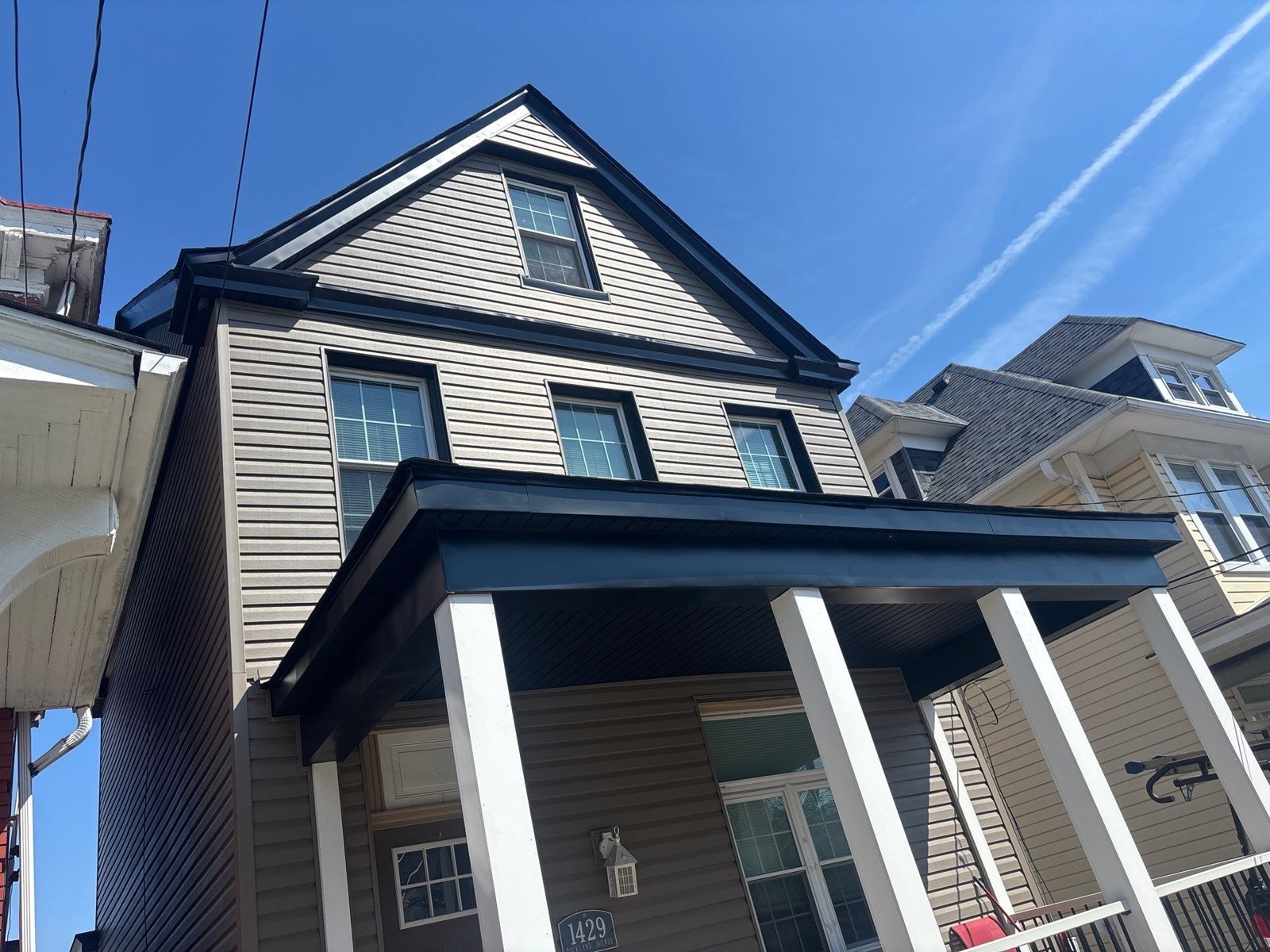
Color matters for the long run too. Darker colors look sharp next to black trim like this, but ask about fade resistance before you commit, since the south and west walls take the most sun.
Tan vinyl siding with black trim on a porch front Pittsburgh home, Alan Construction.
Roof Repair or Roof Replacement?
The roof question is usually simpler than it looks. It comes down to how widespread the problem is and how much life the rest of the roof has left.
When a Repair Makes Sense
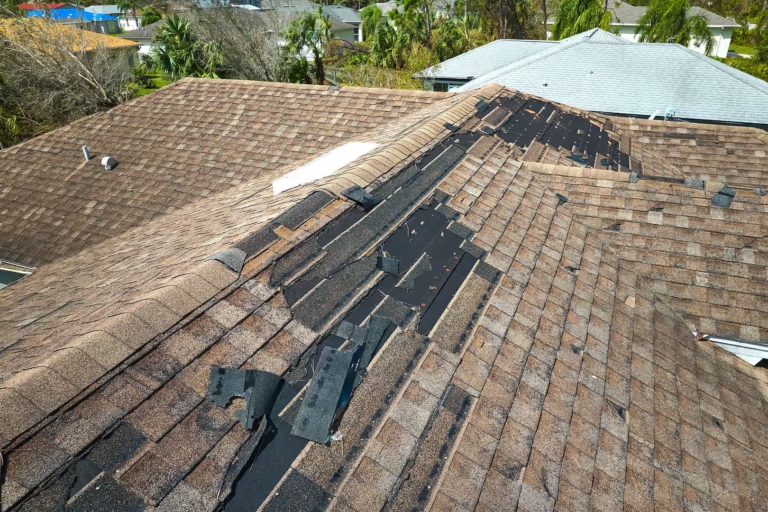
- A few shingles blown off or cracked after a windstorm.
- One leak in one spot, with the rest of the roof in good shape.
- Failed flashing around a chimney, vent pipe or skylight.
- Loose or damaged ridge cap.
When Replacement Is the Better Call
- Leaks in several different places.
- Shingles curling, cracking or losing granules across whole slopes.
- Soft spots in the deck when you walk the roof.
- An asphalt roof in the back half of its life, with problems that keep coming back.
We go deeper on this in roof replacement vs. repair for Pittsburgh homes. The short version: if you’re patching every spring, the patches are costing you more than they’re saving.
Roofing Materials That Make Sense in Wexford
Asphalt shingles cover most homes in the North Hills, and for good reason. They handle snow, cold and summer heat well, they come in a lot of colors, and they’re the easiest to repair. We install Atlas shingles, including Atlas Pinnacle Pristine, which is built to resist the dark algae streaks you see on shaded north facing roofs.
- Asphalt shingles: The standard choice for most homes, and the most common job we do.
- Metal roofing: A longer lasting option that sheds snow well. It costs more up front and takes careful planning around gutters and walkways where snow slides off.
- Slate: Beautiful and very long lived on the right house. Worth repairing rather than replacing when the slate itself is still sound.
- Tile: Heavy, so the framing has to be checked before it goes on. Usually chosen to match a specific architectural style.
- Rubber (EPDM) flat roofing: For low slope porch roofs, additions and garages that shingles can’t handle.
Whatever goes on top, the parts you don’t see do a lot of the work: ice and water shield along the eaves and in valleys, a good underlayment, proper attic ventilation, and new flashing wherever the roof meets a wall.
Should You Replace the Roof and Siding Together?
If both are near the end, doing them back to back is usually the smartest way to go, and the roof should come first. The roof crew installs step flashing and kick out flashing where the roof meets the walls, and the siding then laps over that flashing so water runs out and away. Doing it in the other order means disturbing brand new siding to flash the roof properly.

Doing both at once also lets you deal with the pieces in between: soffit, fascia, gutters and window trim. Those are the parts that get damaged when one crew works around another crew’s finished work. One homeowner, J W., summed it up in a Google review: “Just recently did a roof and siding job with them.” That’s the kind of project where one company handling both saves a lot of coordination. Our post on replacing your roof and siding at the same time goes through the timing in more detail.
How the Seasons Treat a Wexford Exterior
Wexford gets all four seasons, and each one puts a different kind of stress on the roof and walls.
Winter: Snow load, ice dams along the eaves, and freeze and thaw cycles that open up any small crack. Ice dams back water up under shingles, which is why ice and water shield at the eaves matters so much.
Spring: Heavy rain finds whatever winter loosened. It’s the best time to walk around the house and look for lifted shingles, gaps in trim and stains on ceilings.
Summer: Strong thunderstorms with wind that can tear off shingles and siding panels, plus sun that fades the south and west walls first.
Fall: Leaves clog gutters, and overflowing gutters soak the fascia and the bottom courses of siding. Fall is also a good time for inspections before the cold arrives.
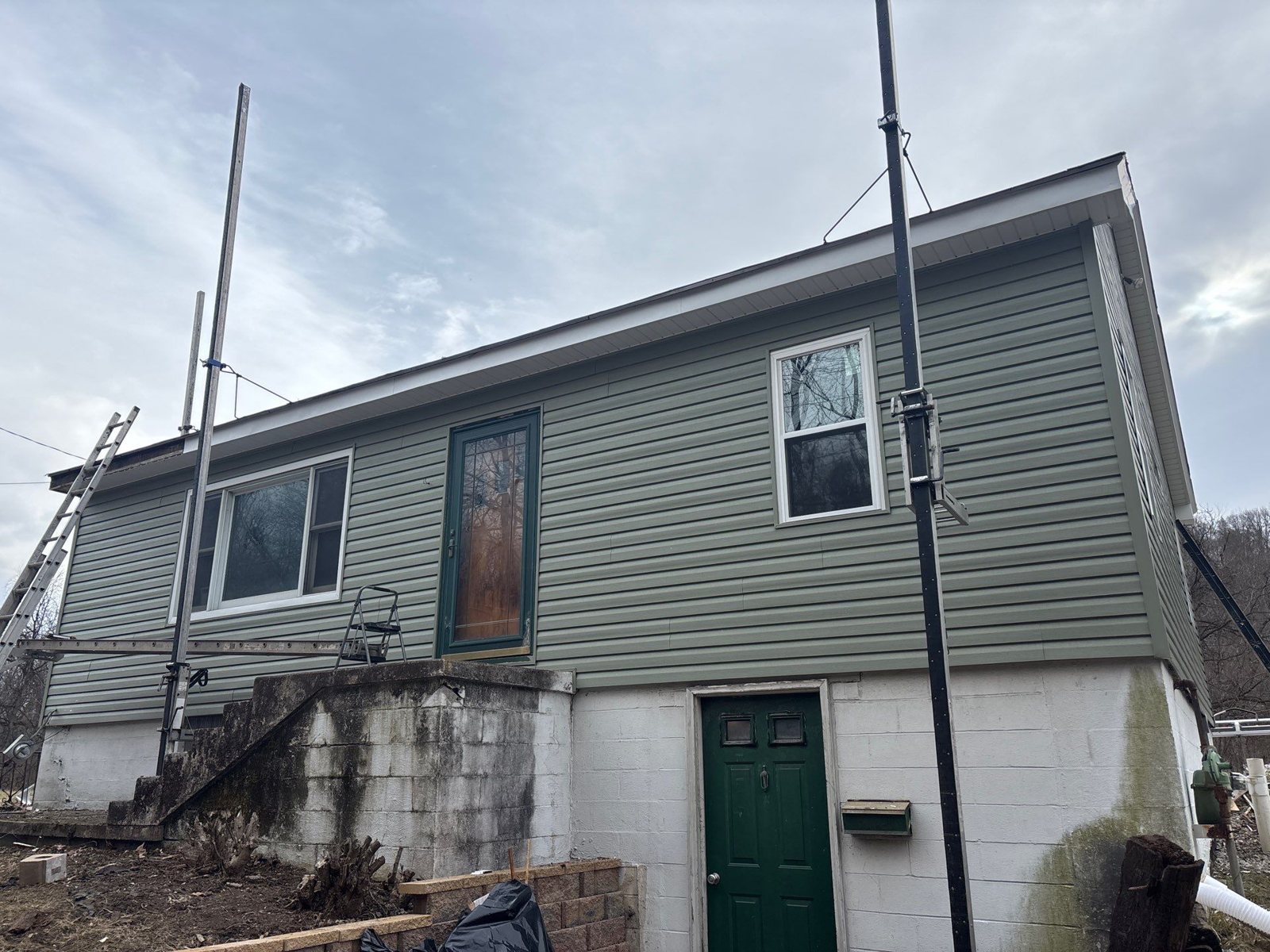
Green vinyl siding on a Monongahela home with a raised basement, Alan Construction.
If a storm does damage the roof or siding, take photos right away and call your insurer. We work with homeowners insurance on storm claims and meet the adjuster on site, so the damage gets documented by someone who knows what to look for.
Windows, Trim and the Rest of the Envelope
A siding job is the easiest time to deal with windows. When the old siding comes off, the window trim and flashing are exposed, and replacing a tired window now means it gets flashed properly into the new wall instead of patched in later.
Even if you’re keeping the windows, ask how the trim around them will be handled. Wrapped trim and new J channel keep water from running behind the siding at every opening. If the windows are drafty or fogged, our window replacement work can be scheduled alongside the siding.
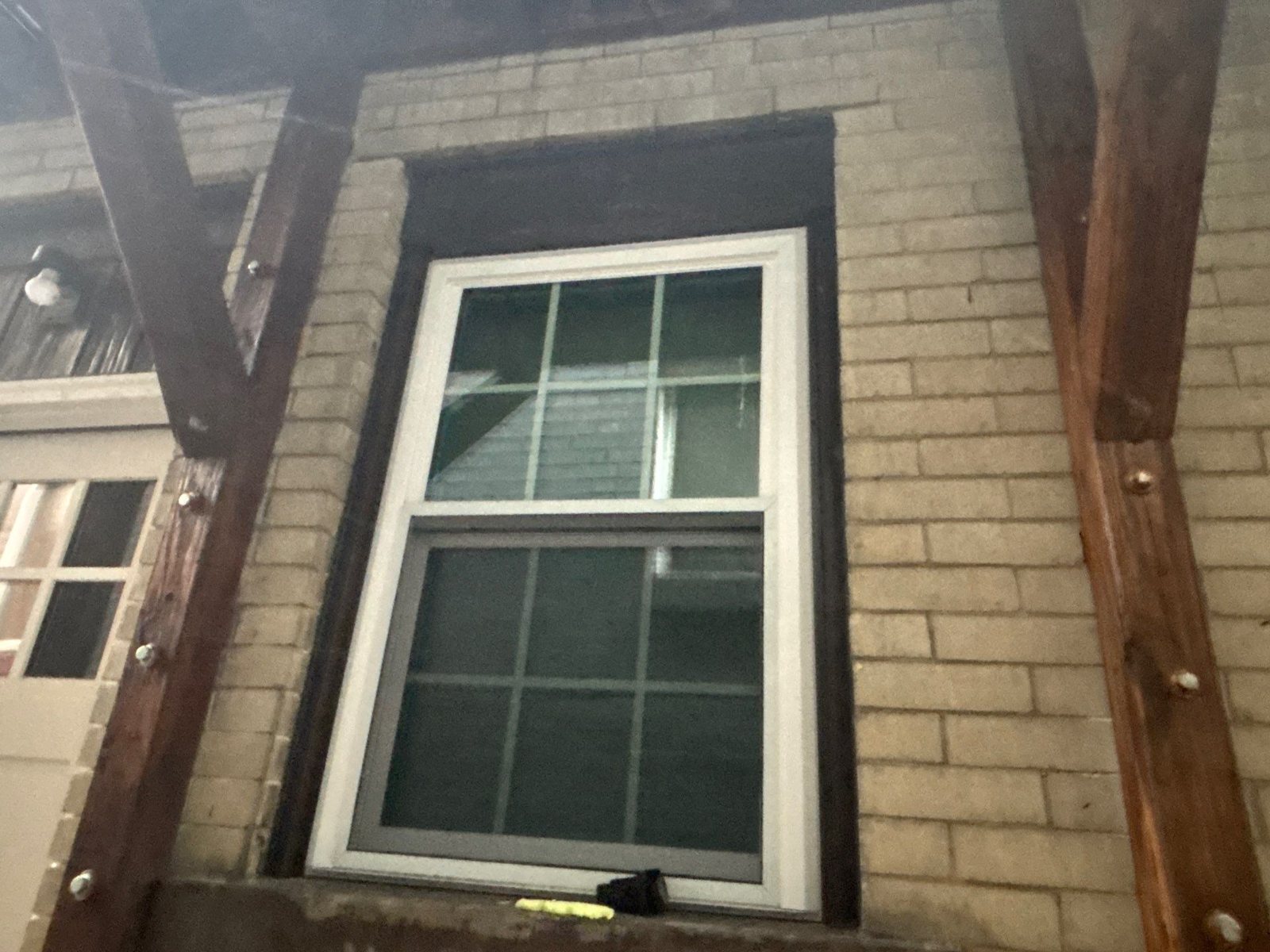
New white double hung window set in a brick wall in Pittsburgh, Alan Construction.
What Drives the Cost of a Roof or Siding Job
Every house is different, which is why we don’t quote over the phone. These are the things that move the number:
- Size and complexity: Total wall area or roof area, plus how many corners, dormers, valleys and windows the crew has to work around.
- Roof pitch and height: Steep roofs and tall walls take more time and more safety equipment.
- Layers to remove: Tearing off one layer of shingles or siding is faster than tearing off two.
- Hidden damage: Rotted deck boards or sheathing have to be replaced before anything new goes on.
- Material choice: Shingle line, siding profile and thickness, and trim options.
- Extras: New gutters, soffit and fascia, window trim, or skylights.
Our estimates are free and come with no obligation. If you’d rather spread the cost out, we offer financing for roofing and siding through a lender network.
Choosing a Contractor for a Wexford Project
Wexford homeowners get plenty of door knockers after a big storm. Before you sign anything, check these basics:
- Pennsylvania HIC registration: Any contractor doing home improvement work in PA has to be registered. You can look up a number on the PA Attorney General’s contractor registration site. Ours is PA#126638.
- Insurance: Ask for proof of liability and workers’ comp coverage.
- A written estimate: It should spell out materials, tear off, flashing, ventilation and cleanup.
- Real reviews: Look for reviews that describe the work, not just stars.
We’re licensed and insured, BBB Accredited with an A+ rating, and most of our roofing jobs are finished in one day with a magnetic nail sweep at the end. On a siding, soffit and gutter job, Chelsea C. wrote: “What I appreciated the most about Alan construction was their communication; they got back to me quickly with any questions.” That’s what we aim for on every house.
Planning a new roof or new siding for your Wexford home? Request a free estimate and we’ll look at the whole exterior and give you a straight answer.