How is vinyl siding installed when you replace it? A siding replacement in Pittsburgh follows six stages: an inspection at the house, choosing your vinyl and checking permits, tearing off the old siding, repairing the sheathing and weather barrier, hanging the new siding and trim, and a final cleanup and walkthrough. Most homes take anywhere from a few days to a couple of weeks, depending on size, condition and weather.
If you’re already weighing your options, our page on siding installation in Pittsburgh covers the vinyl styles and colors we install.
Short answer: the old siding comes off, damaged sheathing is fixed, house wrap and flashing go on, then new vinyl is hung loosely from the bottom up, trimmed out and cleaned up. The hidden prep work decides how long the job lasts.
Before the Work Starts: Inspection and Planning
The first stage happens before anyone sets up a ladder. A good contractor walks the entire exterior, looks at the condition of the existing siding, checks trim, soffits and fascia, and notes any signs of water getting in around windows, doors and the roofline.
They should also look at how water drains away from the house. Grading and gutter problems are common on Pittsburgh’s hillside lots, and they can shorten the life of new siding if they’re left alone. If your roof is close to the end of its life too, it’s worth reading about why timing matters when you replace your roof and siding before you book either job.
Choosing Your Vinyl Siding
Once the condition of the house is clear, you’ll pick the siding itself. We install vinyl, and the choices that matter most are:
- Profile: traditional lap, Dutch lap or vertical board and batten, which many homeowners use on gables or accent walls.
- Color: darker colors have become popular, and trim color changes the whole look of the house.
- Panel thickness: heavier panels lie flatter on the wall and stand up better to bumps and wind.
- Trim and accessories: corner posts, window and door trim, soffit and fascia, all chosen to match.
Your contractor should explain how each option handles cold snaps, moisture and the style of your home rather than steering you toward one choice by default. If you’re still comparing materials, our post on how long different siding materials last in Pittsburgh is a good place to start.
Permits and Older Home Considerations
Depending on where you live, your project may need a permit from the City of Pittsburgh or your local borough or township, and homes in designated historic districts can need extra review before exterior changes are approved. Your contractor should confirm these requirements ahead of time.
Many homes in the region were built before 1978, which means lead based paint may be present on old trim or wood siding, and some mid century homes have cement asbestos shingles. Federal rules require lead safe work practices on pre 1978 homes, and suspected asbestos materials should be tested before removal.
Tear Off: Removing the Old Siding
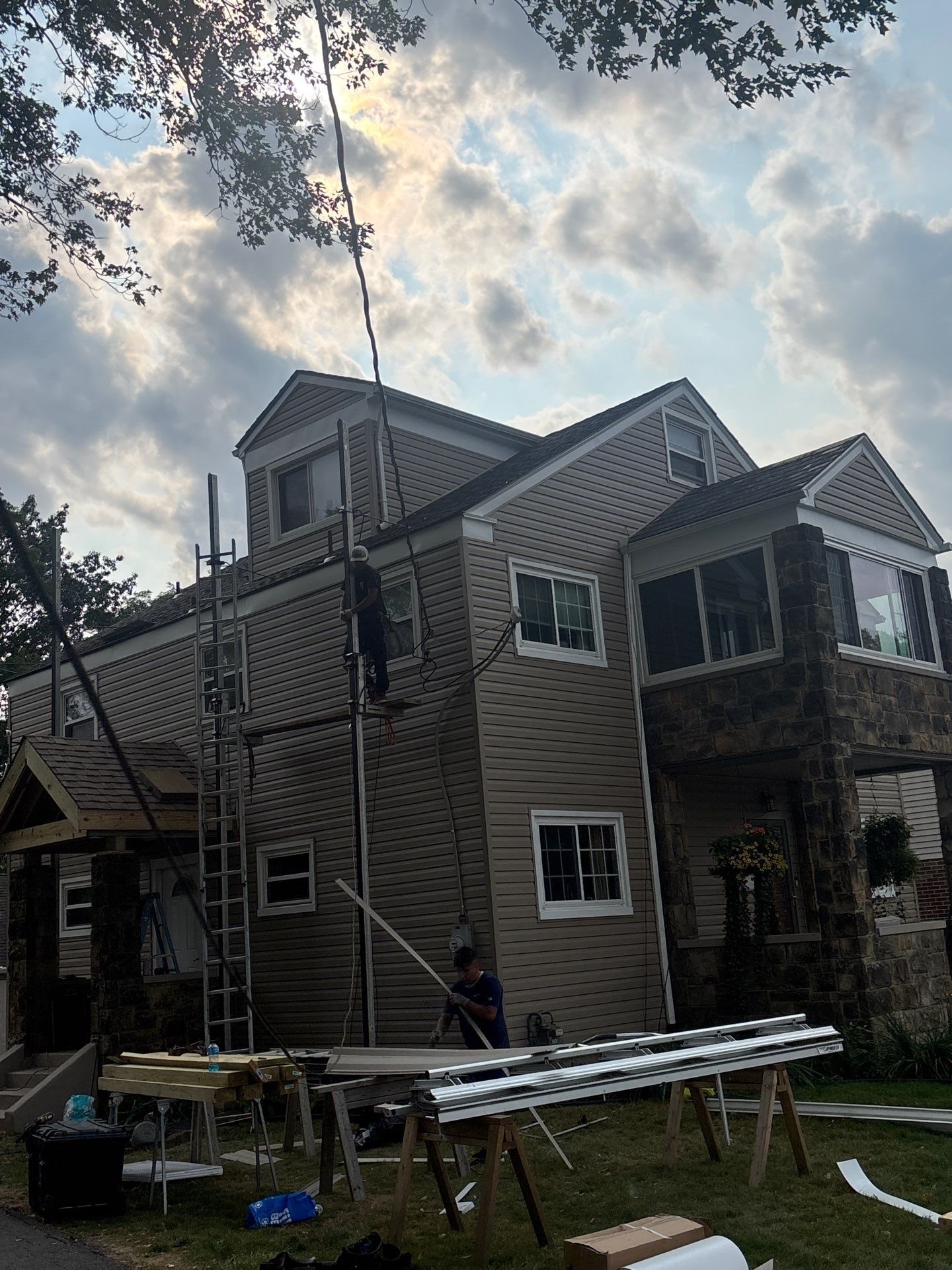
On the first day of work, the crew protects your property. That usually means covering landscaping, setting tarps along the foundation and making sure windows, doors and air conditioning units are shielded from falling debris.
A dumpster is typically placed in the driveway or nearby, so plan to park elsewhere for the duration.
Siding crew setup with ladders and sawhorses beside a house in Carnegie, Alan Construction.
What Happens During Removal
The crew strips the old siding section by section, along with any outdated trim or damaged accessories. In most cases, removing everything down to the sheathing is the better choice, because it lets the crew see what’s actually going on with the wall.
Installing new siding over old layers can hide rot, trap moisture and create an uneven surface.
Repairs and Weather Protection Under the Surface
This is the stage homeowners don’t see once the job is done, and it’s one of the most important. With the walls exposed, the crew checks the sheathing for rot, soft spots and insect damage. Any bad sections get replaced before anything new goes on.
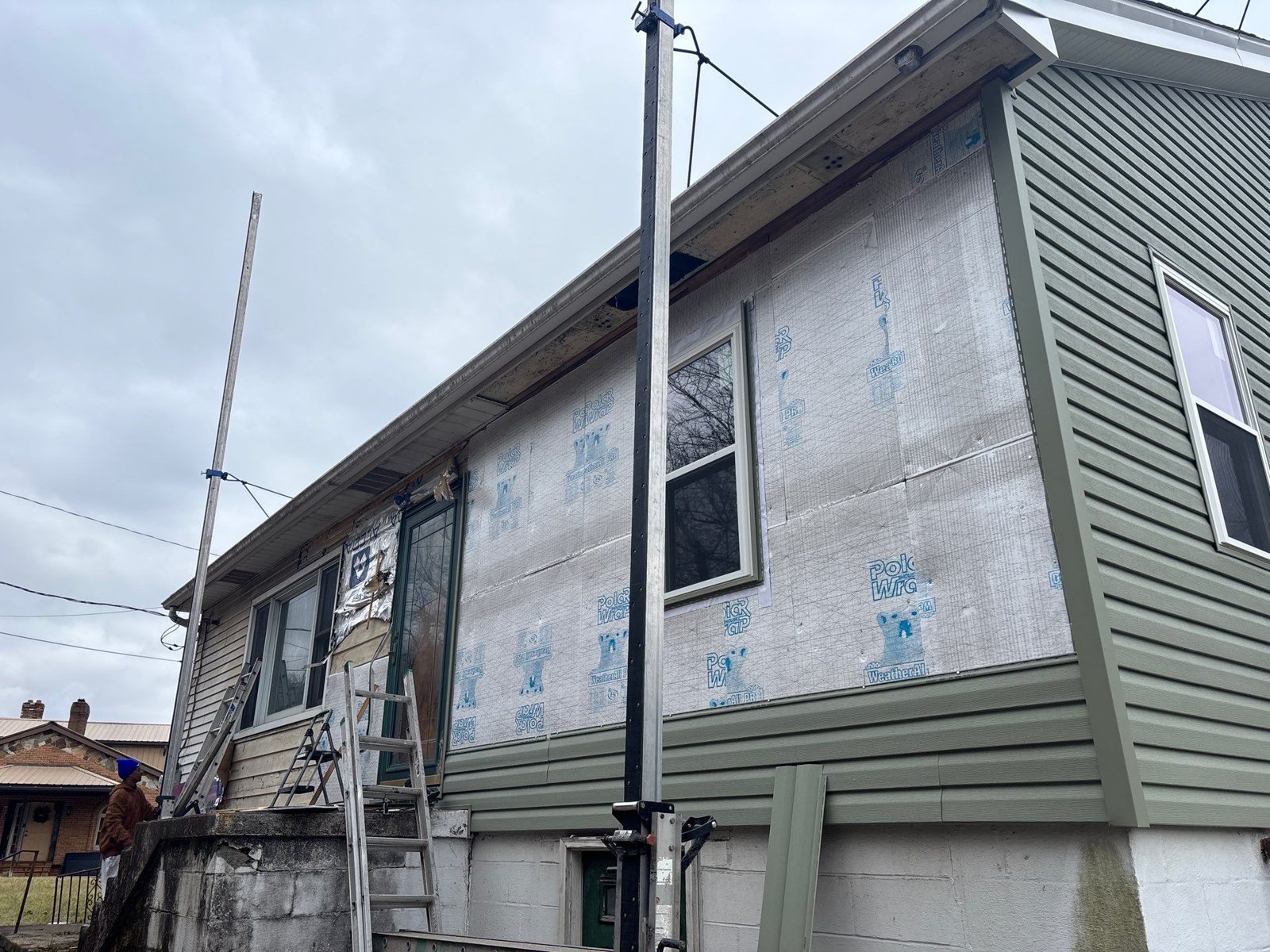
Next, a weather resistant barrier, usually called house wrap, goes over the sheathing. It sheds water that gets behind the siding while still letting the wall dry out, which matters in a climate that swings between humid summers and freezing winters.
Wall half covered in house wrap and half in new green siding in Monongahela, Alan Construction.
Flashing Around Openings
Flashing is added around windows, doors and other openings to direct water away from vulnerable seams. Skipping sheathing repairs or flashing is one of the most common ways a siding job fails early. You can see this stage on a real house in our Monongahela siding replacement project.
How Vinyl Siding Is Installed
With the wall prepared, installation begins. A starter strip goes on first along the bottom edge, followed by corner posts and the channels that frame windows and doors.
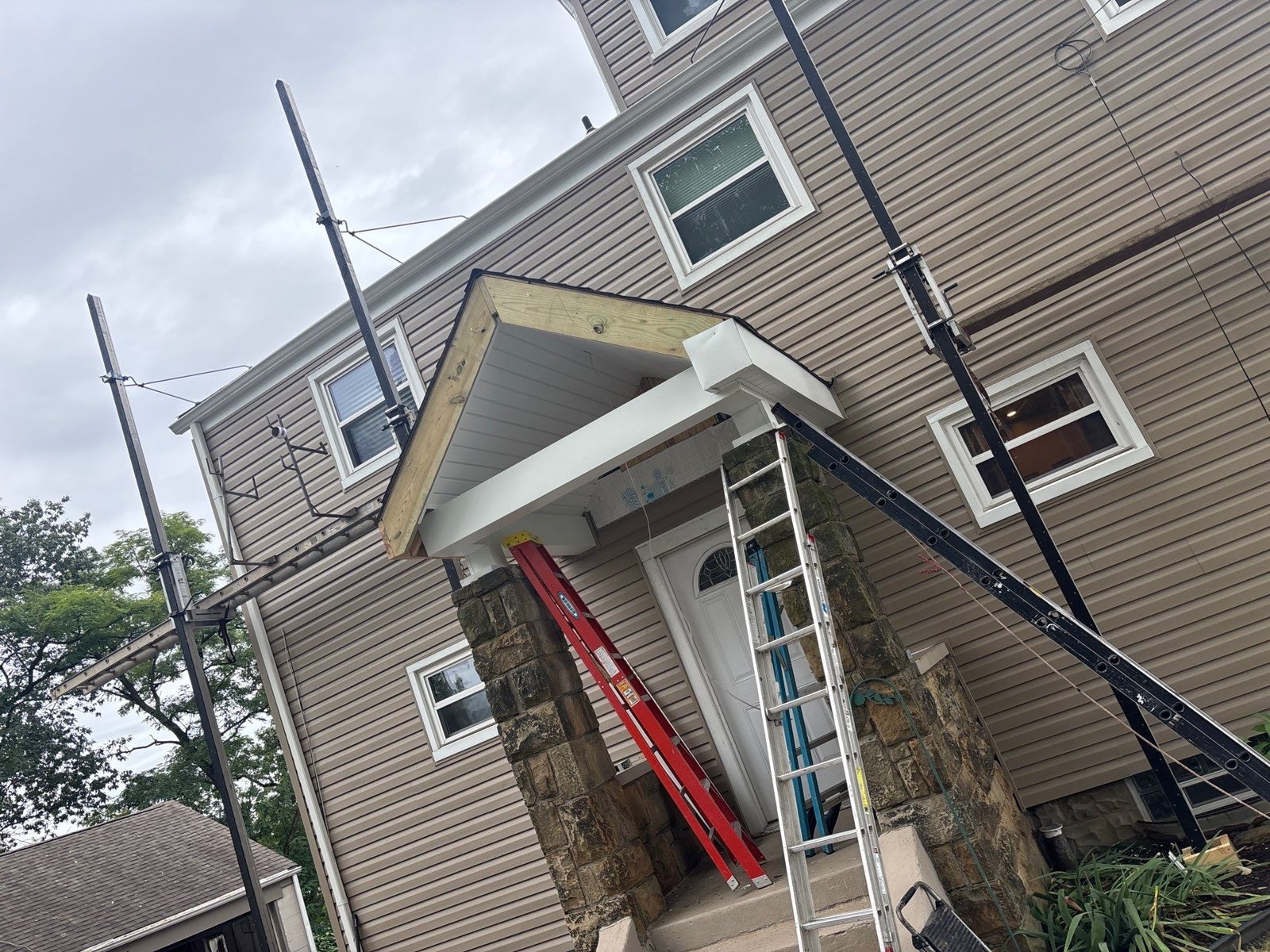
Panels are then installed course by course, working upward and keeping everything level. On a two story wall, the crew works from ladders and pump jacks so each course can be checked as it goes up.
Ladders and pump jacks against a home during siding work in Carnegie, Alan Construction.
Why Fastening Matters
Correct fastening is the difference between siding that lies flat for decades and siding that ripples. Vinyl has to hang loosely enough to expand and contract with temperature changes. Nails go in the center of the slot and are not driven tight. If they are, the panel will buckle on the first hot afternoon or crack on a cold night.
Finishing Details: Trim, Soffit and Fascia
Once the main siding is up, the crew installs trim around windows and doors, replaces or wraps soffits and fascia, and seals joints where the material calls for it.
These details make a big difference in how the finished house looks and how well it keeps water out. If you’d like to see how the stages come together, look at our completed siding replacement projects.
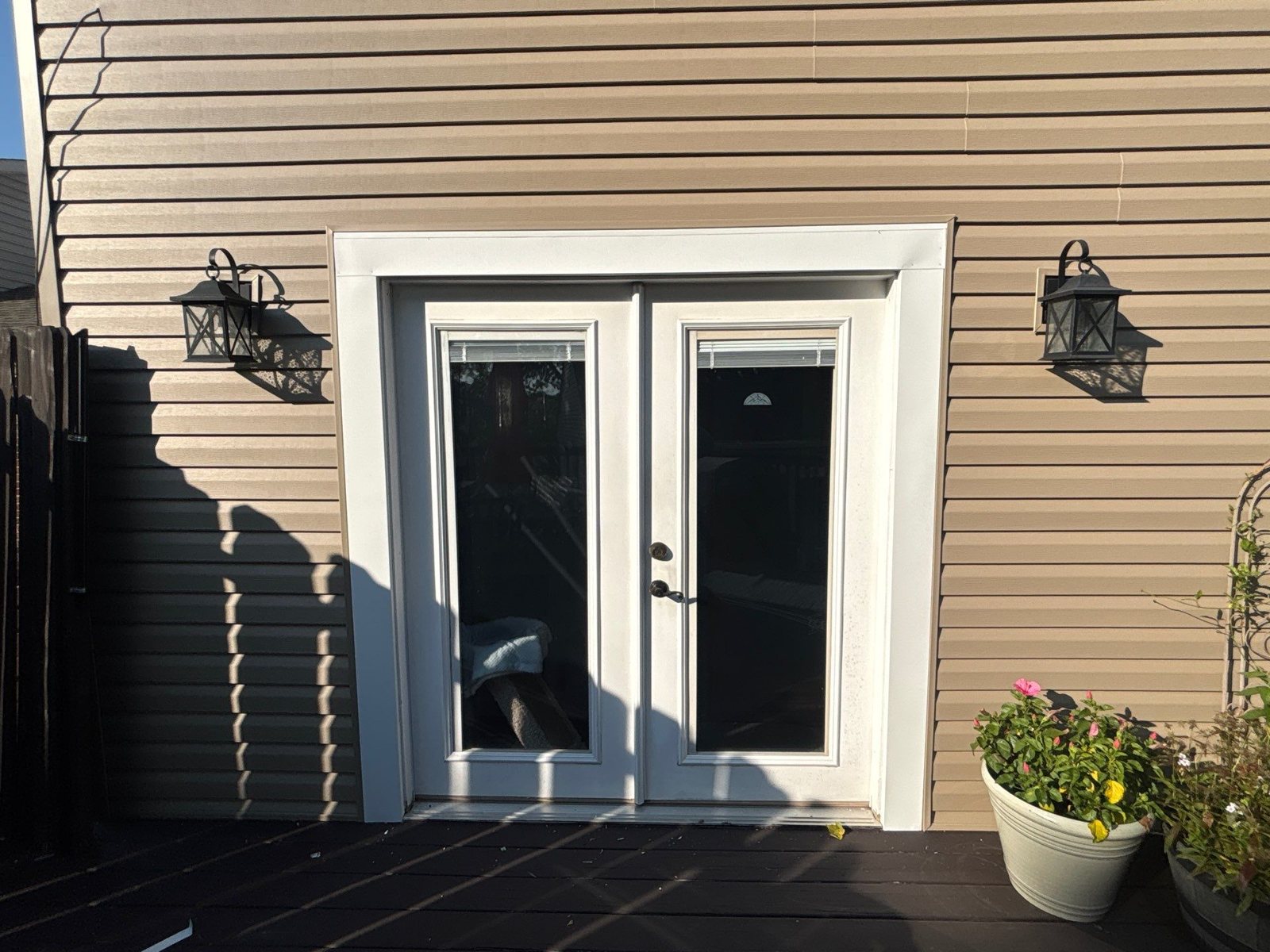
Tan vinyl siding around white French doors on a deck in Carnegie, Alan Construction.
Cleanup and the Final Walkthrough
A professional crew cleans up as they go and does a thorough sweep at the end. That includes hauling away old materials, picking up scrap and packaging, and running a magnetic sweeper over the lawn and driveway to catch stray nails.
The last step is a walkthrough with you. This is your chance to look closely at seams, corners, trim and the transitions around windows and doors. Ask questions about care and maintenance, and make sure you receive warranty information for both the materials and the workmanship.
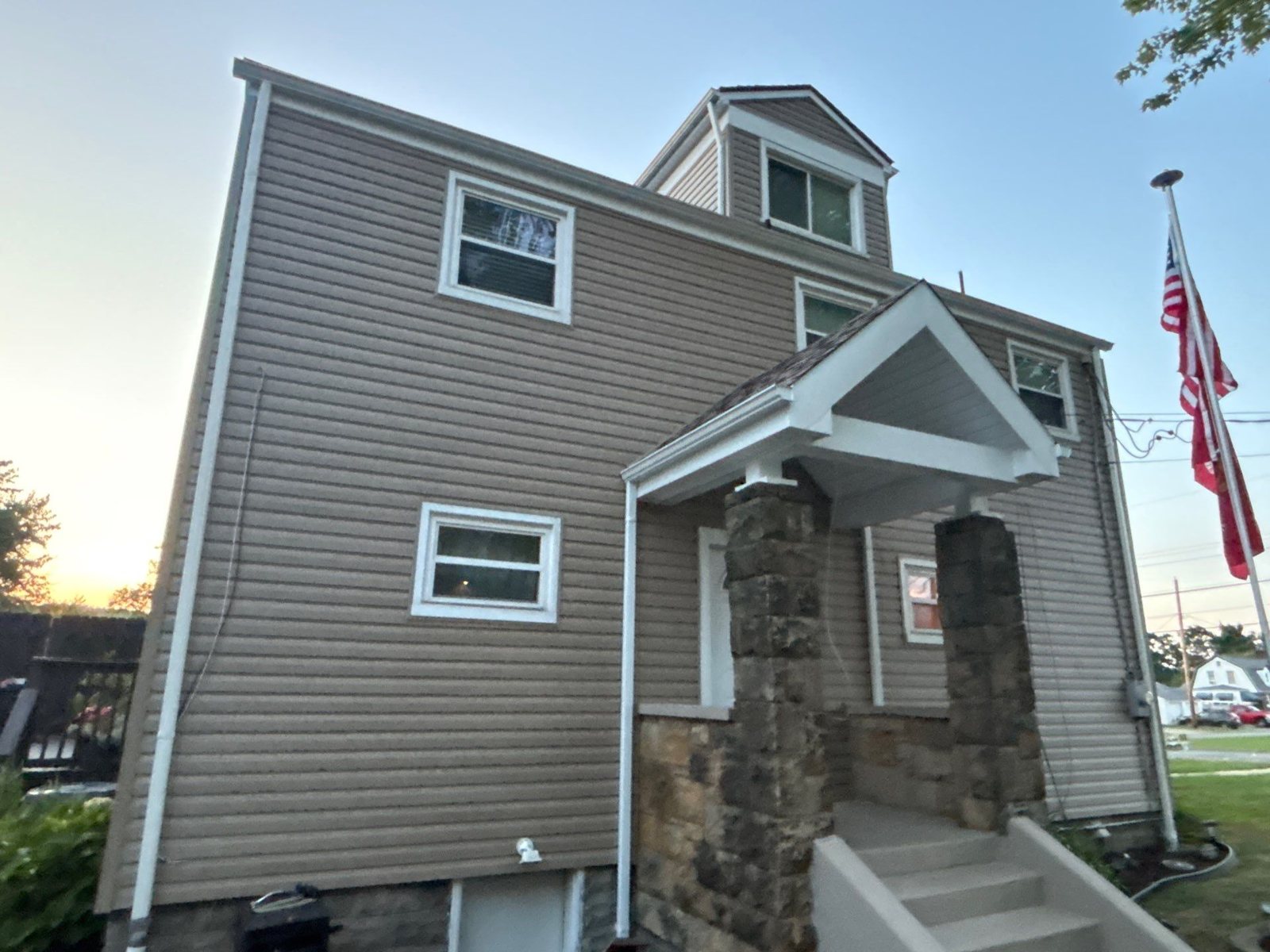
How Long Does a Siding Replacement Take?
Most siding replacements on a typical single family home take a few days to a couple of weeks. The biggest variables are:
- the size of the house and the number of stories
- gables, dormers and other details that need extra cutting
- how much sheathing repair turns up after tear off
- how much trim, soffit and fascia work is included
Weather plays a big role in Western Pennsylvania. Rain delays are common in spring, and deep winter cold makes vinyl stiffer and slower to work with. Late spring through fall is usually the most practical window, though a well planned project can happen in other seasons too.
Here’s how one homeowner described our crew’s days on her job:
“Very pleased with our siding, soffits, fascia, and gutters by Alan, Jim, and their crew! They were very reasonably priced and did solid work. Crew was here every day at 7:30/8a and stayed until 6p each day, even later a couple days if weather was nice.” Chelsea C., Google review
What Affects the Cost of Siding Replacement?
Every project is priced individually, and several factors shape the final number. The square footage of the exterior and the complexity of the house, including gables, dormers and multiple stories, have the biggest impact. The vinyl you choose matters too, as does the amount of trim, soffit and fascia work involved.
Hidden conditions also play a part. Rotted sheathing, lead safe work requirements on older homes, asbestos testing or extra layers of old siding to remove all add labor. A detailed written estimate should spell out what’s included, so you can compare contractors on the same terms. If you’d rather spread the cost out, we offer financing options.
Planning a siding replacement? Alan Construction has served Pittsburgh homeowners since 2003, and we’ll walk your house, explain each stage and give you a free, no obligation estimate. Contact us to schedule your visit.