Roof flashing leaks around chimneys almost always come from four things: dried out sealant, corroded metal, counter flashing that was never properly set into the mortar, and mortar joints that have crumbled from freeze and thaw damage. Water slips behind the metal where the chimney meets the roof and runs down the decking, while the shingles themselves are usually fine. A proper chimney flashing repair fixes most of these leaks without a new roof, and it’s some of the most common roof repair in Pittsburgh work we do.
That surprises people. Homeowners often call convinced they need a full tear off, and the actual problem is a strip of metal that has pulled away from the brick. Flashing is the least glamorous part of a roof and one of the most common failure points. It’s also the part most homeowners have never looked at.
Who does what: Chimney flashing is roofing work, and that’s our job. If the brick, mortar or crown of the chimney itself is failing, a mason handles the repointing or rebuild first, and the new flashing goes on once the masonry is sound.
The anatomy of a chimney flashing system
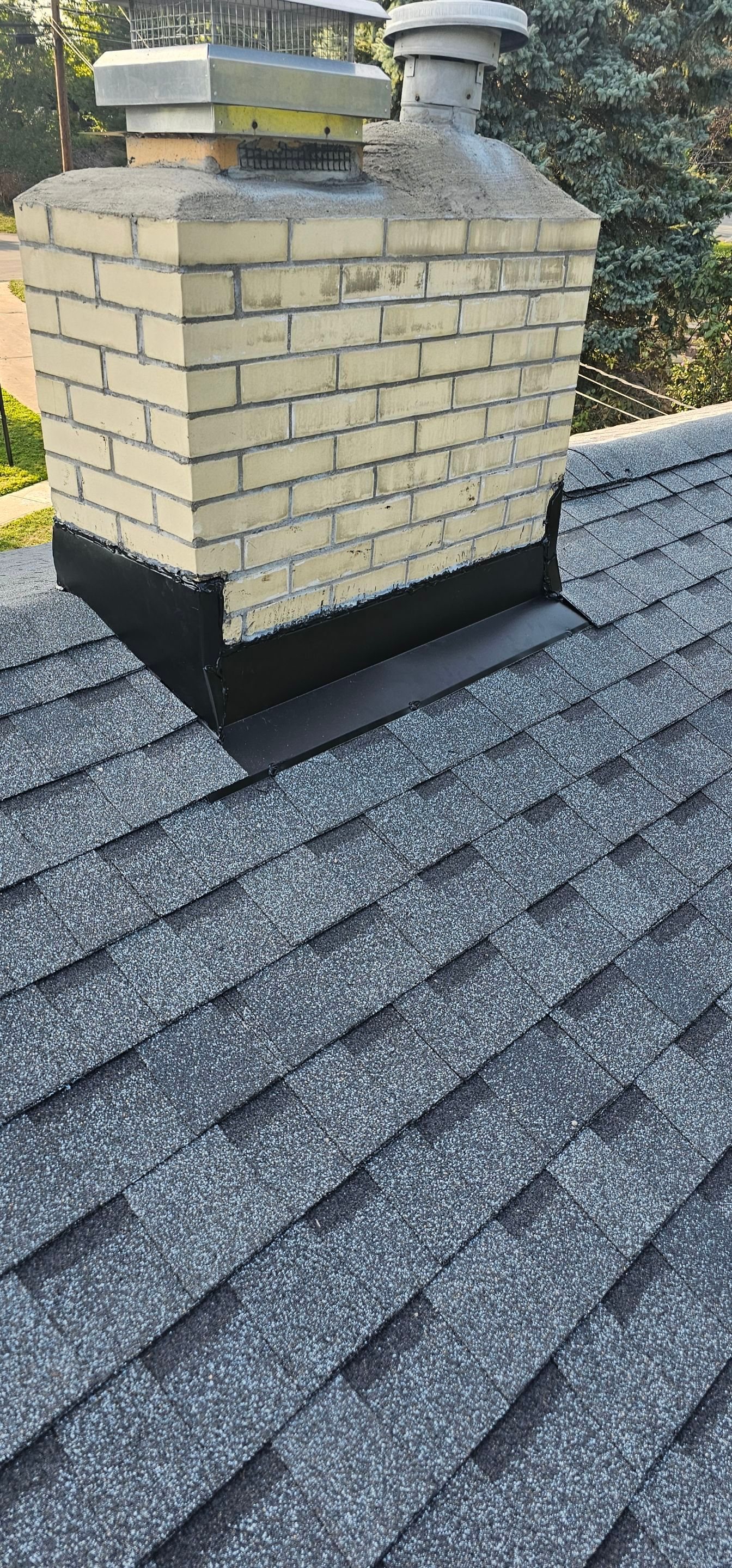
Flashing isn’t one piece of metal. It’s a layered system, and every layer has a job.
- Apron flashing sits at the low side of the chimney and sheds water onto the shingles.
- Step flashing runs up both sides in overlapping L shaped pieces, woven in with each shingle course.
- Counter flashing is the top layer. It tucks into a cut mortar joint and laps over the step flashing so water can’t find a seam to climb into.
New black flashing around a brick chimney with new gray shingles on a Bethel Park roof, Alan Construction.
On wider chimneys, a cricket goes behind the stack. That’s a small peaked structure that splits water and sends it around each side, and the residential code calls for one on chimneys wider than 30 inches. Skip the cricket on a wide chimney and you’ve built a dam. Snow piles up, melts slowly and sits against the brick for weeks.
The chimney flashing failure points we see most
Sealant failure is number one, and it isn’t close. Caulk and roofing cement are temporary by design. They shrink, harden and crack. Too often a previous contractor smeared a bead of black tar across the top edge of the flashing instead of cutting a proper groove, called a reglet, into the mortar. A few winters later that bead splits, and now there’s a direct funnel into the roof deck.
Corrosion is a close second. Galvanized steel eventually rusts through, especially at fasteners and folds where water lingers, and very old pieces can come apart in your hand. Mixing metals causes trouble too: aluminum flashing in contact with copper corrodes faster through galvanic reaction.
Bad installation rounds out the list. Step flashing nailed to the brick instead of the roof deck, counter flashing tucked under shingles instead of over the step pieces, or one long strip bent along the chimney side instead of individual steps. Each of those looks acceptable from the ground. None of them survive a decade of real weather.
Failing mortar is the fourth cause, and it’s the one that isn’t purely a roofing problem. If the joint holding the counter flashing has crumbled, the metal has nothing to grip. A mason needs to repoint that joint before any new flashing can hold.
What are the common causes of roof flashing issues?
Chimneys get the most attention, but flashing can fail at every transition on a roof. Valleys move a lot of water, so a single rusted spot there creates a stain fast.
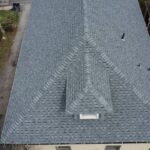
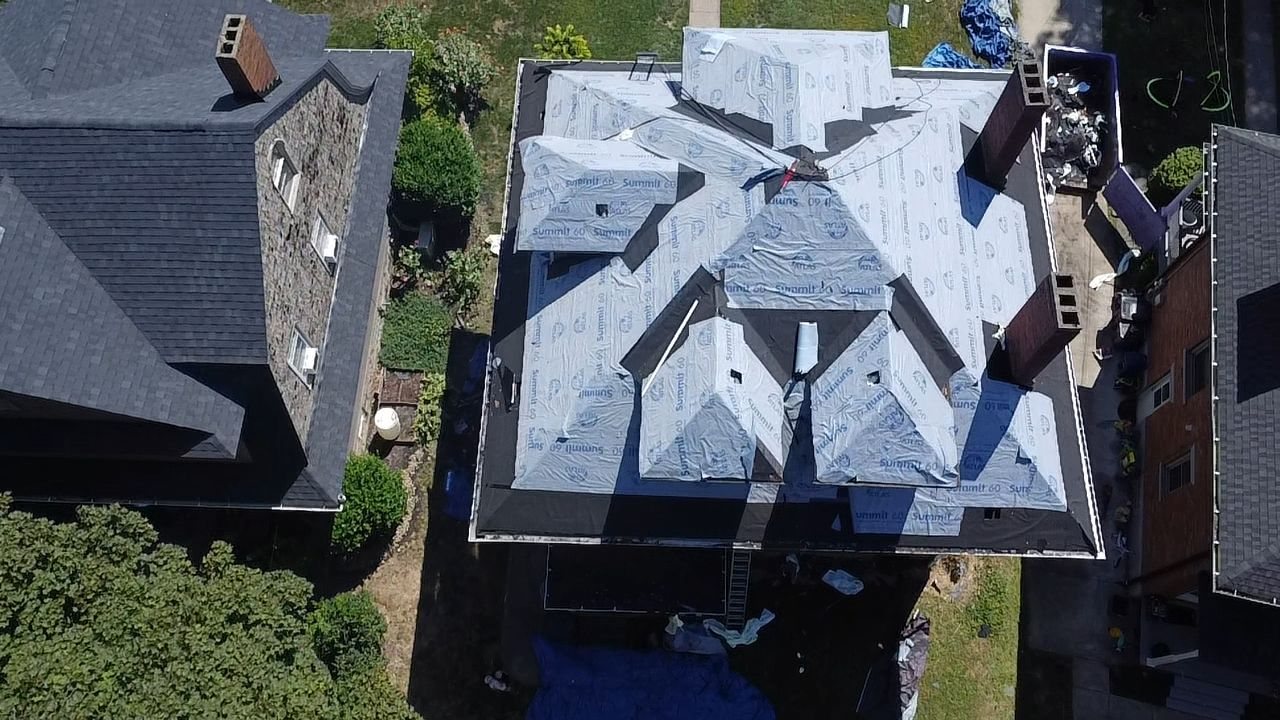
Sidewall and headwall flashing, where a roof meets a wall, fails when the step pieces are too short or the housewrap wasn’t lapped over the metal. Every dormer on a roof like this one adds two more of those roof to wall joints that need step flashing done right.
Overhead view of a Pittsburgh hip roof with several dormers, dried in with underlayment, Alan Construction.
Then there’s kickout flashing, or the total absence of it. That’s the small angled piece at the bottom of a roof to wall junction that sends water into the gutter instead of behind the siding. It’s missing on many older homes. When it’s gone, water can run down inside the wall cavity for years before anyone notices soft sheathing.
Why Pittsburgh weather is especially hard on flashing
This region punishes the joint where metal meets masonry. We get a lot of individual wetting events through the year, and then winter brings days that swing above and below freezing.
That daily swing across 32 degrees is the real villain. Water gets into a hairline crack in the mortar, freezes, expands about nine percent and widens the crack. Repeat that through a whole season and the joint holding your counter flashing lets go. Add the many older houses around Pittsburgh that still wear original or near original flashing, and it’s easy to see why chimney leaks are such a common call.
My chimney flashing is leaking. How can I fix it?
First, confirm it’s actually flashing. Go into the attic during or right after a hard rain with a flashlight and look at the roof boards around the chimney. Wet wood, dark staining or rusty nail tips near the chimney point to flashing. A wet spot ten feet away points somewhere else entirely.
What you can reasonably do yourself
If you can safely reach the area and the gap is small and visible, a bead of good elastomeric sealant can buy you some time, sometimes a full season. That’s a bandage, not a repair. Never use roofing tar as a permanent fix on counter flashing. It traps moisture against the metal and speeds up the rust you’re trying to stop.
When to bring in a pro for chimney flashing repair
If the metal is corroded through or the flashing was installed wrong to begin with, sealant won’t save it. A proper chimney flashing repair means removing shingle courses, cutting a fresh reglet, and installing new apron, step and counter flashing. That’s a fix that lasts decades instead of months.
If the mortar joints are soft, the brick is loose or the crown is cracked, a mason should repoint or rebuild that part of the chimney first. New metal can’t hold in failing masonry, so getting the order right saves you from paying for the same leak twice.
What affects the cost of chimney flashing repair?
It depends mostly on how long the leak has been running. A reseal caught early is one of the smaller repairs in roofing. A full flashing replacement on a steep, two story roof with soft decking underneath is a different conversation. Here’s how the work scales.
| Type of work | Relative size of the job | What’s involved |
|---|---|---|
| Reseal or minor patch | Smallest | New sealant, reset loose edges |
| Step flashing replacement | Small to moderate | Remove shingle courses, install new metal |
| Counter flashing replacement | Moderate | Cut a new reglet, set new metal |
| Cricket added | Moderate | New framing and flashing behind a wide chimney |
| Full chimney flashing system | Moderate to large | Complete apron, step and counter replacement |
| Hidden damage (rotted decking) | Largest | Sheathing and underlayment replacement |
| Mortar, brick or crown repair | Separate trade | Handled by a mason before the flashing goes on |
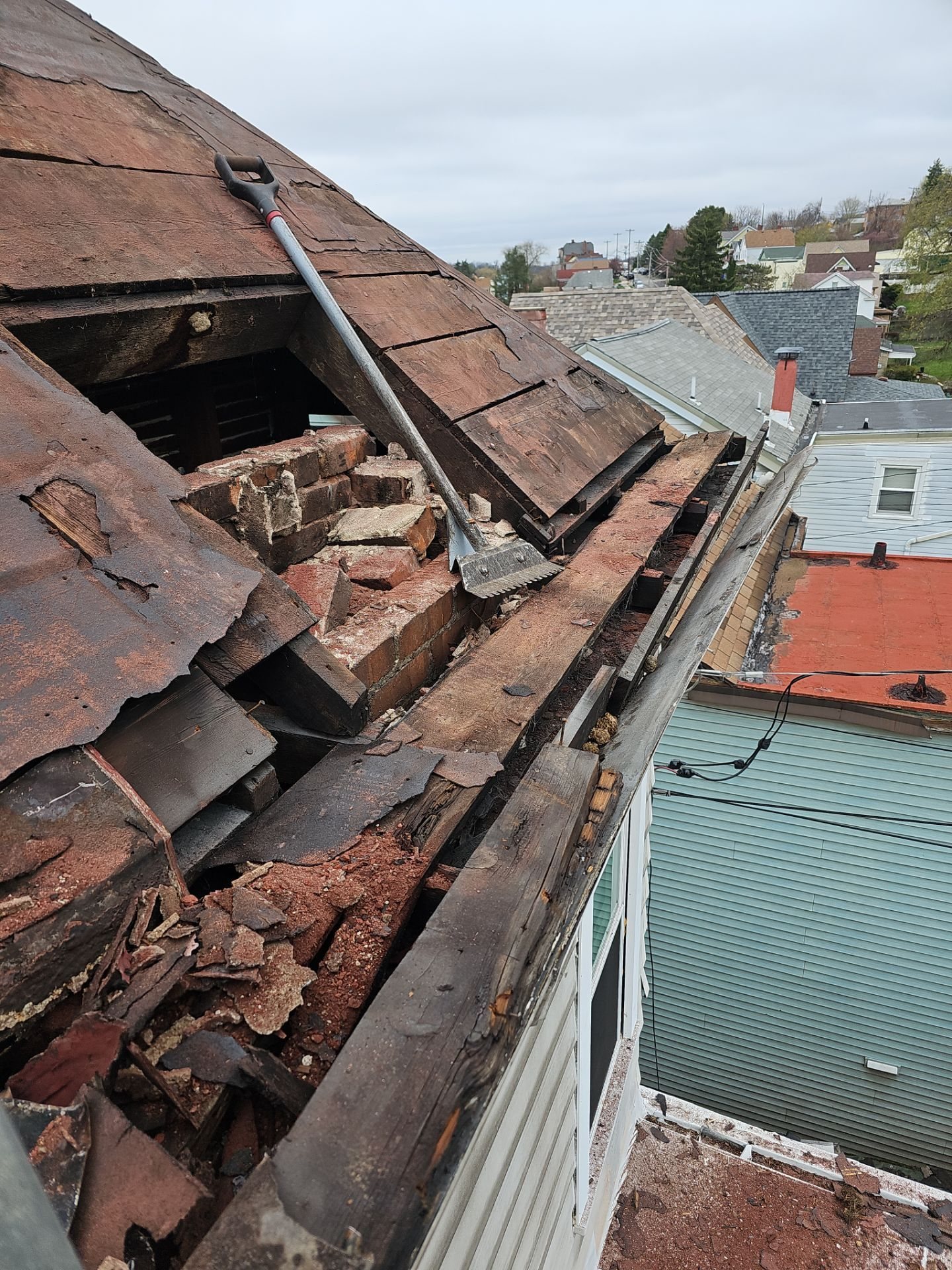
The hidden damage row is why waiting hurts. When water runs behind flashing for a few seasons, the boards underneath go soft and dark like the ones in this photo, and a short repair turns into a bigger project.
When you compare quotes, a good estimate should list exactly which flashing pieces are being replaced, not just say “repair chimney area.” Our estimates are free and written, so you can see what’s included before you decide.
Rotted roof boards and broken old shingles at a roof edge on a Pittsburgh home, Alan Construction.
Does homeowners insurance cover flashing repair?
Sometimes, and the distinction matters. Standard policies cover sudden, accidental damage: a windstorm tears the flashing loose, a falling limb crushes it, hail punctures it. In those cases the repair and the resulting interior water damage are generally covered, minus your deductible.
What insurance won’t cover is gradual wear. Rust, dried sealant, failed mortar and poor original installation all fall under maintenance, and adjusters are trained to spot the difference. Document storm damage right away with dated photos, and see our guide on whether homeowners insurance covers roof leaks in Pittsburgh before you file.
What is the typical lifespan of roof flashing?
It depends heavily on the metal. Galvanized steel has the shortest life of the common choices. Aluminum lasts longer as long as it isn’t paired with incompatible metals. Copper and lead are the long haul options, which is why you still see original copper or lead flashing doing its job on some very old Pittsburgh homes.
Sealant is the weak link in every one of those systems, so even good flashing deserves a look every few years. For a seasonal checklist, read our chimney flashing guide for Pittsburgh homeowners.
Should roofers replace flashing during a new roof?
Yes, every time. Reusing old flashing on a new roof is one of the most common corner cuts in this industry, and it’s how homeowners end up with a leak on a two year old roof.
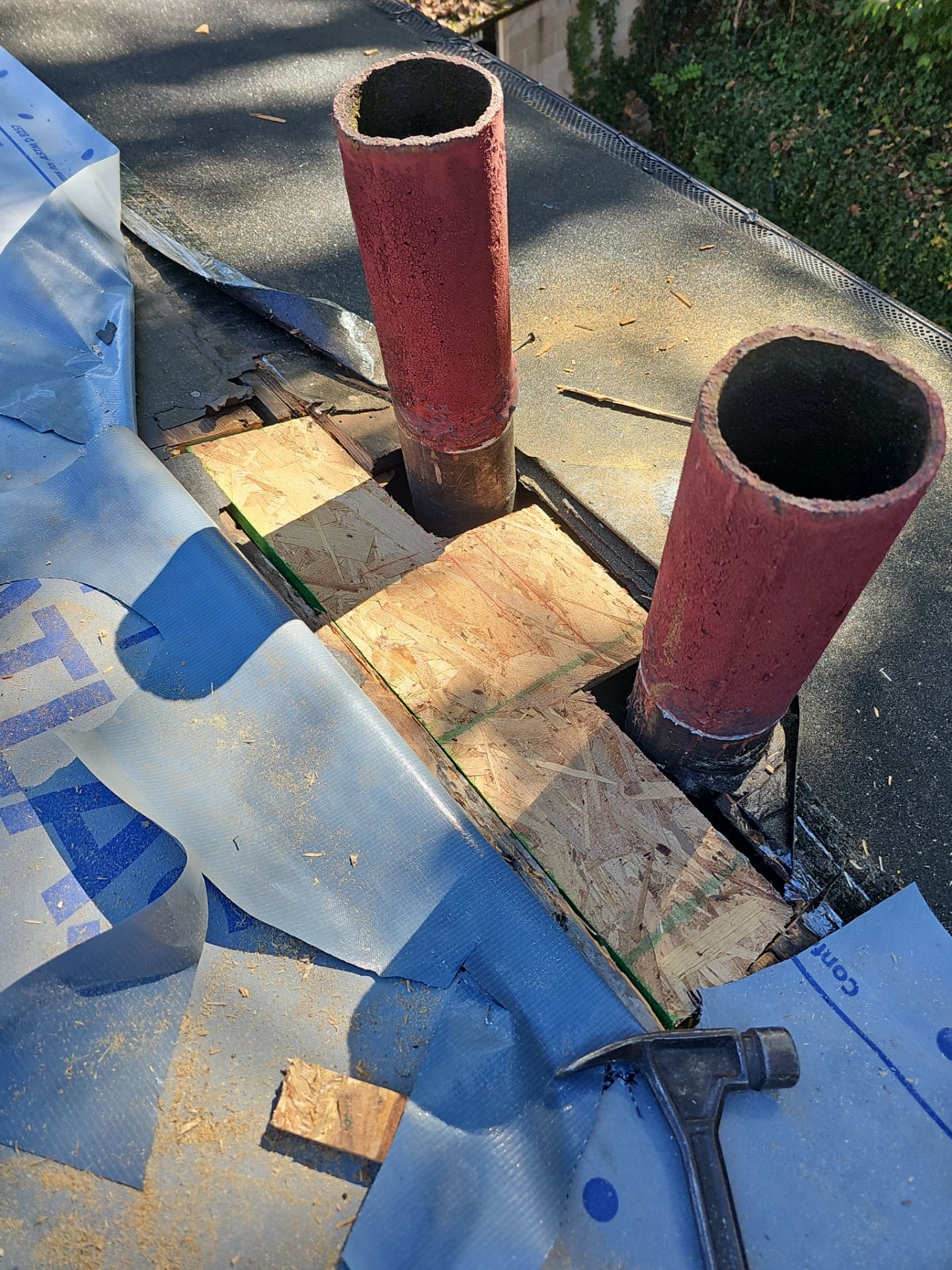
New flashing is a small part of a full replacement. Reusing twenty year old metal saves the contractor labor and material while moving all the risk to you. If a roof replacement bid doesn’t say “new chimney flashing,” ask why. Every penetration, from the chimney to flue pipes like these, should get new metal.
Two red flue pipes rising through new roof decking and underlayment on a Pittsburgh replacement, Alan Construction.
Home inspectors treat flashing that depends on sealant alone as a defect worth flagging. You can see that guidance in InterNACHI’s roof penetration inspection guide.
Catch it before it becomes structural
A ceiling stain is a late sign. By the time drywall discolors, water has been moving through your roof for a while, and the EPA advises drying wet materials within 24 to 48 hours to prevent mold growth. That’s the real cost of waiting.
Twice a year, walk around the house and look up at the chimney with binoculars. Watch for:
- Rust streaks on the brick
- A visible gap between the metal and the masonry
- Lifted shingles at the base of the chimney
- White, chalky efflorescence on the brick, which is worth having a mason look at
Spring and fall are the right windows. Catch it then, and it’s usually a short repair instead of a project.
Seeing a stain near your chimney? Contact Alan Construction for a free, no obligation estimate on your chimney flashing repair.