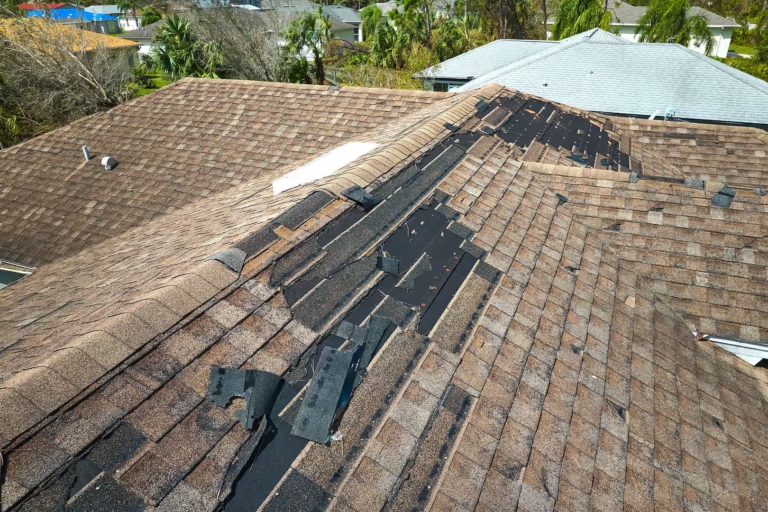
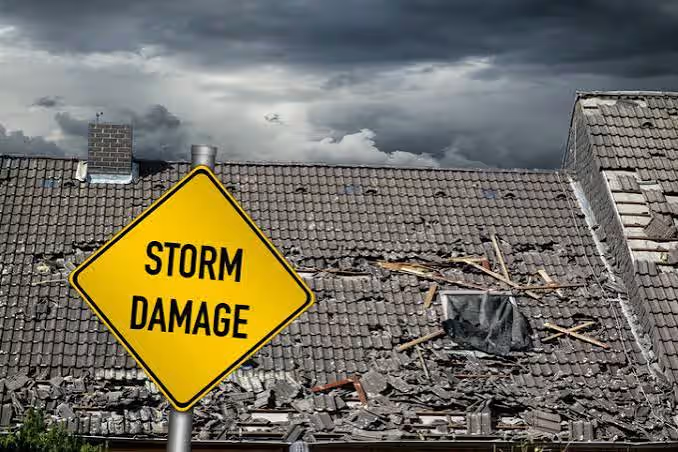
Most roof repair in McKees Rocks, PA comes down to a handful of weak spots: lifted or missing shingles, worn flashing around chimneys and vents, and gutters that send water back under the roof edge. Catch those early with a quick check each spring and fall, and a small repair usually keeps an older roof going for years. We’ve been handling roof repair in Pittsburgh and the surrounding boroughs since 2003, and we’ve worked on homes in McKees Rocks, so this guide sticks to what we actually see on roofs here.
Short answer: Look over your roof every spring and fall and after any big wind storm. Fix lifted shingles, cracked vent seals and loose flashing right away, and plan a replacement only when problems are spread across the whole roof or the decking underneath has gone soft.
Roof Repair in McKees Rocks, PA: What Makes Roofs Here Different
McKees Rocks sits just west of the city, with a lot of older housing on steep streets and hillsides. That mix shapes the repairs we get called for.
Older homes often have more than one roof layer, plank decking instead of plywood, and chimneys and dormers that all need flashing. Every one of those is a place where water can find its way in.
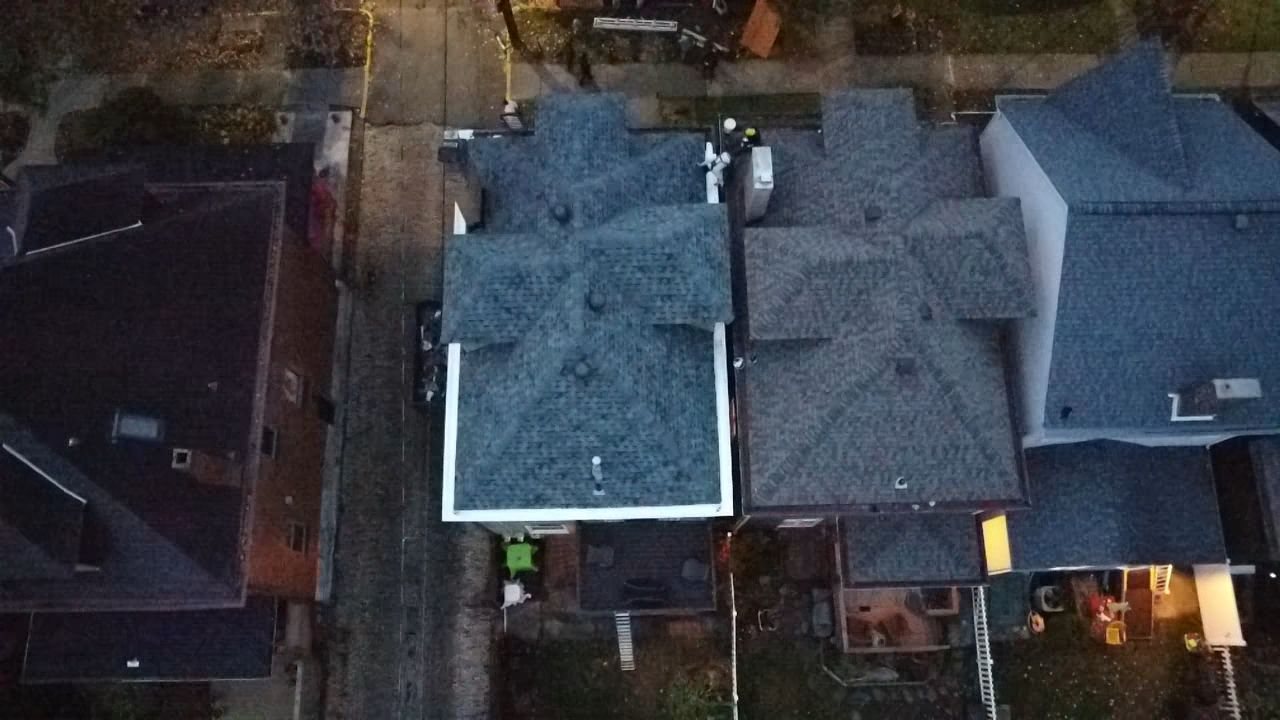
Houses that sit close together or share a wall also share trouble spots. Where two roofs meet, the seam and the flashing along the party wall take a beating, and a leak on one side can show up inside the house next door.
Mature trees drop leaves and shade the north side of a roof, which keeps shingles damp longer and fills gutters fast.
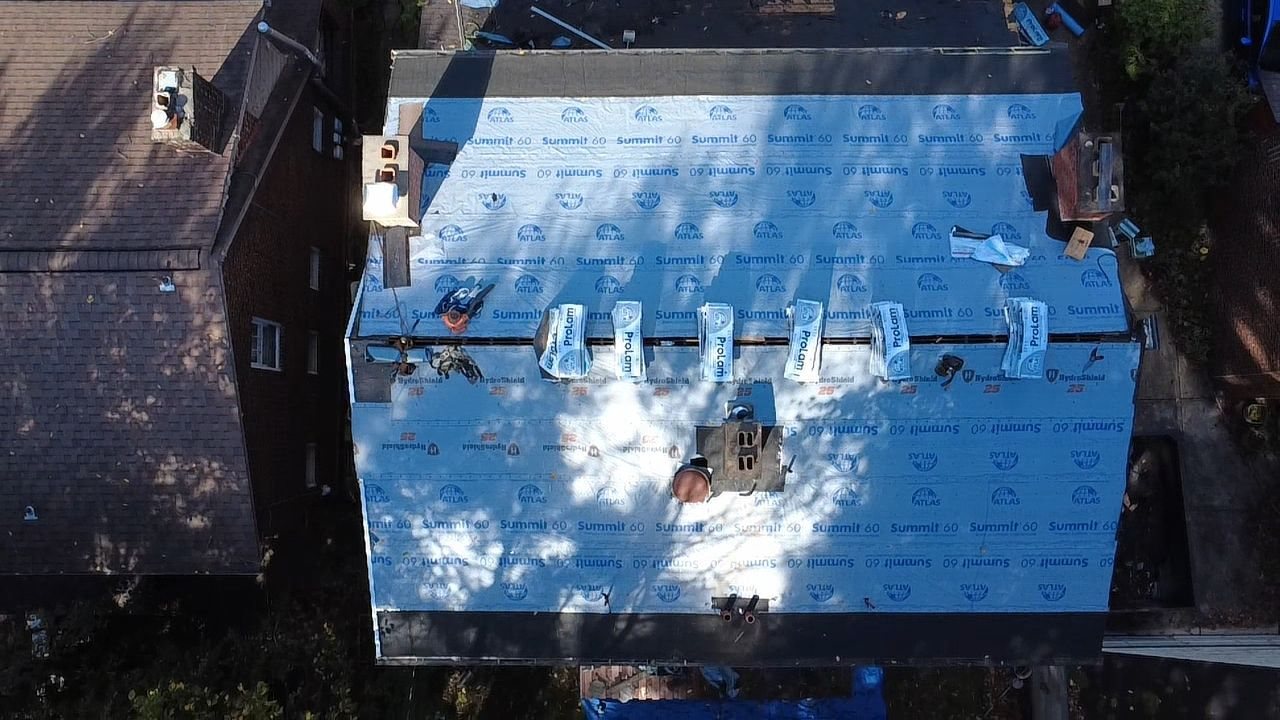
Drone view of finished gray shingle roofs on a close set Pittsburgh block, Alan Construction.
None of this means an older McKees Rocks roof is a lost cause. It means maintenance matters more, because small problems on an older roof don’t stay small for long.
A Seasonal Roof Maintenance Checklist
You don’t need to climb on the roof to do most of this. A pair of binoculars from the yard or sidewalk, a look in the attic, and a check of your gutters will tell you a lot. If something looks off, that’s when you call a roofer.
| When | What to check | Why it matters |
|---|---|---|
| Spring | Missing, cracked or lifted shingles; bent flashing; granules piling up in gutters | Winter freeze and thaw loosens shingles and flashing, and spring rain finds the gaps |
| Summer | Attic for heat, stains or damp spots; moss or dark streaks on shaded slopes | Trapped heat and moisture age shingles faster from underneath |
| Fall | Gutters and downspouts clear; branches trimmed back from the roof; vent seals and pipe boots intact | Clogged gutters and cracked seals are common causes of winter leaks |
| Winter | Icicles and ice buildup at the eaves; ceiling stains in top floor rooms | Ice at the edge backs water up under shingles |
| After any big storm | Shingles in the yard, dents in gutters, anything hanging off the edge | Wind damage is easiest to fix, and to document for insurance, right away |
Keep a few photos of your roof from the ground each season. If you ever need to file a storm claim, before and after pictures help a lot.
Common Roof Repairs We Make on Older Homes
Most repair calls fall into a few groups. Here’s what each one looks like and what fixing it involves.
Lifted, cracked or missing shingles
Wind gets under a shingle whose seal strip has let go, lifts it, and eventually tears it off. One missing shingle exposes the nail line of the row above it and leaves the underlayment open to weather. We replace the damaged shingles, reseal the surrounding tabs and match color as closely as the existing roof allows. Winter makes this worse quickly; we explain why in our post on how missing shingles turn into bigger winter problems.
Flashing around chimneys, walls and dormers
Flashing is the metal that seals the joint where the roof meets something vertical. On older homes it’s often original, rusted or held on by caulk that dried out years ago. Chimney flashing is a frequent leak source on older homes. Our guide to why chimney flashing matters goes deeper on how it should be built.
Vent seals and pipe boots
The rubber collar around a plumbing vent cracks in the sun. Water runs down the pipe and shows up as a ceiling stain that seems to come from nowhere. It’s one of the quickest fixes on a roof and one of the most overlooked.
Gutters and the roof edge
When gutters overflow or pull away, water soaks the fascia and the edge of the roof deck. Fixing the edge without fixing the gutters just sets up the same repair again. We handle both, and our gutter systems work includes gutter guards for homes under heavy tree cover.
What a Small Leak Does Underneath
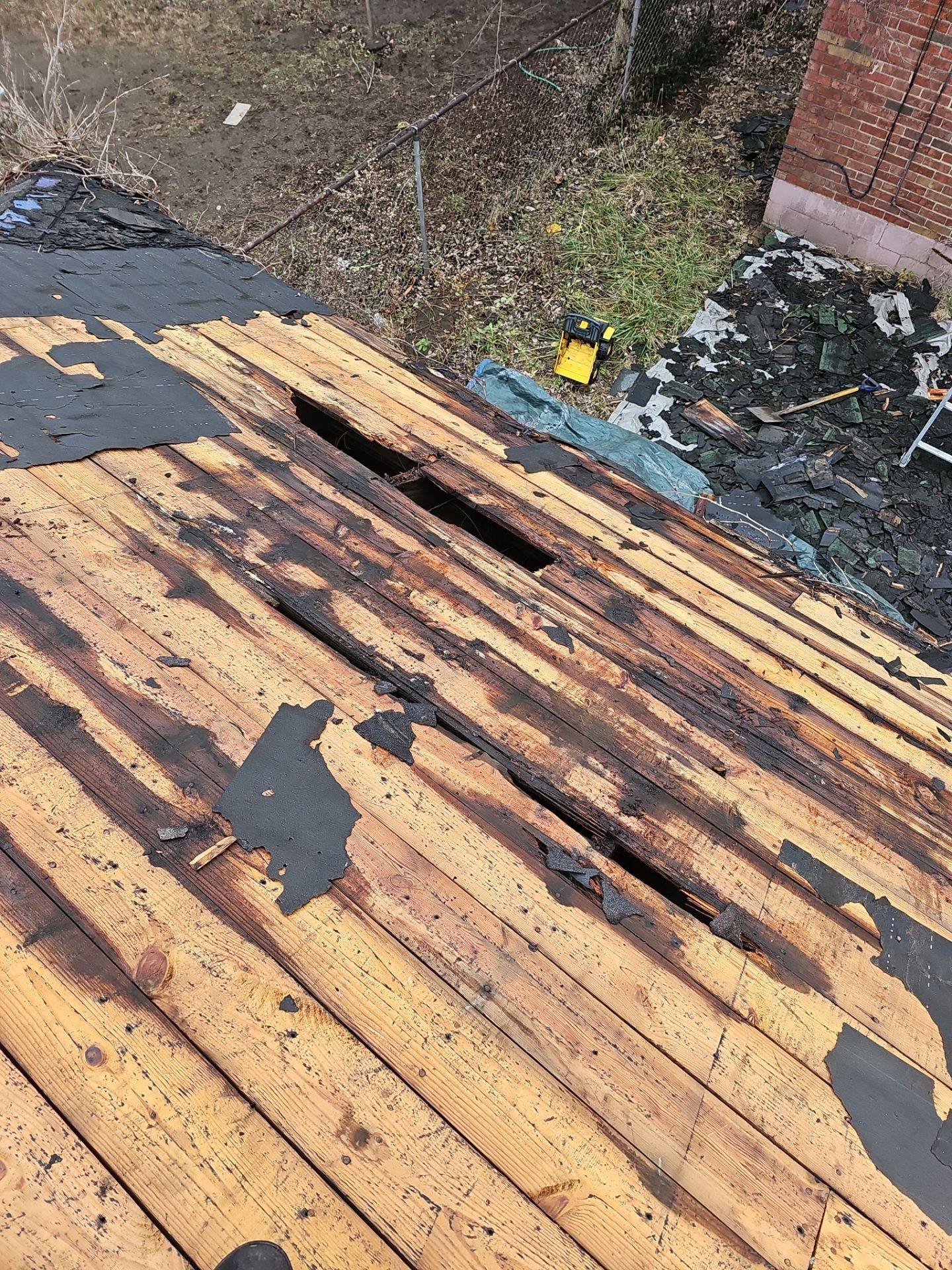
This is why we push for early repairs. On this Clairton job, the holes and gaps in the old plank decking only showed once the shingles came off. From the yard, you can’t see the deck at all.
Water that gets past a shingle doesn’t drip straight into your living room. It soaks into the decking first, and on plank decks it can travel along the boards before it ever shows on a ceiling.
By the time you see a stain, the wood above it may already be soft. A repair caught early is a few shingles and some flashing. Caught late, it’s decking.
Old plank roof deck with holes, exposed during a shingle tear off in Clairton, Alan Construction.
Inside, look for stains on top floor ceilings, peeling paint near the roofline, a musty smell in the attic, or daylight showing through attic boards. Any of those is worth a call even if you haven’t seen a drip.
Repair or Replace? How We Decide
We’d rather fix a roof that has life left than sell a replacement nobody needs. Here’s the honest line we draw.
A repair usually makes sense when
- The damage is in one area, like a few shingles, one chimney or one vent
- The rest of the shingles still lie flat and hold their granules
- The decking feels solid when we walk it
- The roof isn’t near the end of its life
Replacement is usually the better call when
- Shingles are curling, cracking or bald across most of the roof
- Leaks keep coming back in new places after repairs
- The roofline sags or the deck feels soft underfoot
- You’d be patching a large share of the roof anyway
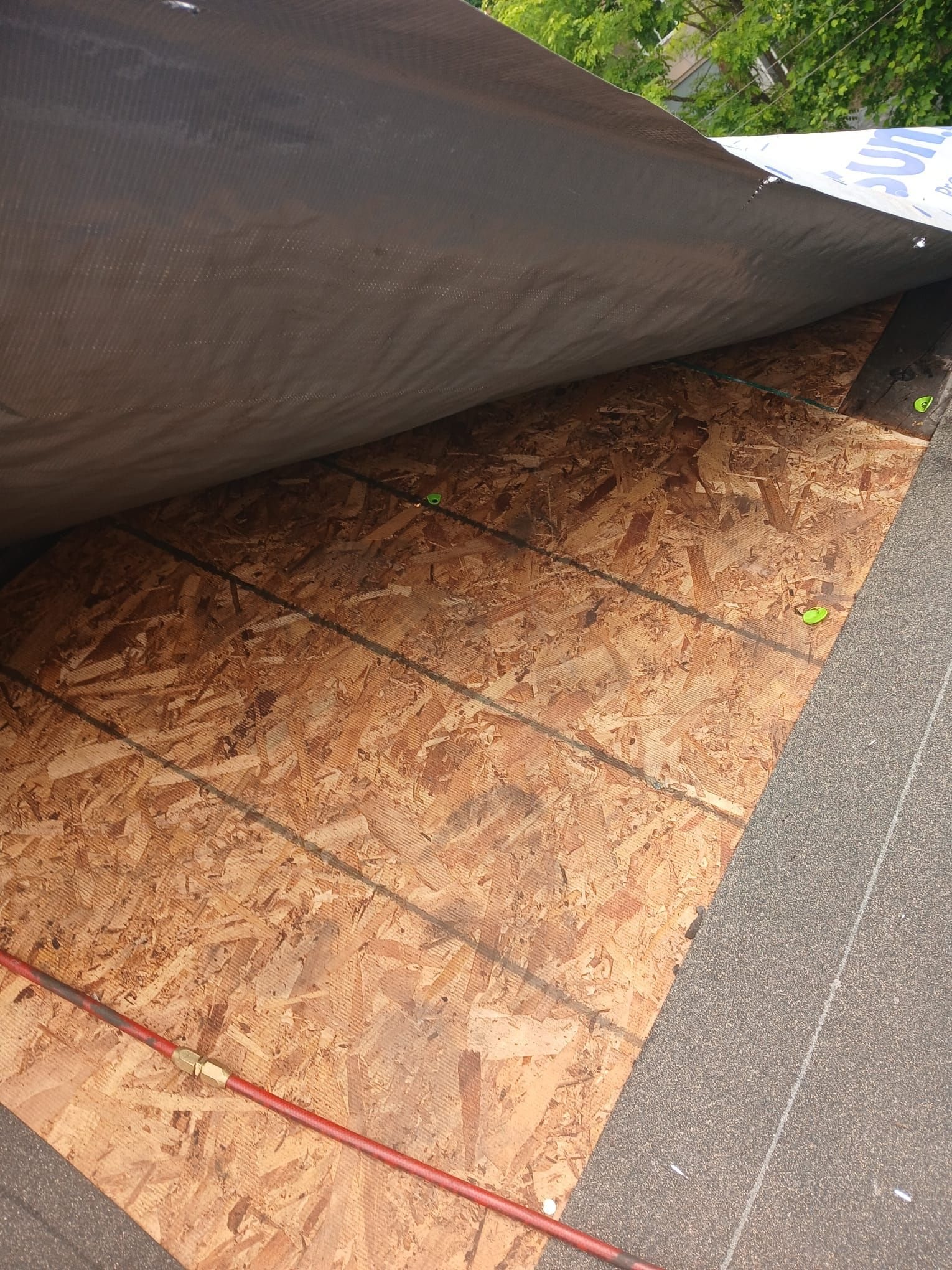
When a roof does need replacing, the decking is part of the conversation. Here, new plywood decking is in place along the drip edge, ready for underlayment. The drip edge helps carry water off the eave and into the gutter.
That’s the work a patch can’t do. If the wood underneath is failing, new shingles on top won’t last.
For a full side by side, read roof replacement vs. repair in Pittsburgh, or see how our roof replacement process works.
New plywood roof decking along a drip edge on a Pittsburgh replacement, Alan Construction.
What a Repair Visit From Us Looks Like
We check the area you’re worried about, then look over the rest of the roof so you know where things stand overall, not just at the one spot that leaked.
You get a plain explanation of what’s wrong, what we’d fix, and whether we think a repair or a replacement is the smarter spend. The estimate is free and there’s no obligation.
On the day of the work, we protect the area below, make the repair, and clean up with a magnetic nail sweep before we leave.
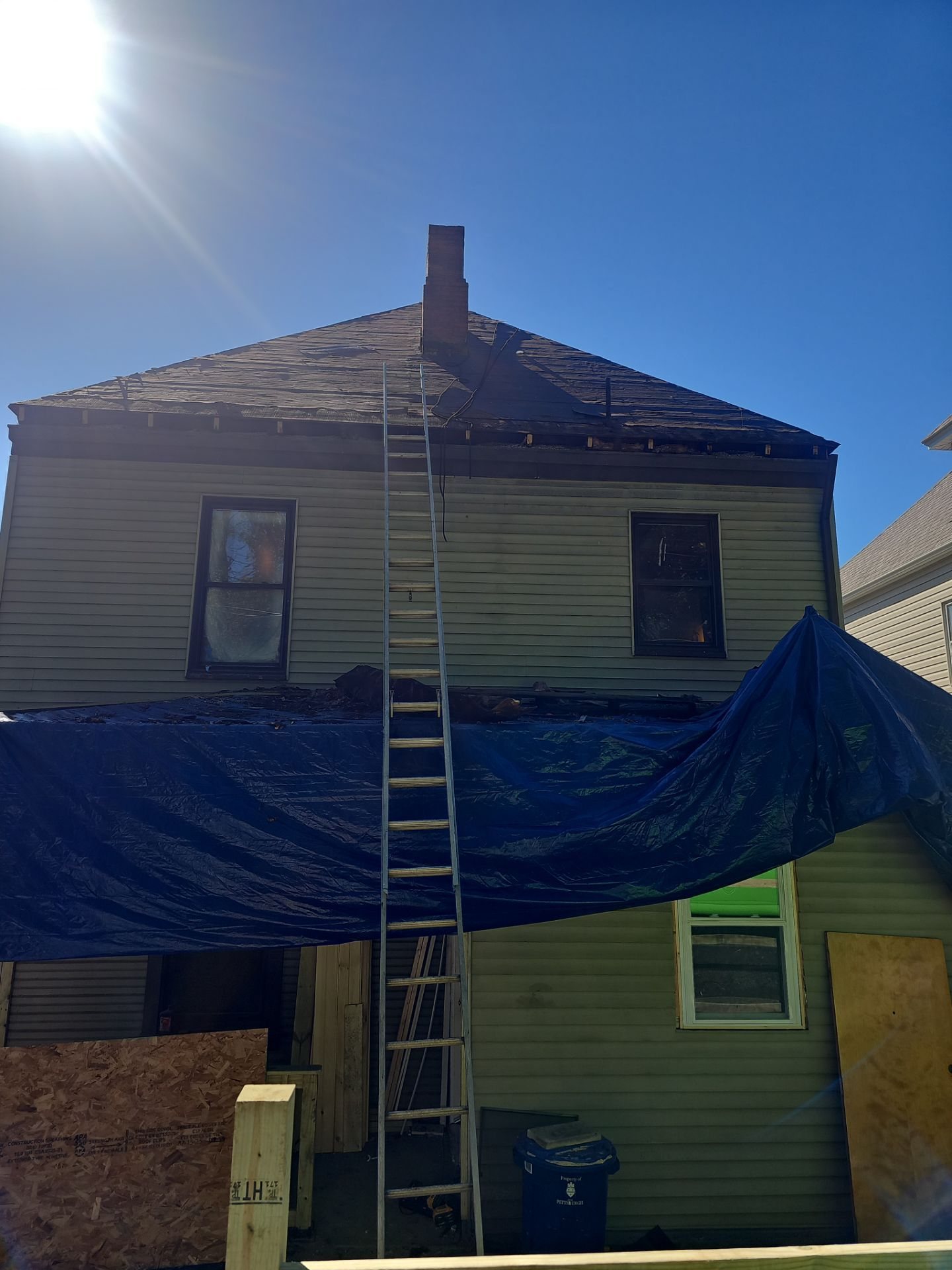
Ladder set to the roof and a tarp spread below at the rear of an older Pittsburgh home, Alan Construction.
Matching shingles on a partial repair
One worry with repairs is a patch that sticks out. Matching depends on the shingle line and how much the old roof has weathered, so we check what’s on the house before we promise anything. Here’s what Dylan L. from McKees Rocks wrote in his Google review:
“Alan Construction did a great job on our roof! They communicated well, got the job done in one day, and quoted me a fair price. I had part of my roof done a few years ago and they matched the shingle color exactly. They also sealed a vent for me on the part of the roof they weren’t responsible for at no cost. My parents are getting their roof done next year and will definitely be using Alan Construction! I highly recommend.” Dylan L., McKees Rocks
Choosing a Roofing Company in McKees Rocks
Whoever you hire, a few checks protect you before anyone climbs a ladder.
- Pennsylvania HIC registration. Home improvement contractors in Pennsylvania must register with the Attorney General. You can look any contractor up in the state HIC search. Ours is PA#126638.
- Insurance. Ask for proof of liability coverage before work starts.
- A written estimate that names the materials and the scope, not just a total.
- Local track record. Real reviews from nearby homeowners and photos of real jobs tell you more than a sales pitch.
We’re licensed and insured, BBB Accredited with an A+ rating, and we’ve served Pittsburgh since 2003. We install Atlas shingles, including Pinnacle Pristine, and we also work with metal, slate, tile and flat EPDM roofs. If storm damage is involved, we’ll work with your homeowners insurance and meet the adjuster at the house.
Seeing a stain, a lifted shingle or flashing that’s pulled loose? Ask us for a free roof repair estimate and we’ll tell you honestly whether it needs a repair or a new roof.